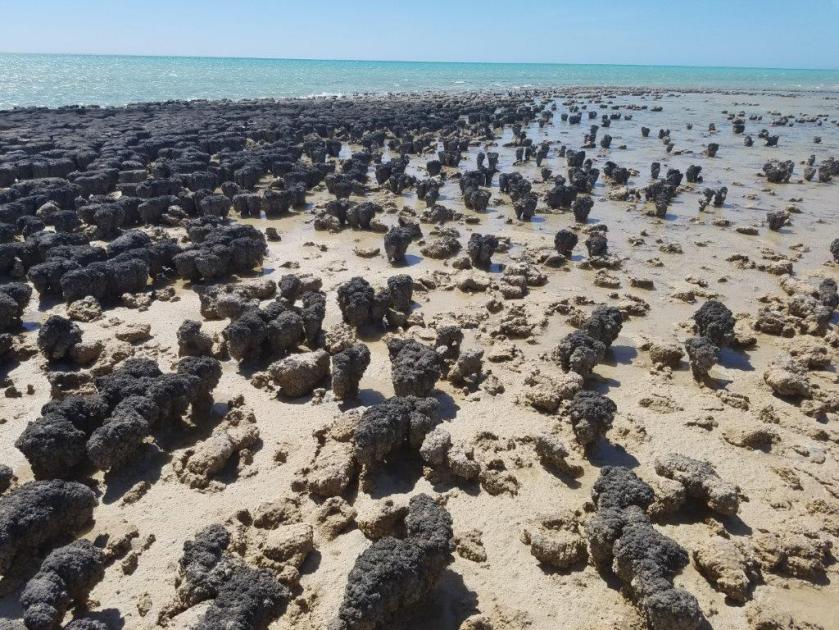
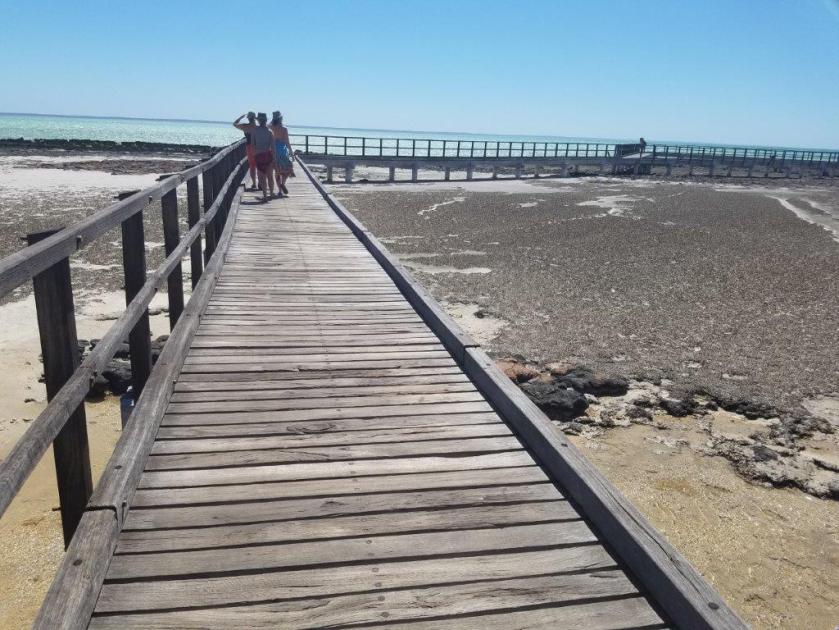
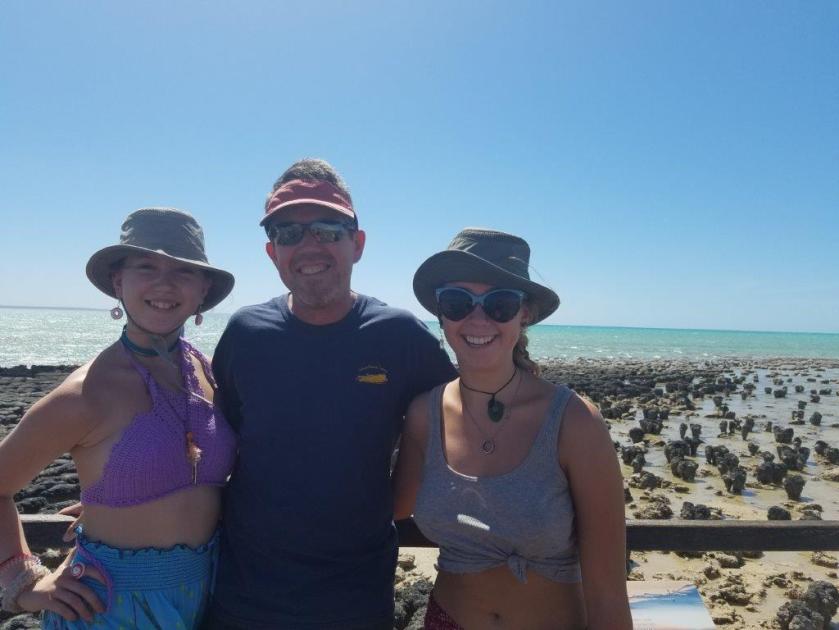
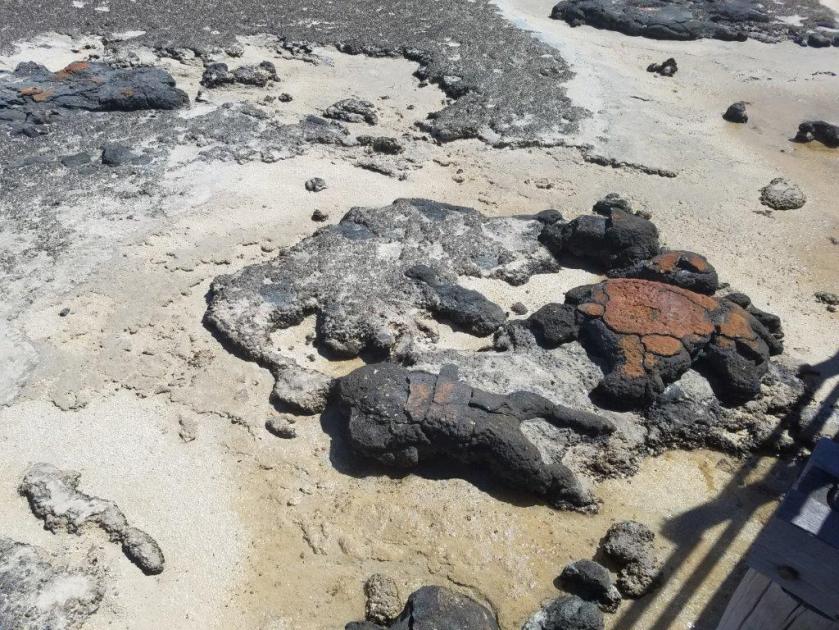
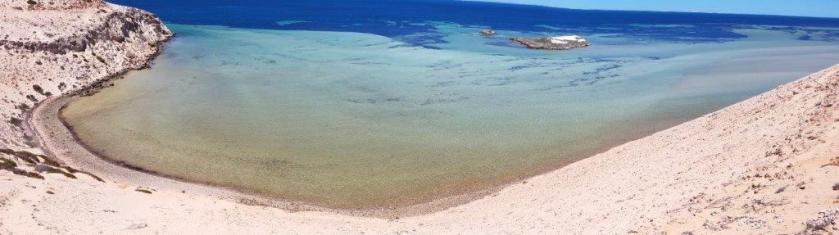
Have you ever heard of stromatolites? Did you have any idea how responsible they are to our existence?? We were amazed by these living fossils at Hamlin Pool in Shark’s Bay, Western Australia, one of only three places in the world they still exist and the only place people can readily view them. What are stromatolites, you might ask? They are the oldest form of life on our planet, dating back 3.5 billion years. They were originally formed by the growth of layer upon layer of cyanobacteria, a single-celled photosynthesizing microbe. Due to past continental drifts dramatically changing ocean levels (10,000 years ago), current day stromatolites live in high saline waters remote and salty enough to be safe from hungry predators.
Stromatolites at Hamlin Bay, Western Australia

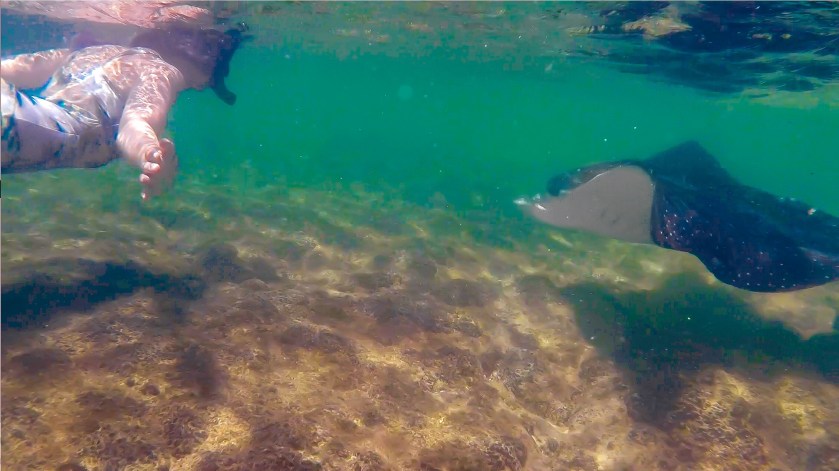
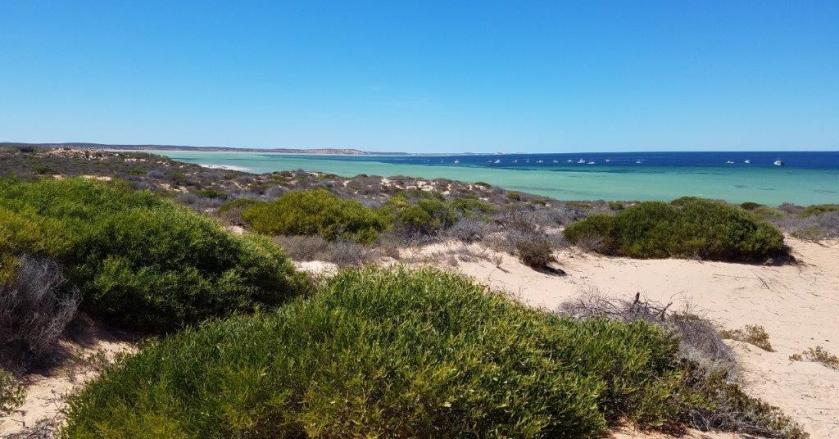
We anchored ourselves in Denham, Shark’s Bay for a few days, snorkeling at Francois Peron National Park for close encounters with manta rays and a shovel nosed ray, featured in Ella’s video further down this page.
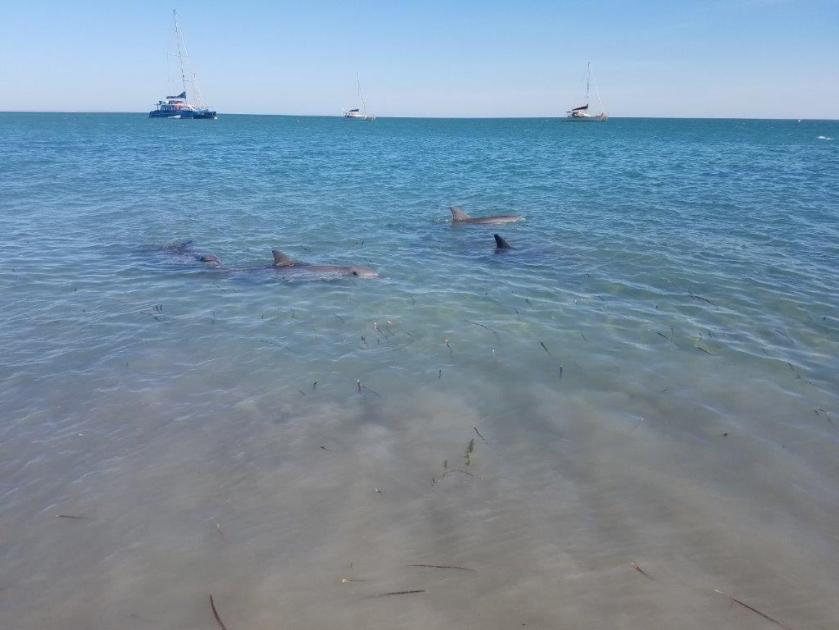
We also attended the popular Monkey Mia dolphin experience, where people have fed dolphins since the 1960s. In the 1980s a research center was developed and began closely tracking and protecting the dolphins in the area. Each dolphin is well known to the researchers and can be identified by the marks on their dorsal fins. There were six dolphins visiting us that morning, including a 3-year-old calf who was still nursing.
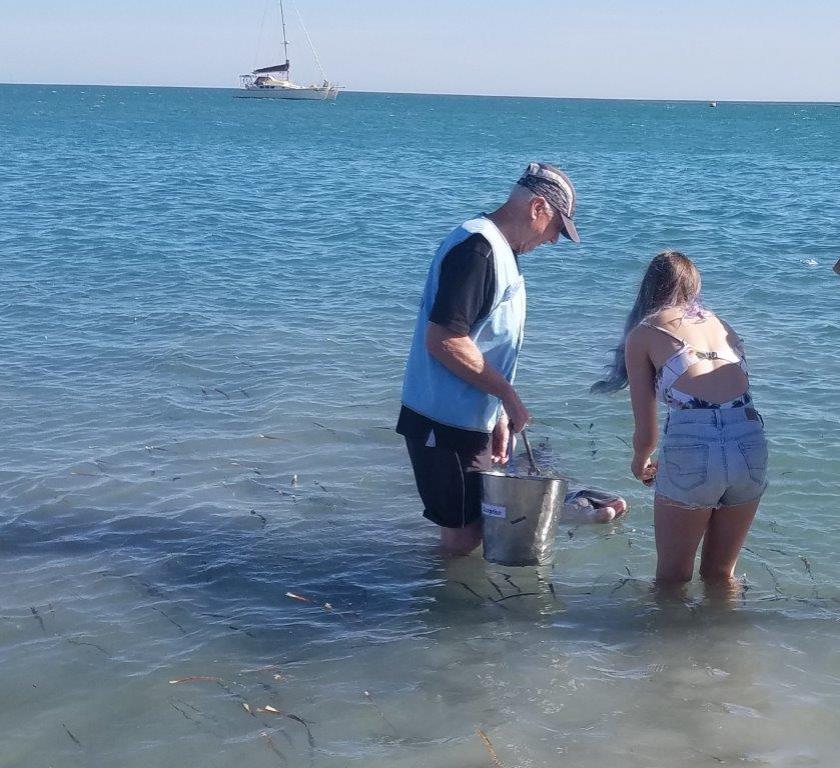
We were there in the low tourist season, though there were still 50 people ready for the 7:30am feeding. Everyone could only go to shin deep in the water, and couldn’t touch the dolphins. Helen was one of a dozen people chosen to feed a dolphin (they only are fed about 10% of their daily intake, so are not reliant on humans). The experts encouraged us to wave and smile at the dolphins, who in fact did respond by stopping and looking with their “smiling” faces.
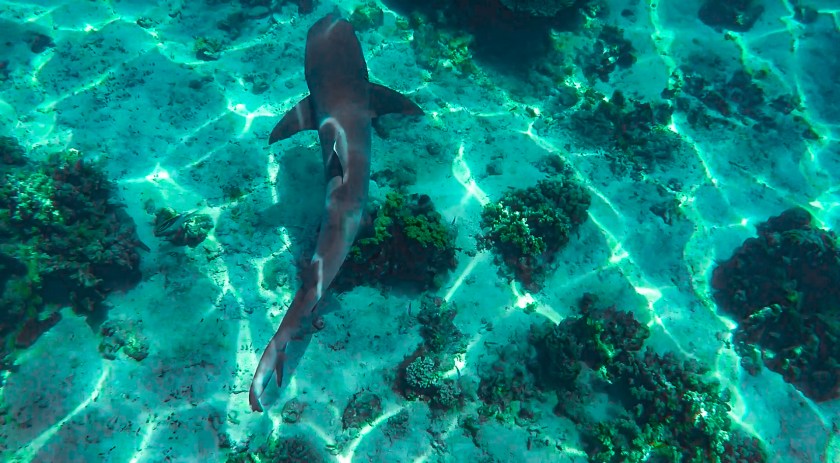
Heading north from Denham we made a couple of unsuccessful snorkeling stops, but did see a shark from Eagle’s View, then arrived in Carnarvon in time to watch the Super Blue Blood Moon in our back yard!
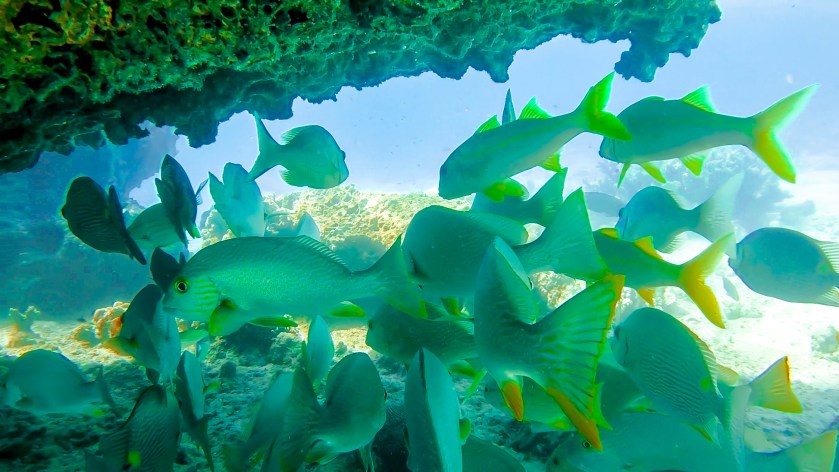
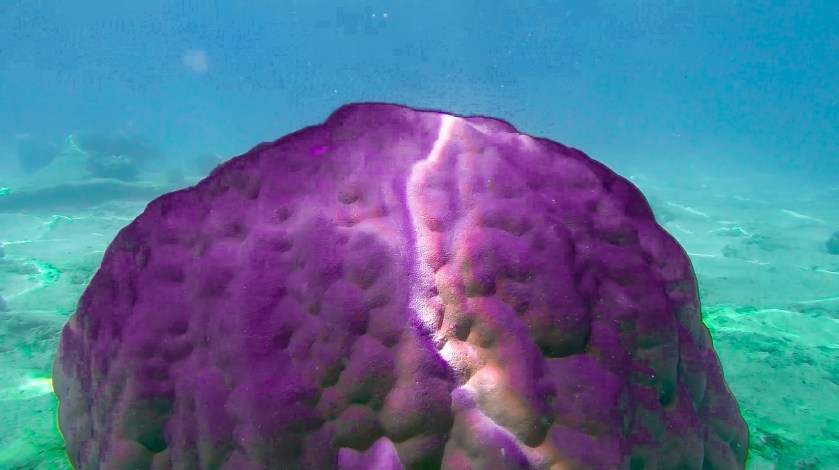
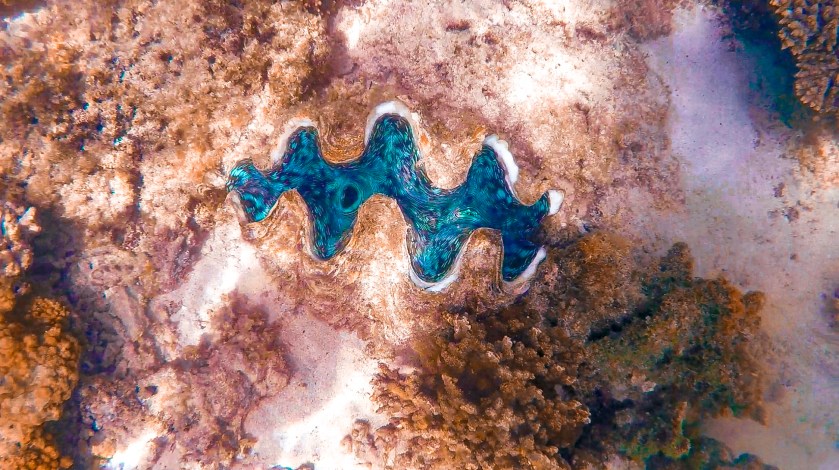
Next to the BlowHoles north of Carnarvon we snorkeled a spot called the “aquarium”. In fact it was like swimming in a fancy aquarium, with super warm water and so many crazy colorful fish and coral. What a magical spot.
snorkeling photo edits by Helen
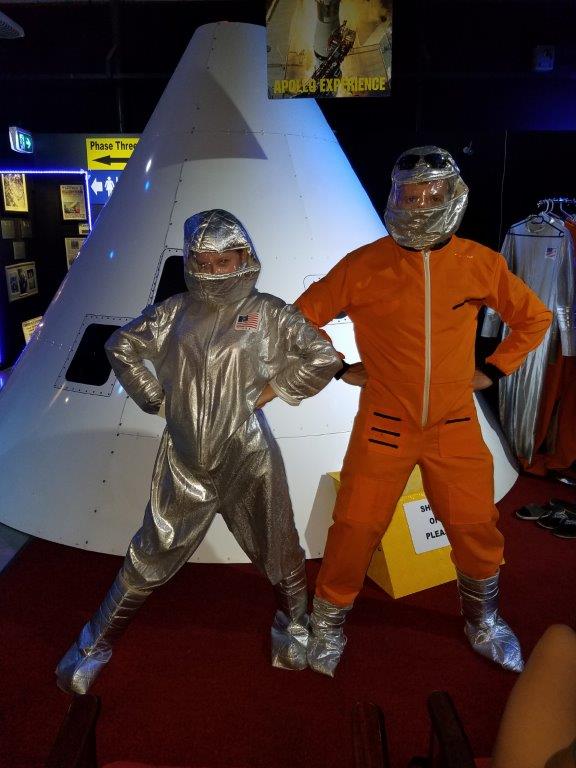
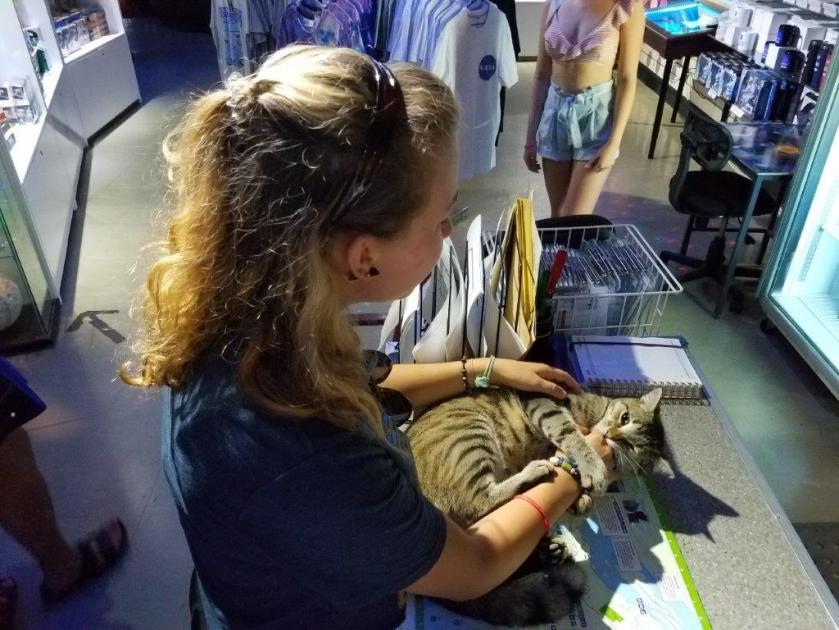
Carnarvon played an important communication role in America’s landing on the moon, and features a nice Space and Technology Museum. There’s nothing like learning more about our galaxy (and being with these two famous astronauts) to be left in complete awe.
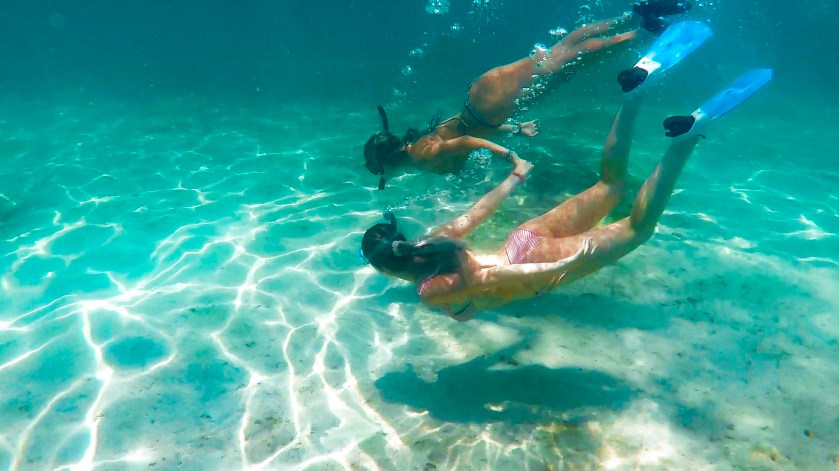
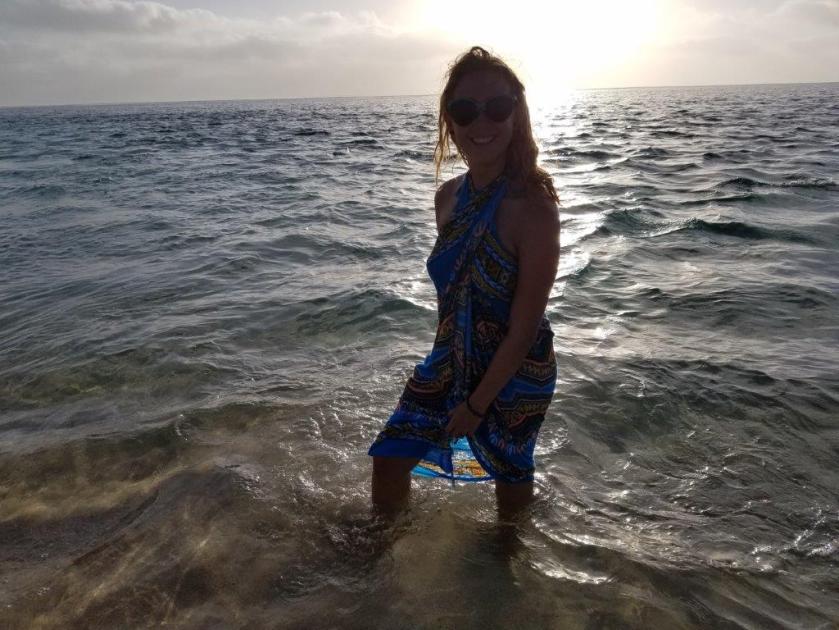
Eight hours north of Carnarvon is Cape Range National Park and Australia’s second largest reef system–the Ningaloo Reef in the Indian Ocean. Being a fringe reef it is easily accessible from shore. We soaked up four days of multiple snorkeling adventures in Turquoise Bay, The Oyster Stacks, and Lakeview reef sites. Wow!! Ella, Helen and I saw our first sharks (black and white tipped reef sharks–not a threat to us), though the massive 5 foot long gropers were more startling in some ways. It was absolutely magical spending so much time in the ocean world with oodles of parrot fish, angel fish, wrasses, clown fish, trigger fish, green turtles, loggerhead turtles, manta rays, blue spotted rays, sea cucumbers, starfish….
Ella’s 6 minute video of our snorkeling adventures, complete with Men at Work soundtrack




In Cape Range we joined a dozen other tourists for a guided beach walk in search of turtles, which are currently in their hatching season. Our guide followed some small tracks back to a sand mound, and sure enough, a hatchling turtle was just emerging from its 6 day journey out of its dune nest! We all watched this little dark creature make a b-line to the ocean, then saw a rapid succession of 25 more hatchlings emerge their stretched heads and front flippers to scurry down the sandy slope into the ocean ((one ran right over my foot!) navigating our large footprints. Although it was dark we could see the dark turtle figures contrasting with the light sand, and were thrilled at getting to spot this rare sight (the Turtle Center had only had one other hatchling sighting this year). Sadly it was too dark to capture the image.
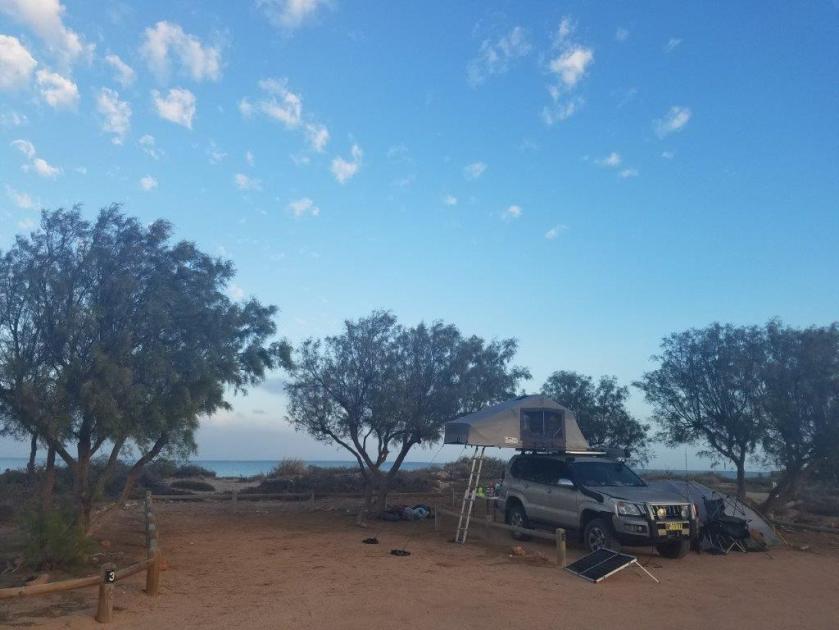
stimson python


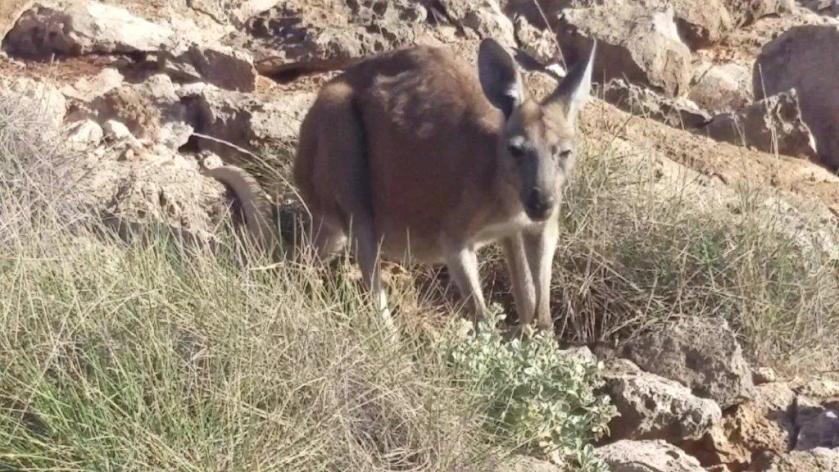
4 second video by Doug of black flanked rock wallaby, Cape Range NP
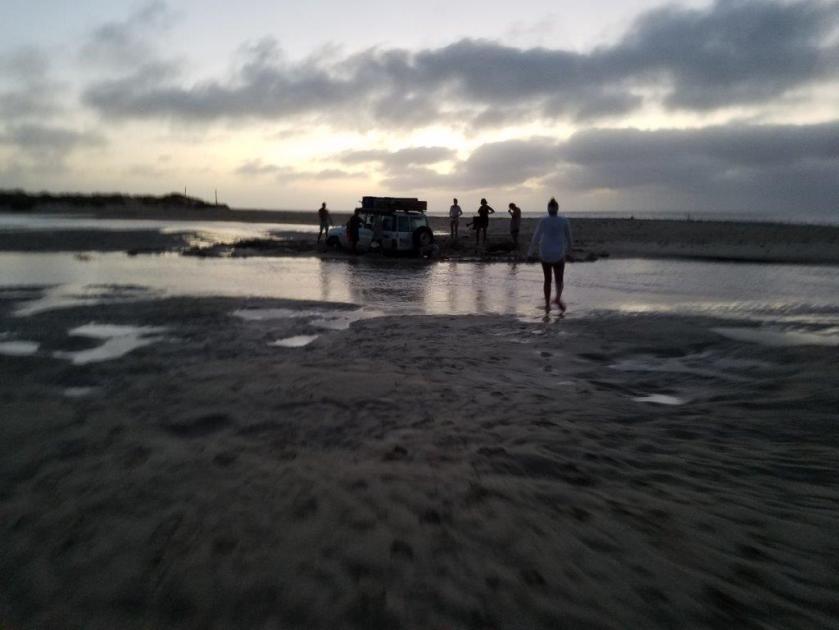
One adventure we were happy to be secondary to was pulling a bogged truck from Yardie Creek. One evening a distressed German woman about 30 years old came to our campsite asking us to help her, her husband and sister get their Toyata Landcruiser out of the riverbed. They had driven out at low tide and the tide turned earlier than they expected, leaving them deeply bogged in wet sand for 8 hours. They had two other parties helping them, and we joined to make twelve. Our ToyataPrado fortunately has a heavy duty winch system, which we deployed in an attempt to get them unstuck. It wasn’t quite that easy though, as their car was so bogged it started dragging our truck towards the water. What to do? Upon closer inspection of the bogged car, we realized the car’s tires were still pretty hard. It turned out that a garage had lowered the psi pressure earlier that day, but not nearly enough. In the dark night and shin deep water, we got the pressure on all four tires down from 30psi to about 8, then Doug got behind the wheel and with all of us pushing successfully reversed out of the water and back to dry land. After much rejoicing, we all tented in the same campground and got to know the three other parties a bit more. It ended up being a bonding experience, and we now have some very friendly contacts in Germany, Switzerland and Perth! In fact, a couple of days later we ended up at the same restaurant as two of the rescuers, and again bumped into them days later at Karijini National Park, where we joined them for a hike!
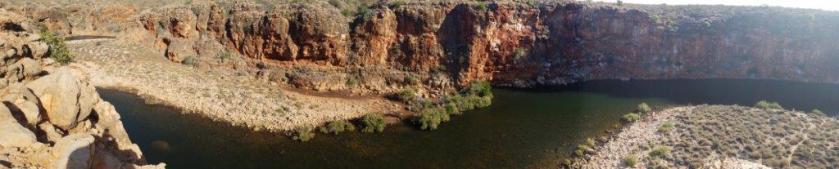
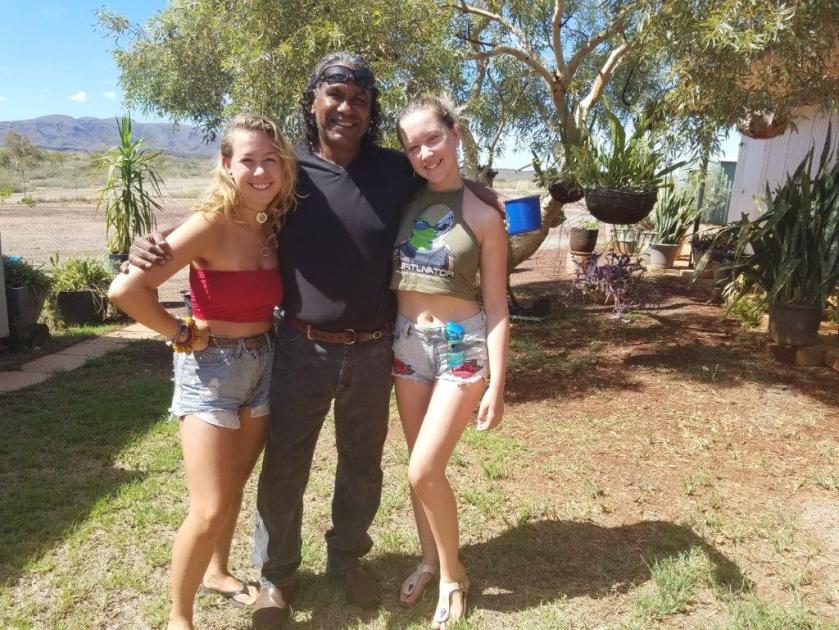
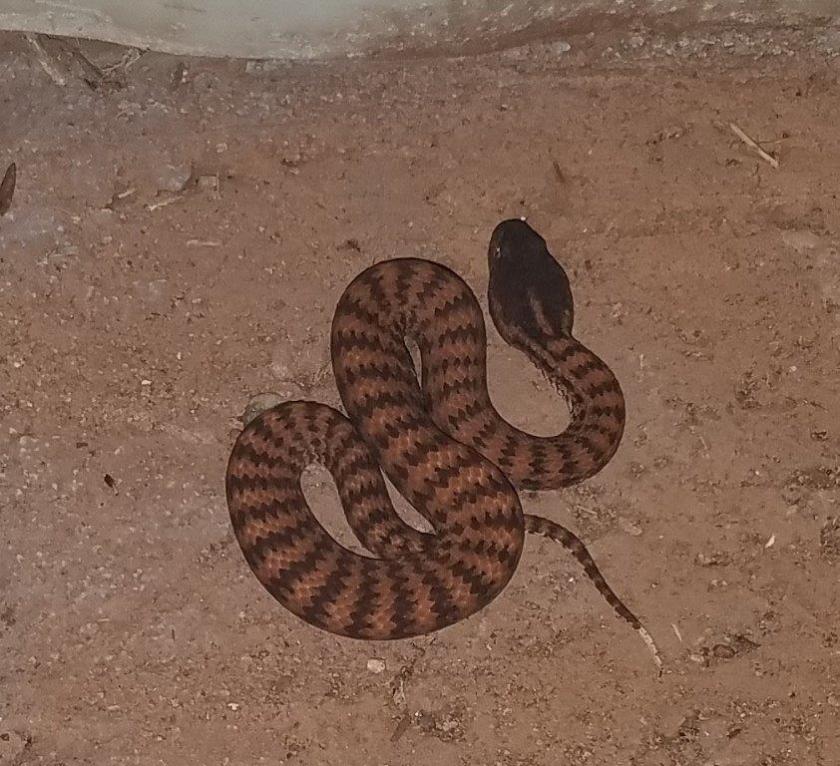
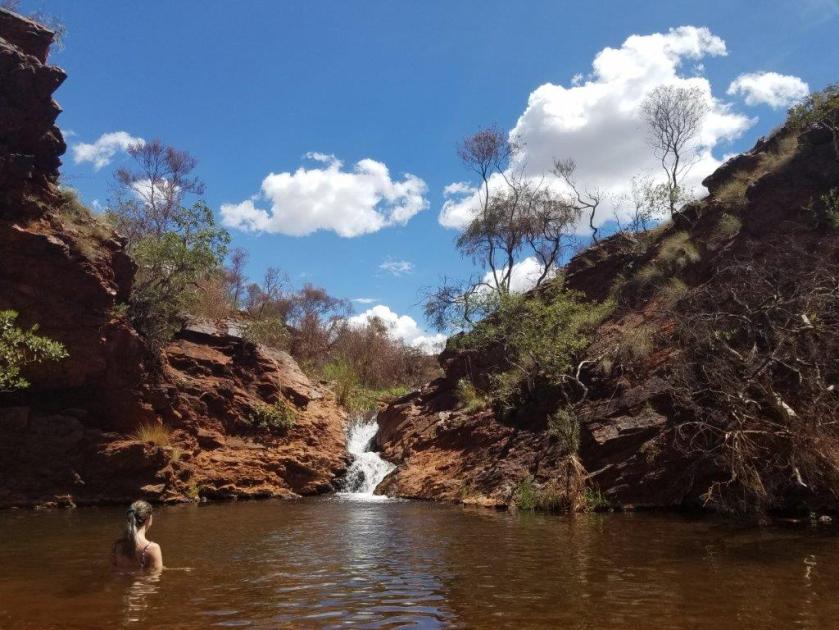
After four very active days in Cape Range National Park we appreciated a couple of relaxing evenings at a lodging in town, with real beds and running water. We restocked supplies and started our seven hour drive to the town of Tom Price, where we were greeted by our Aborigine host, Wayne Stevens. He is a dark, husky man with shoulder length curly locks, who spoke to us in a very soft, mystical voice. He had just returned that day from nearly three months in the bush engaging in traditional Aboriginal ceremonies with his tribe, returning to host us at his Airbnb situated in the bush near mountains, with no sign of civilization in sight. We hired Wayne to bring us to a couple of scenic Aborigine spots, including a gorge and a waterfall where the water was truly bathwater temperature. While at his place we saw a highly venomous Pilbura Death Adder on his veranda, and our burly host anxiously urged Doug to, “Get rid of it, mate!” Doug brushed it into a dustpan and flung it into the grass–an unnerving sight to witness.

Next stop, Karijini and Perth, our final stretch in Australia!
 Strout Family Year of Travel
It all looks so beautiful as well as all of you! Great video Ella! Big Hugs!!! Pete
LikeLiked by 2 people
Hi Peter! Thanks so much. Thinking of you!! Where are you?? xoxo
LikeLiked by 1 person
I’m in Puerto Viejo Costa Rica. A wonderful funky beach town on the south Caribbean coast not too far north of Panama. I might be able to call this place my second home. Love you!!!
LikeLiked by 1 person
Wow! It sounds lovely! We’d like to visit you in your second home. I’ll send an email to catch up more, soon. Have a ball! Love you, Peteskies!
LikeLike
Wow! Wow! Wow! How exciting and scary. Great video and pictures. I love the python bracelet 😉
LikeLiked by 1 person
Ha!! Pretty cool jewelry, eh? Yes, exciting and scary! Can’t wait to share the next post with Sarah featured! xoxo
LikeLike