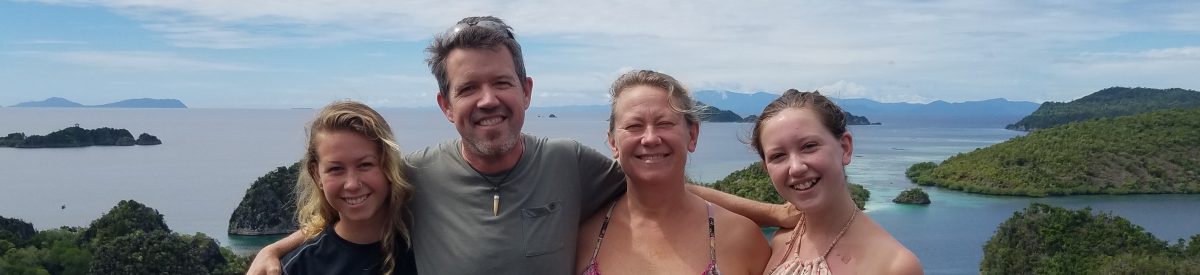

I’m writing this from the friendly skies of Batik Air, flying from Sorong to Makassar so we can head to Malaysia, Cambodia and Vietnam. We just finished 11 days of relaxation and adventure in the beautiful province of Raja Ampat off West Papua, Indonesia. Known as R4 (Four Kings), Raja Ampat is a biodiversity hotspot rich in marine and bird life. R4 is also considered by biologists a “super reef”, heart of Asia’s Coral Triangle and one of the most significant marine locations in the world.
After one night in Sorong (or So-wrong as some call it—it’s a pretty gritty and unattractive city overall) we took the two hour ferry ride to the island of Wasai. Here we paid $70 USD each for a year pass to R4. The fees are for conservation as this part of the world has become increasingly popular with tourists. We hope the money is indeed used for this, and for keeping this incredible ocean and land clean.
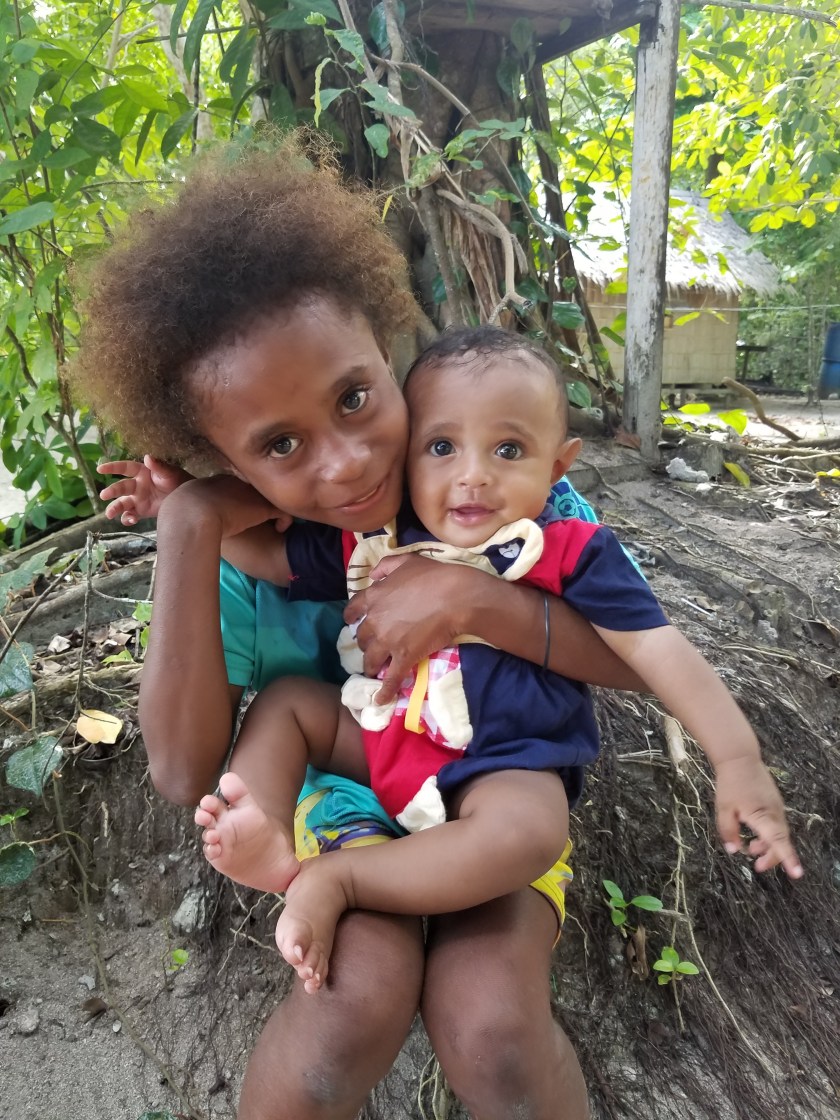
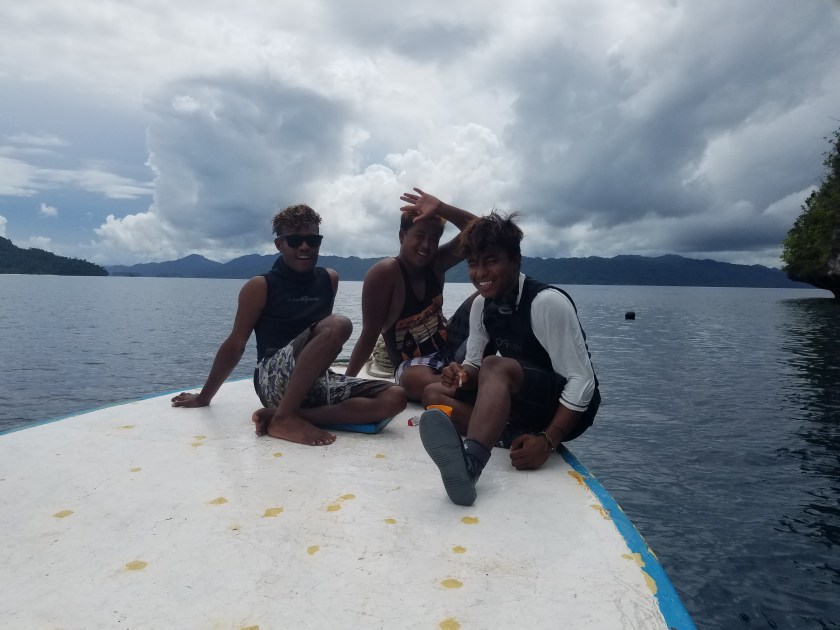
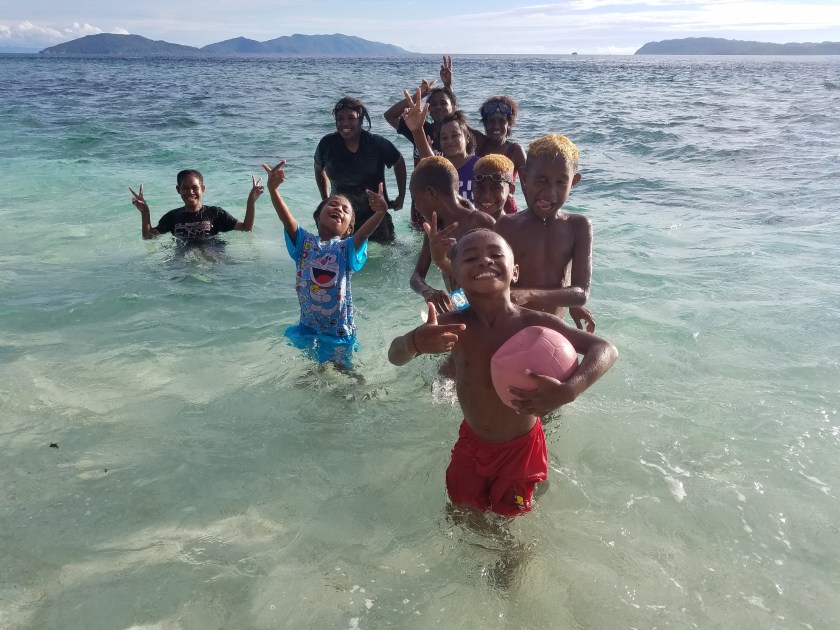
It is interesting to see the difference in natives’ appearance here, where there is a more pronounced facial structure and darker skin color. To me many Papuans resemble Aborigines and some resemble native Africans. Papua was attached to Australia before the continental drift, and many related marsupials found in Australia are also found here. It would be a fascinating region to study anthropology.
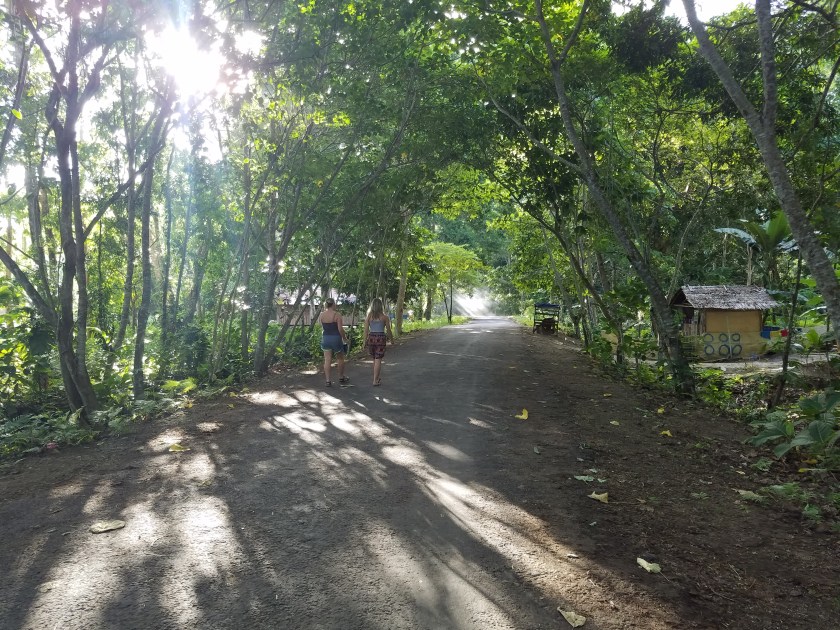

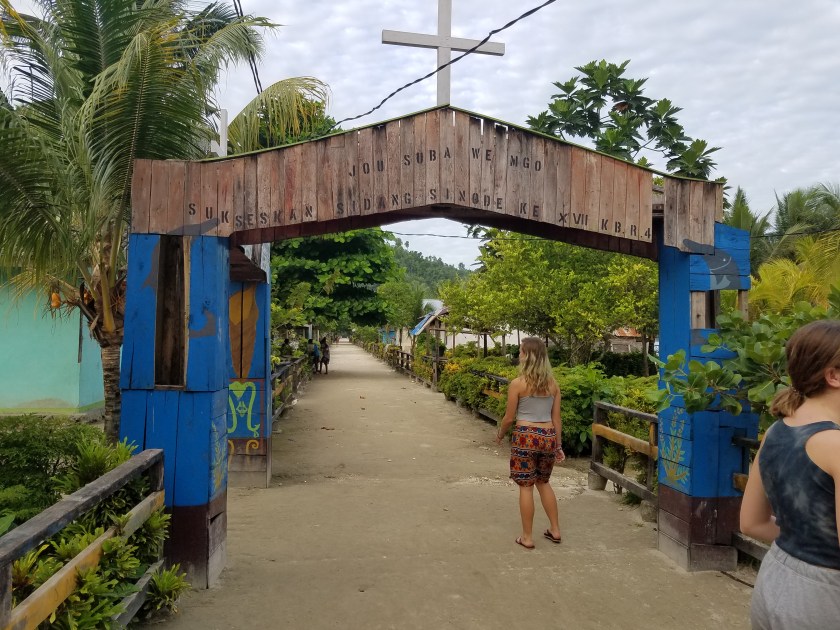
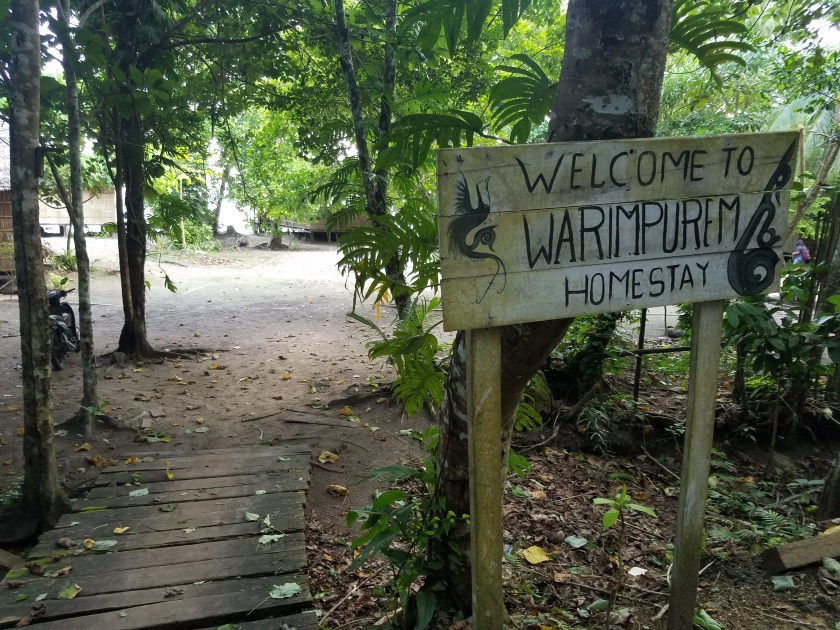
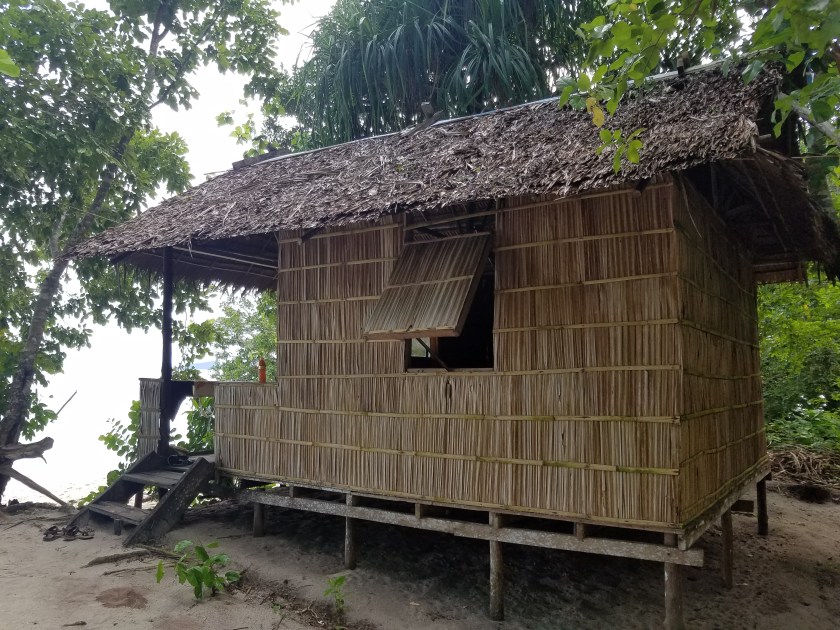
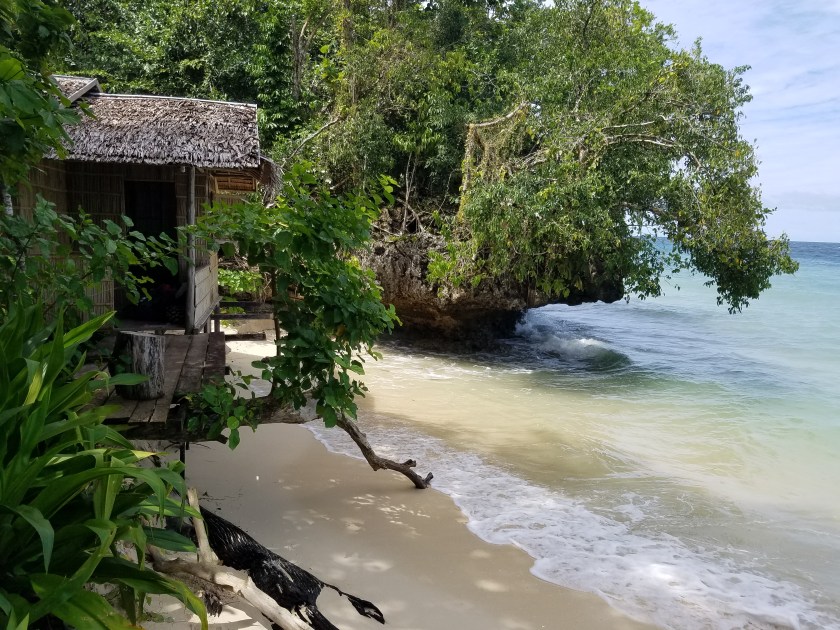
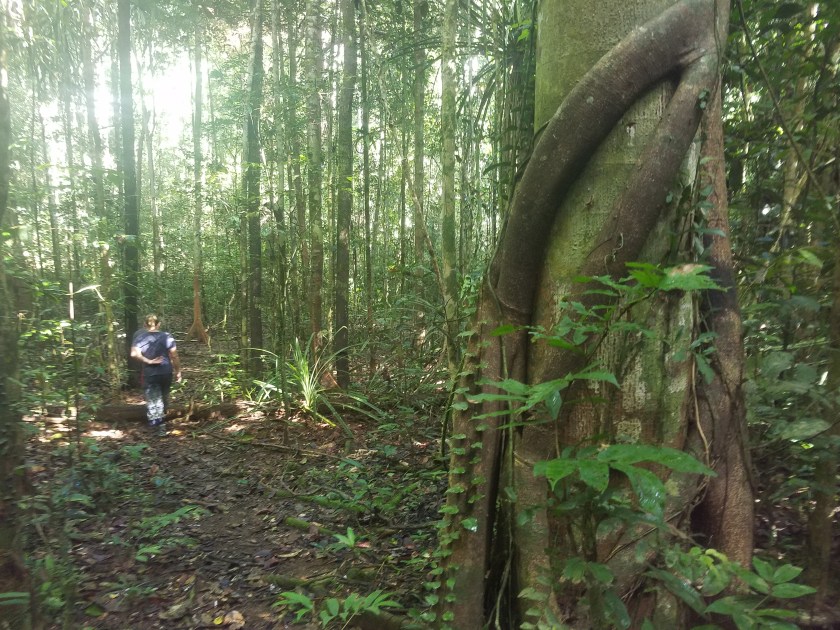
We spent five nights in simple beachfront bungalows in Warimpuren Homestay, where we were the only guests to enjoy the delicious vegetarian food and fresh fish. June is the beginning of their rainy season so tourism drops significantly. We had few showers and one day of real rain though the moisture did interfere with our bird watching excursion, as the Wilson’s Bird of Paradise likes dry ground to perform its mating ritual “dance”. Doug and I awoke at 4:00 one morning (to a warm coffee cake made by our host!) to be led on the 90 minute hike into the jungle for the morning bird watch. After waiting quietly at two separate spots for nearly three hours we gave up and hiked back home. We did hear the Wilson’s song as well as some Red Birds of Paradise and many other bird species, and we did see hornbills, cockatoos, dollar birds, a parrot, and multiple gorgeous butterflies, though the most exciting nature experience that morning was an unfortunate one involving Doug and a nine inch giant millipede. He wanted to take a photograph of this impressive insect, and thought a hand would give some perspective to the size. As Doug asked our guide “hati-hati?” (“should I be careful?”) the millipede sprayed a sticky yellow goo right into Doug’s face, eye and hand. We flushed it with water, but Doug spent the next several hours with a stinging, tearing right eye that took three days to fully recover. Our guide showed us a wound on his leg that had been burned with a centipede’s acid he’d accidentally sat on two weeks earlier. This wasn’t comforting to see but he assured us it was a different insect, and that Doug would be okay with washing it out. Thankfully he was right. Note to self: bring first aid kit on hikes. Note to Doug: ask “hati-hati” before touching wildlife.
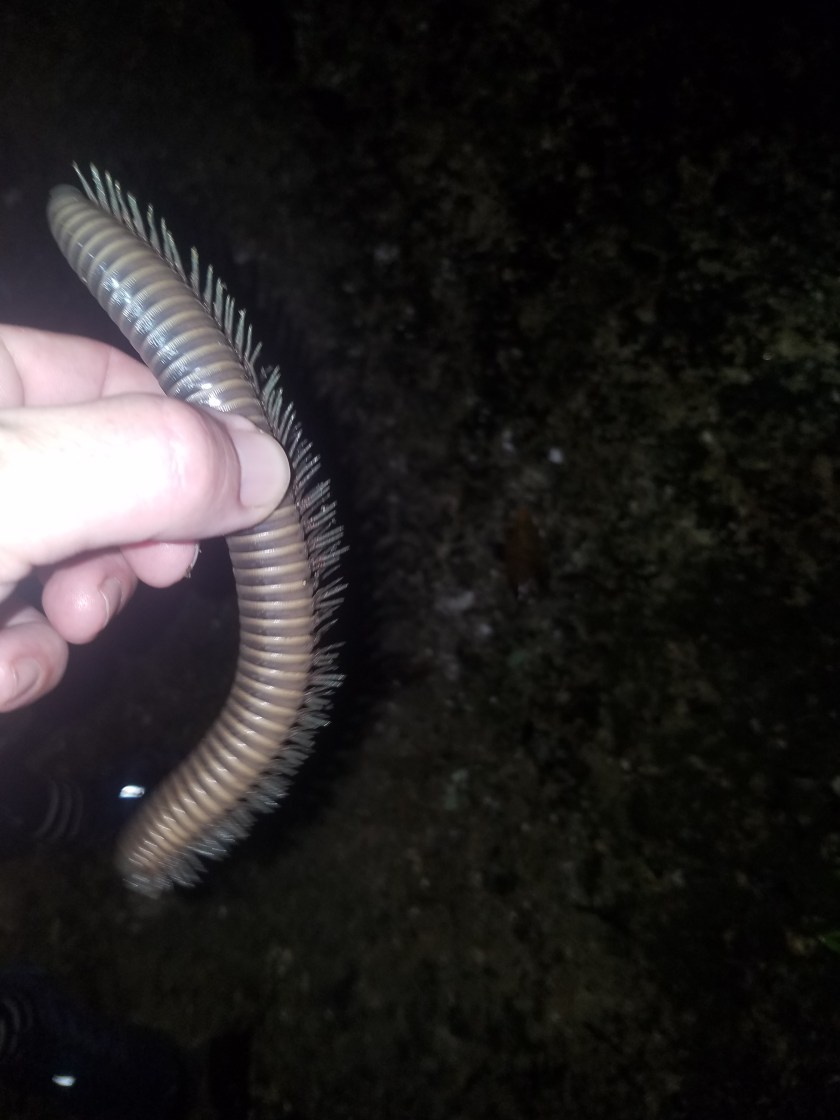
Doug’s hand and eye after the millipede sting, and the guide’s leg from a centipede sting


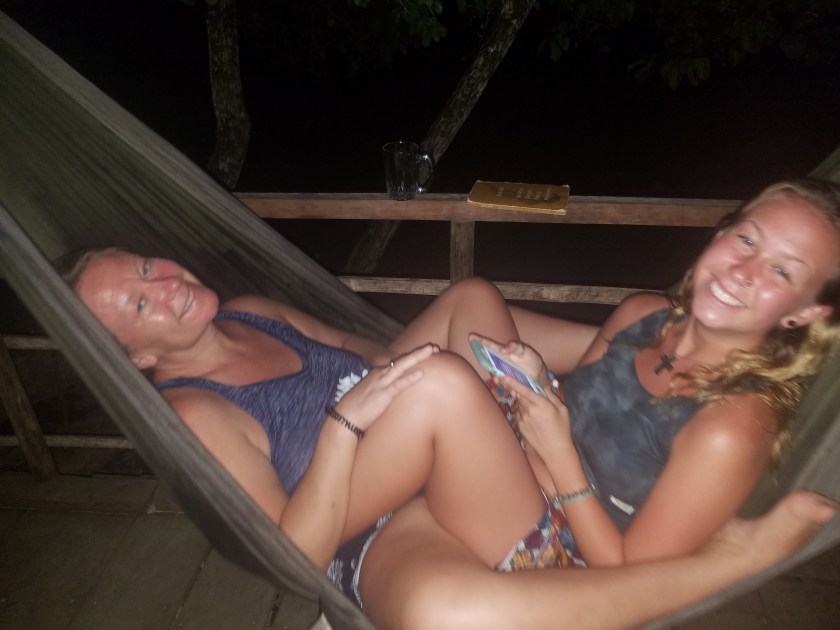
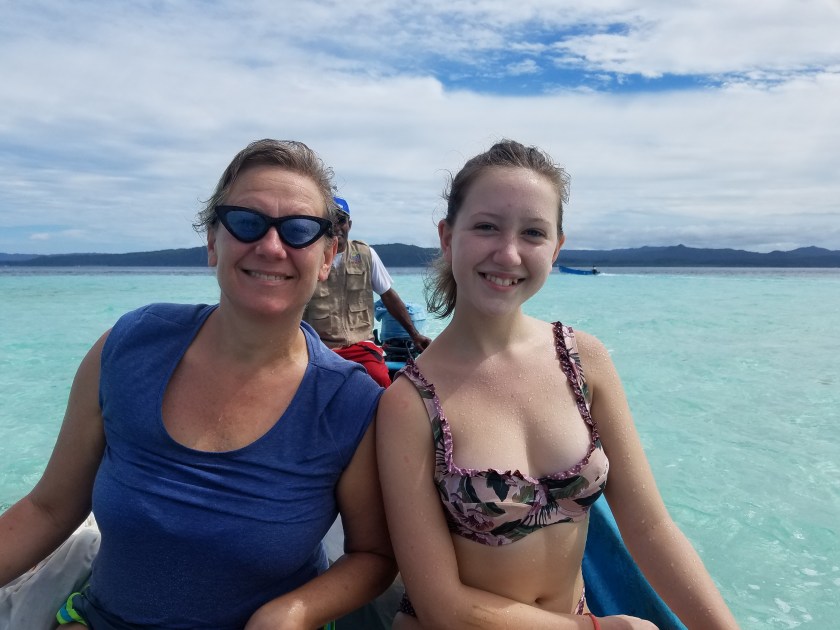
The snorkeling trip we did was far more rewarding for seeing species. We hired a boat one day that brought us to two top notch snorkeling spots, where we were blown away by the number and color of corals, fish, sponges, anemones, turtles, and sharks (all black and white tip, not dangerous). Helen made the mistake of thinking that overcast meant no risk of sunburn, then got so badly burned on her chest and belly that she could barely wear a sarong for several days and missed our first day of diving. 😦

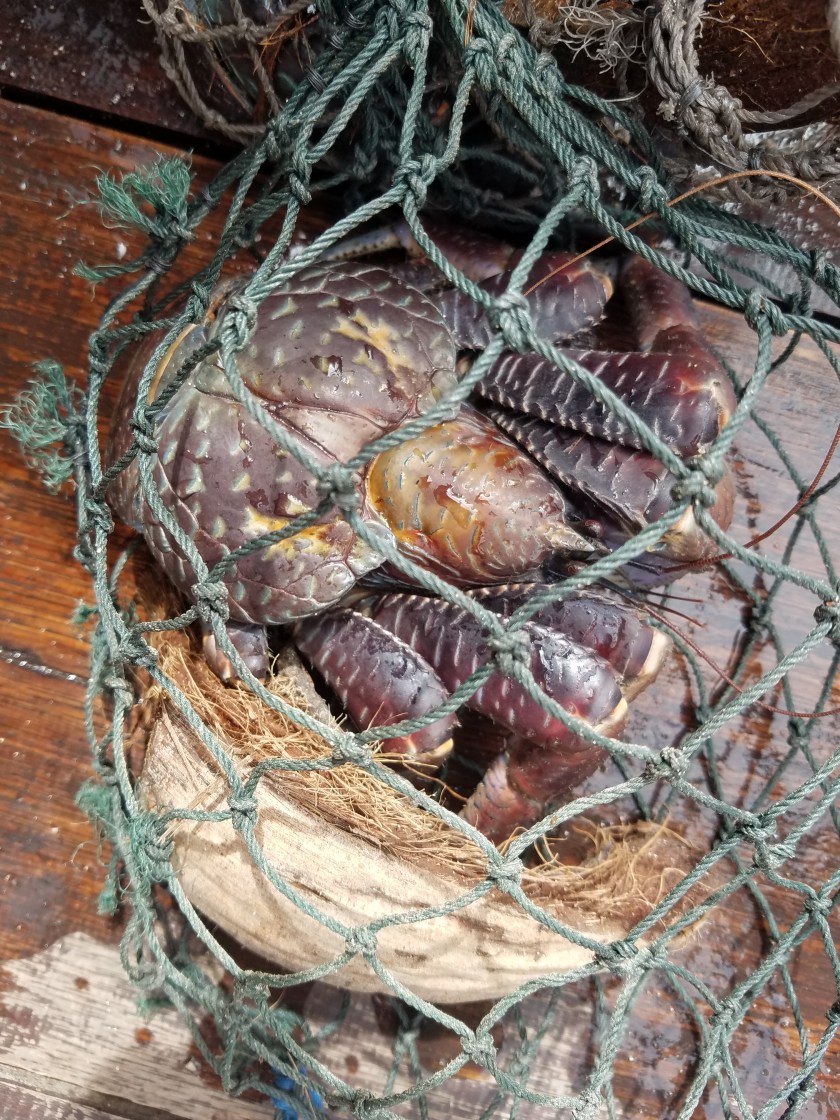
Sea urchin shell, and coconut crab poking its claw out



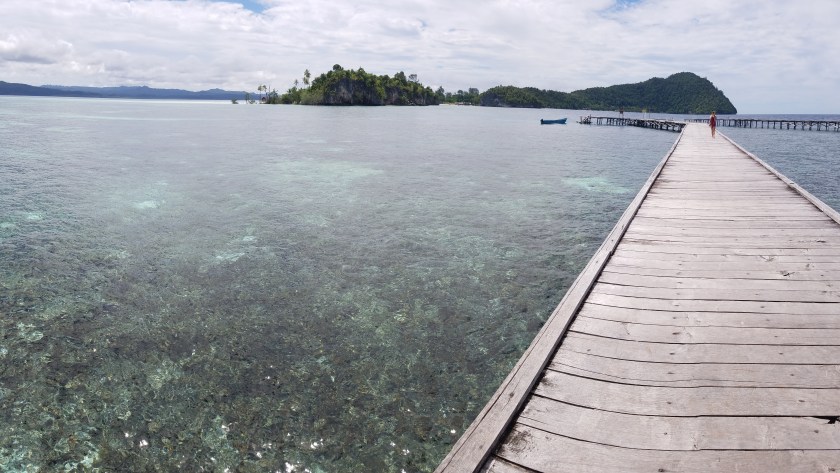
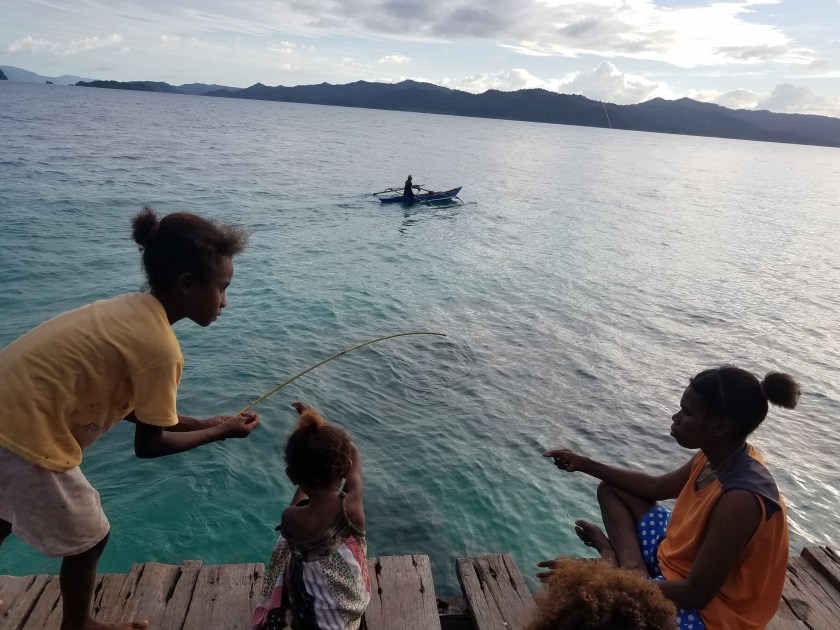
One afternoon we walked through the simple village of Warimpuren to the community pier, where perhaps 25 children and adults were fishing with simple bamboo poles, fishing line, and weighted hooks. They “foul hooked” small fish on nearly every cast, which they could then later eat or use to bait larger fish such as trevally or Spanish mackerel. It was so interesting to watch the locals go about their business, including nimbly crossing the pier that was missing perhaps 1/3 of its floorboards, and one athletic girl repeatedly shimmying up a pier piling after unhooking lines from the coral below.


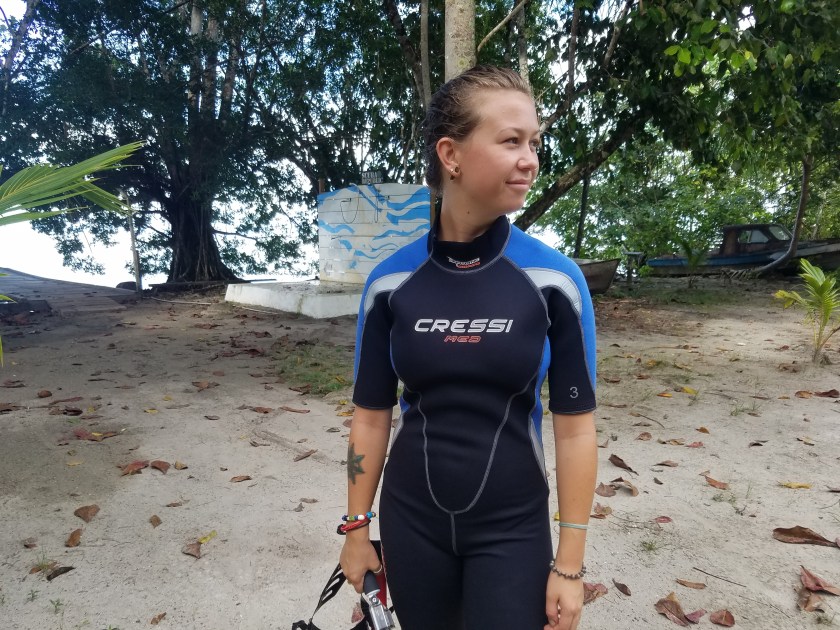
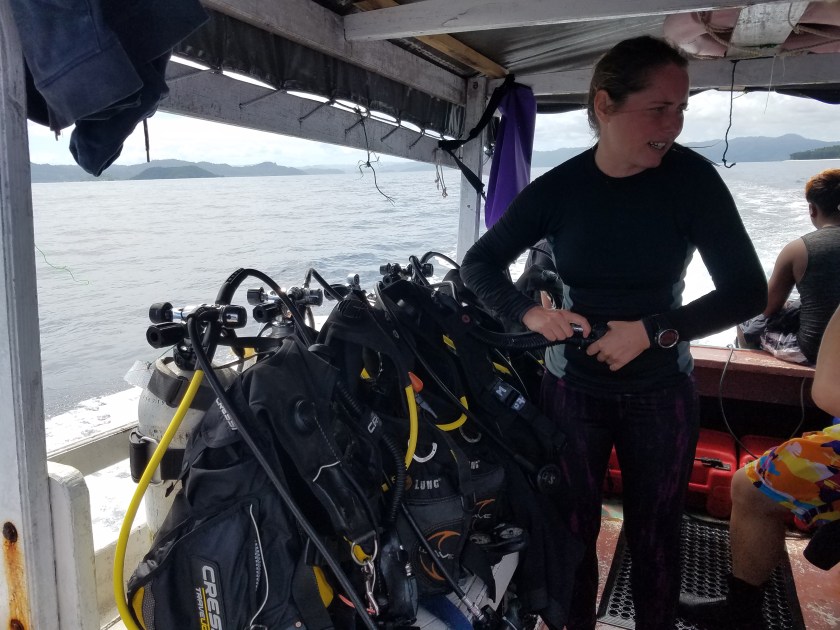
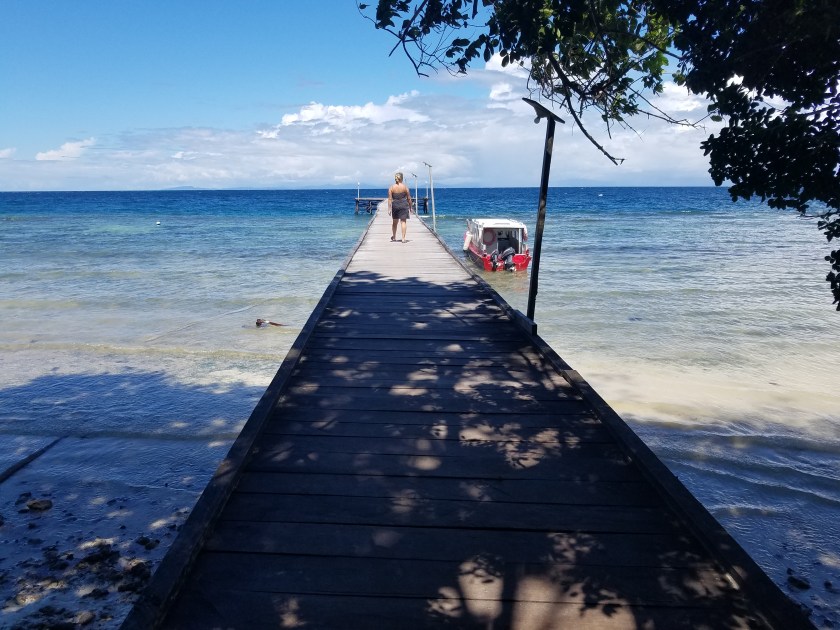
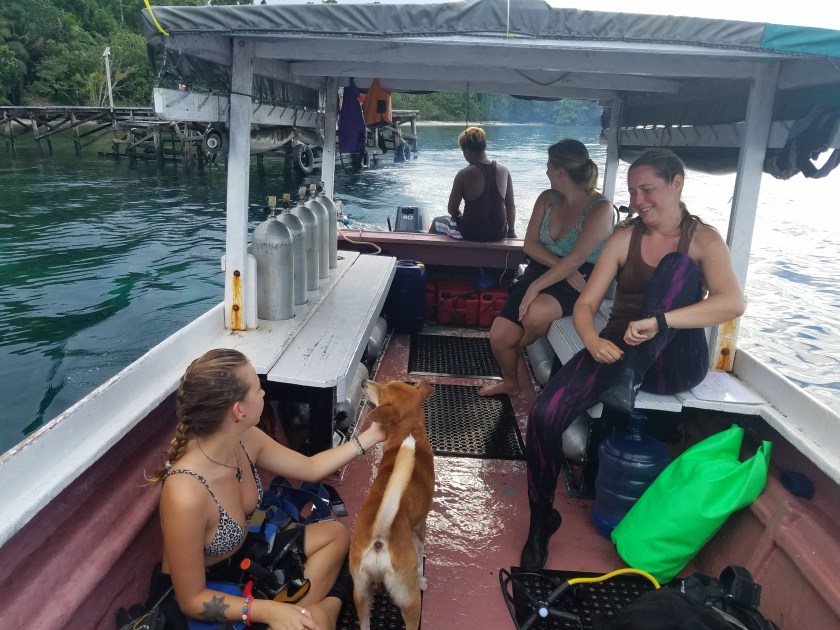
From Warimpuren Homestay we moved down the road to Scuba Republic http://www.scuba-republic.com/dive-resort-and-bungalows/scuba-republic-beach-bungalows-raja-ampat-dive-resort/ for six nights. Here we had the luxury of air conditioning and private bathrooms, as well as diving availability. We took one snorkel/scenery excursion and four boat trips for eight fantastic dives. Our dive master Dana (pronounced Dah-nah) is a competent, knowledgeable Czech woman who–along with her Papuan assistant Nelis–spotted many smaller species we mightn’t have seen, such as 1/2 inch long pygmy seahorses, crazy wobbegong sharks, ghost eels, and two blue-ringed octopus (very rare). It was unbelievable!
Let’s play “Find the scorpion fish…”. Video by Ella Strout




(photo of people lining up for photo with girls)
Grasshopper and small scorpion


Discovery video of Tasselled Wobbegong Shark. We got to see several.
After a day of rain, these pretty tree frogs sang all night and one found its way to our door


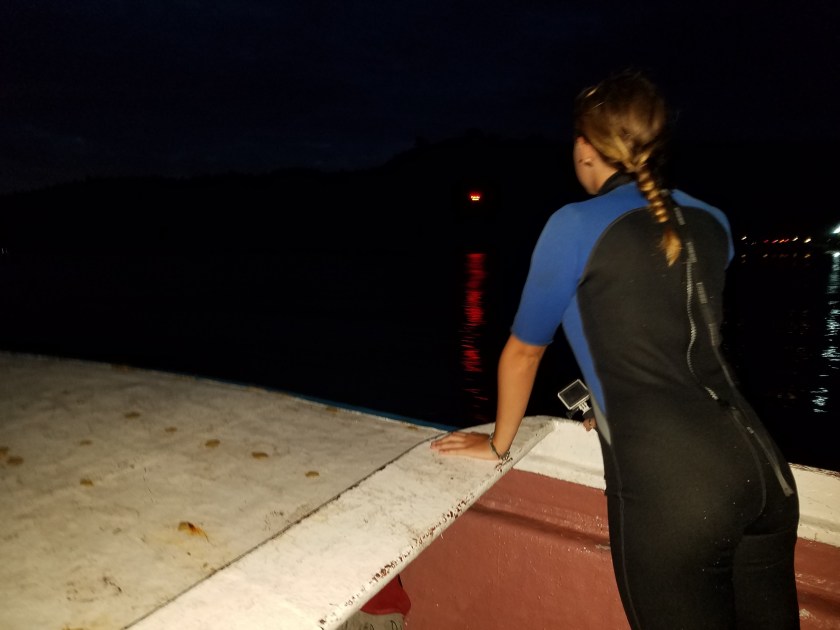
Our last evening on the island we had our first night dive experience. At sunset we boated to a nearby sandy slope, lit our torches, and sank 60 feet into the dark sea. It was both exciting and peaceful. On daylight dives there is so much obvious activity, whereas the night dive was quiet and mysterious, with fewer but stranger looking creatures about. We saw several fascinating frog fish, pulsing cuttlefish and disguised crabs (one under a jellyfish called a “jellyfish carry crab”, another under a piece of coral called a “decorator crab”. Our dive master had even seen one of those carrying a Coke can on a previous night dive). At times we would block our light so we could run our hand through the water, stirring the bioluminescence to create an underwater fairy effect. On the return ride to our pier the boat stirred it up again, sending “sparks” of phosphorus into the night air. Our only regret was we didn’t have more evenings left for night diving!
So now it’s a too-brief stop in Kuala Lumpur, Malaysia, a few days in Cambodia, and a week in northern Vietnam. We won’t miss the prominence of cigarette smoking nor the generally limited food choices in Indonesia, though we will miss its stunning natural beauty, fascinating culture, and friendliness.

Doug’s letter to family:
July 17, 2018
“Dearest All,
It is a Wednesday morning here at Scuba Republic, our last in Indonesia, and the tin roof of the pavilion I’m sitting under just began drumming with rain. I’ve been looking out at the ocean, watching a sheet of water advancing from out beyond a long jetty where Ella is practicing yoga. I’d have guessed she would have retreated at some point but I can still see her out there as rain is beginning to really hammer down. Wow. Here comes the wind. Ella must be thoroughly soaked out there but I can just make out her defiant sun salutation through the downpour.
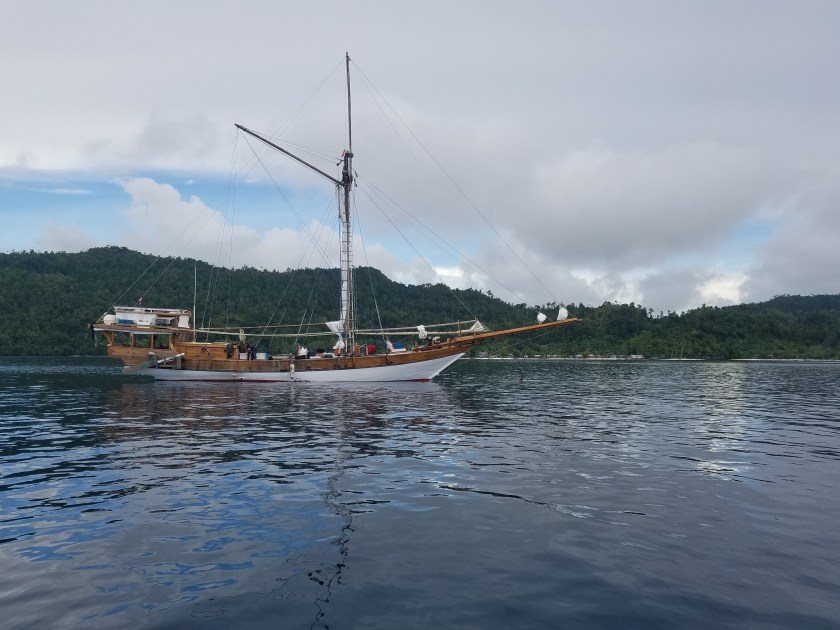
We decided on a make and mend day here, nice after a rather full week since arriving on the big island of Waigeo in the regency known as Raja Ampat (or R4 in scuba parlance) off the northwest tip of Papua. Tomorrow we head out to a series of small islands on a 2 night fishing and scuba adventure with new friends, a dive master from the Czech Republic and her Turkish boyfriend, the captain of a 27 meter sailboat we ate lunch on yesterday between dives.
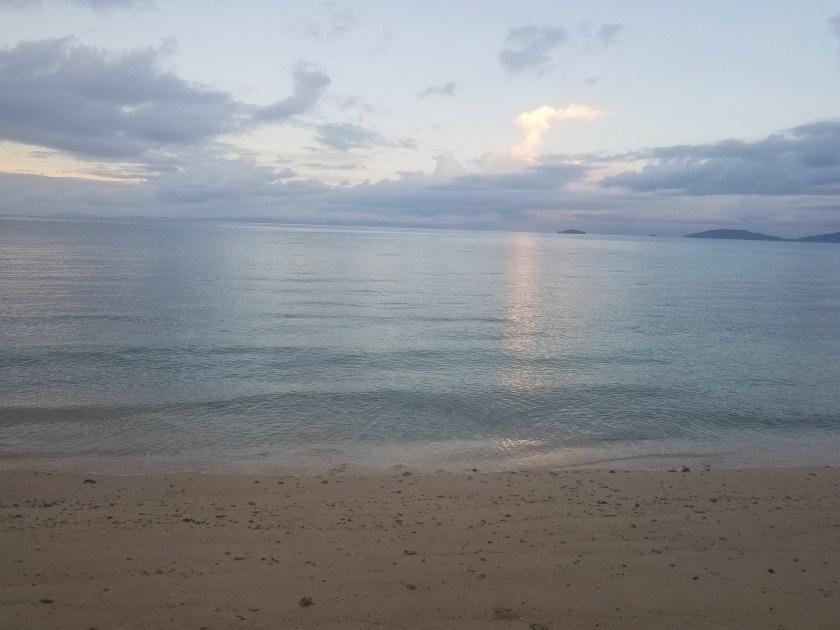
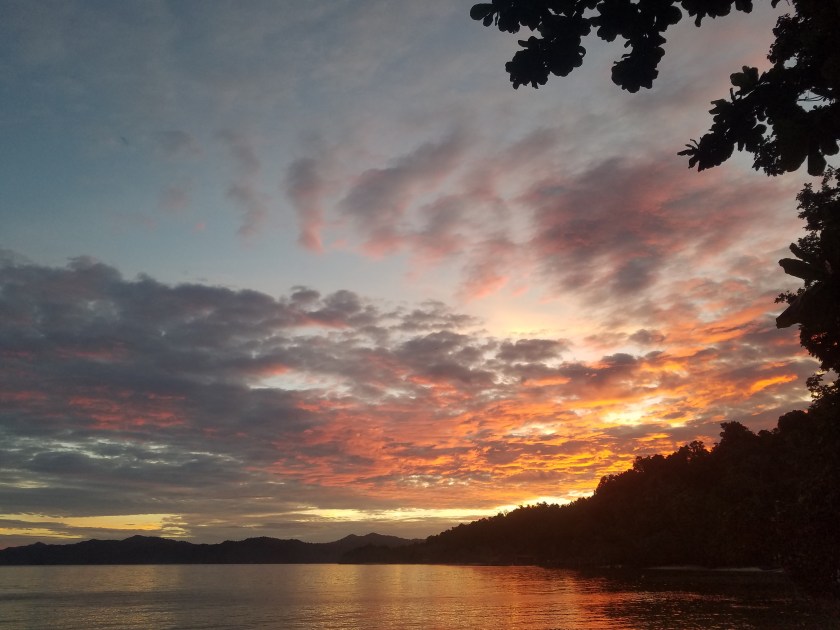
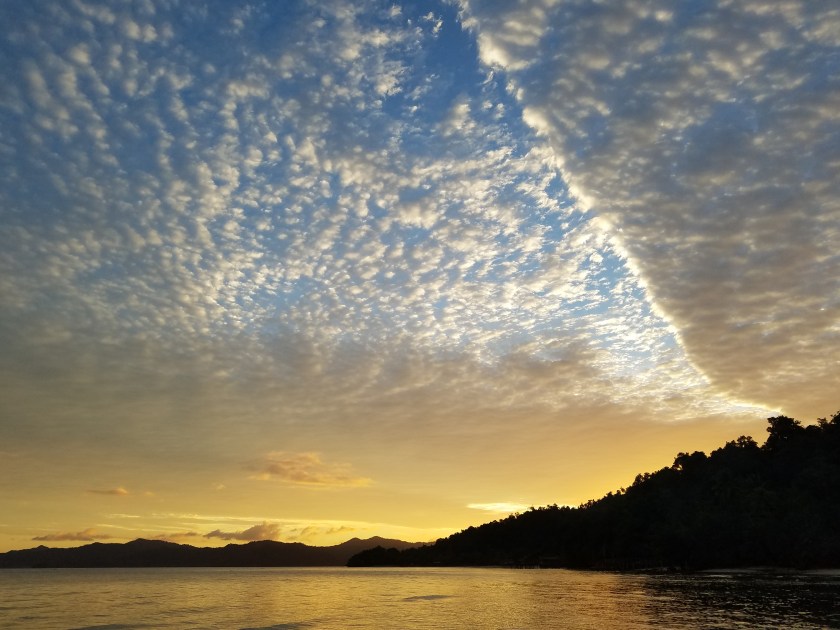
It’s getting into the low season here, a 3 month period from June until September when winds from the south bring less predictable weather. Consequently we have seen just 4 other tourists since arriving on the island and right now have the 8 bungalow dive camp to ourselves. The monsoon season here is intermittent and it’s been mostly dry since our arrival, with occasional downpours like this one, usually followed by steamy sunshine. Also cells of rain have been visible out on the water that never reach us, like yesterday when we were encircled for a time by 3 separate dark curtains while sun still brightened our dive site. Sunsets each evening have been spectacular.
Last Wednesday we checked out of our comfortable overnight stay at a fancy hotel convention center in the gritty port city of Sorong, twice now referred to as “so wrong” by people describing how little there is to recommend there. At the ferry terminal we caught the early (2 hour) boat out to Waisai, the only town with an ATM and proper stores on our island. Interestingly, upon arrival we were checked in at a processing station charging a one million IDR entrance fee (500K IDR for domestic tourists) good for one year of travel within Raja Ampat. This fee translated to about $70 USD for each of us, a significant amount in SE Asia, and is (hopefully) being used in part to help protect the area’s now famous super reef, heart of the world’s Coral Triangle.
Thirty minutes out of town by taxi along a mountainous jungle road hugging the coast brought us to a simple homestay we called home for the next 5 nights. Within minutes of arriving I’d grabbed my mask and snorkel and swam out for a quick recon of our local “house reef”, my first glimpse of this fabled area I’d been reading about since the winter before leaving on our travels. The visibility at something under 20 meters wasn’t amazing but fish were everywhere in the shallow water as I swam over a tangle of brightly colored corals. At the reef’s shelf 70 meters offshore trevally harassed a large school of silvery baitfish and within minutes a big shark appeared below me, slowly cruising the wall about 10 meters down. The shark was large enough that I questioned its species, only verifying it as a blacktip (full grown and heavy at about 7 feet) when I checked a reference book back at the open sided central structure we mostly hung out at and ate all our meals.
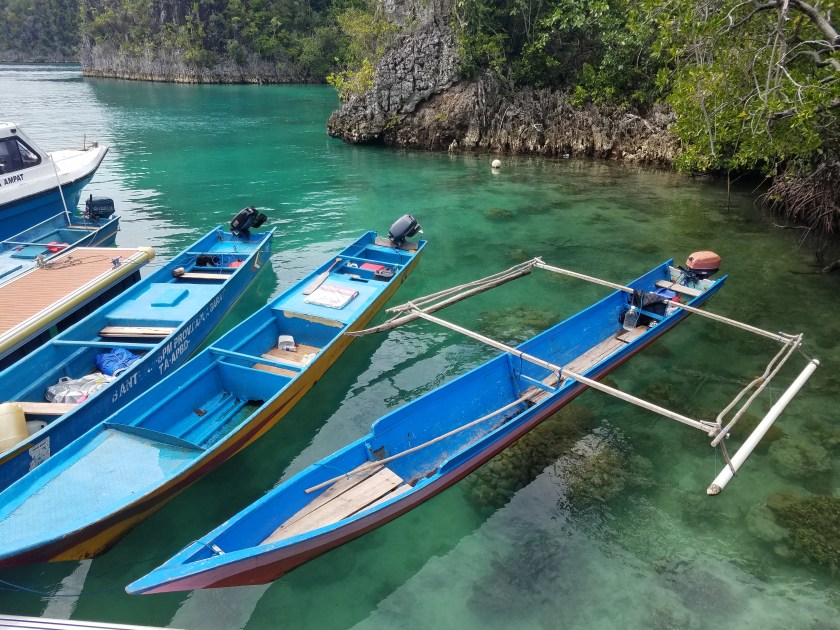
That first snorkel adventure set the bar for an amazing stretch of underwater sightseeing each day of our stay here. We didn’t actually dive until checking into Scuba Republic 2 days ago but did spend most of one day on a narrow local boat with 2 crew that drove us to snorkel areas on and off the nearby island of Kri. Mostly the visibility has been just okay at about 20 meters but one of our dives yesterday was estimated to be about 35, the site a real life aquarium filled with an overwhelming assortment of tropical sea creatures large and small. Our dive began with a back roll off into 20 meters of glassy water that made me think of flying as we slowly descended to the sandy bottom through a large school of 4 foot barracuda. From there it turned a bit freaky for Ella, who heard the sound of bubbles screaming out of her tank shortly after reaching the bottom. She held her breath and watched as the needle on her pressure gauge fell from 200 bar to 120 in just a few seconds. She quickly swam over to Anna, thinking the tank would drain and she’d need to use her buddy’s spare regulator to breath. Just as mysteriously, the release of air stopped and her gear functioned normally for the rest of the 47 minute dive, though Ella felt an urge to continually check her gauge and was frustrated at not being able to make our dive master leader understand what she had just experienced. The incident was never satisfactorily explained, though our leader did swap Ella’s regulator for a spare one she happened to have in a bag of gear onboard.
If curious, for scuba purposes visibility is estimated as the distance another diver can be easily seen. Maximum visibility gets up to about 60 meters and I actually saw these conditions once snorkeling on the Sinai’s southern tip back in 1985. I still remember the sense of vertigo from swimming off a coral shelf out over the deep blue and have been hoping to experience similar conditions ever since. Here at R4 corals regularly spawn a discharge of eggs and sperm, clouding the water slightly but also supporting a robust food chain from tiny filter feeders on up to a variety of toothy apex predators.
Above water, visibility around here is determined by the weather and also which direction you’re looking. Inland, low jungle clad mountains and rainforest hide most of the bird life that also makes Raja Ampat a world draw for ornithologists. Several days ago Anna and I woke at 4:10 to walk with a guide almost 2 hours hoping for a view of the Wilson’s bird-of-paradise. We later heard (from perhaps a better guide?) that Wilson’s, who are mating now and performing their ornate courtship dances in clearings on the ground, like a dry floor. The jungle for our morning hike was still dripping from the previous night’s rain, probably explaining why we never saw them as we crouched in a blind for almost 3 hours. We did hear their whistling, and once saw a rustle high in the trees apparently made by one. Mostly we just heard many a strange and melodic birdcall our guide identified as Wilson’s and Red birds-of-paradise, an assortment of parrots and cockatoos, hornbills, frogmouths, boobooks, bee-eaters and honeyeaters, butcherbirds and dollar birds and other improbably exotic species.
Our other noteworthy experience that morning was my getting sprayed in one eye by a big millipede I tried to pick up. This was, in hindsight, one of my more boneheaded nature encounters, as I’m ordinarily pretty good at not touching creatures I haven’t identified as harmless. This was an impressive insect I later identified as a giant millipede, about 9 inches long. I’ve handled millipedes at home and was pretty sure they didn’t bite so thought taking an image of one on my hand would lend a more dramatic perspective. But did you know a riled up millipede can spray toxins? Me neither. I just read that the top two ingredients of these toxins are hydrogen cyanide and hydrochloric acid. Also big millipedes have an effective spray range of about 32 inches. My hand got pretty soaked by a sticky golden goo and I also had drops on my face and in my right eye. Asking my guide if it was dangerous (the burning in my eye was immediately intense) he pointed to a large nasty looking, oozing burn on his leg and told us it had been caused from a millipede he had inadvertently squished and sat on 2 weeks earlier. He had almost no English (except for many bird names) but managed to explain that his burn was so bad because he had failed to notice and wash off the toxin until hours later. Also it was a different species than mine, small and yellow. Fortunately he had a water bottle and I repeatedly doused my eye with it, then a few minutes later worked on rubbing the juice off my hand, by now stained bright red. On the website I just looked at the list of symptoms resulting from contact with skin and eyes match mine exactly. Recommended treatment is water (and soap), then a call to emergency services. Blindness is rare. Normal is inflammation of the eyelid and cornea. I had this encounter on our hike into the jungle bird blind and spent most of my time there sitting on a board in a blur of tears. Later Anna and Ella went into town and brought me back a bottle of saline. Waking up from a nap that afternoon, and again the next morning, my eye was glued shut just like with a strong case of conjunctivitis. Despite this, a scratchy irritated sensation and swelling, my vision always seemed okay and symptoms steadily improved so fortunately I wasn’t overly nervous for more than the first eight hours or so. Now, 4 days later, my eye is fine as is the hand, though I can still see a faint brown stain on my skin the website says may last for months. Whew.
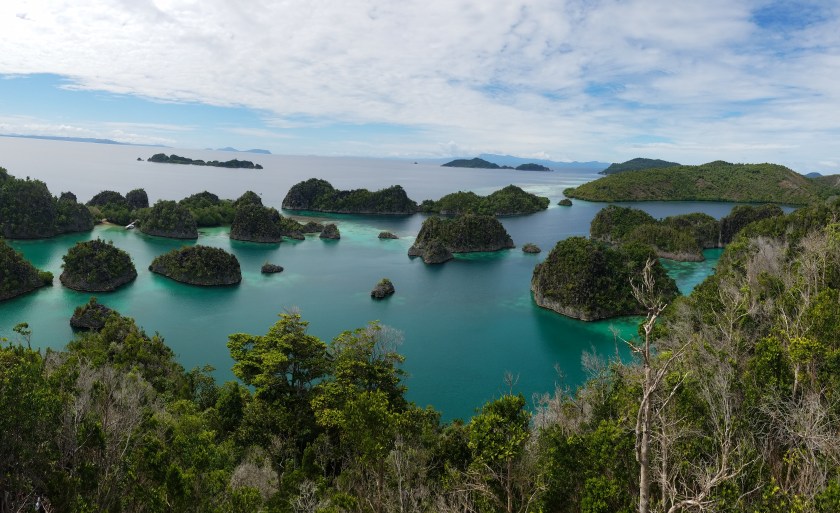
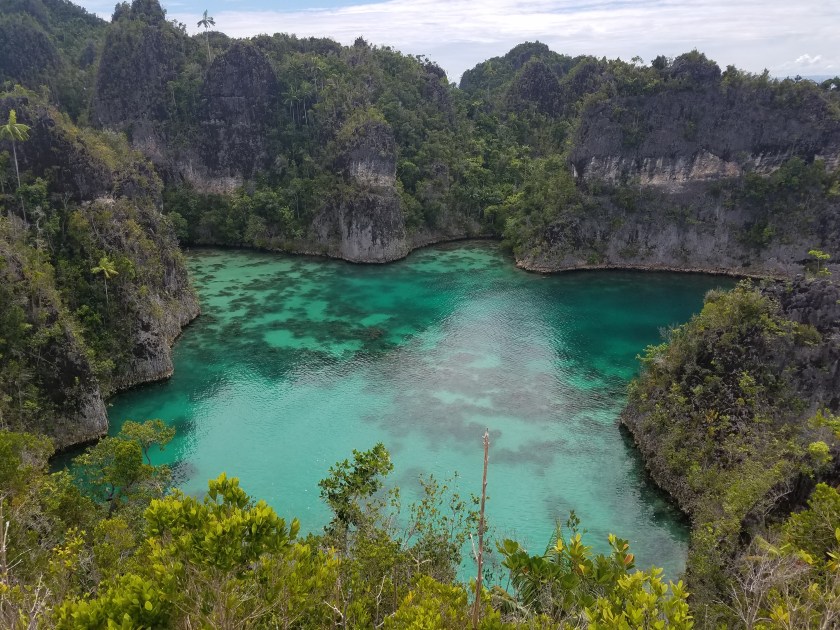
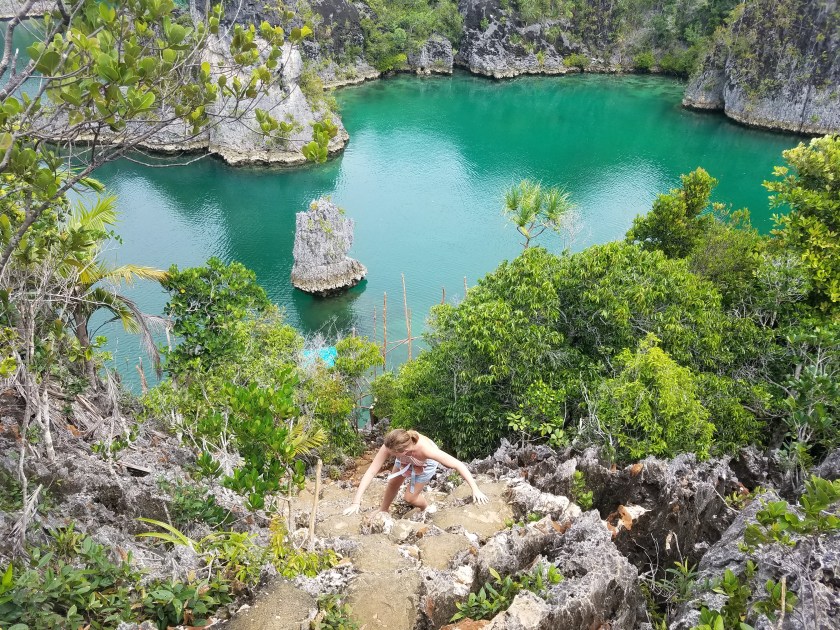
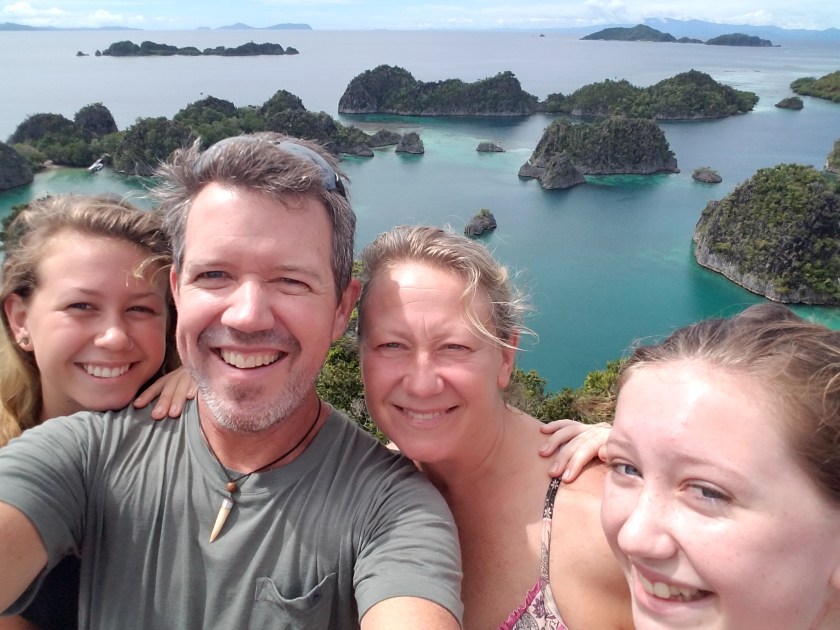
It is Saturday now and we are hanging out in the central pavilion waiting for our next dive excursion to begin. The rain I mentioned at the beginning of this email ended up lasting most of that day. On a mildly interesting note, Anna and I were reflecting that during our whole year of traveling this is only the 3rd time we can remember having almost an entire day of rain. The first was a day last October around the pancake rocks area on the west coast of New Zealand’s south island and the second in January in West Australia’s Margaret River Valley area. Anyway, we had a pleasant enough time writing and reading, then socializing with a nice young Brazilian couple who checked in here, straight from a long travel slog over from Bali. Because of the unsettled weather forecast and also the Brazilian’s schedule of leaving today, we regretfully decided to change our plans for a two night island fishing and diving adventure. Things usually have a way of working out, of course, and this last couple of days have still been pretty cool. Thursday turned out to be mostly sunny and calm and we were on the water, in and out of the dive boat from 8 until 6 that evening. We started our day driving the boat with its fast twin 40 HP outboard motors about 35 miles, part sheltered by islands and the 2nd half across exposed open ocean, to a famously photogenic area, one of 2 locations that account for most of Raja Ampat’s google images. This is a sheltered area of small karst islets surrounded by shallow sand and coral in turquoise waters. A substantial dock has been built, along with wide wooden stairs up through jungle to a viewing platform that looks down on a ridiculously idyllic tropical scene. That evening marked the beginning of Idul Fitri and the end of Ramadan, so many local Papuans had the day off and came out from Sorong on party boats to take in the view. Our family has gotten used to requests to be in photos with Indonesians but this was probably the most extreme session we’ve encountered. I ended up taking photos of the girls, each stationed at the railing and posing separately with a constant stream of adults and children waiting patiently to get their turn standing next to the exotic foreigners. We lasted maybe 20 minutes then apologized and made our escape back to the boat.
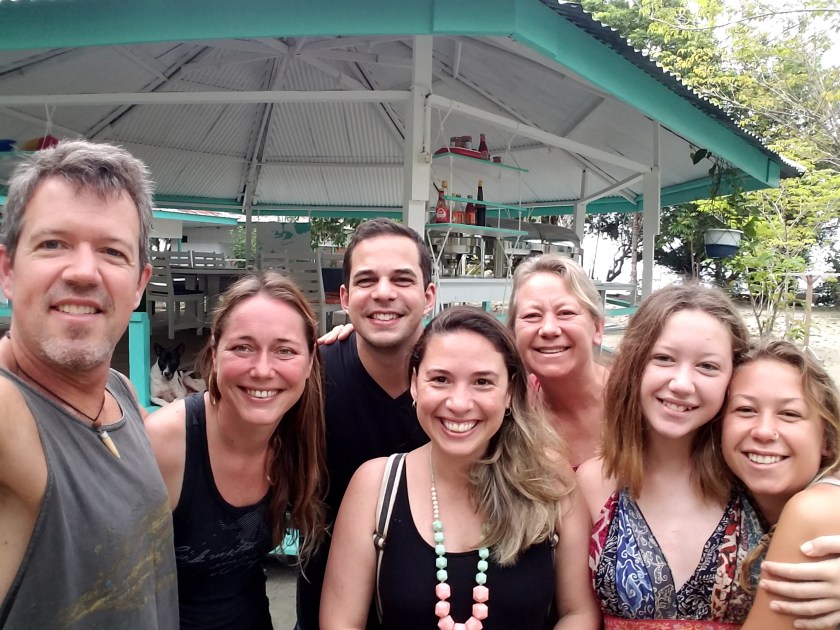
We spent the rest of the day visiting 3 snorkel sites (the Brazilians Philip and Renata couldn’t dive) where we all agreed we had the best snorkeling encounters of our lives. The visibility was great, the corals thick, healthy and colorful and so many fish, from several sharks on every dive, barracuda, different species of trevally (including a few 30+ pound Giant Trevally) and countless crazy reef fish and nudibranch. At the third site we drove our boat on a small island’s white sandbar an hour before sunset, a colony of noisy fruit bats squabbling in trees above us. There we snorkeled shallows where juvenile reef sharks, blue spotted rays and Picasso triggerfish competed for our attention. That night we all felt that we could leave Raja Ampat content that we’d fully experienced its fabled waters.
Friday we spent a wavy, cloudy afternoon visiting 2 dive sites, then today (it’s now late afternoon on Saturday) we went for two dives in glorious calm, sunny weather. Both were spectacular and the first dive we all agreed was the best we’d ever done, including what I remember of that incredible stretch of Sinai snorkeling I’d done 33 years ago, my previous high bar. Highlights were large 2 wobbegong sharks (check out this short video https://www.youtube.com/watch?v=mbv2DhcKAh4 ) alligator fish, stone and scorpion fish, numerous fully grown white and black tip reef sharks (too many to count), lots of big trevally hammering large schools of terrified baitfish, tuna, Spanish mackerel and barracuda. A large school of giant bumphead parrotfish (maybe 80 to 100 pounds each) grazed on coral that Ella swam amongst, camera rolling. To list some of the impressive small stuff, besides colorful nudibranchs we saw 2 species of pygmy seahorse, frogfish, both ghost and ringed pipefish, and a ridiculously amazing blue-ringed octopus, arguably the most deadly (not dangerous) creature in the sea. It was small, about golf ball sized, and continually pulsed from blue to red along with flashes of a seemingly endless spectrum of rippling hues. It was on the edge of a coral bommie and our dive master kept it from hiding using her steel poker, gently nudging it in a visible position until we’d all had our fill of staring at its shimmering, shifting colors and cute, pudgy body and arms.
Tonight at sunset we’ll head out on the boat again for our final dive. It will be the first night dive for all of us and I’m curious what we will experience that’s different from daytime. Helen will join us, only her second dive in R4 where for the rest of us it will be dive number eight. She had a couple of mishaps, the first being a pretty bad sunburn on our first all-day snorkel adventure shortly after arriving. Poor kid got fried without us realizing and that kept her out of the sun for a few days and unable to put on a wetsuit so she missed our first dive outing at Scuba Republic. She was recovered enough to join us for our amazing 3 location snorkel adventure 2 days ago so that was great. Then yesterday, our first dive was a backward roll entry off a heavily rocking boat. She was, in hindsight, positioned a bit too close to the diver on her left (a Chinese guy named Qin who joined us from another homestay yesterday and today) and hit her head on his tank as we all entered the water together. She got a big goose egg bump on her head but it also freaked her out. Doing this dive entry involves everyone simultaneously falling backwards off a boat, a scary maneuver for anyone, and over these last weeks she’s bravely gotten past her understandable apprehension. She spent some time on the surface in really wavy conditions, crying and hyperventilating, then settled down enough to go down with the rest of us though with her head hurting and feeling somewhat in shock she didn’t enjoy the dive. Poor kid. Today her head still hurt a bit and she decided to stay home to rest while the rest of us went out. Then just now (it’s about 5:30) she announced that she’s feeling better and wants to join us for tonight’s dive adventure. Stay tuned and I’ll let you know how it goes for us all.
We just took off on our flight from Papua back to Sulawesi. Last night’s dive excursion already seems like a dream. Helen did great, overcoming her fear by rolling backward off the boat into inky calm water and a spray of bioluminescence. The dive site was a sandy location a quick 10 minute boat ride down the coast from our bungalows. As light faded we were briefed by Dana (our Czech dive master) on a set of flashlight signals and other nighttime protocols. The ocean seemed alive on the ride over with fish jumping across the water and out of our path as we raced along under emerging stars. In the water we gathered on the surface, each clutching our own waterproof torch, then descended together down through 20 meters of darkness to the ocean floor. Dana had told us we’d move slowly along the bottom, looking for nocturnal creatures within the arc of our lights. Almost immediately we saw 2 peacock flounder rising together belly to belly off the sand in an obvious mating behavior, some colored fluid visible between them. They seemed oblivious to us as our beams lit them up in the clear water before they settled back down to blend with the sand.
From there we made one startling discovery after another. Everything we saw, with the exception of a few familiar creatures like clownfish and angelfish, was strange. Later that evening back at the pavilion we checked reference books to confirm what we’d seen and here’s a list. Check these creatures out on google images if you have time. Each one was crazy and fascinating, real life monsters was how Ella described them when back on the surface. During that 60 minute dive we saw two freckled frogfish, several zebra lionfish, a dwarf cuttlefish and a flamboyant cuttlefish (both pulsing with a rainbow of changing colors), a spiny devilfish, two long horn cowfish, a slender tail moray, several species of scorpionfish, a jellyfish carry crab and also a decorator crab, a coconut octopus and also another blue-ringed octopus, our second that day. Dana (pronounced Danna) has only seen a few blue-ringed octopus during her whole career as a dive master (including 3 years in Raja Ampat) as they are very small and camouflage perfectly in corals where they typically hide. Simply crazy to see two on consecutive dives, this one walking along the sandy floor on its stubby legs, then swimming a little way up into the water, alarmingly close to Dana’s hand as she held her light on its colorful pulsing body. We got to look as long as we wanted at each creature, as they were all exposed on sand and never swam away from our flashlight beams. We were all giddy with excitement and discovery, barely remembering to keep an eye on our glow in the dark air gauges. When we finally surfaced Anna and my tanks were almost empty (at 20 and 30 bar) and we were all high on adventure and amazement. The ride back, with bioluminescent sparks lighting up the sides of the boat, was dreamlike. After an icy Bintang, a late dinner and a thorough debrief on all the wonders we’d beheld, bed felt great and leaving this morning seemed appropriate after so fully experiencing this stunning corner of Indonesia.
And so ends this chapter of our travels. Tomorrow, after spending tonight in Makassar, we say goodbye to this amazing country and fly to Kuala Lumpur. Our plan now is to spend three nights there while visiting a friend and sightseeing, then fly to Cambodia for 6 nights and Vietnam for 6 nights. Then, before we know it we’ll be boarding a plane for the long flight from Hanoi to Zurich, kicking off the last leg of our trip with 3 weeks in Europe before lake and family and journey’s end.
Can’t wait to see you all and so much love,
Doug”
 Strout Family Year of Travel
Wow! What a lot of excitement. Glad to hear Doug is okay. I often wondered about the variety of creatures you’ve encountered. Cuttlefish are absolutely amazing and out if this world in their ability to super morph…even when swimming atop a checkerboard they can camouflage like, a checkerboard! Their physical makeup is very unique and they have intelligence to reason. One of God’s baffling designs. How blessed we all have been to have shared in your experiences. I’m sure you’ve all grown in ways that you yourselves may not yet have realized until you decompress. It will be fun to give you all a hug again and perhaps hear stories face to face although you may just want to chill awhile. Much love, Ingy
LikeLike
Beautifully put, Ingy. All very true! You’ve been our biggest fan! It’s been lovely having your interest. I’m feeling a bit lost my first few days home, but I know it’s a big transition. I am so, so glad we made this trip, and a bit sad it’s over. But, there will be more adventures in the future, and the adventure of everyday life here! Really looking forward to seeing you. Love, love….Anna
LikeLike