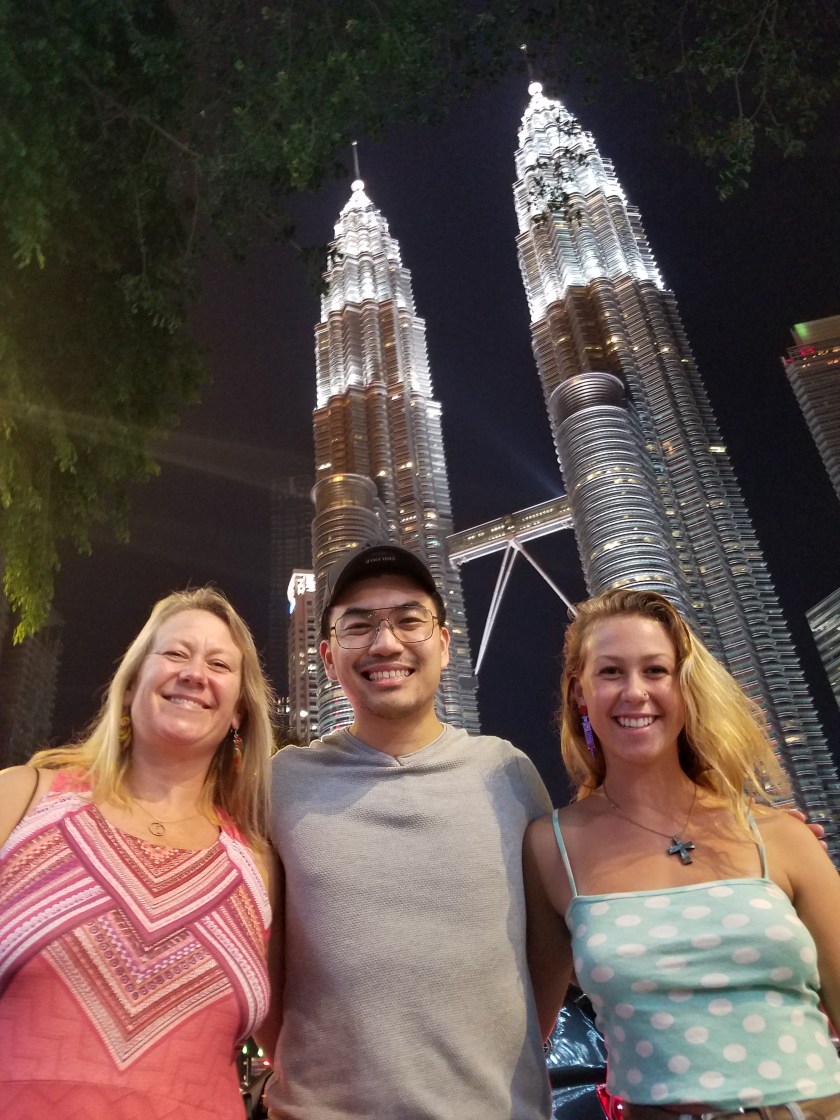
We paused in Kuala Lumpur for just three days; despite taking 12 months to travel we feel we have run out of time to see and do all we want to! In Kuala Lumpur we arranged to meet Alex, a sweet friend of my friend Ruth Grady. His fiancee Sunnie (former Cape Elizabeth exchange student) was out of town while we were there, but Alex treated us to a great local meal and a little sightseeing. The rest of our time in Kuala Lumpur was spent enjoying this exceptionally clean, prosperous city that doesn’t go to sleep, and follows road rules!
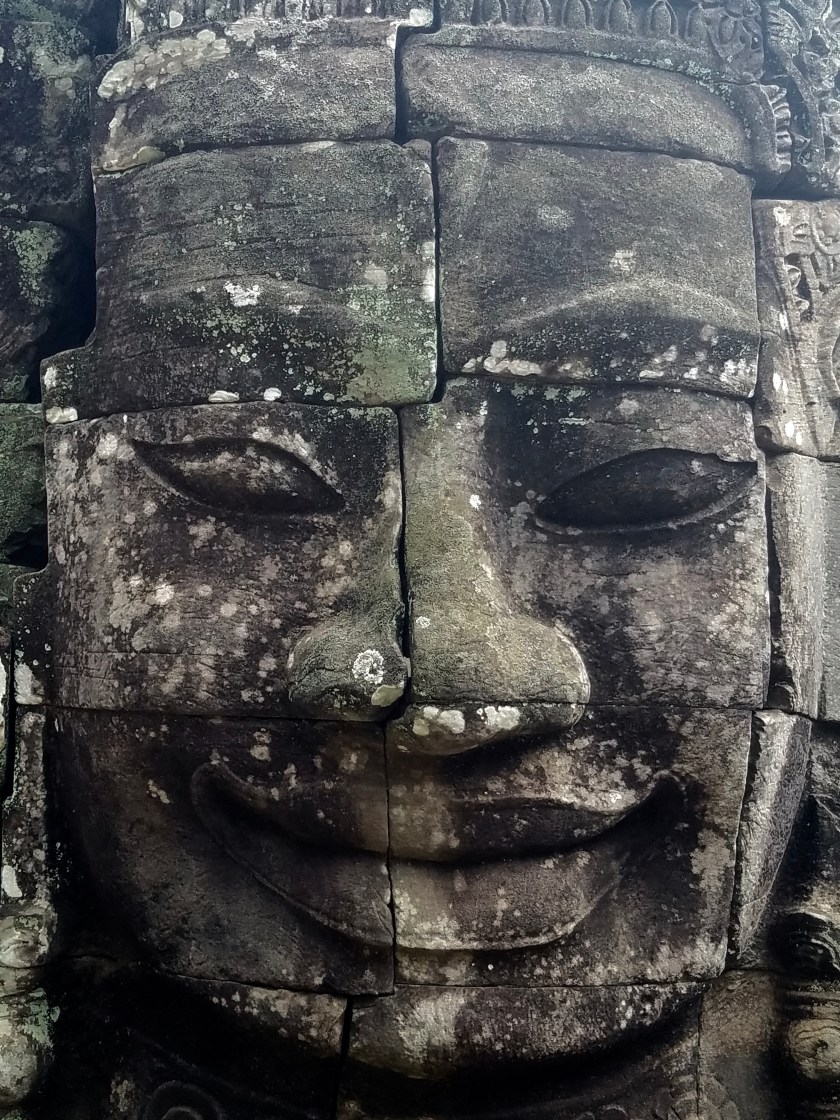
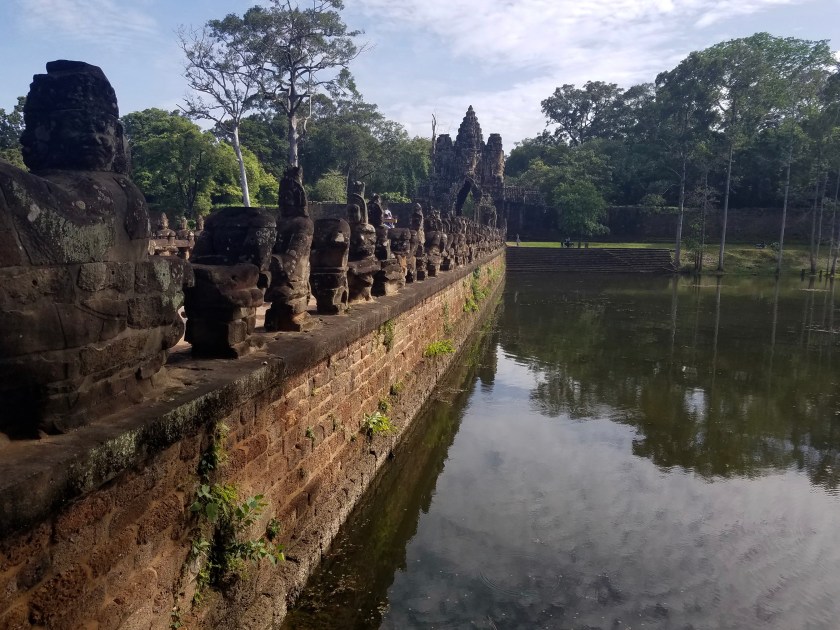
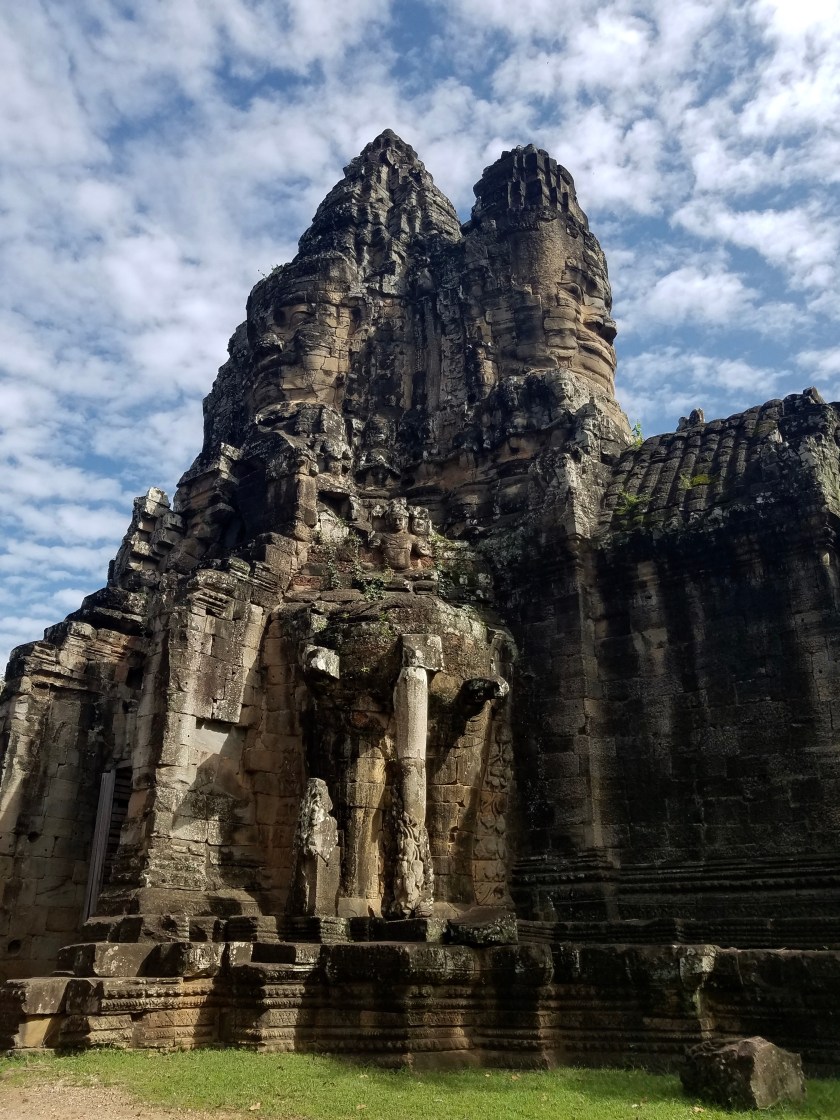
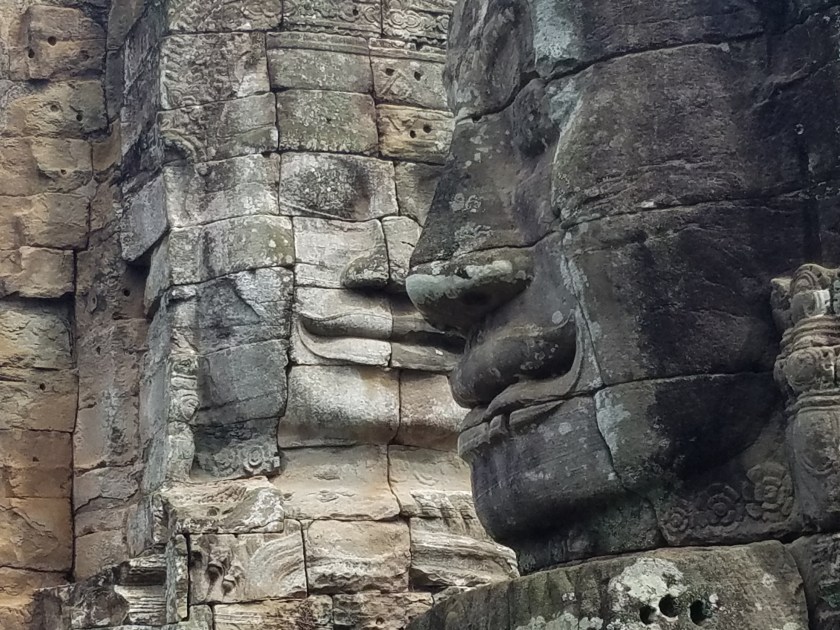
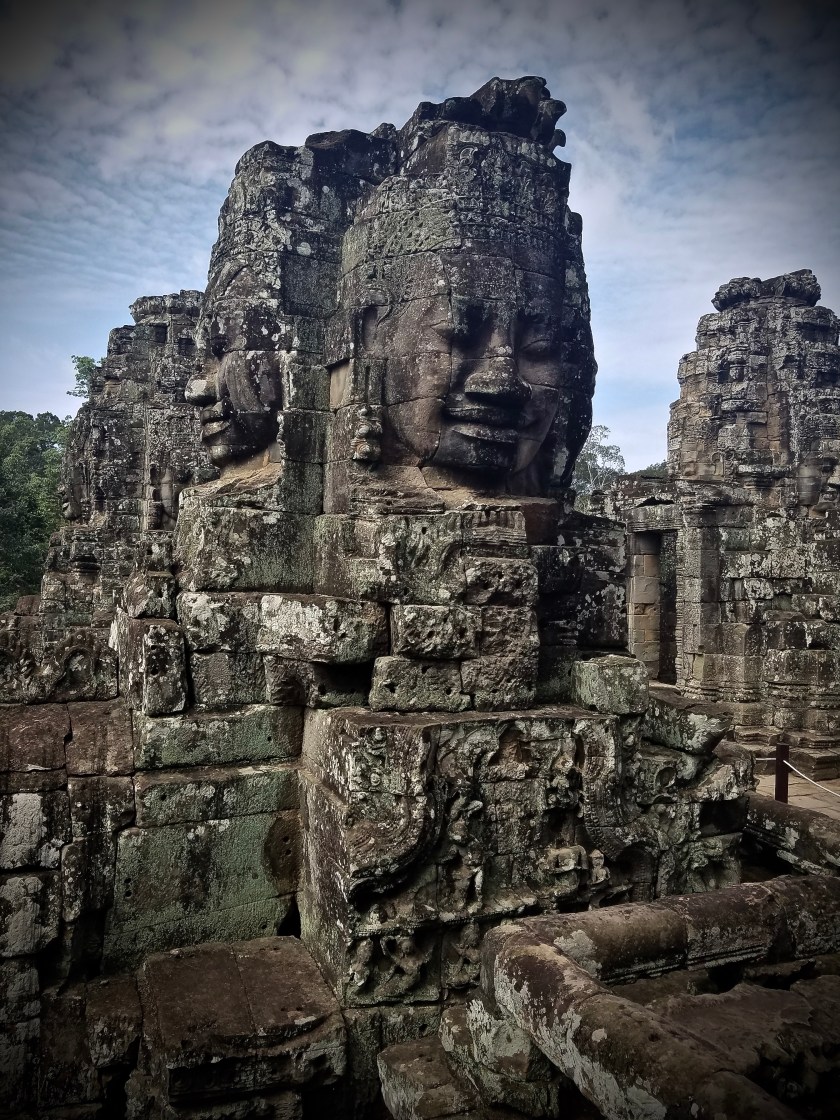
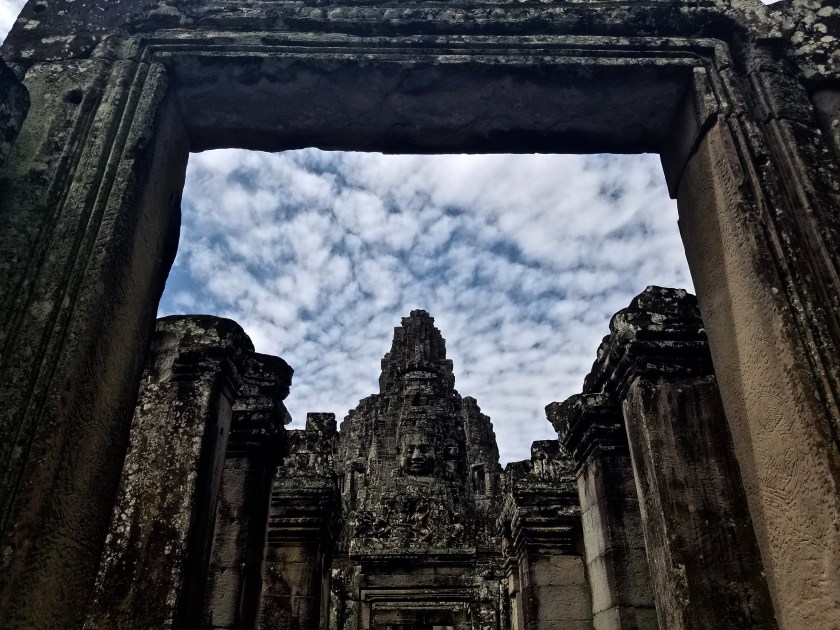
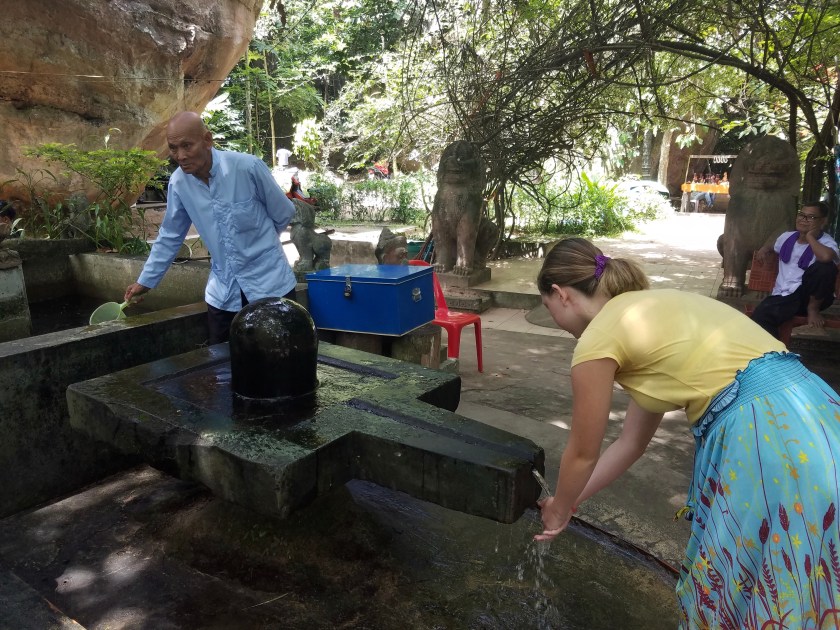
Though we spent only four days in Siem Reap, Cambodia, it was an extraordinarily rich trip. I felt a strong affinity towards the people, temples, food and life here. Angkor Wat (understandably the most visited Hindu temple in the world) and its surrounding temples are stunning. The wild trees growing through the Pra Thom Temple were magical, and now even more famous having been featured in the movie Tomb Raider. Each day we’d experience fabulous cultural sites with our kind guide Sunny http://smilecambodiatour.com/ , always returning to the air conditioned van for ice cold water and face cloths to ease the intense heat.

-
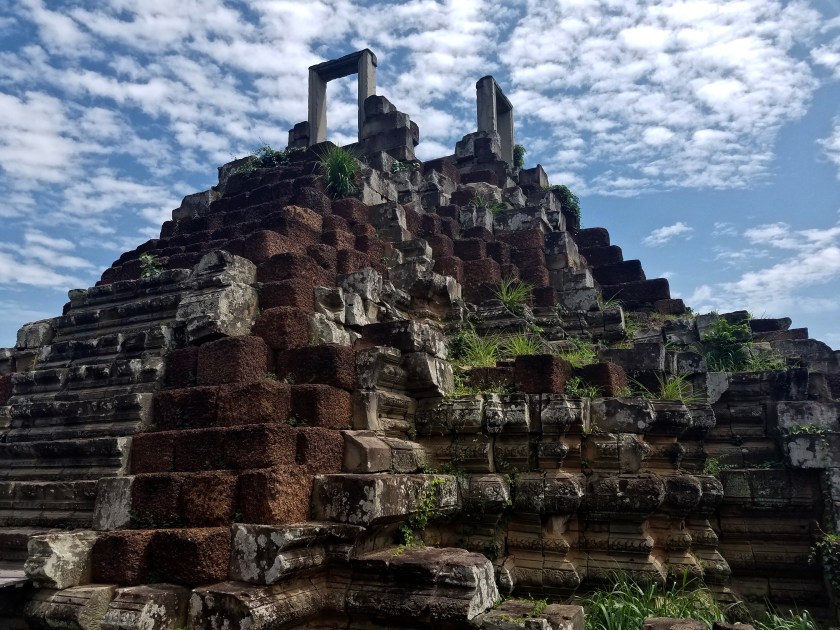
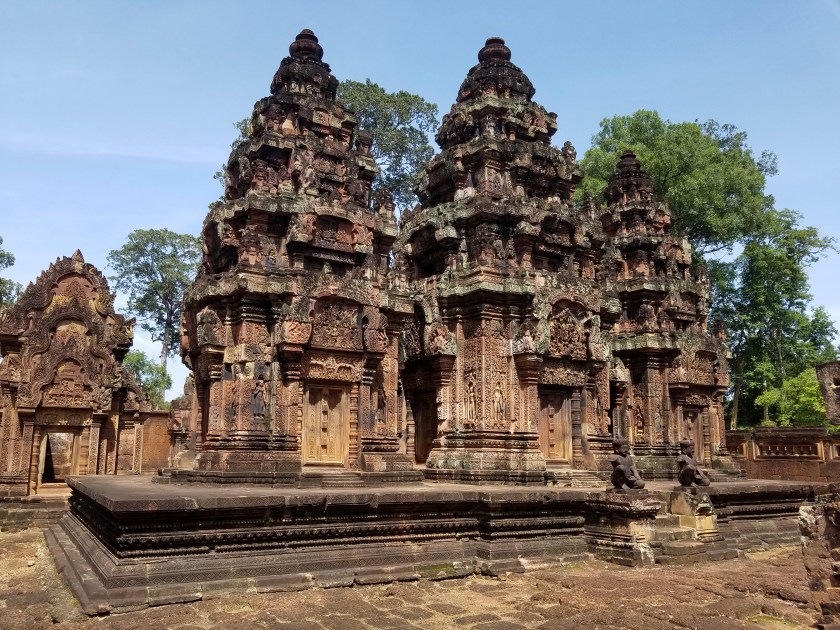
Baphoun, representation of Mount Meru
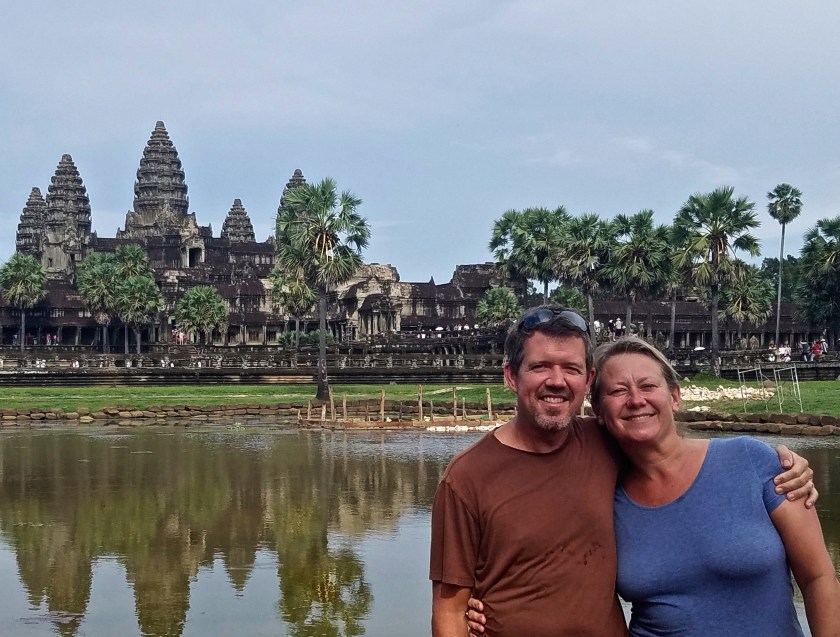
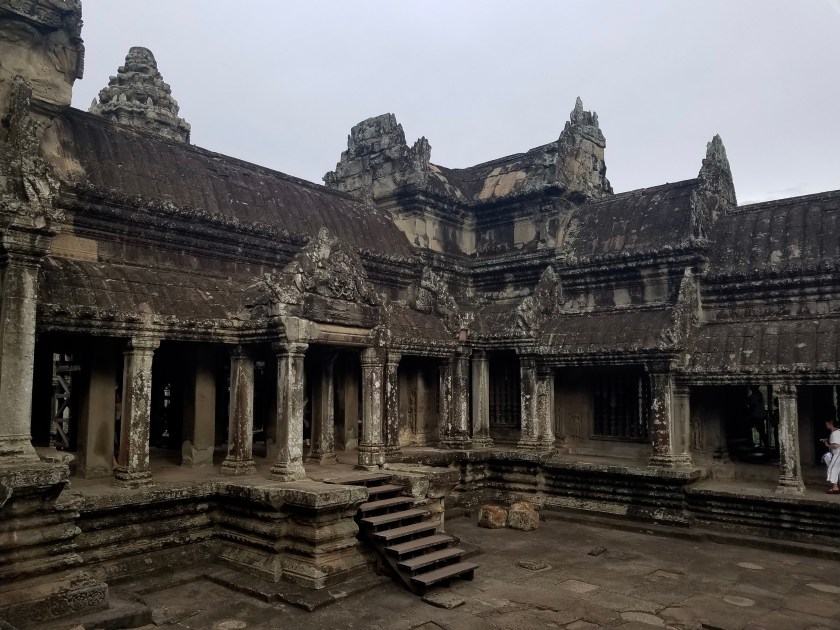
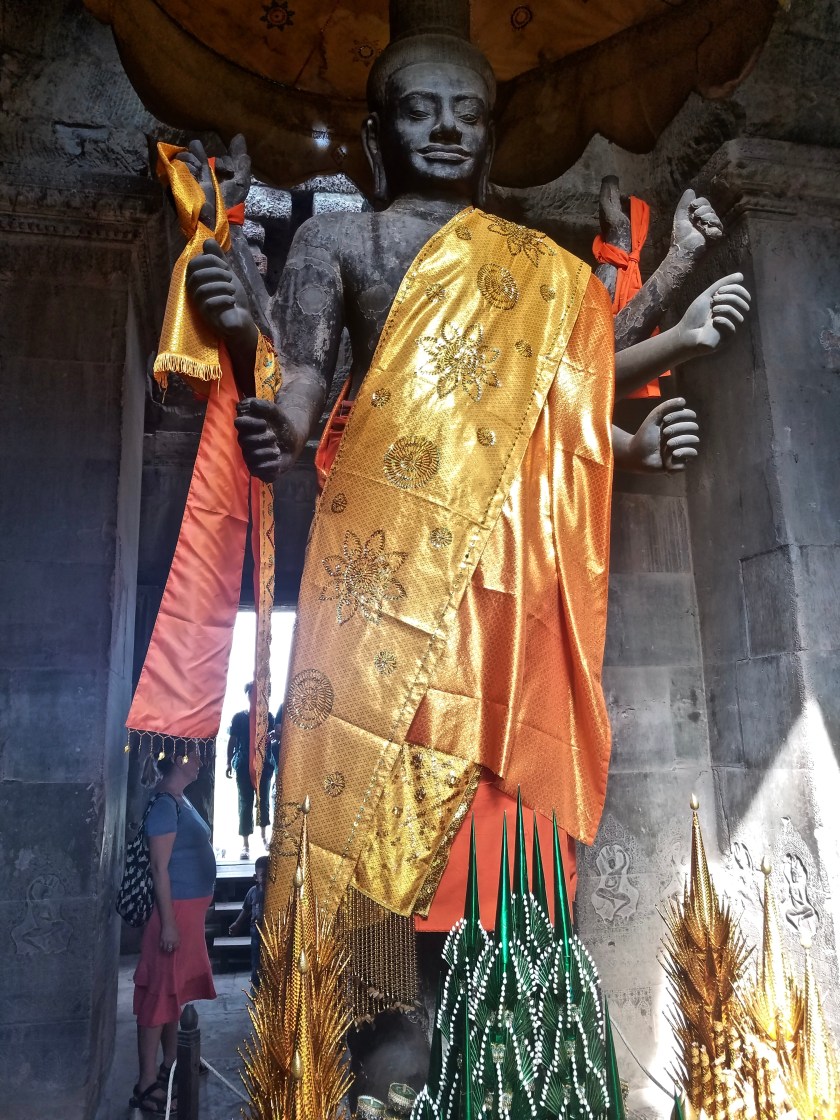
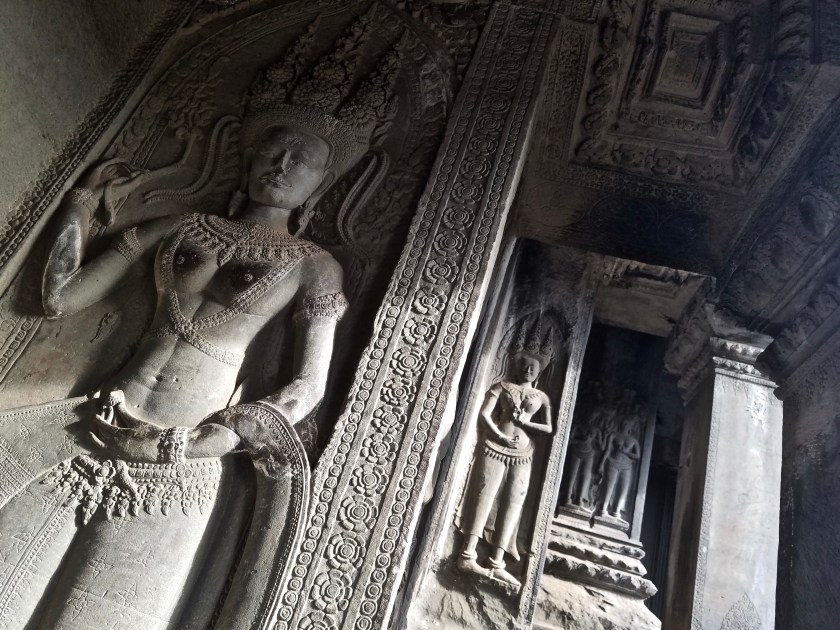
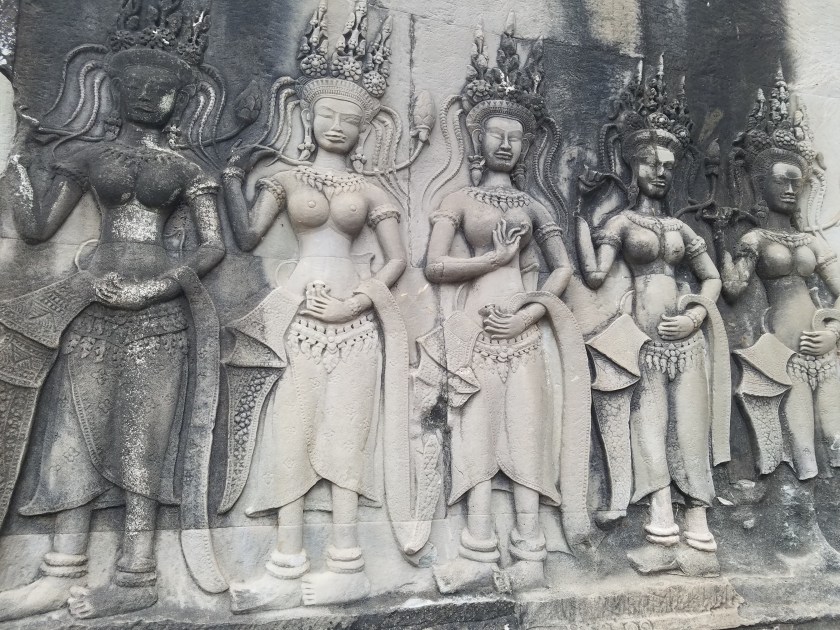
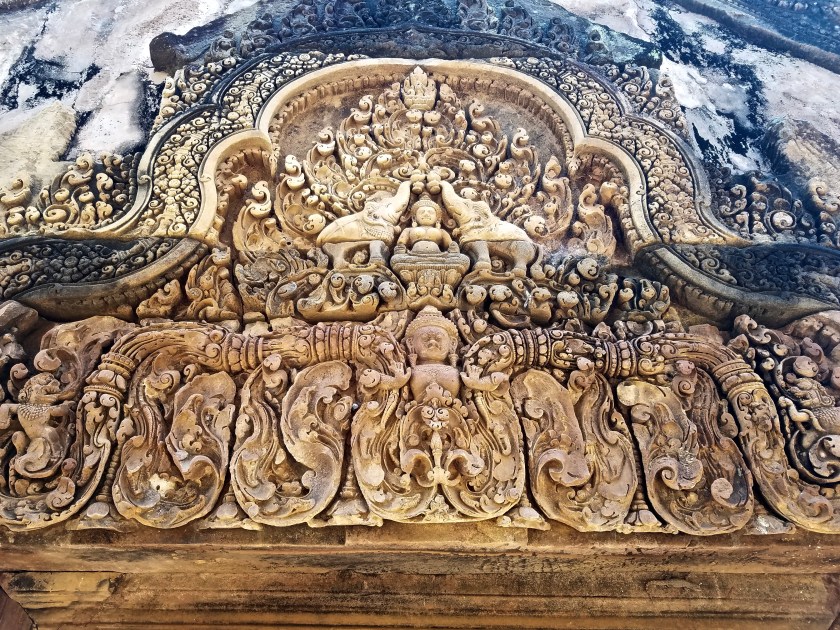
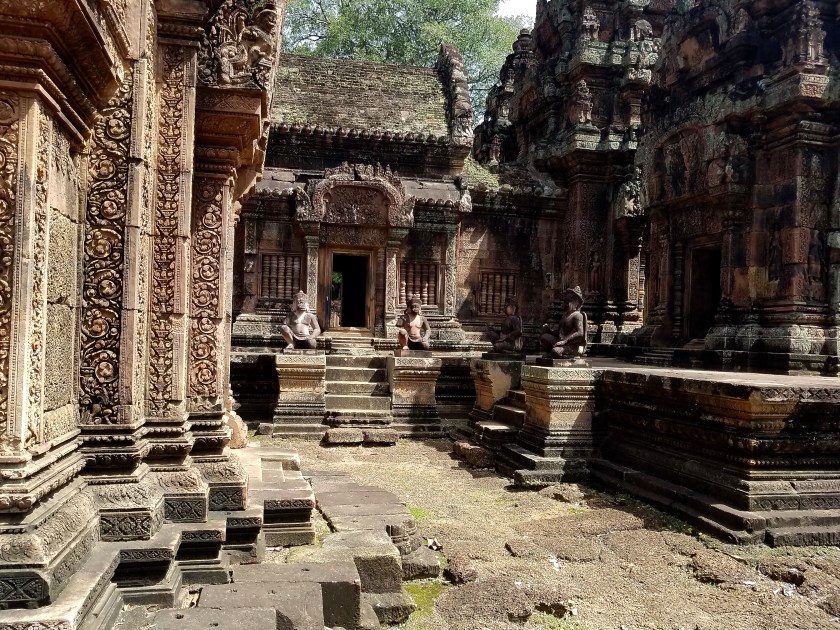

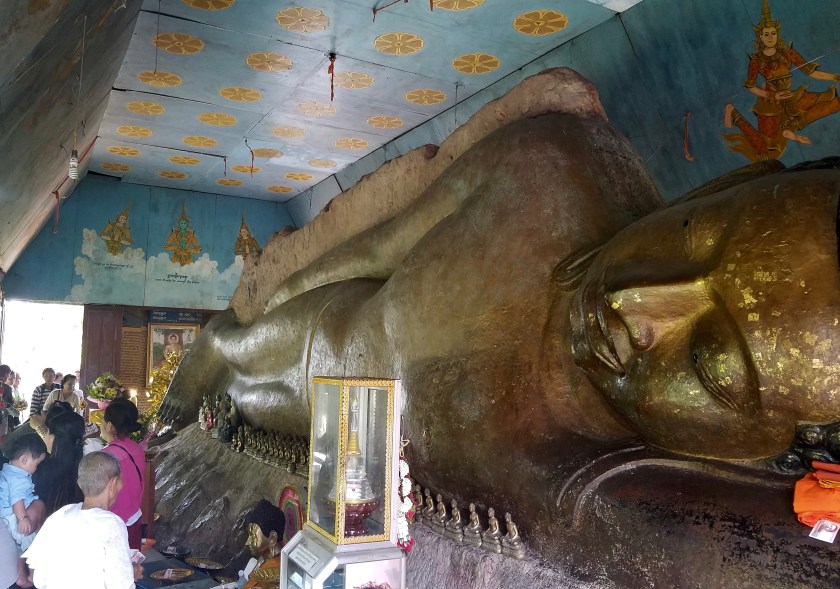
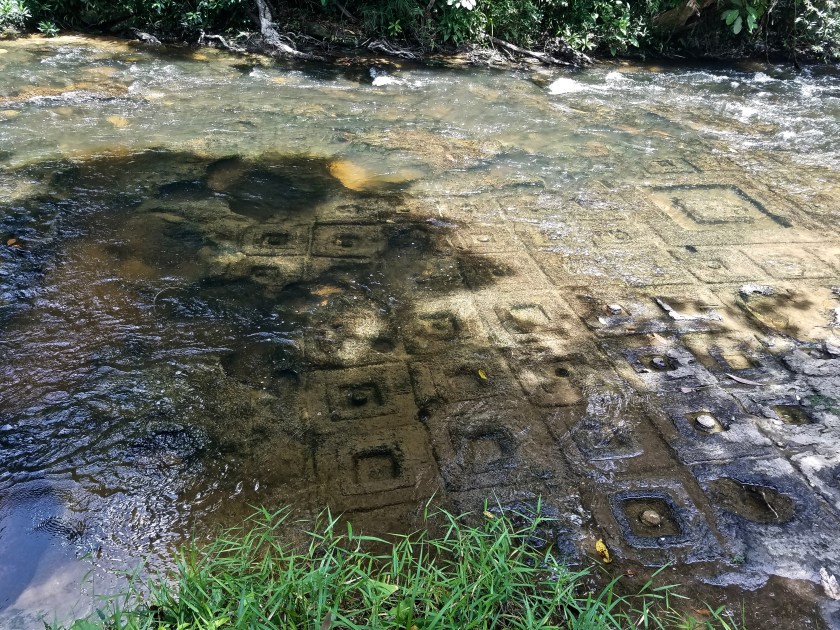
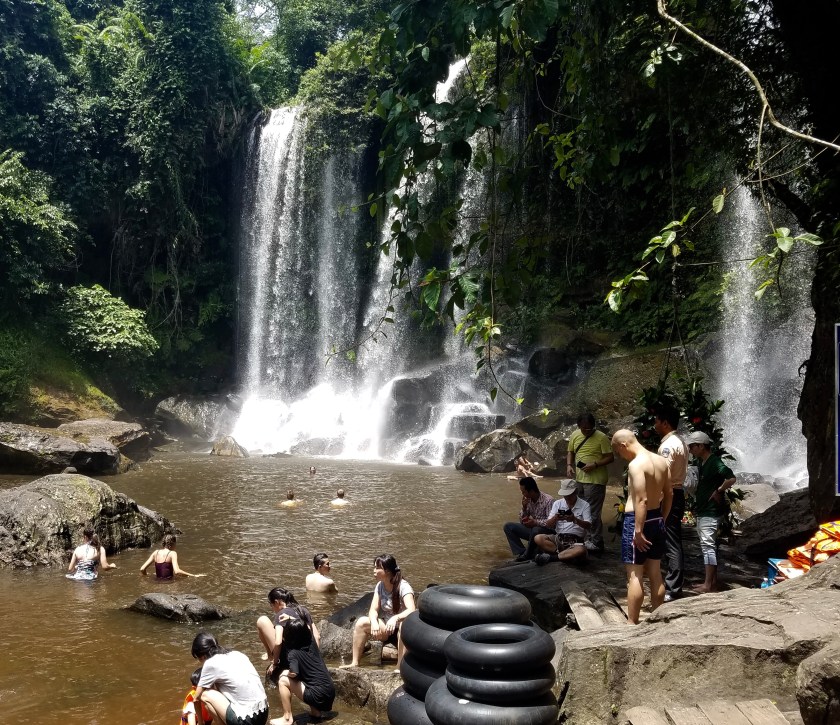




-
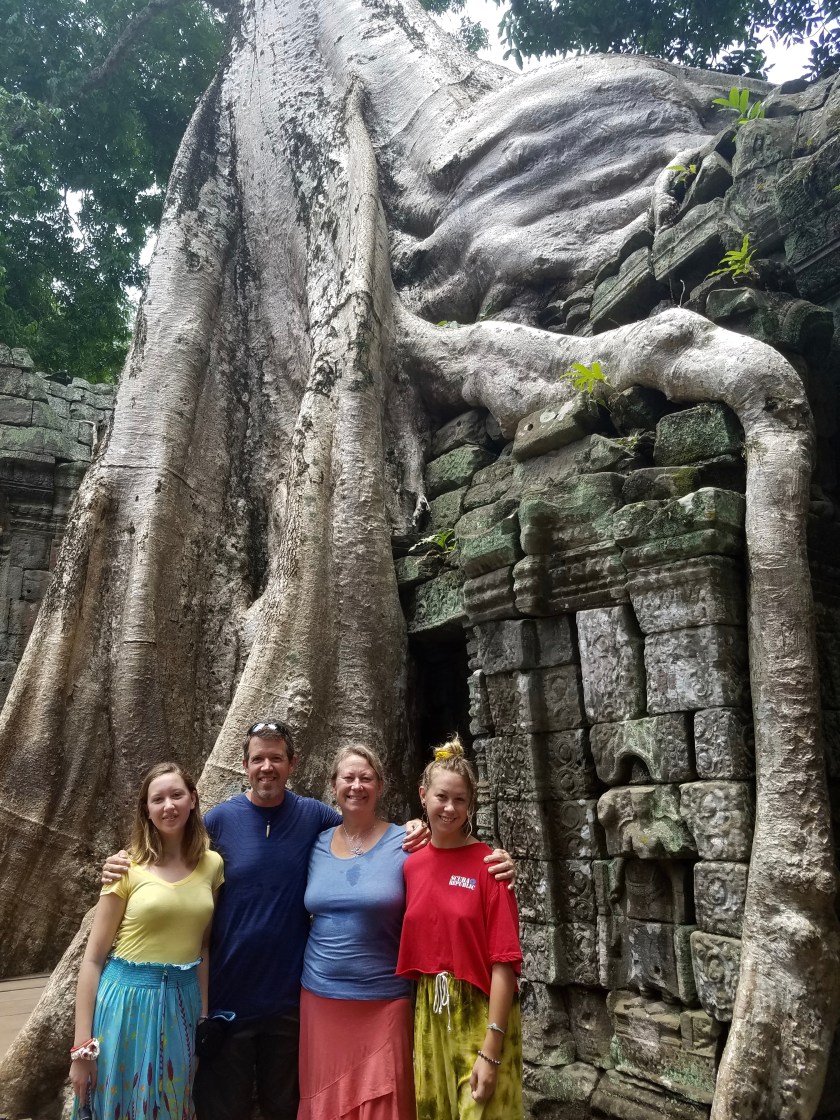
12th century Hindu temple, Ta Prohm
Our 45 year old wise, sensitive guide Sunny thoughtfully shared some of his knowledge and experience of the mass genocide by the Khmer Rouge Army that occurred between 1970 and 1975. He was 2 years old when his father and uncles—identified as educated and successful—were taken and killed, leaving his mother with 3 young children. Over the four days we spent with Sunny, he bit by bit shared some of his memories, including sleeping in trenches during his childhood (as it was safer than sleeping in one’s house that could be burned by Khmer Rouge guerrillas), and having school classes taught under a tree, as the schools had been burned. At age 18 he had to serve five years in the Army, and was one of the lucky men who did not die of malaria or landmines. He now has a wife and three daughters, one in medical school on an academic scholarship. The resilience of Cambodians is palpable. While I had known a little about the killing fields where Pol Pot had 2 million Cambodians slaughtered, I hadn’t realized the extent of this horrific part of history. Nearly 3 million people died, about half from killing and the rest by disease and starvation. All people who were educated, considered wealthy, had any past connection with westerners, practiced any religion, or made any attempts to own property were sent off to be “rehabilitated”—brought to the killing fields for enslavement and death. (Doug has written a bit more about this extremely painful and grim part of history in his letter at the end of this post. I am also including a link to some historical facts about this devastating tragedy: https://www.commondreams.org/views/2007/05/13/bombs-over-cambodia-new-light-us-air-war) One thing Cambodians have consciously done is to leave the remains of those killed in the 1000 or so different killing fields, so people can remember this horror and not allow history to repeat itself. Most of the actual fields are north of Siem Reap in Phnom Penh, but we did go to one site where remains had been collected and placed in a Buddhist temple area, along with story boards and photos to educate people. It was unfathomable and heart-wrenching. I recommend the book First They Killed My Father by Loung Ung, written from her own childhood memories during this horrific time.
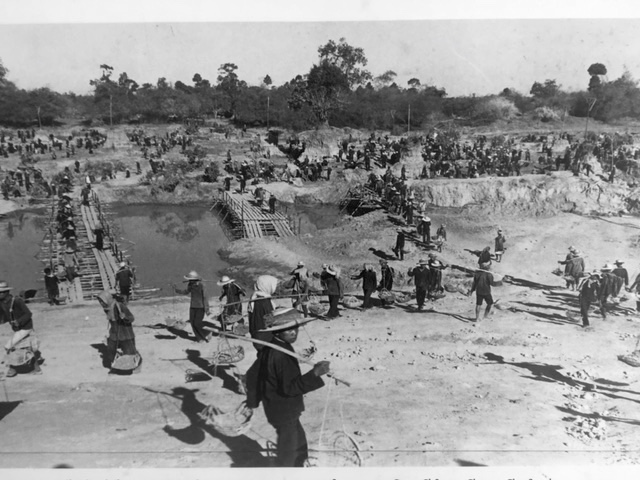
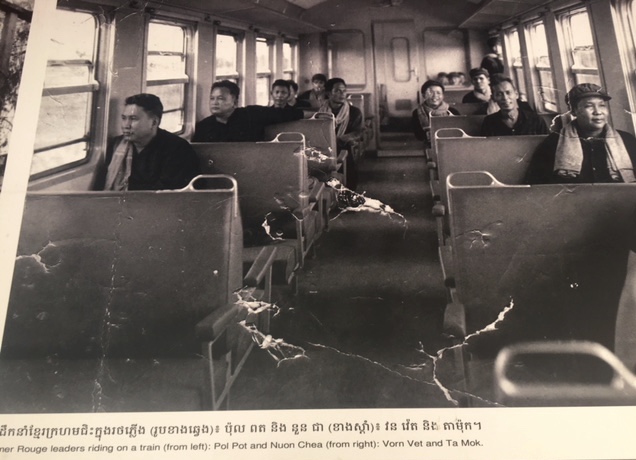

We know we want to return to Cambodia, and it will be interesting to see what changes happen in the meantime. In the past 10 years Siem Reap’s population has grown from 30,000 to 200,000, largely due to Cambodians moving to this city to benefit from the burgeoning tourist industry. Hopefully change will also entail truly democratic elections, and freedom from prosecution for speaking one’s mind. I hope the growth doesn’t take away from the authenticity and beauty of Siem Reap and its people. It is a special a place with amazing people, and deserves to be honored and preserved.
-
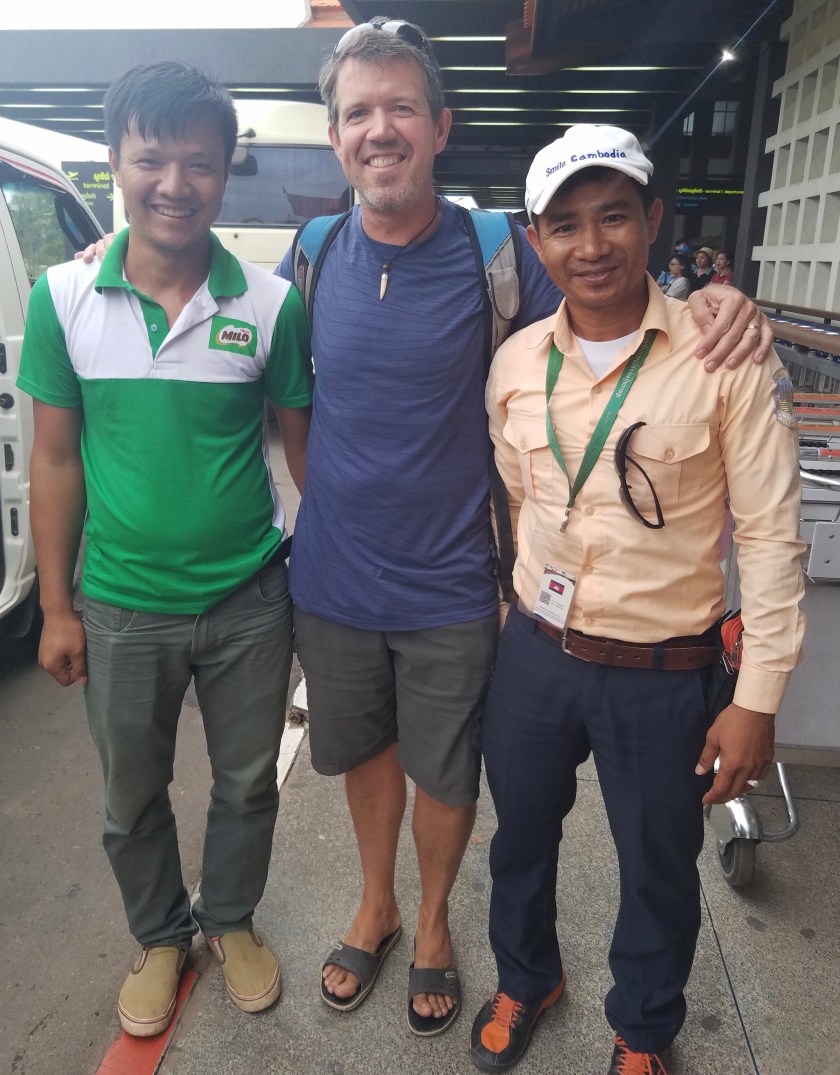
Our driver Om, Doug and our guide Sunny
July 2, 2018 Doug’s letter home
“When last I left you, gentle readers, Raja Ampat was receding into the distance as our plane flew towards a setting sun back to Sulawesi. After a night in a rather glamorous Makassar hotel (imagine high ceilings, big art, large swaths of marble and the best buffet breakfast we’d had in Indonesia) we headed to the airport yet again for a quick 2 hour flight west to Malaysia’s capitol city.
Kuala Lumpur was stunning and we all felt the culture shock. We stayed 3 nights in a high rise Airbnb apartment downtown near the famous Petronas Towers (tallest in the world), twin skywalk-connected rocket ships, futuristic and dazzling after dark. Other modern skyscrapers clustered the area, fancy electronic billboards streamed hi-def video, trees lining streets glowed with fairy lights, sidewalks were wide and clean and motorists followed traffic rules. We ate at lovely vegan restaurants and wandered through glamorous high-end shopping malls feeling decidedly underdressed in our simple backpackers attire.
Our second night in KL we connected with the fiancé and brother of a former Cape Elizabeth exchange student whose host family Anna knows. Sunnie herself was visiting family in Taiwan but connected us with Alex and James who hosted us at their favorite Malay restaurant in a nearby suburb. After dinner James headed off to an evening job and Alex (owner of a popular restaurant and music venue currently closed for upgrades and relocation) drove us on a nighttime sightseeing tour of downtown. We were touched by their warmth and generosity and hope they make it back to Maine sometime soon and give us the chance to reciprocate.
With our remaining days in SE Asia now so limited, decisions were made and all-too-soon we tore ourselves away from the bright city lights and caught a plane to the cultural center of Cambodia. Siem Reap is flat, hot and steamy and full of good food and friendly locals. We all loved it and agree that the short time we spent there was just a taste of adventures yet to come. With a short visit and much to see, we opted for a driver and tour guide to show us the local sights over our 3 day stay. Our guide Sunny started showing travelers around the area about 20 years ago, shortly after Cambodia opened itself up to tourism. Back then things were pretty quiet, and even 10 years ago Siem Reap had a population of around 20,000. That number is now approaching 300,000, the result mostly of an explosion in tourism and the subsequent migration of Cambodians cashing in on the booming city economy.
Nearby Angkor Wat, Cambodia’s largest and most revered temple complex, was designated a UNESCO World Heritage site 25 years ago and currently ranks near the top of Trip Advisors most popular travel destinations. The Angkor Archeological Park is enormous, a ridiculous feat of ancient engineering and the world’s largest pre-industrial city between the 9th and 15th centuries. It was awe inspiring to wander through the ruins of this forgotten empire, imagining ancient royalty and armies and elephant troops massing in the colossal parade grounds.
What a fall the region has taken since its heyday a thousand years ago. Their last significant ancient king squandered vast wealth on infrastructure and temple expansion in the 1400’s then gradually neighboring countries learned of weakened armies and stopped paying fealty. War and attrition continued until colonial expansion, when 90 years of a (mostly benign) French protectorate stabilized the country at the cost of many cultural treasures and lost mineral and timber wealth. After WW2, Cambodia’s popular young king gained his country’s independence and their economy and modernization grew over the next 20 years, ending catastrophically in the mid 1960’s. At that time the king, facing tremendous pressure from the cold war superpowers, couldn’t maintain his country’s neutrality and sided with China and Russia in the escalating war in Vietnam. Over the next 10 years America dropped more bombs on Cambodia (almost 2.8M tons) than the total number of bombs (just over 2M tons) the allies dropped during all of WWII. First this was with the intent of driving the North Vietnamese Viet Cong out of the Cambodian jungle, then later in an attempt to protect the pro-American Cambodian general (who had successfully driven the king into exile) from the growing Cambodian Communist forces.
The devastation caused by (first President Johnson’s then) Nixon’s Indochina military campaign, of course ironically led to the rise of the Khmer Rouge and the very communism America was trying to avoid. When the bombing in Cambodia began, Pol Pot was hiding in the jungle with under 5,000 poorly trained and disorganized guerilla fighters. American bombing forced both Vietnamese communist fighters and regular displaced civilians deeper into the jungle where they joined forces with the Khmer Rouge, swelling their ranks to the point where they were able to successfully overthrow the government in Phnom Penh and take control of the country in 1975.
I got a lot of this information from our tour guide, Sunny, and also from the internet. An interesting and informative article I’ve just been reading is at https://www.commondreams.org/views/2007/05/13/bombs-over-cambodia-new-light-us-air-war if you want to look into this any further. Sunny was a baby when Pol Pot took power and began the Cambodian Genocide. His father, a well-educated civil servant, was one of the first sent to the Khmer Rouge re-education camps to be tortured and killed. Somehow his mother, two older siblings and he survived, though he lost various uncles and other family members. In all, between killing anyone with an education or skill or possible ties to the West, and to disease and starvation, it is now estimated that about 2 million Cambodians died between 1975 and 1979.
Not to belabor this depressing history but you are probably interested in hearing how this all turned out to date. In 1978 Vietnam began a border war with Cambodia and after many more tens of thousands of casualties successfully marched on Phnom Penh, taking control of the government in 1979 and forcing Pol Pot and the remains of his Khmer Rouge army to seek refuge inside the Thai border. The Khmer Rouge, supported by China and Thailand, continued to run guerilla raids into Cambodia for the next 15 years. This was the world Sunny grew up in, sleeping in a trench outside his home through his school years as the guerillas would primarily raid at night, bombing and shooting up the public buildings, businesses and homes of Siem Reap. Sunny spent a couple of years around this time helping to build a security fence around the city which was ultimately successful in keeping out the raiding Khmer Rouge. He joined the army after high school and spent 5 years (1990 to 95) on the Thai border fighting the guerilla army. Then in 1992 the United Nations created a coalition (the UN Transitional Authority of Cambodia), spending $2B to set the country up for an election that took place in 1993. Sunny also fought alongside UNTAC troops to keep polling stations safe from the Khmer Rouge who were intent on disrupting the election.
Unfortunately, the election resulted in a strong man (Hun Sen is still Cambodia’s president) who consolidated his power and has been running the country ever since, regularly accused by outside groups of political violence, corruption and media control. Sunny and his family don’t vote in elections any more (like the one coming up this month) as, for example, the most recent opposition candidate was recently charged with treason and thrown in jail. Sounds like a freaky country to be living in as a local right now as no one is allowed to even discuss politics in public places. Sunny was uncomfortable with questions we asked about the current state of affairs and said he simply couldn’t have a discussion with us on this topic.
So there you have it. A fascinating and tragic area of the world with super friendly, beautiful people surrounded by the ancient ruins of what was once the most powerful civilization on earth. At least they are doing better economically as tourism has really grown these last 10 years. Perhaps their single biggest challenge currently is picking up an additional 3 million landmines and un-exploded bombs that still litter the countryside, about half the original number before disposal efforts began 25 years ago. Landmines apparently, besides still causing death and disability to locals, were the single biggest reason there are no large animals left in Cambodia. Sorry, but that’s one more thing for us to cry about. Imagine a country that in ancient times was home to a million elephants and still boasted all the big SE Asian apex creatures prior to our Vietnam war, now reduced to woods mostly empty except for snakes and birds.
And so our family’s year of education continues. Needless to say we’ve been having many interesting conversations and I’ve been impressed with the girls’ growth in understanding and interest of world affairs. I also love their natural empathy for all the disadvantaged people we meet and outrage that powerful nations like ours aren’t better at understanding and providing meaningful assistance to those in need.
I guess I’ll send this off now, then write a bit more about our 10 days in Vietnam. It is July 2nd, our final full day in SE Asia, and tomorrow morning we fly to Zurich for the last chapter of our year’s travels. Exciting stuff and looking forward to each of these next few weeks, especially the part where we get to drive that last few hours up from JFK to the Lake and you all. Until then still feel the love we’re sending down through the world and up through your feet to your hearts,
Doug”
 Strout Family Year of Travel