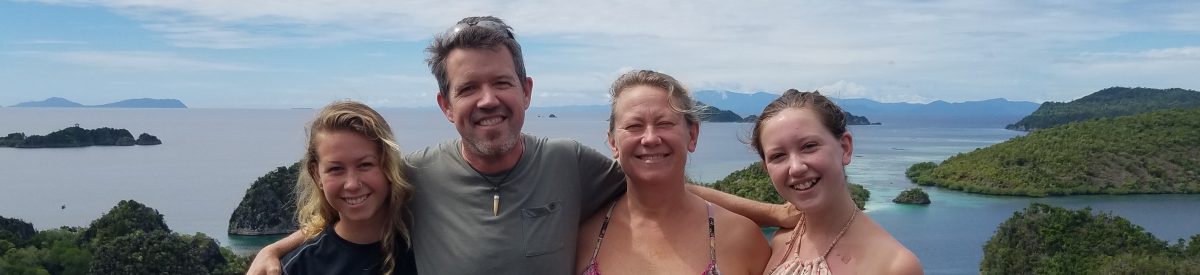
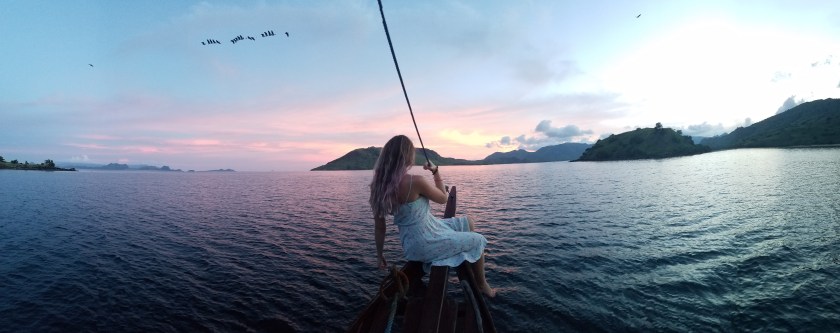
We left Bali just 4 hours ago and I’m already missing it! The island is a striking, spiritual, special place, with extremely friendly people. My first introduction to Indonesia has been everything I could have hoped for after hearing stories all these years from Doug and his family, who lived and traveled the country for many years.
Let me back up…. On February 28 we arrived in Denpasar, a substantial city–though no buildings are higher than a coconut tree–in the southern part of the island of Bali, Indonesia. We had our first tawar (Bahasa Indonesian word for bargaining) with the one taxi driver we chose from over a hundred drivers vying for our business. Doug was feeling pretty good about getting the price from $750,000 to $500,000 rupiah until we later learned a good price is $200,000 rupiah. Oh well, it still was only about $35 USD for an hour cab ride in a nice air conditioned car–pretty good by American standards, and we have now learned to ask our place of accommodation how much we should expect to pay.
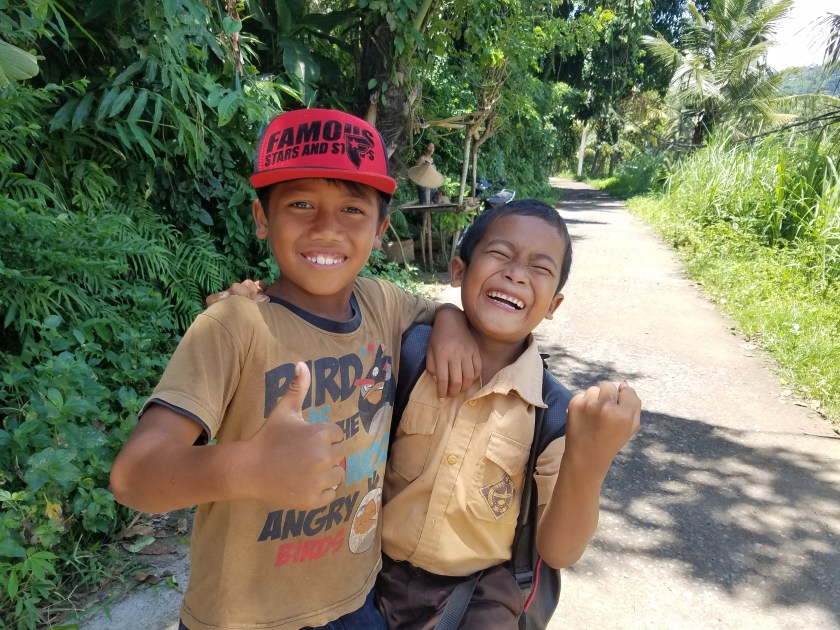
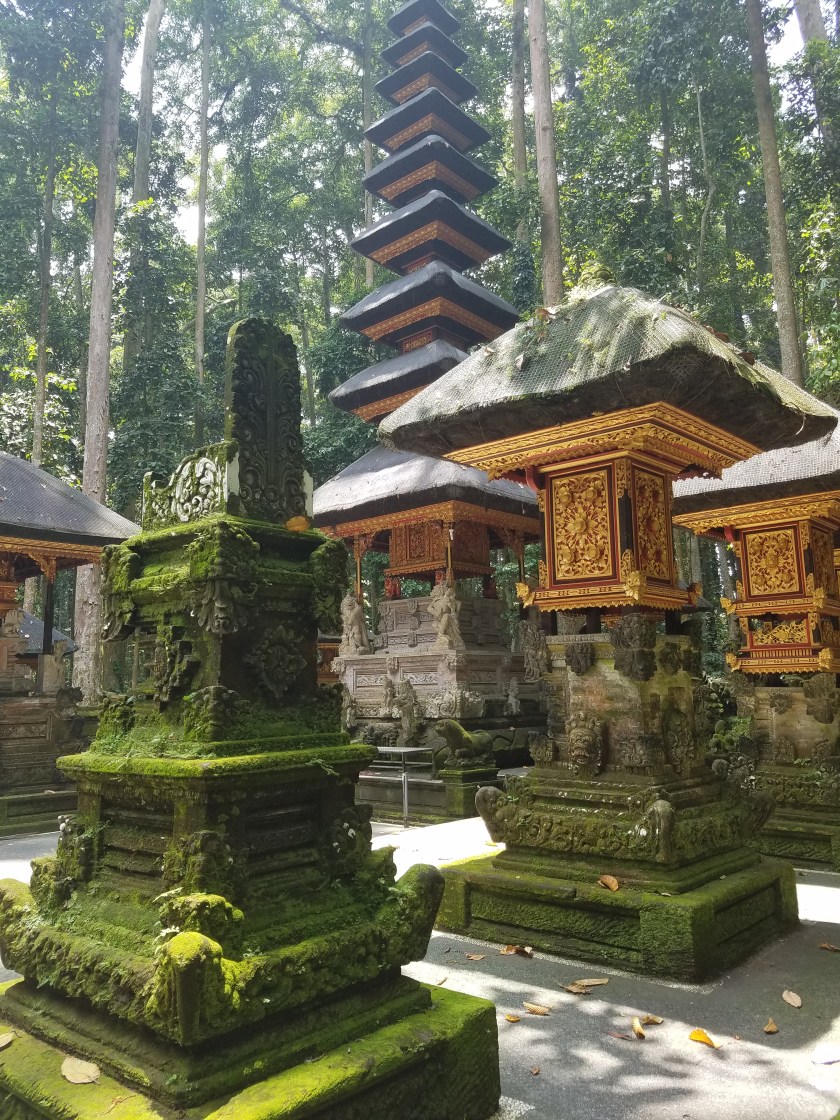
Our drive from the airport was a quick initiation into Bali traffic, where the numbers of cars has had a dramatic increase as the population has exploded. Shortly after leaving city central, roads narrow from four lanes to two, and hundreds of scooters (small motorbikes) with up to 4 people on each one blend between the trucks, cars and vans. What we found surprising is how well everyone merges, largely ignoring lanes and narrowly missing one another. Somehow there is a civility and consideration for others in this wild flow of vehicles, and a horn seems only used to let others on the road know you are going to pass them, or to say hello. No road rage here!
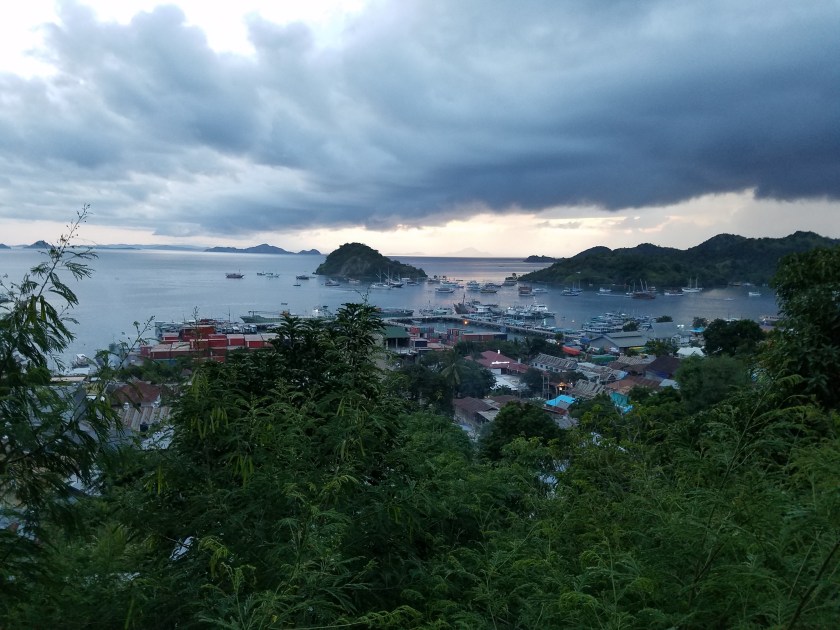

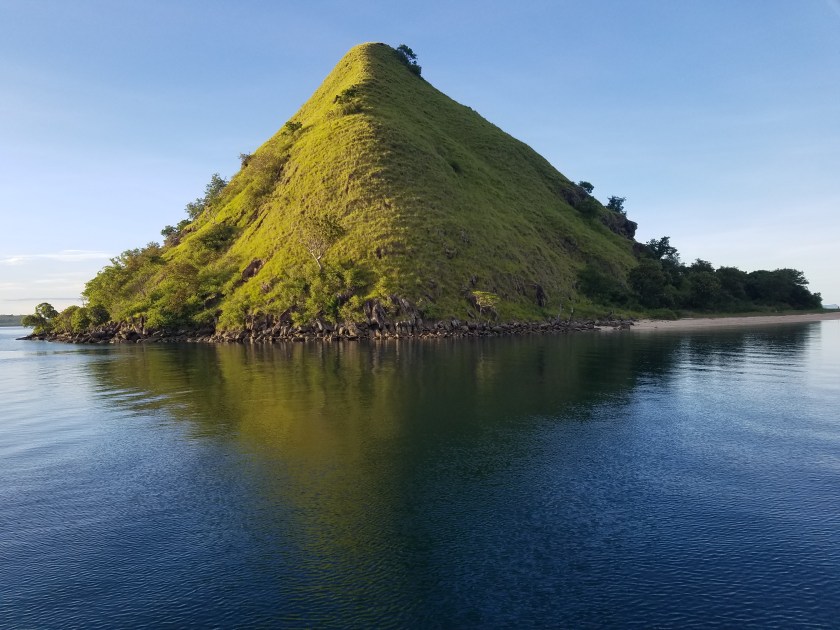
We had just one night in Denpasar before returning to the airport (for half the price, now that we were more savvy) for a short domestic flight to Lebuan Bajo on the island of Flores. Here we boarded a small wooden boat we would call home for the next three days. We chartered this through http://discoverykomodoadventure.com/ to explore some of the many small islands inside the Unesco world heritage area around Komodo National Park. For just $100 USD per person per day we had our private boat, two air conditioned bunkrooms, a crew of 5 (captain, guide, cook and two deck hands), and three very good meals a day. We highly recommend this amazing way to explore such a spectacularly beautiful part of the world, where volcanic islands majestically stand in calm, tropical waters. We were there at the end of the rainy season, rendering the landscape a lush, velvety green. The four of us agreed that being in this setting with one another was, in a word, paradise.
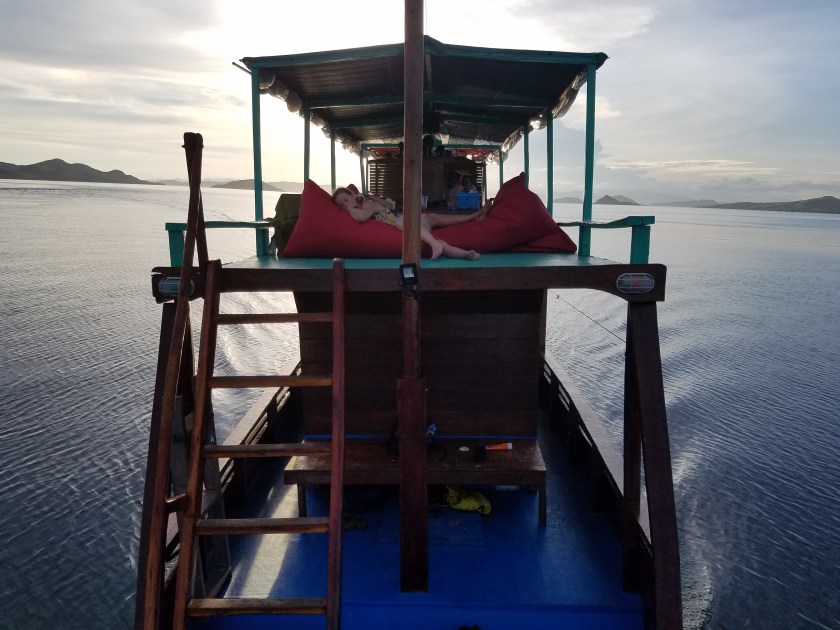


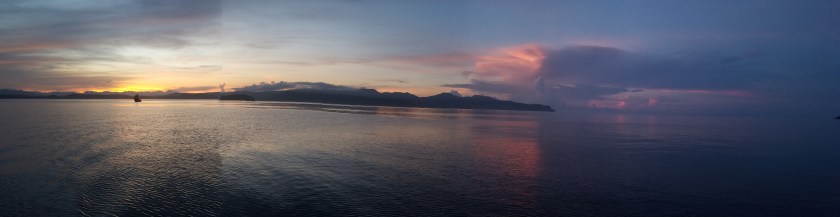


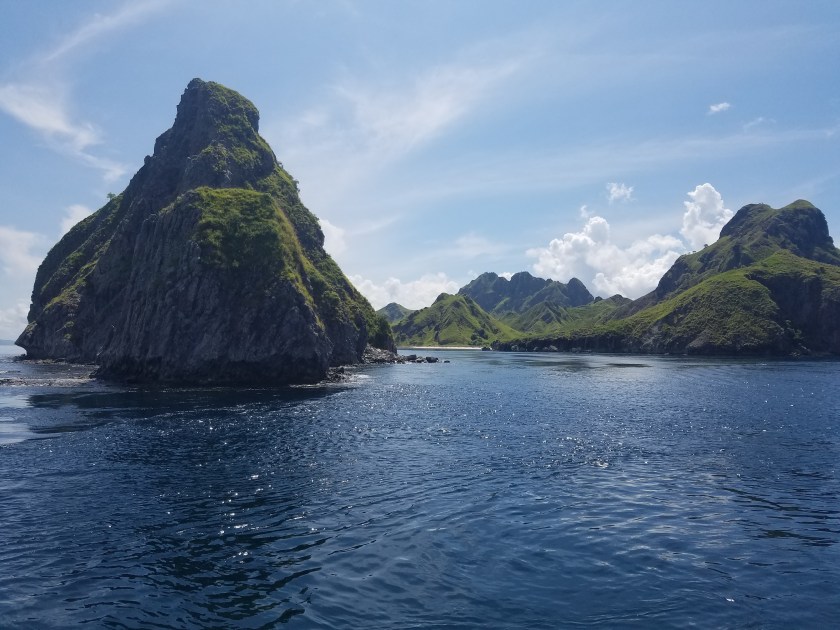
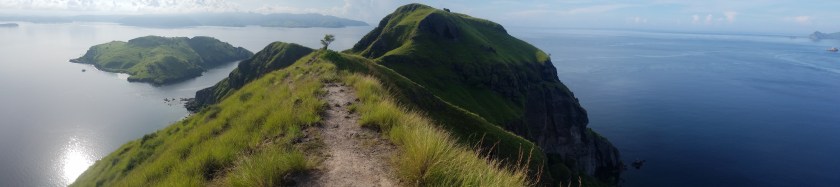
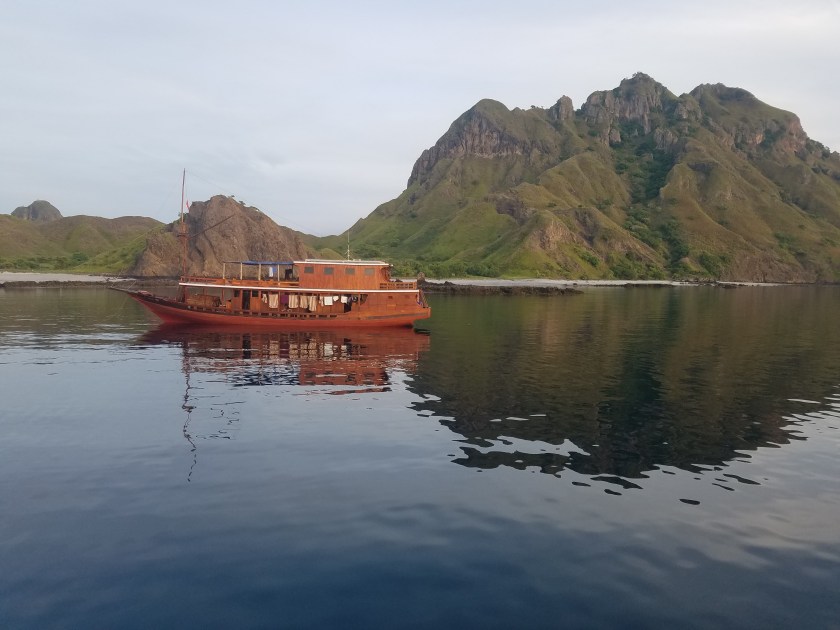

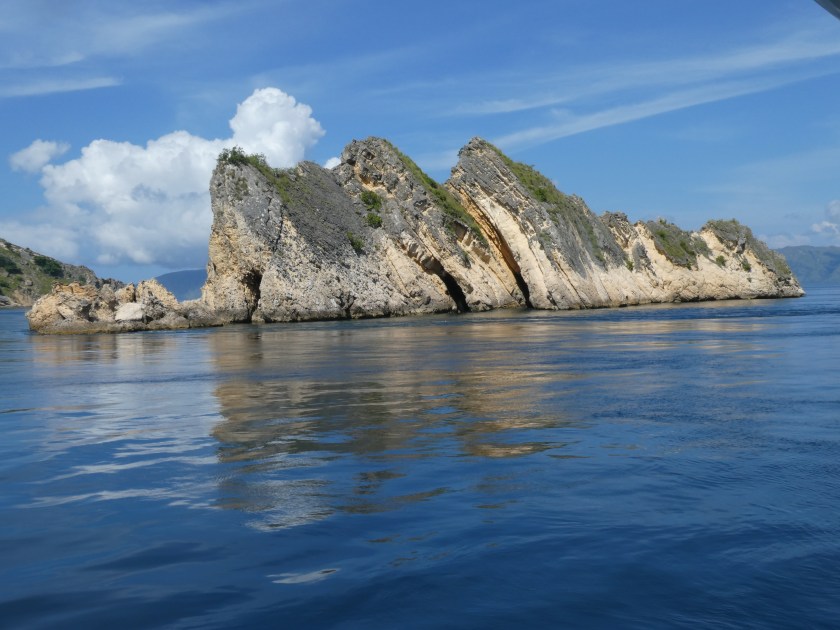
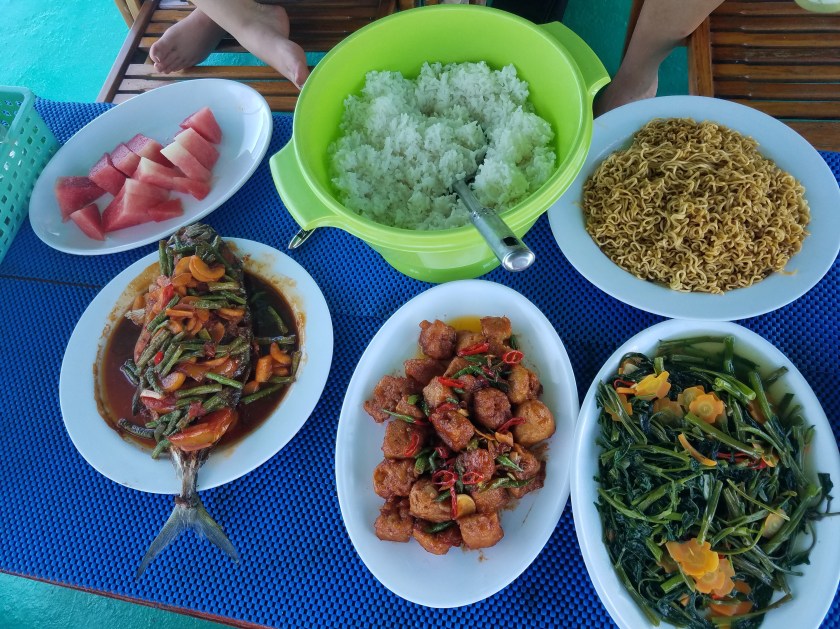

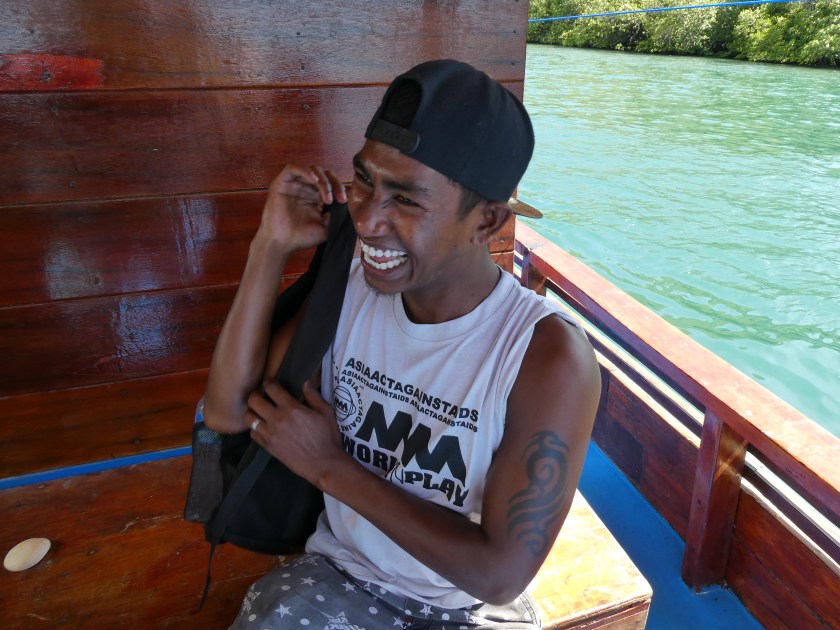
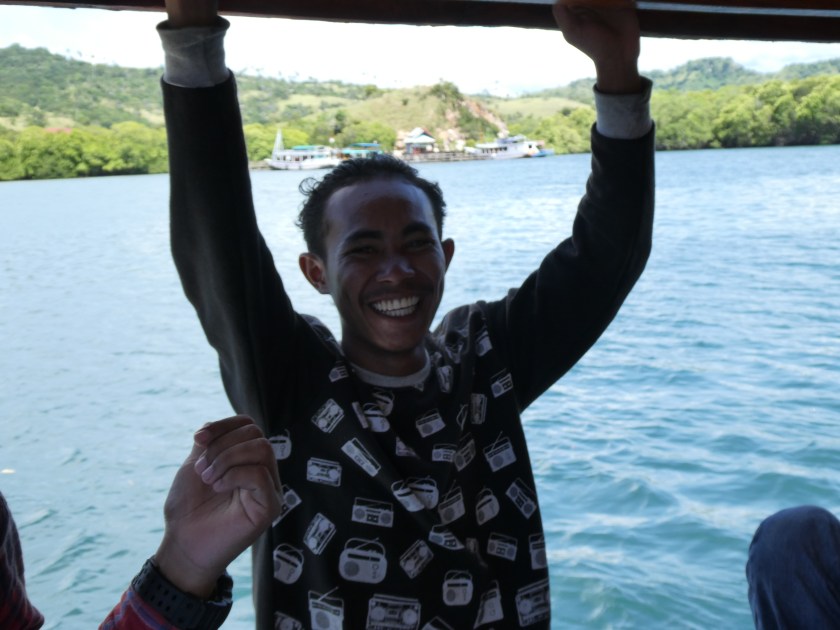
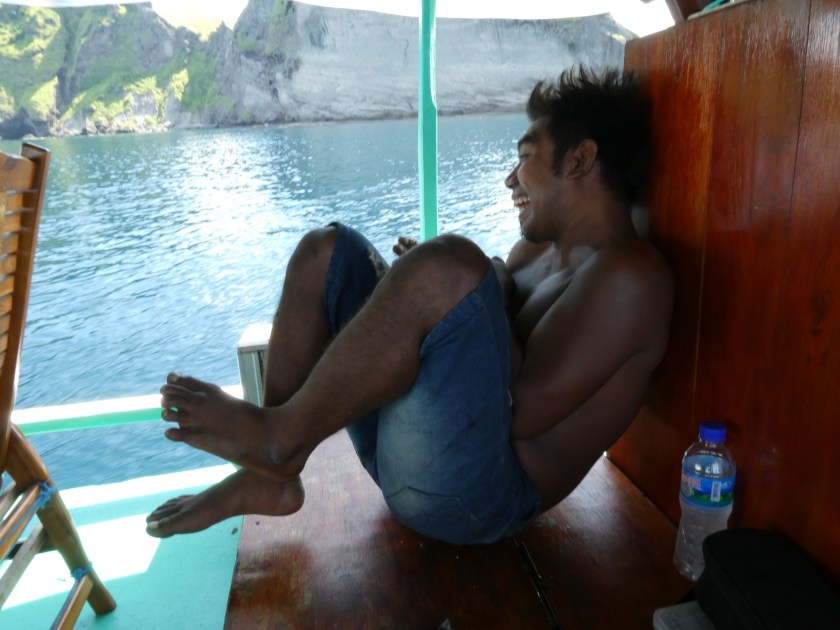
Helen takes a turn at the helm, with the easy going crew
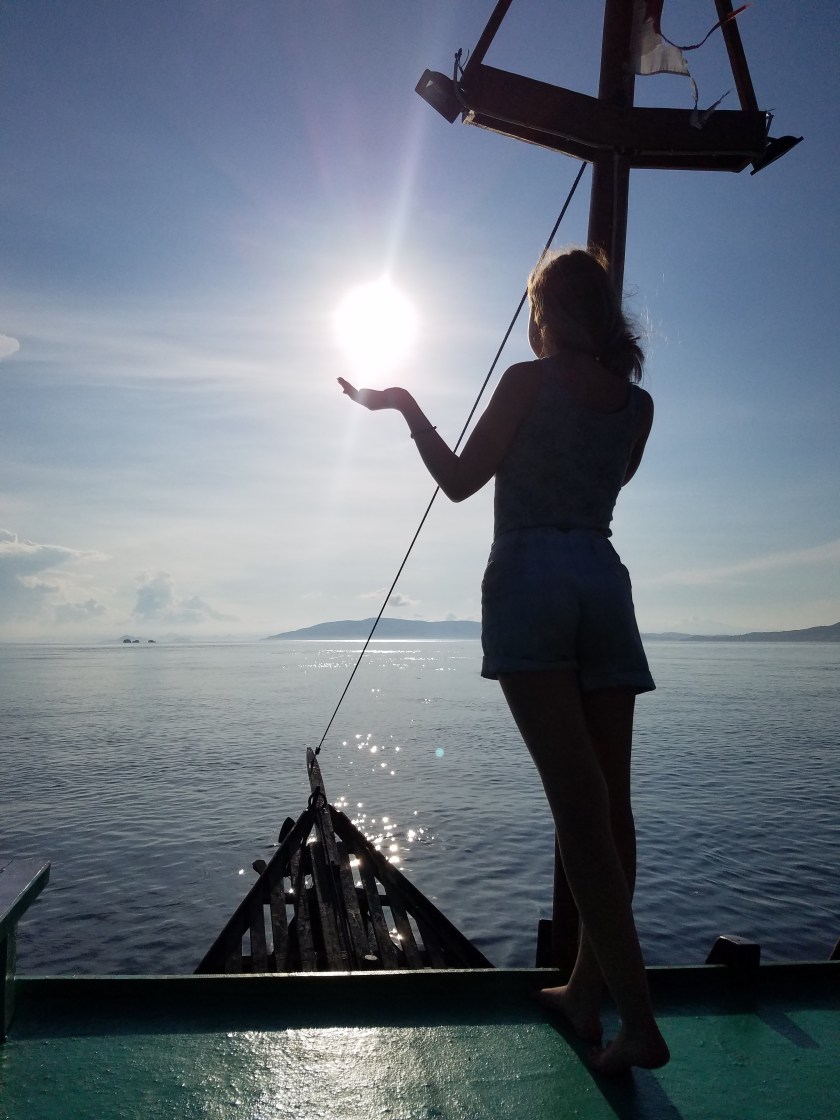
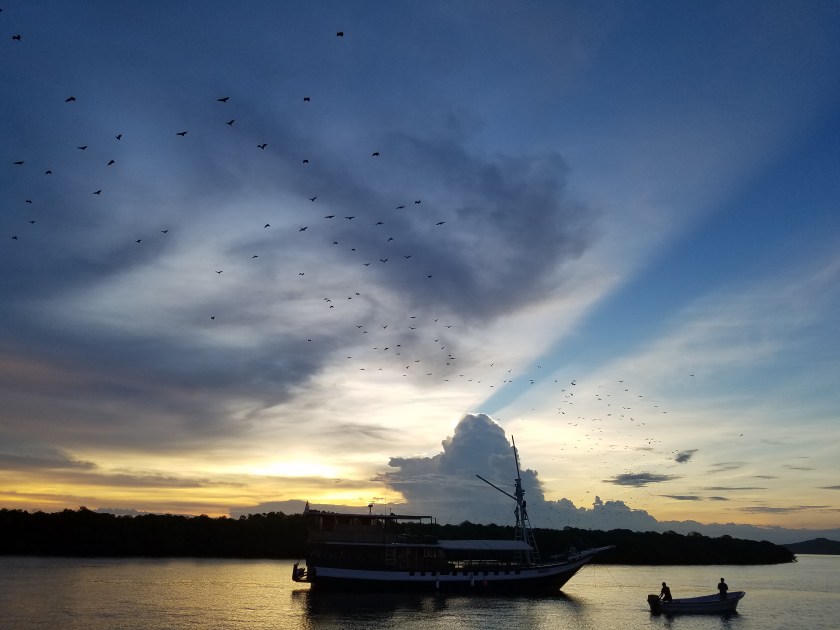
Video of thousands of fruit bats flying out for dinner
While on the boat we stopped several times to hike, snorkel, see the local village of Komodo and the famous Komodo dragons, watch thousands of fruit bats in flight, and swim with manta rays. Just wow.
The Komodo dragons are gigantic, ugly monitor lizards that live on two islands. Thankfully they don’t swim and migrate, as they are nasty creatures! We went to two parks where local guides led us on walks to spot the dragons. We saw many, and kept our distance. They are active feeders in the morning and early evening, so we were there in the heat of the day while they were lying passively, sometimes rolling over in the dirt lazily. One demonstration on just how fast these huge lizards could move if they thought food was present was when a ranger threw a mango pit from the porch, and three Komodo dragons lunged at it. If it had been any animal—including their own young—they would have eaten it. They eat goats, water buffalo, and yes, their babies. In fact after hatching, young dragons immediately climb a tree (which they can do until about 3 years of age) to avoid being eaten by their parents. (I never want to hear my children complain about how mean I can be….)
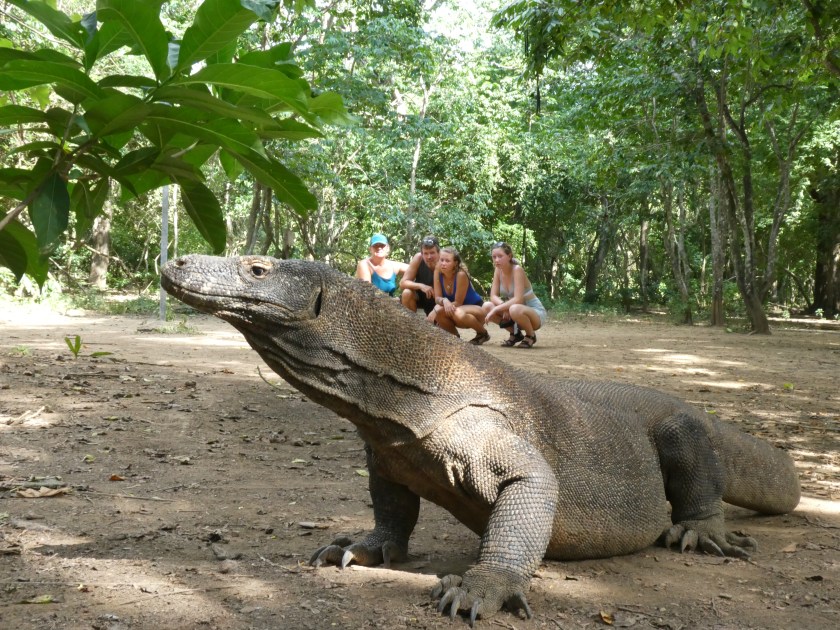
Guide prodding Komodo dragon
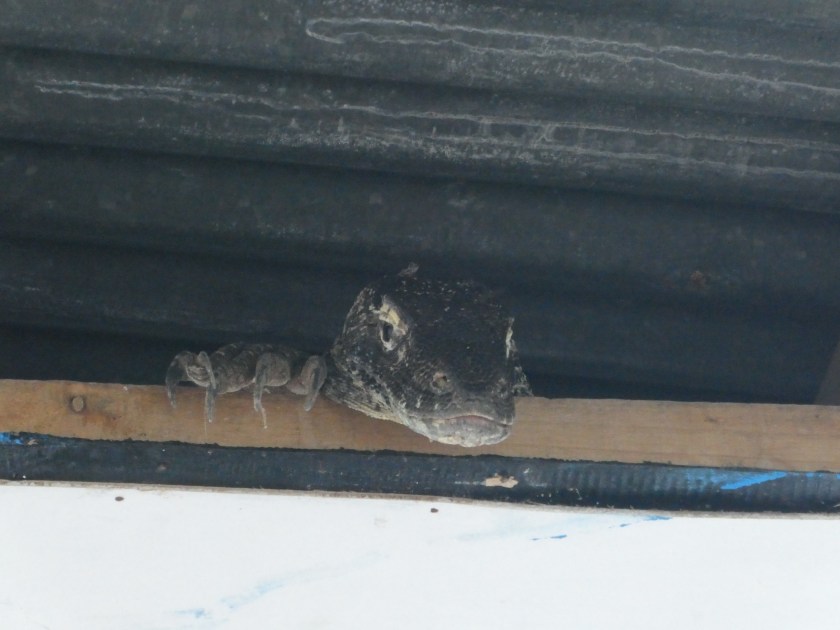
While in Komodo village we saw one young dragon hiding above a displaced ceiling tile in a Muslim mosque, seeking safety and perhaps religious sanction from a huge dragon who had just eaten a “kucing” (cat) for an appetizer–a sight we thankfully did not witness. The goats in the village were all on high alert, looking towards the massive Komodo dragon crawling down the hillside. This particular beast was the same one that had bitten a man from Singapore. While this sounds awful, it’s hard to feel too sorry for the bloke. Travelers are told to use a guide to safely view Komodo dragons, especially at dusk and dawn. This eager photographer awoke early and set out in search of dragons, and indeed found some feasting on a pig. While snapping photos, a hungry dragon came from behind and bit him. Locals heard his screaming and rescued the tourist, and last heard he had made it back to Singapore, though our guide was unsure if he survived. The mouth bacteria in the dragon’s bite is what typically kills their prey; with 60 strains of nasty bacteria the dragon can take a bite, leave the victim, then return a few days later after the prey has succumbed to the infection.
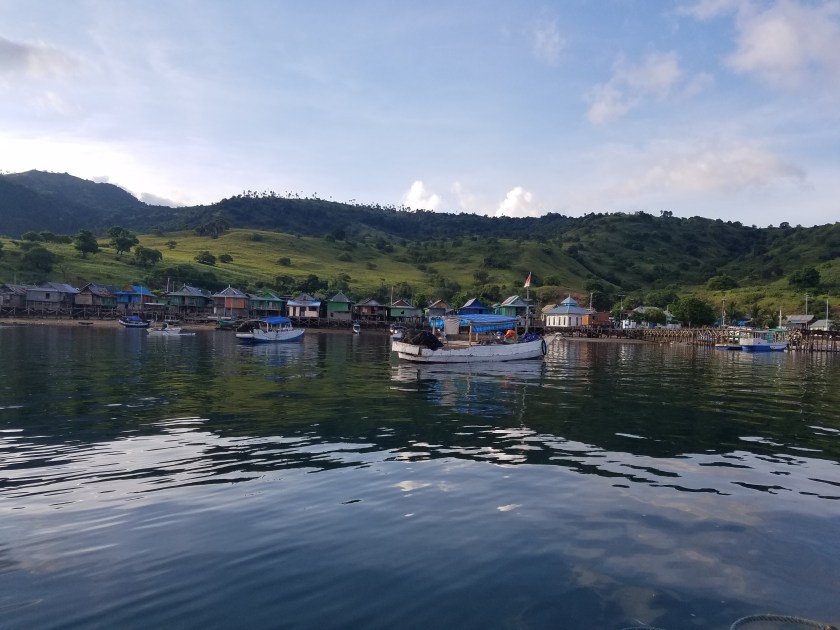
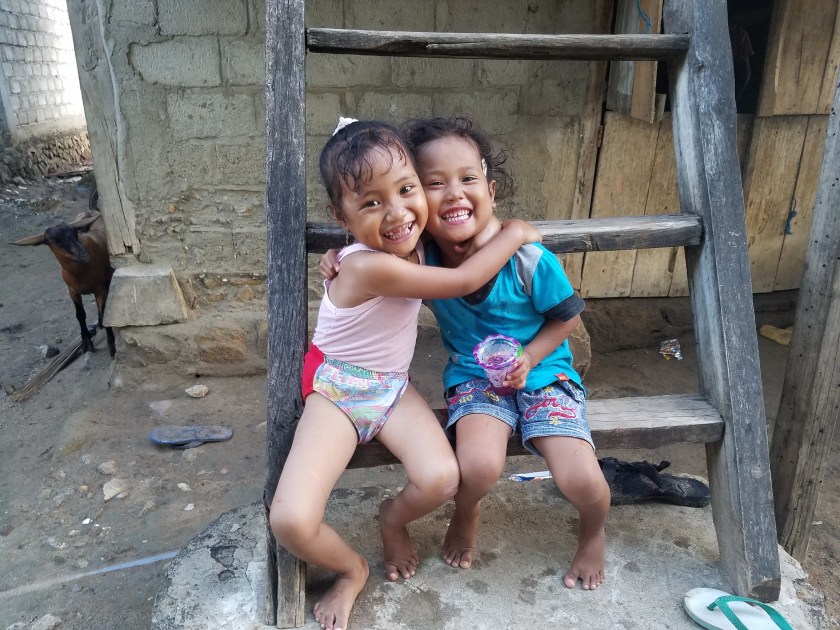
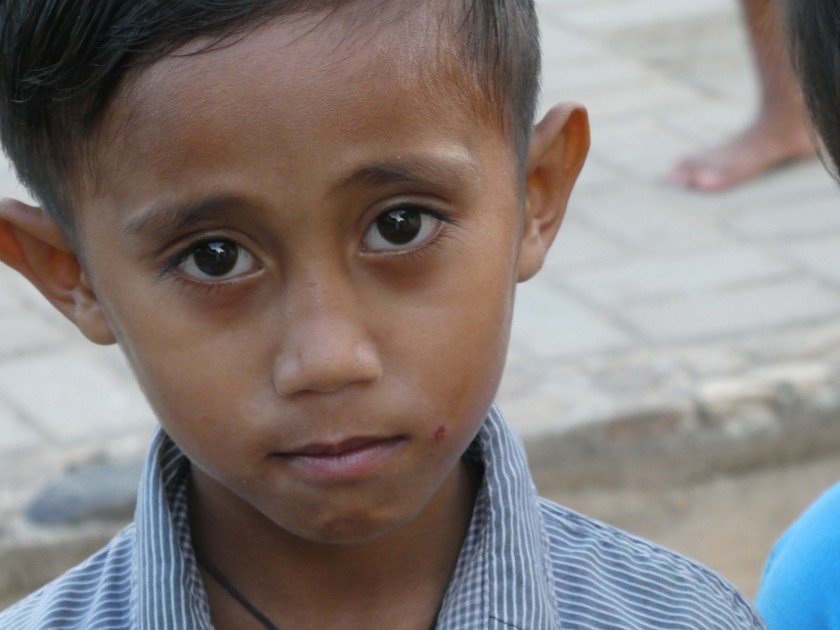
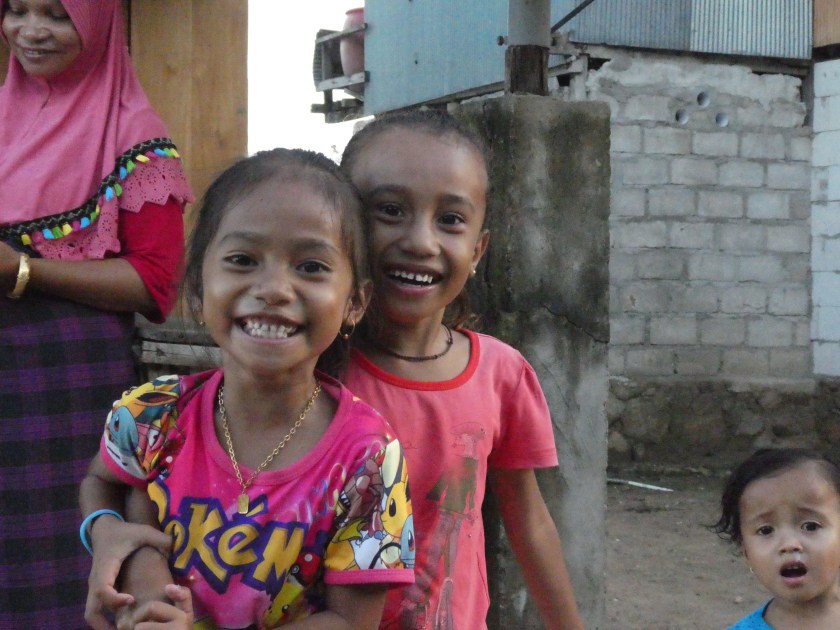
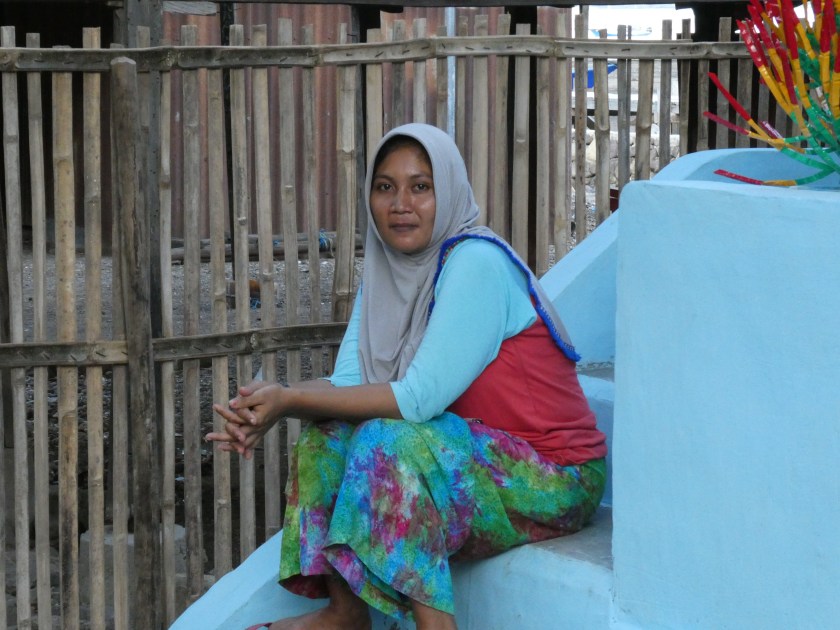
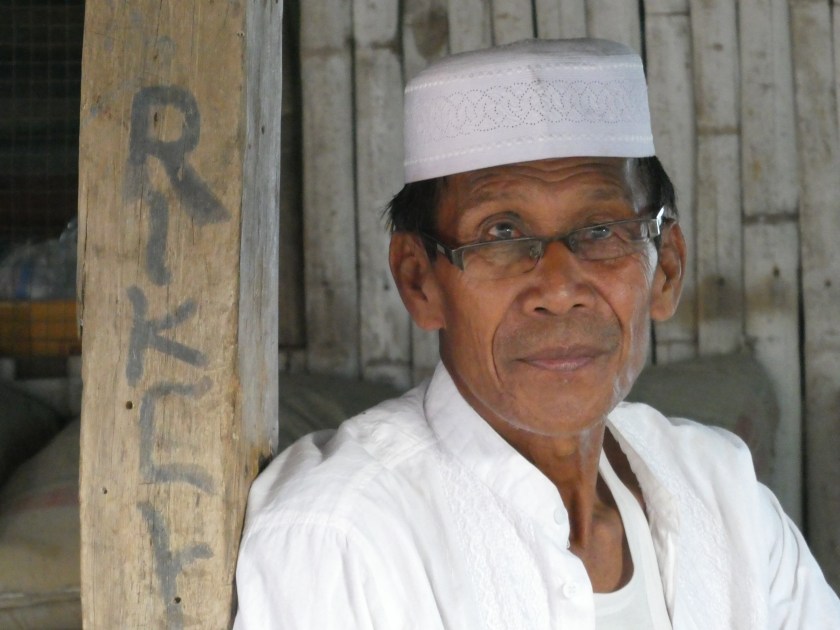
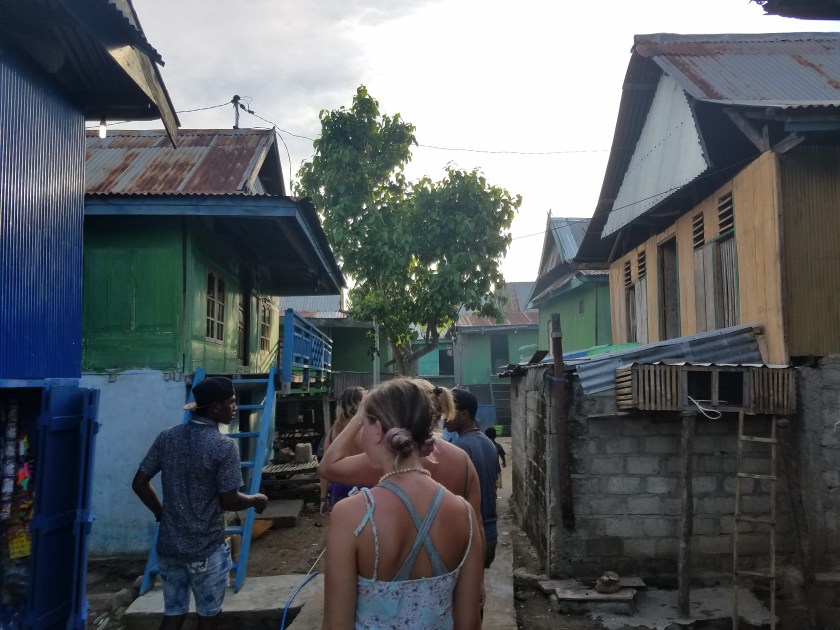
Komodo villagers, photos by Helen


The Komodo dragon (who’d bitten a tourist) coming down the village hillside after eating a cat
Doug gets his (supposed) dragon tooth necklace, and enjoys the sun.


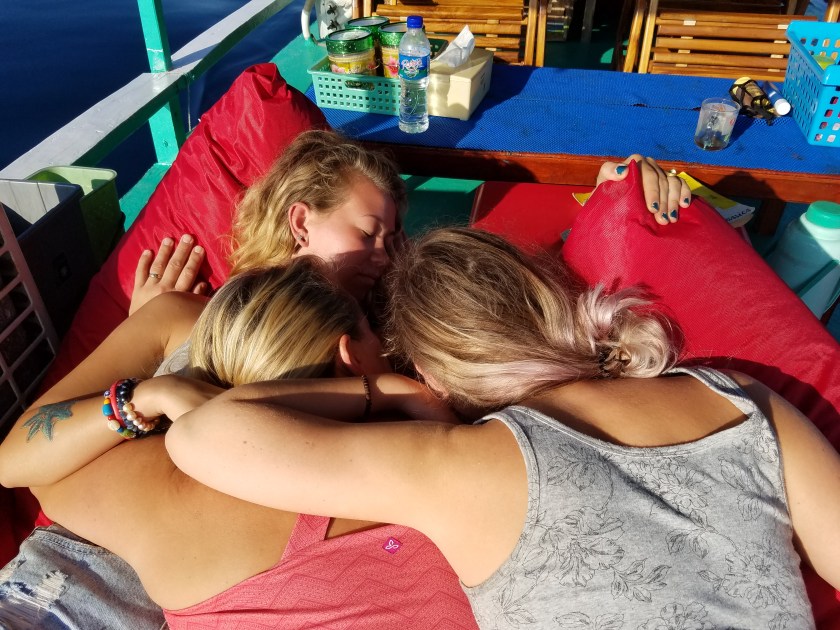
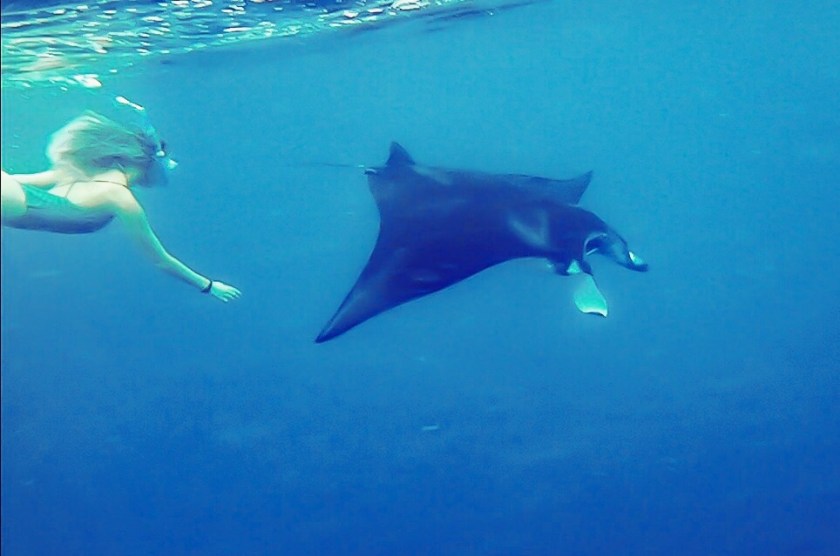
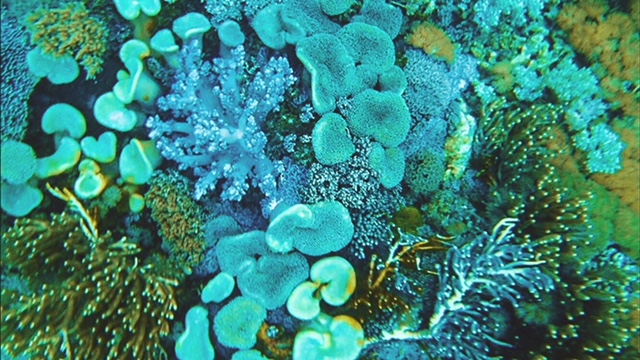
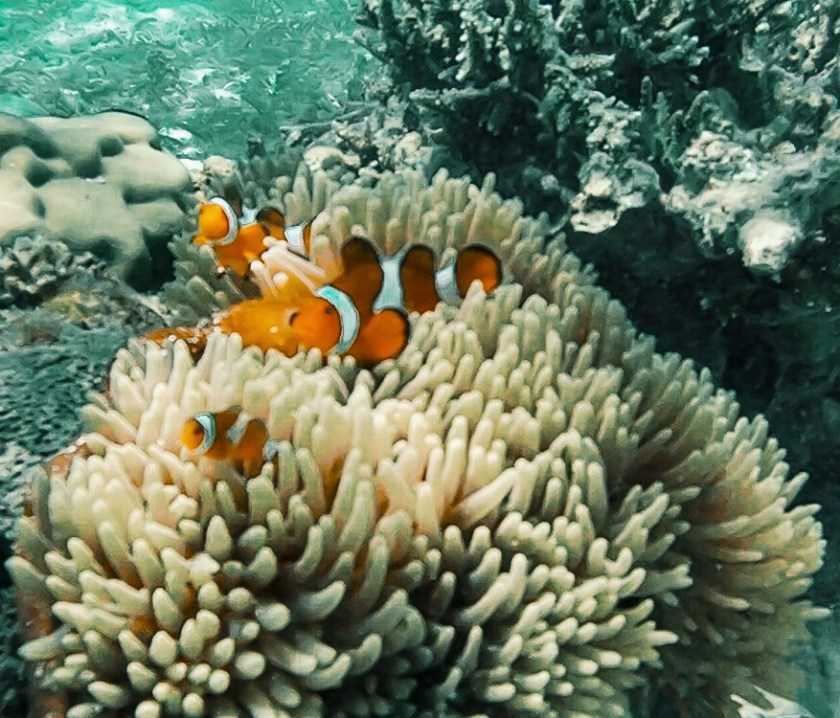
Everything else we had the fortune to see was gorgeous, from the beautiful children in Komodo Village, stunning mountains, amazing sunrises and sunsets, fabulous coral reefs and abundant marine life. A highlight for us was a morning of swimming with more than 100 manta rays with wing spans of 5-6 meters. As we plunged from our boat into the top of the current and were facing their huge open mouths, I reminded myself that manta rays are plankton feeders, and therefore not interested in us. These gentle creatures were unphased by us, and were absolutely thrilling and mesmerizing.
Manta Ray videos by Doug. Ella watched from the boat (her fresh tattoo kept her from swimming)
There were gazillions of pink jellyfish too.
Snorkeling in the Flores Sea, photo editing by Helen


Radiant white underbelly of a ray


We said good-bye to our fun crew though swayed from internal waves for the next 3 days, forcing some of us to continue taking the motion sickness tablets we used while on the boat. After a morning exploring Mirror Caves in Lebuan Bajo we hopped on a flight back to Bali to unite with Ibu and Poppa (Caroline and Alan, Doug’s parents). What a lovely reunion after 7 months apart! At ages 91 and 86, we were so psyched they made the adventurous, long trip from Boston to Bali.
Helen and Ella in Mirror Caves, Lebuan Bajo


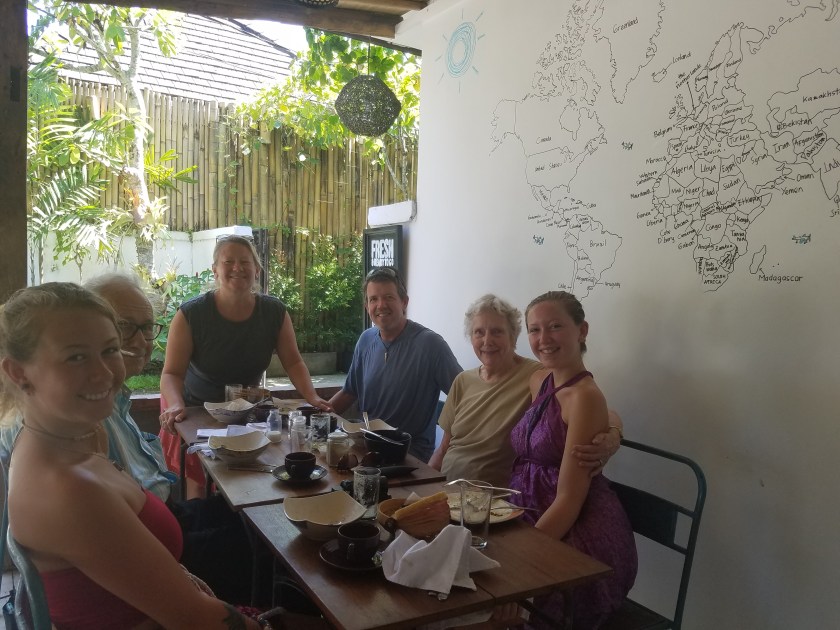
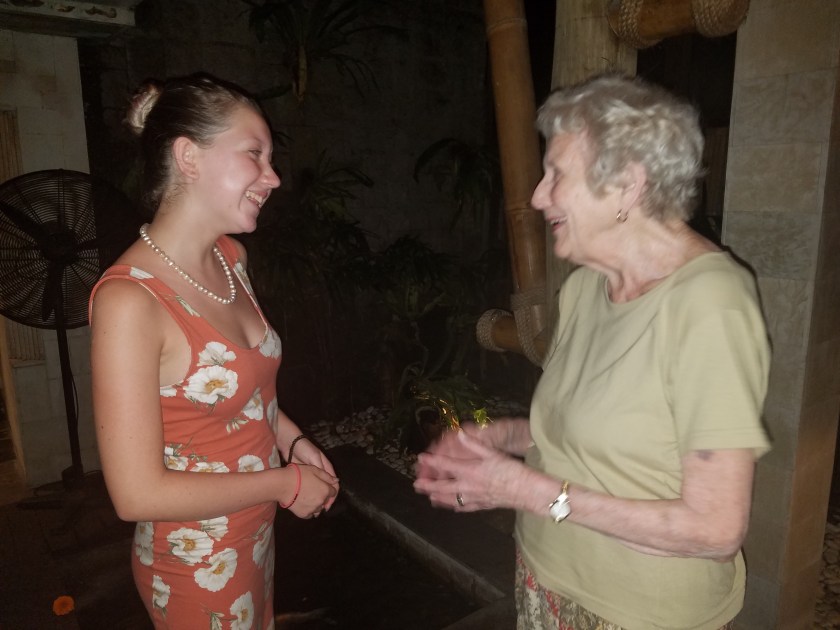
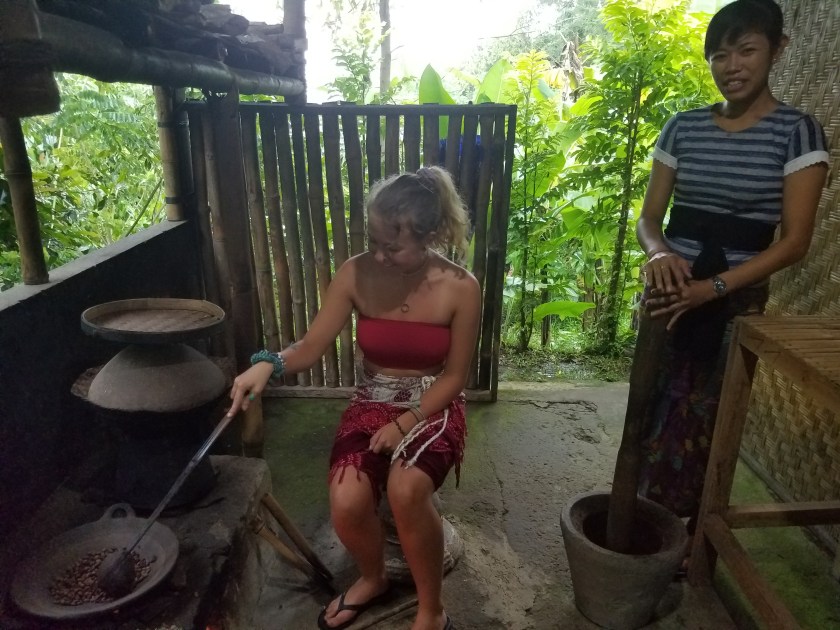
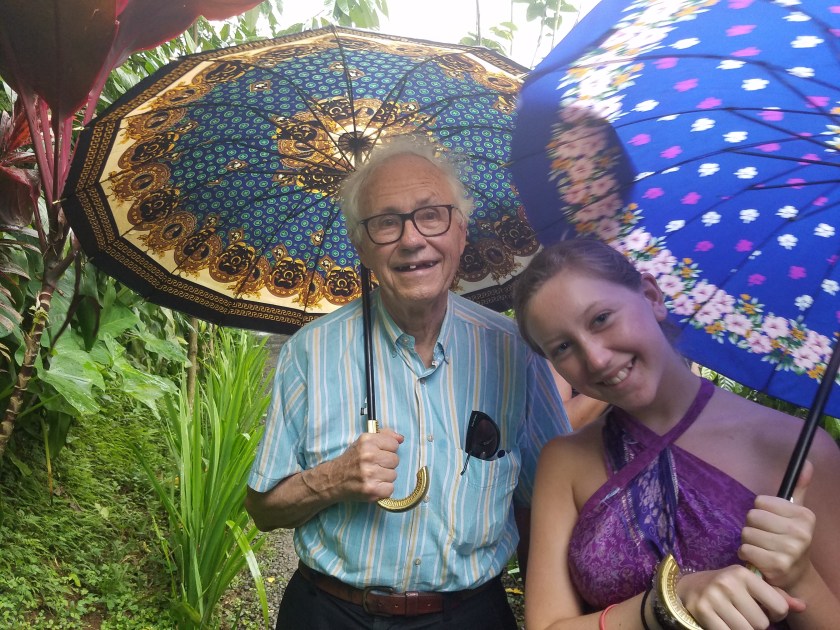
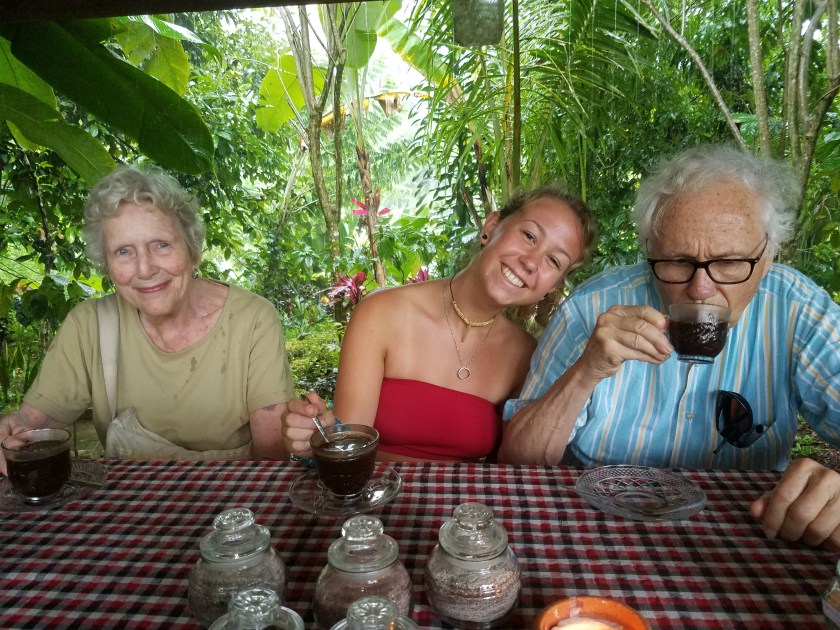
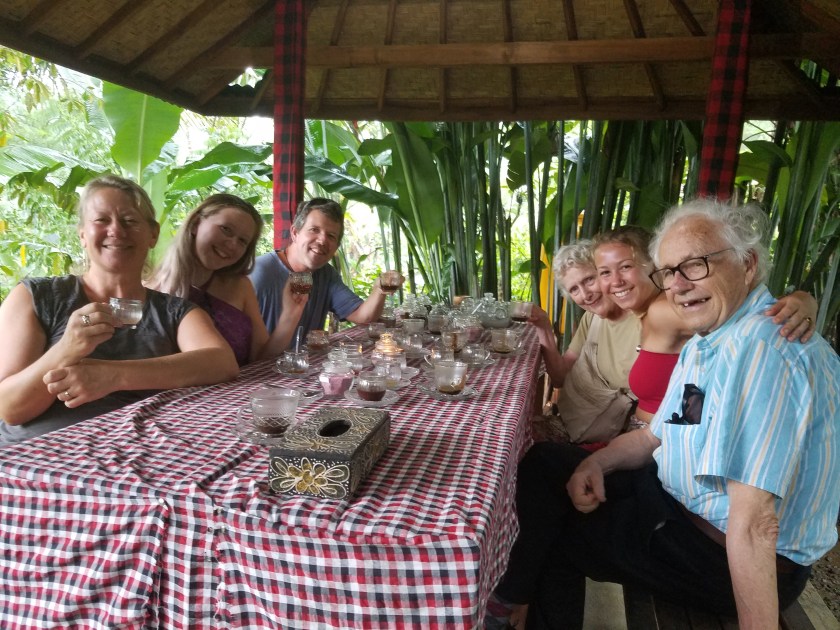
Visit to a coffee and tea plantation
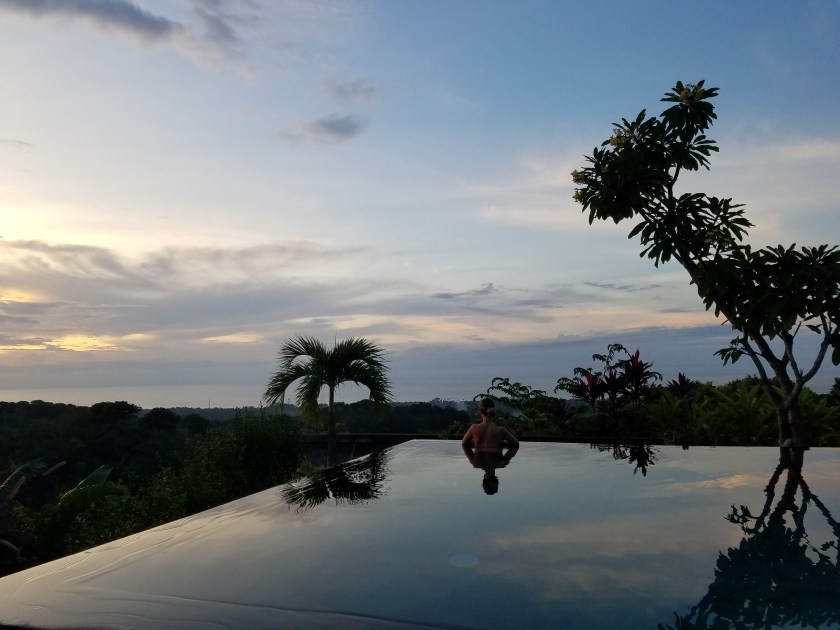
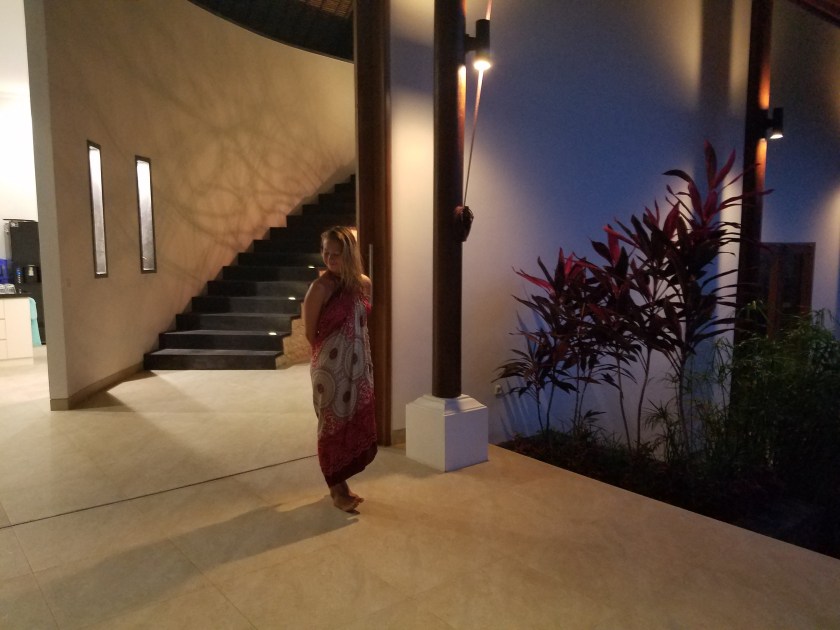
For the next 3 weeks we had adventures together in Bali, starting with our drive to the northern town of Lovina. Here we rented the most luxurious home we’ve ever stayed in, where an infinity pool was the only thing interrupting our view of rain forest and the Java Sea in the distance. It is common for wealthy westerners (and any westerner reading this is wealthy by Indonesian standards) to hire staff, so the place came with a cook, cleaner, gardener, night watchman, and a helpful manager. For just $200 USD/night the six of us had this fabulous 4 bedroom, 4 bathroom home (with breakfast!). https://www.airbnb.co.nz/rooms/14639874 It is nice to be in a place where our dollars stretch so far.
Our dream house in Lovina, Bali



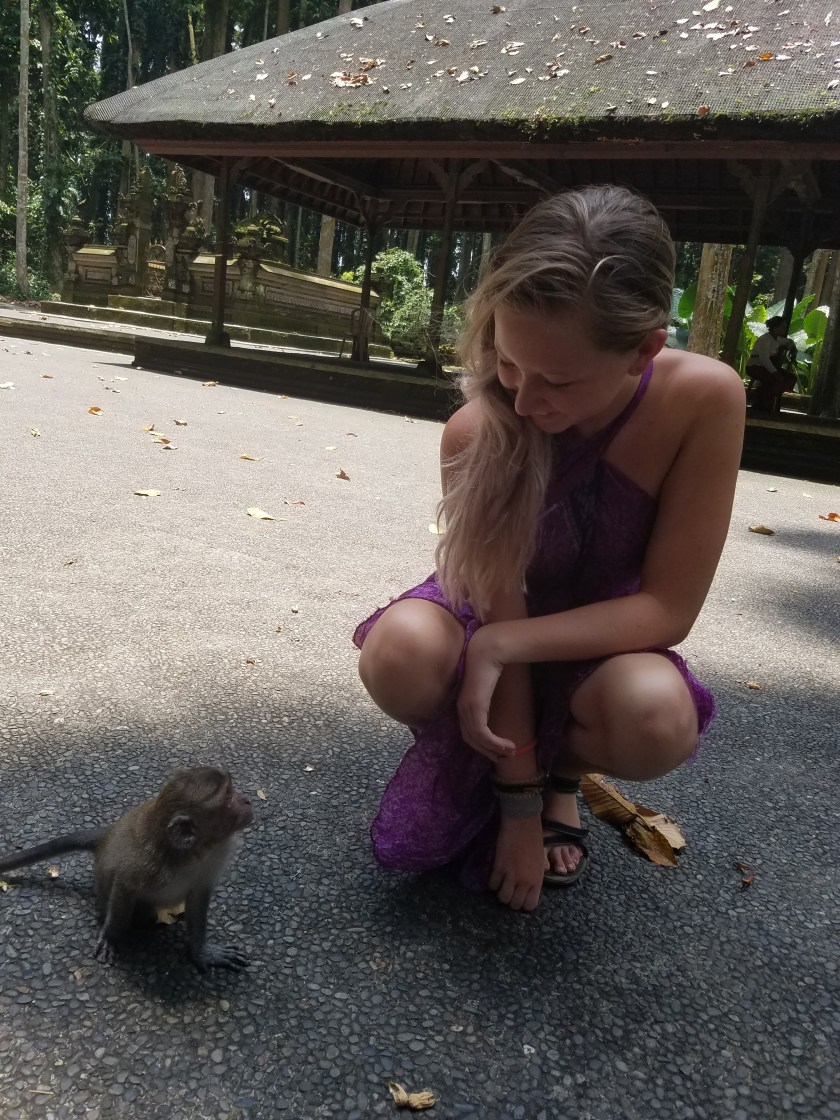
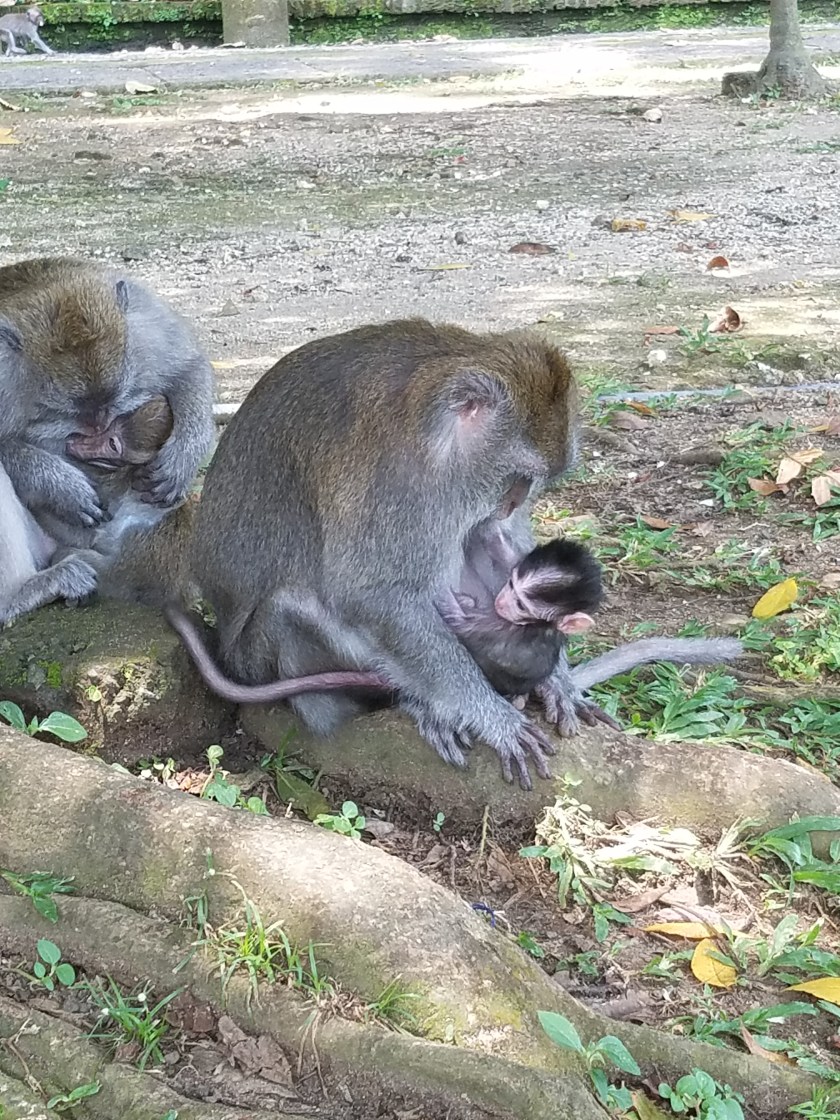
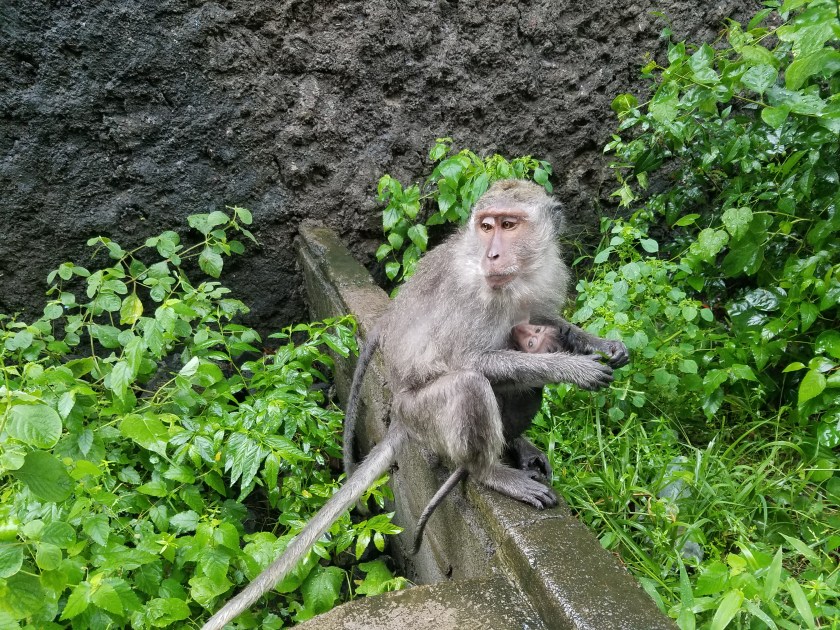
Monkeys grooming
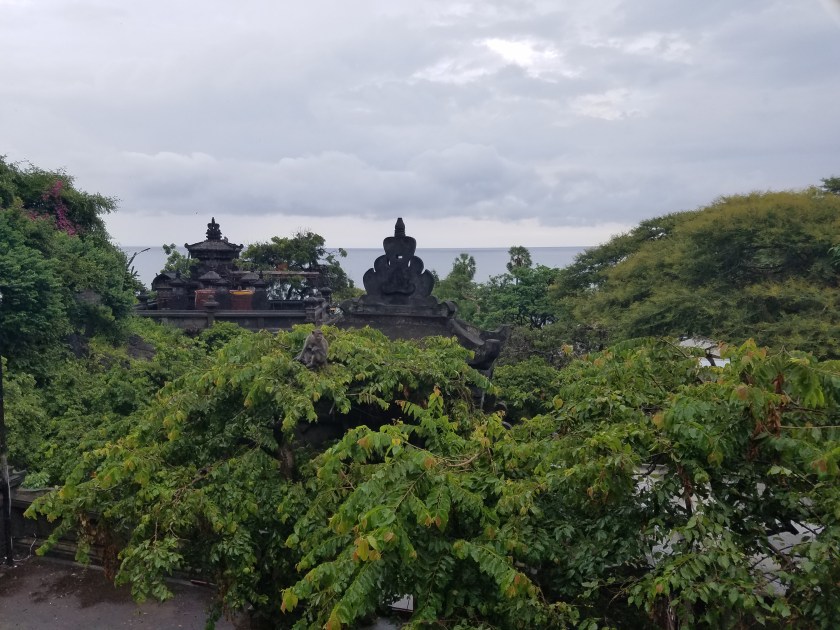

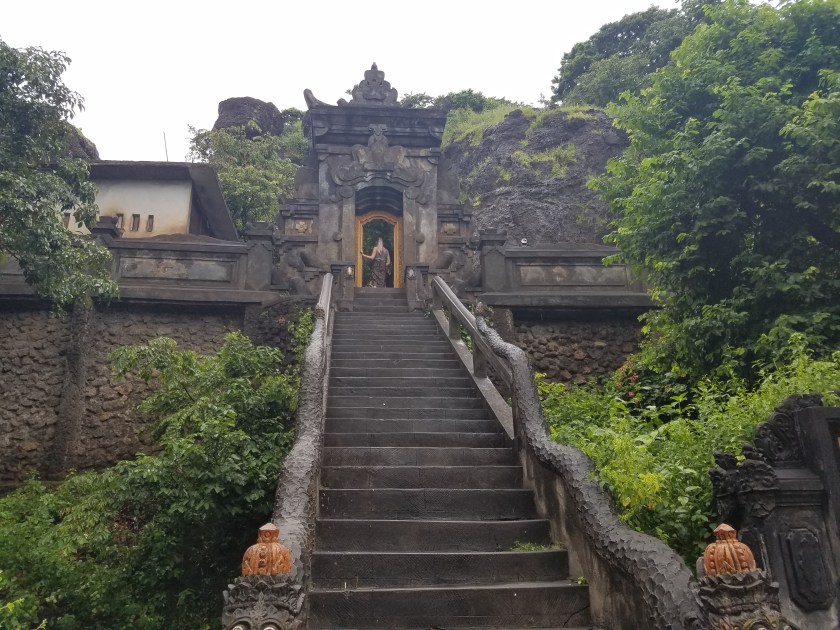
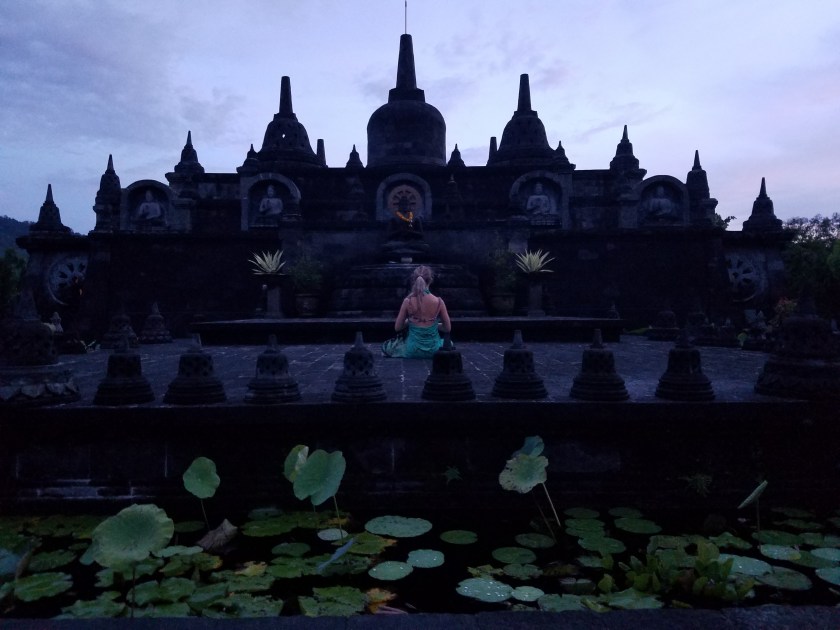
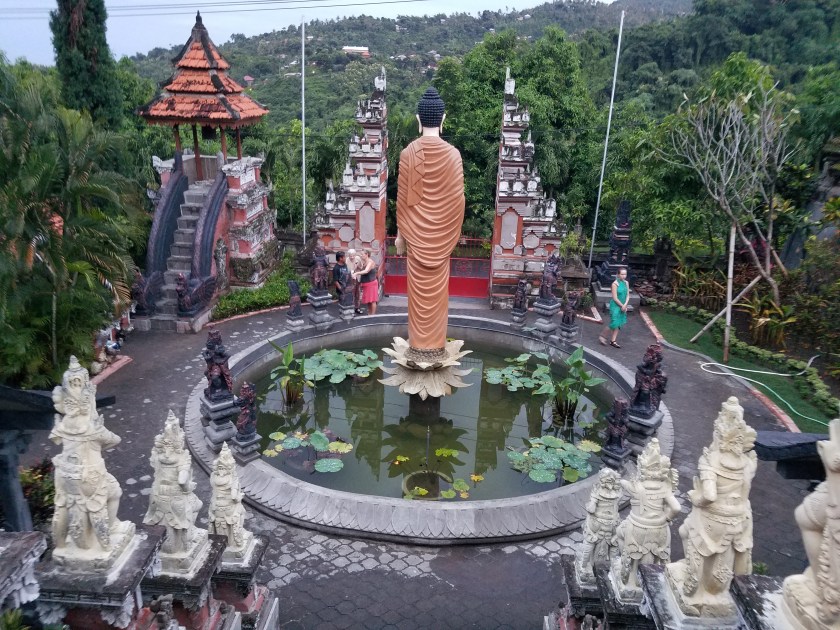
Buddhist Temple


Helen with one of many random cats. A scorpion I found on bedroom floor (here on a piece of paper with a drop of its venom next to it).


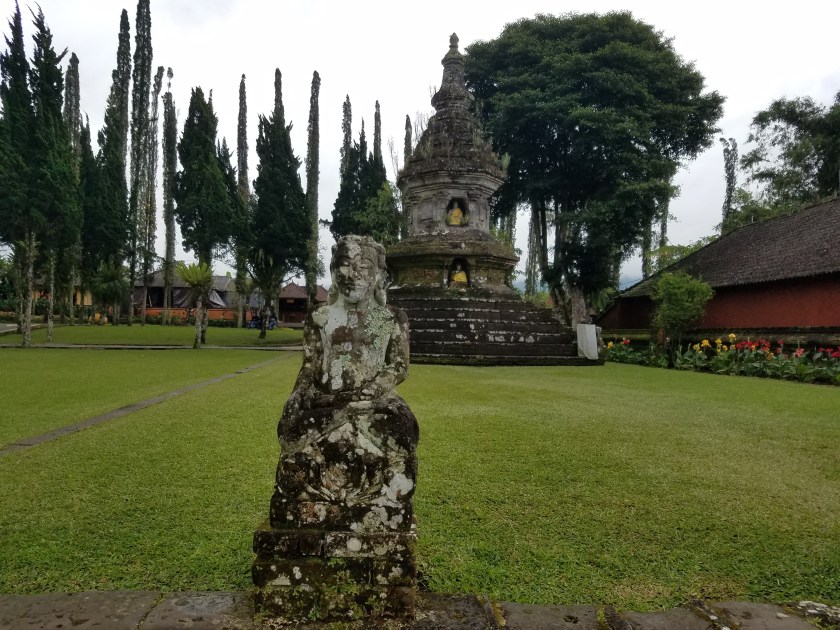
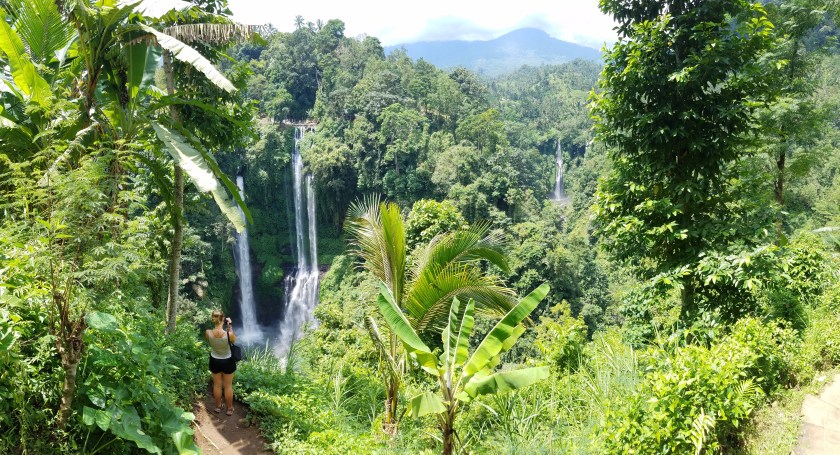
Begrudgingly we left Lovina and headed back south and inland to Ubud, home of the famous Gunung Agung, a volcanic mountain that actually closed the airport with a minor eruption just last fall. It is currently considered safe but is closely monitored with evacuation plans in place. The center of Ubud is now a trendy tourist village, unrecognizable to Doug and his parents from the Ubud they knew 30 years ago. That Ubud had been full of rice fields, with a scattering of warungs (small restaurants) and simple accommodations.

- Restaurant view
Passionfruit flower and lily


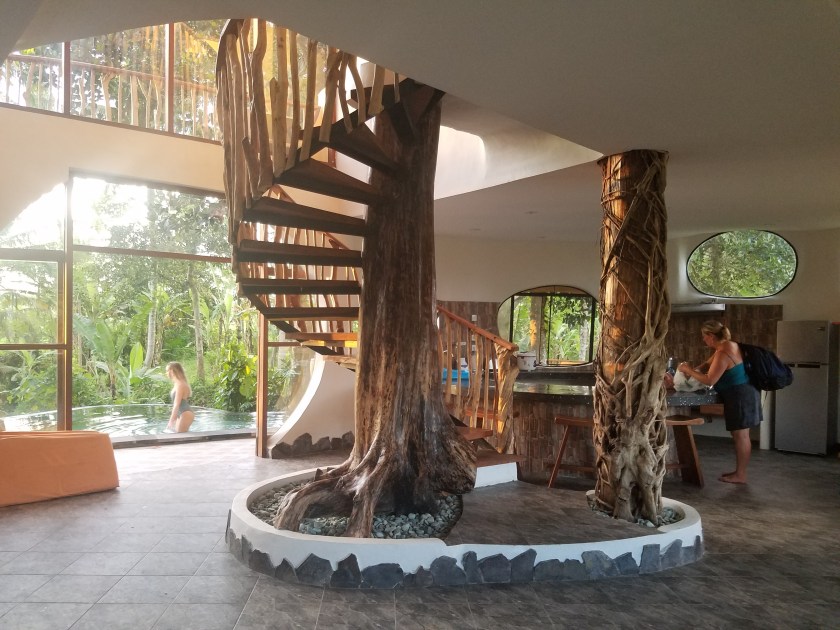

https://www.airbnb.co.nz/rooms/19365970
Our driver Ari with Ella and Poppa. Did someone say rambutan??!!


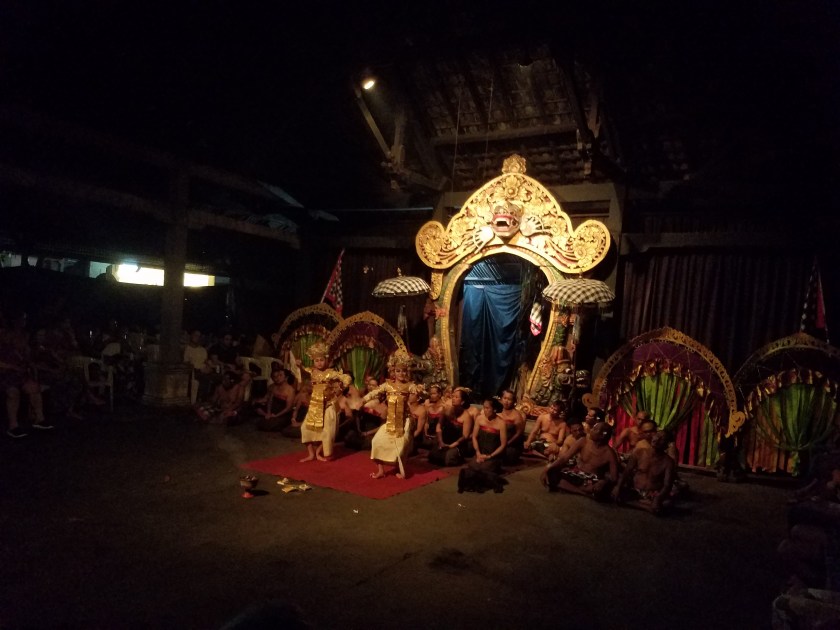
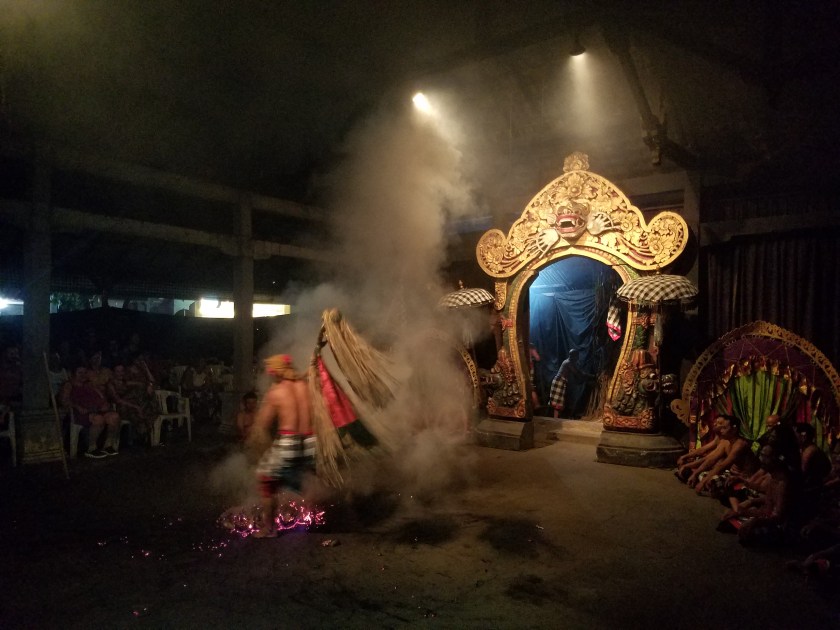
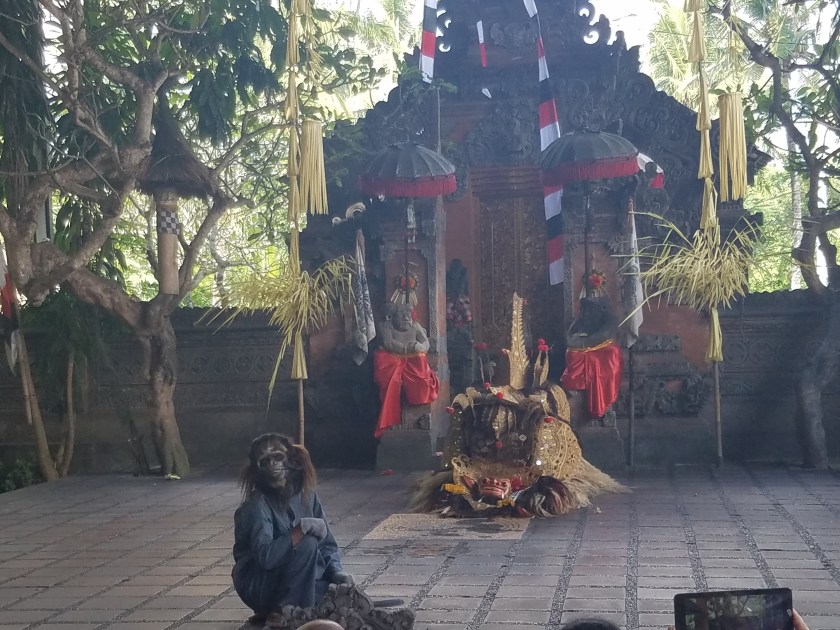
Balinese masks (Rangda and the Barong)


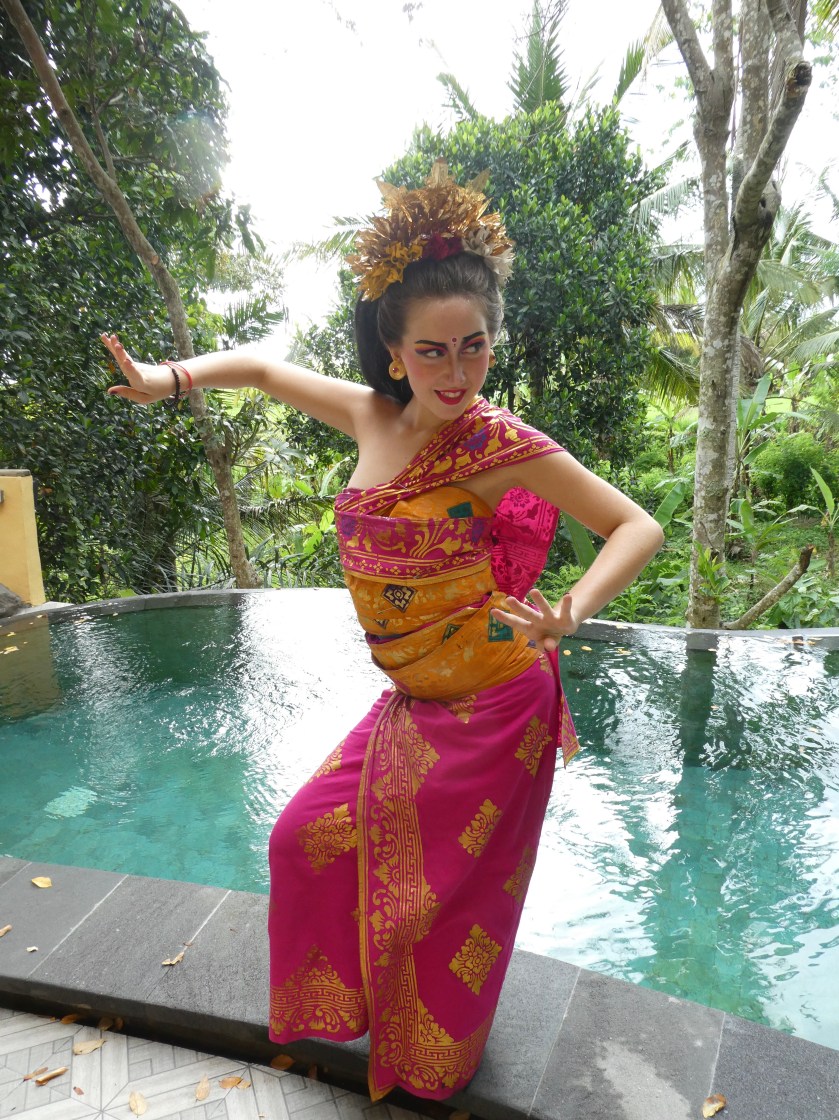
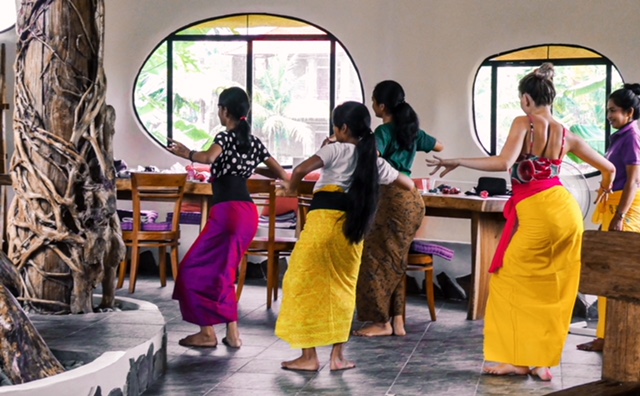
Helen tries out Balinese dancing, complete with costume.
One day Doug, Ella, Helen and I joined another “world schooling” family (whom Ella had met at a waterfall back near Lovina) for a cool biking adventure down 32K of mountainside through rural villages sprinkled with Hindu and Buddhist temples, lush green rice paddies, incense wafting from offerings and smiling children hollering “hello!” Twice our bike ride came to a halt as we waited, along with dozens of scooters, behind cremation processions. Cremations are big community events in Bali. Very important or wealthy families can afford a private cremation, but most have to opt for more affordable group cremations which are held every few months in each village. During these ceremonies, elaborate funeral pyres are marched through the streets, accompanied by drumming and the music of gamelans.
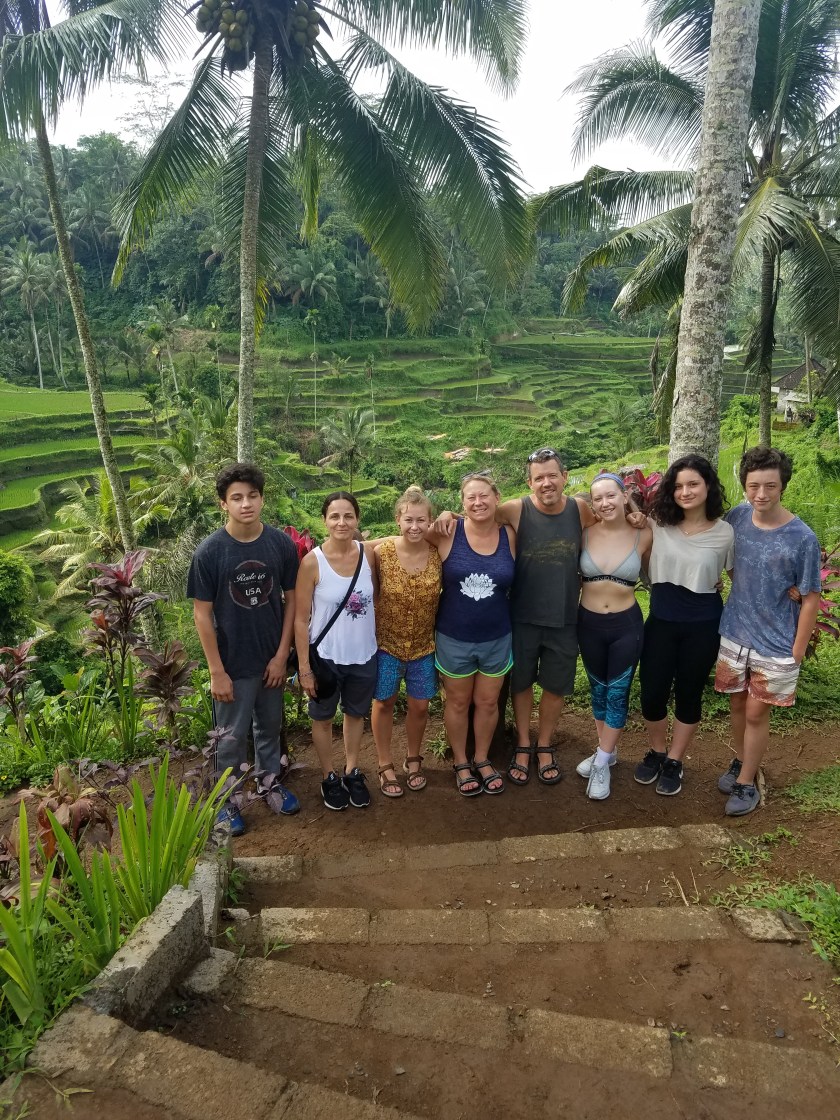

Caroline and Alan at Agung Rai Museum of Art, Ubud, Bali


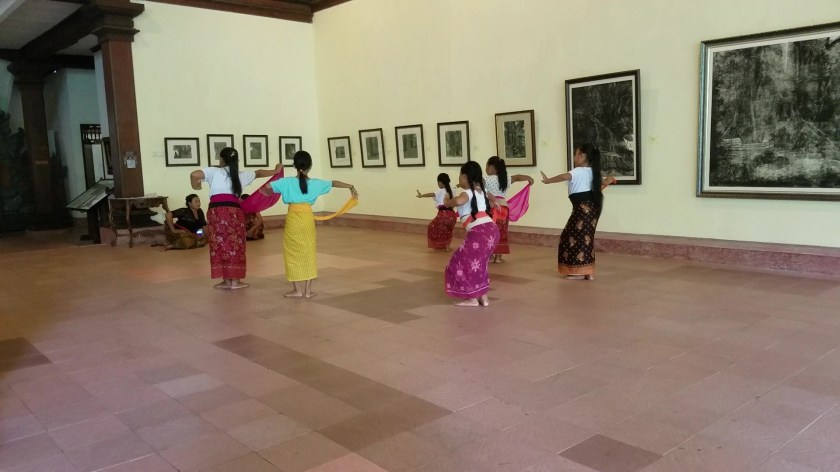
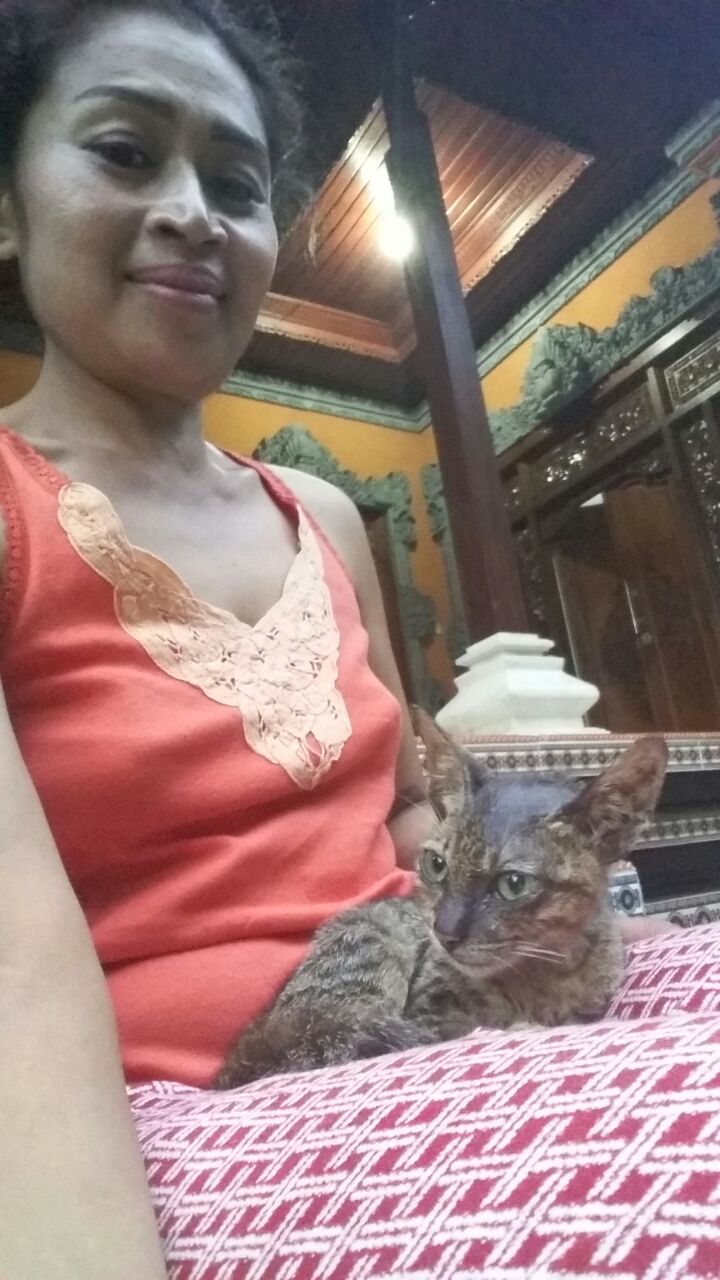
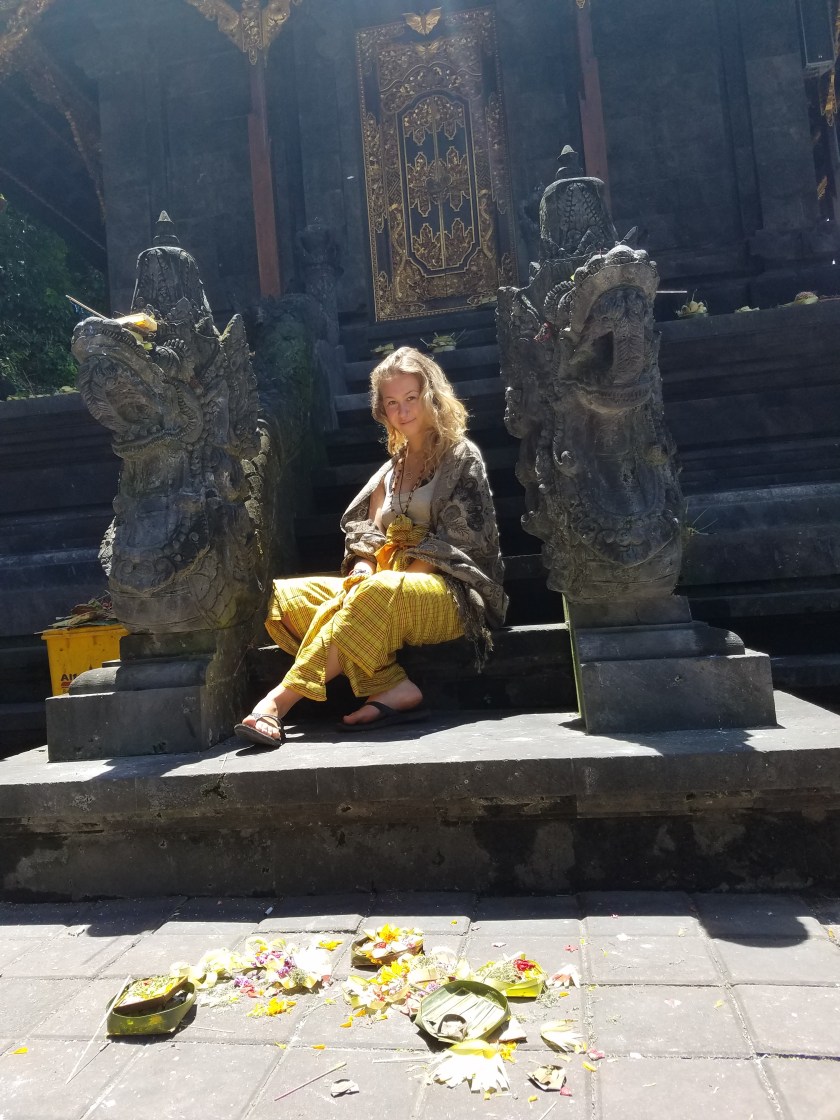
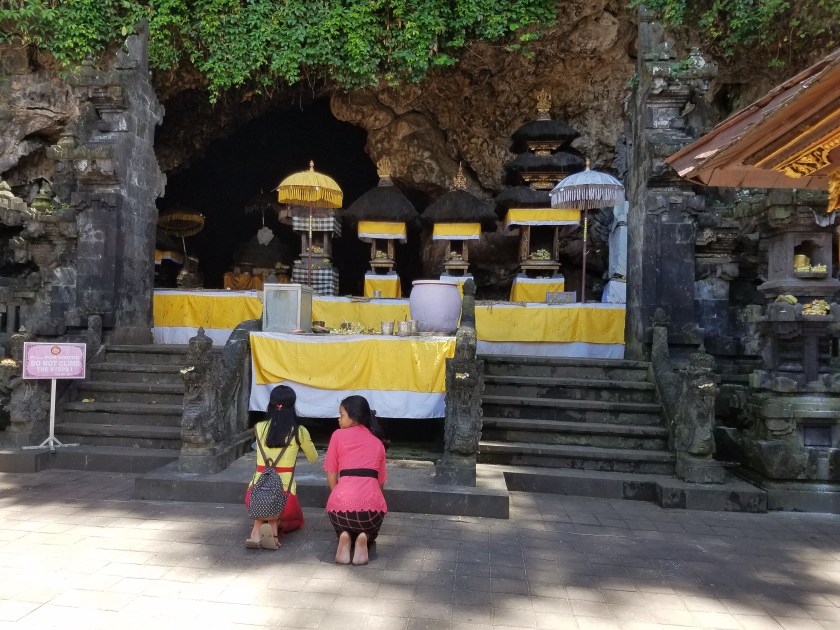
Indonesians are extremely spiritual people, primarily following Muslim, Hindu or Buddhist faiths. With few exceptions, they honor one anothers’ beliefs and live peacefully together. Often temples will have symbols from other faiths, such as Muslim temples having a Buddha, or Buddhist temples having Hindu deities. Each village has temples, every home has shrines, and all businesses and homes give regular, often daily, “offerings” for the spirits. These offerings are very small baskets woven from coconut fronds, filled with specific colored flowers, grasses, incense, something sweet and a coin. Signs of these are seen everywhere, wafting the smell of incense and beautifying the stone or bamboo shrines.
Women praying and offering blessings at cave temple
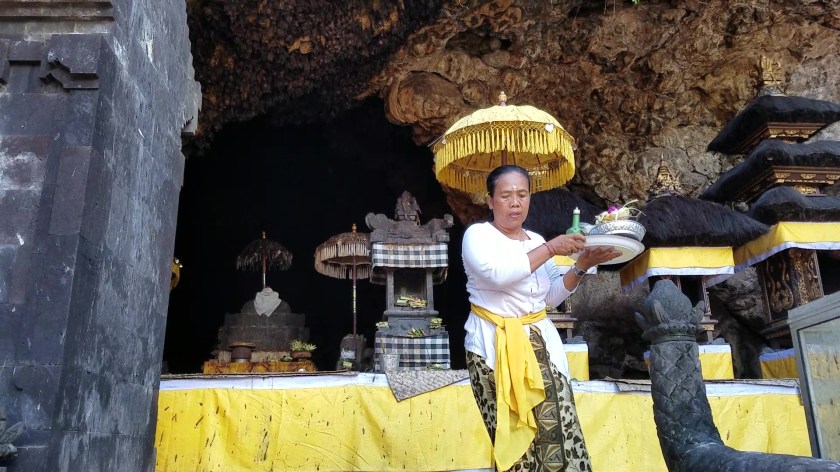
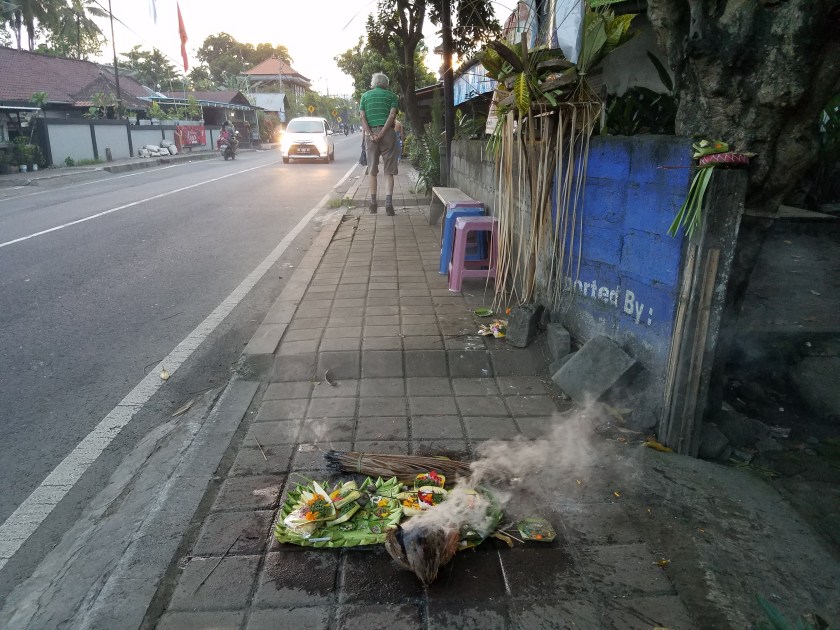
Temple offerings


A major cultural highlight for us was experiencing Nyepi, known as the Silent Day. The holiday celebrates a new year for Balinese people, and involves several steps. Leading up to Nyepi villagers construct ogoh-ogohs, which are wild demons made from bamboo frames covered with paper mache, fabric and paint. Two days before Nyepi, each village gathers up sacred relics from their temples, loads them into trucks, and proceeds to the beach to purify the sacred pieces. We passed a few of these while driving, and got to see the throngs of people dressed in white in the backs of large trucks, drumming and chanting as they headed to the ocean. Later that day and the next, villages have rituals and processions blessing their community and temples. Everyone dresses in sacred clothing, and women place elaborate handwoven baskets on their heads filled with beautiful fruit and flowers.
Ogoh-ogohs
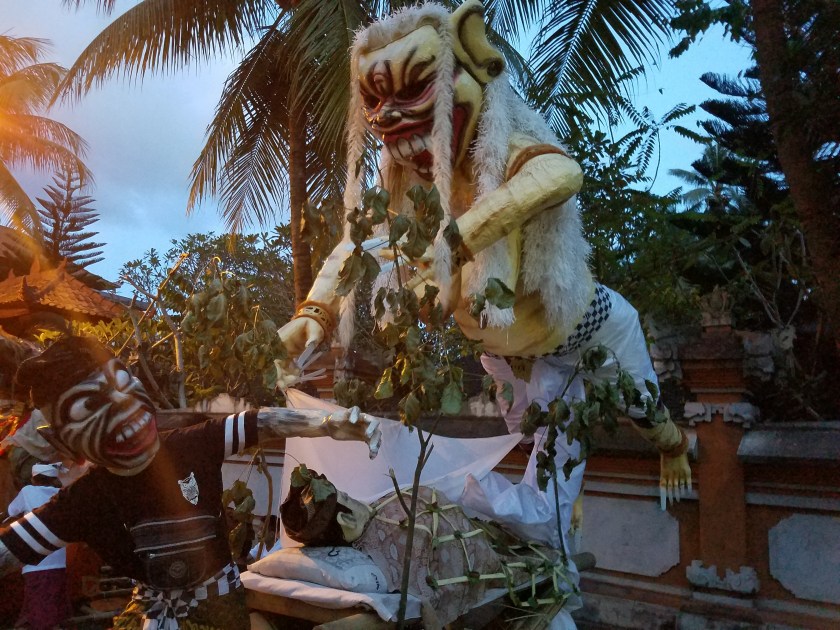
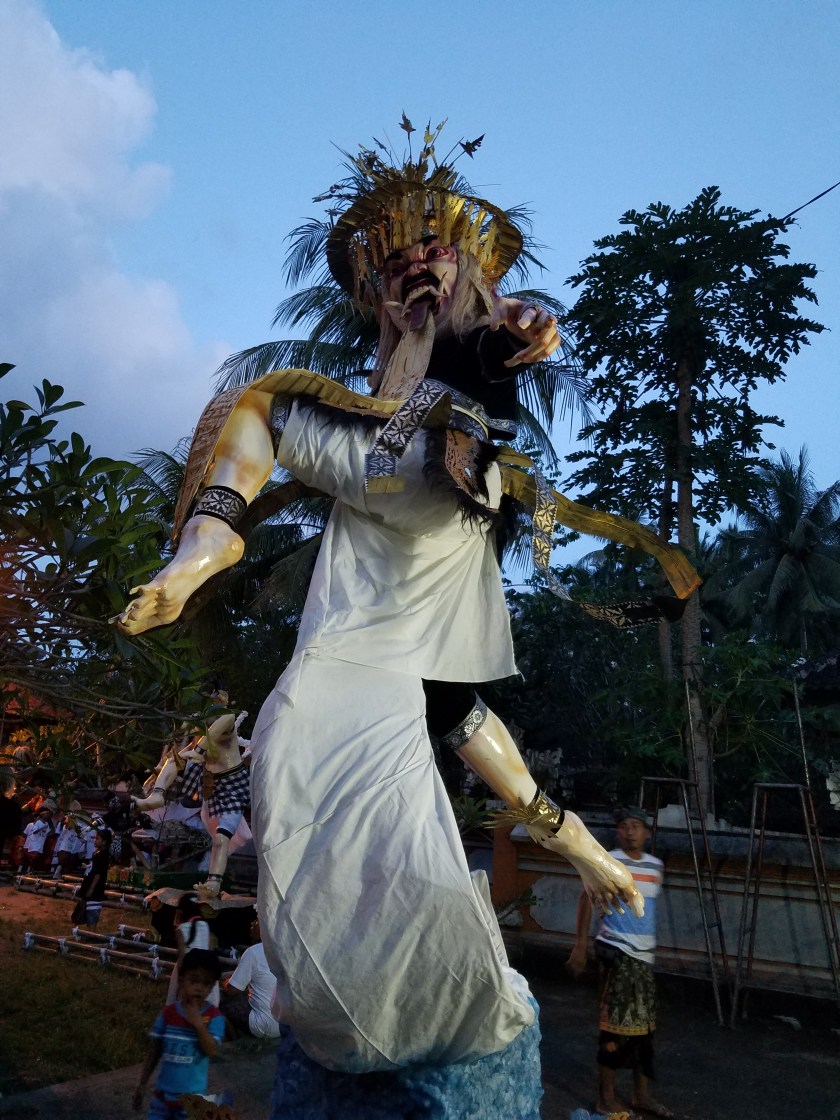
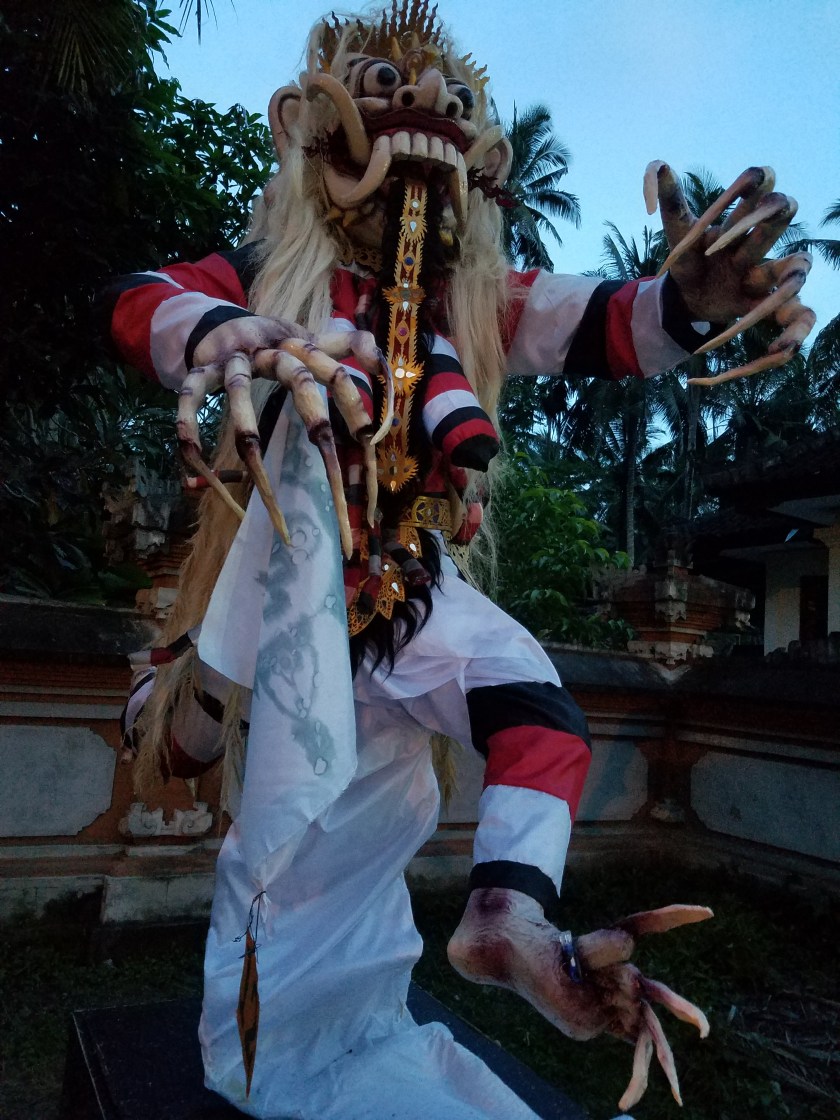
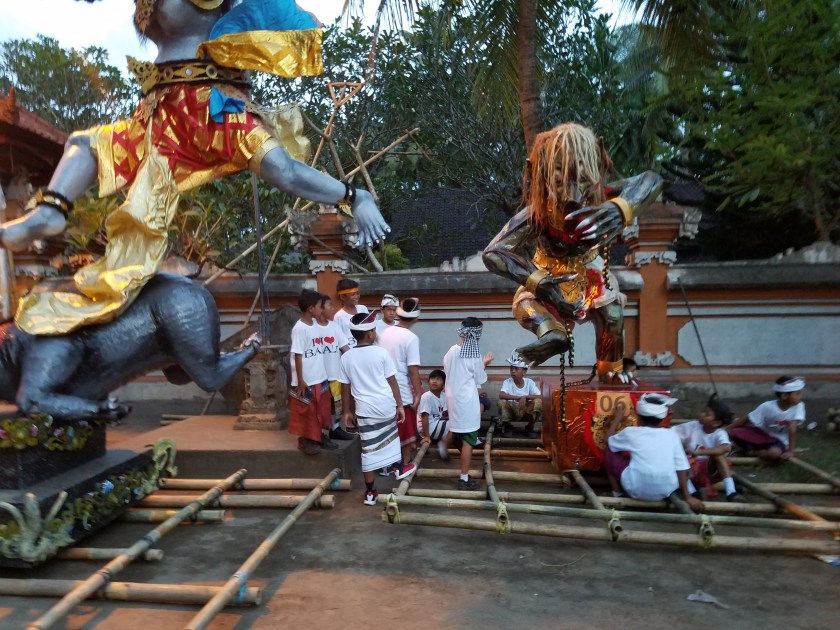
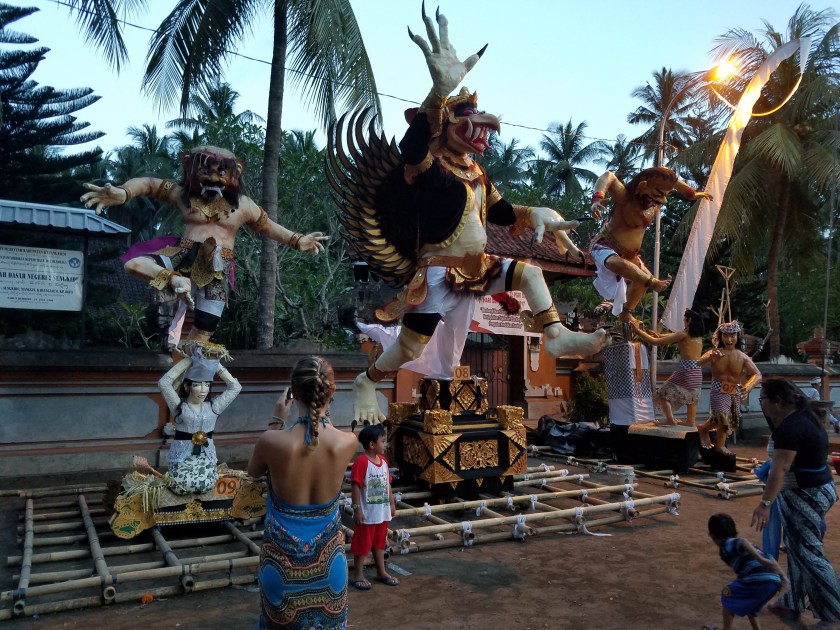
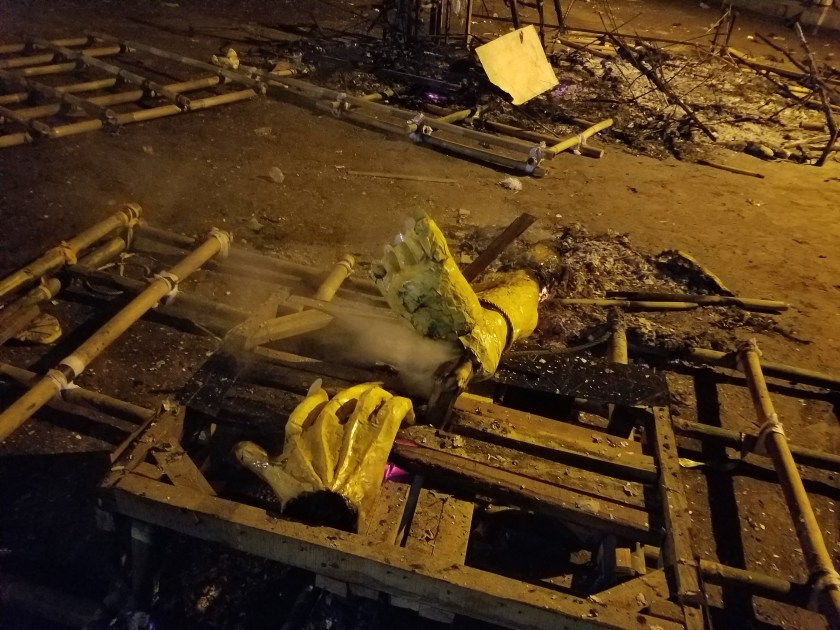
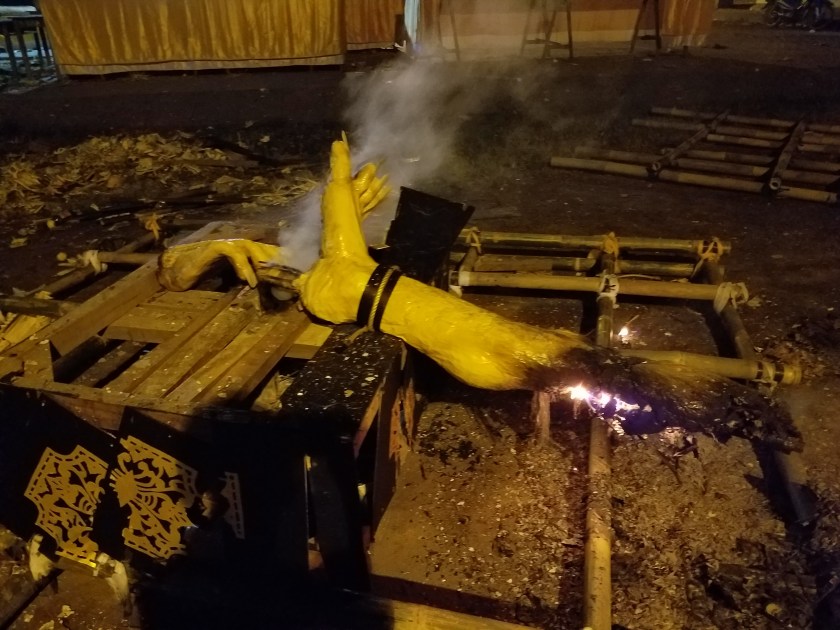
The evening before Nyepi each community in Bali has a parade after dark, where all of the ogoh-ogohs are supported on large bamboo structures and carried through streets by many men and boys. We were staying in the coastal town of Candidasa, which is where we experienced this thrilling event first hand. There were bands banging on drums and cymbals and women and girls marching with blazing torches. Throngs of people whooped and hollered as the huge demons were marched by, often tipped and tilted to confuse the spirits. It was exhilarating, exciting, and very loud! Once these creative and ornate ogoh-ogohs had been marched through town they returned to the temple where they were burned, as no one wanted those evil spirits lingering about! We missed the burning part, though Doug and Ella did return in time to see a few smoldering bits and pieces. By midnight everyone had to be inside with lights turned out and remain quiet for the next 24 hours, an attempt to trick evil spirits into thinking the island is uninhabited and thus ignoring Bali for another year. No one is allowed to be outside, the government shuts off internet, and if seen, village police escort even tourists back to their hotels. Many people fast and don’t speak for the day (which Helen participated in). At our resort we did have power, though there were no outside or dining room lights on after dark, and all was in fact very quiet. The following morning we saw throngs of villagers swimming in the ocean, cleansing themselves for the new year.
Ogoh-ogoh parade, Candidasa, Bali
After Nyepi Day we settled into a routine of relaxing and sight-seeing, visiting a couple of nearby water temples. Ella, Helen and I completed our first of three days of PADI dive certification but were thwarted from completing the course by various illnesses–none too serious but enough to keep us out of the water for open water testing. The current plan is to complete our certifications when we return to Indonesia.
Taman Ujung Water Palace
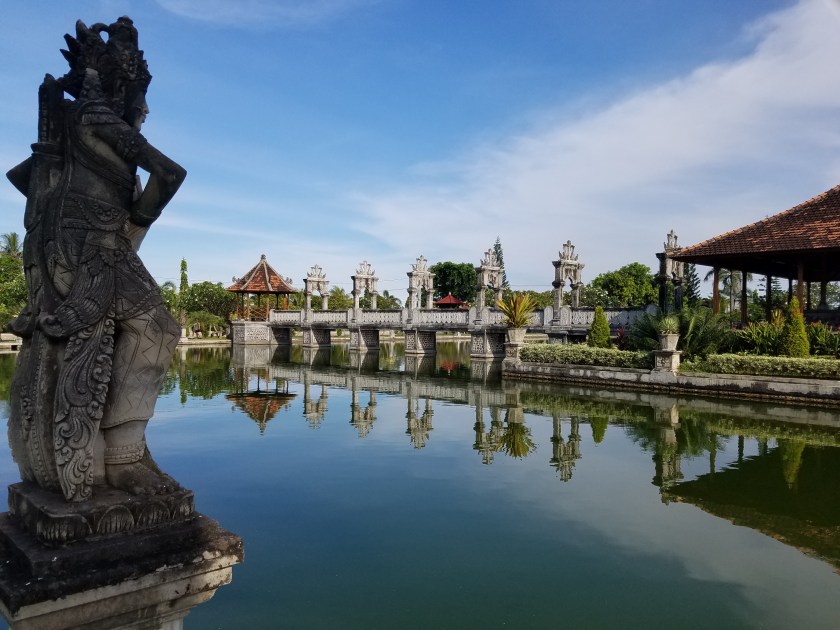
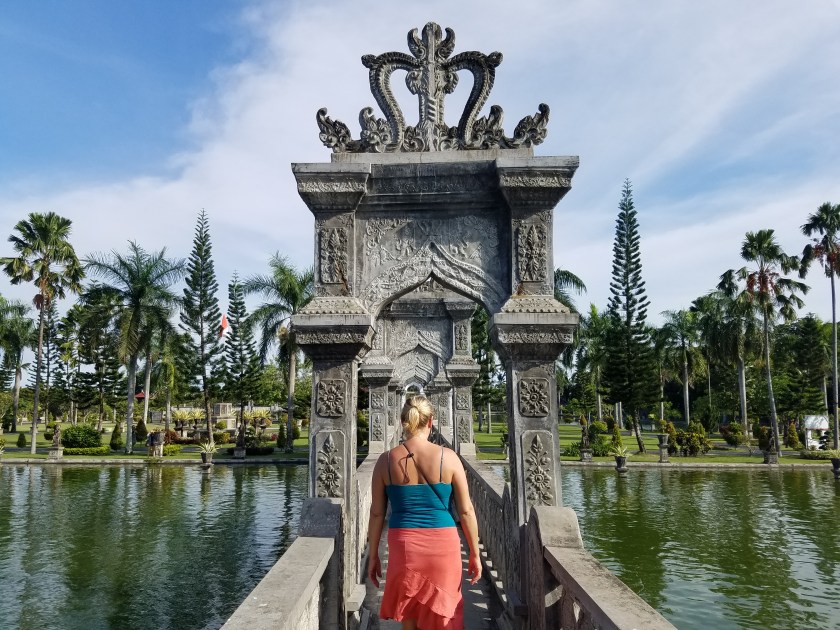
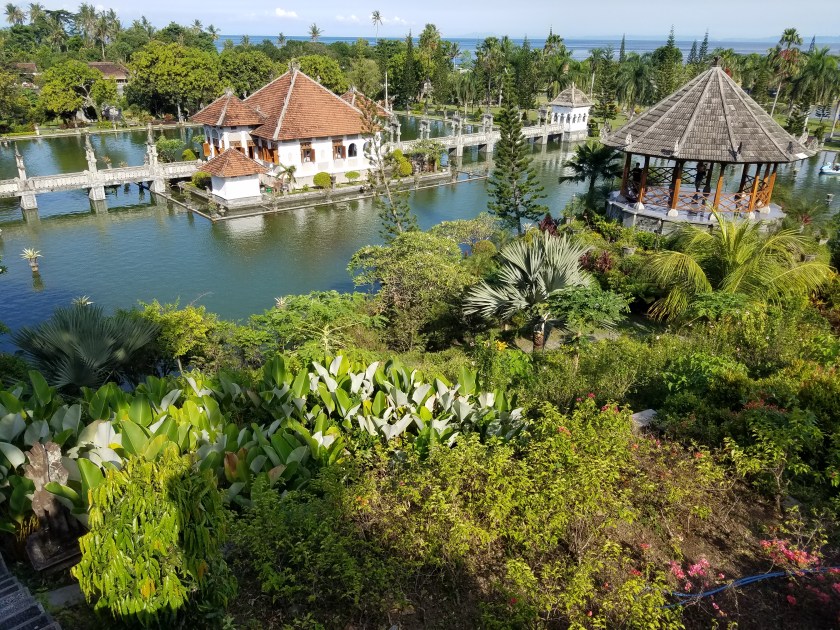
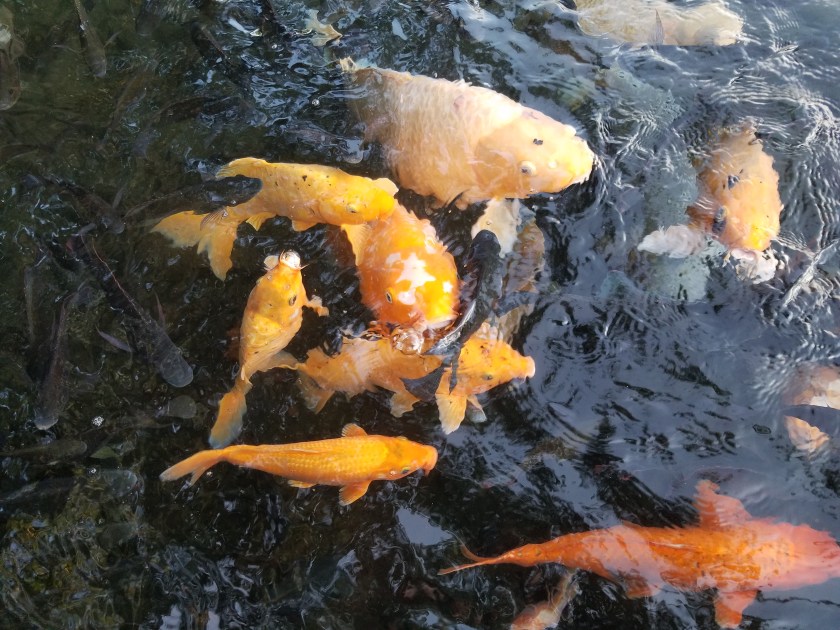
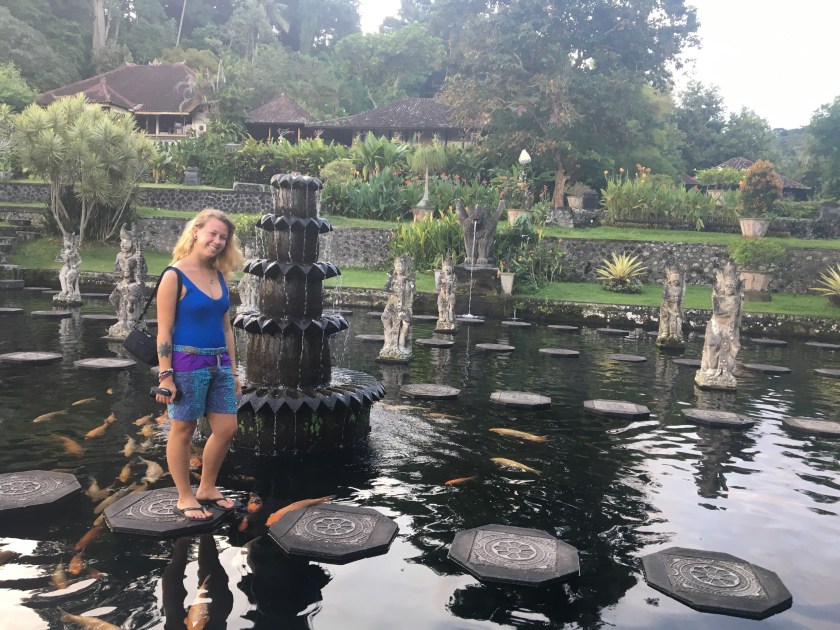
Tirta Gangga Water Palace
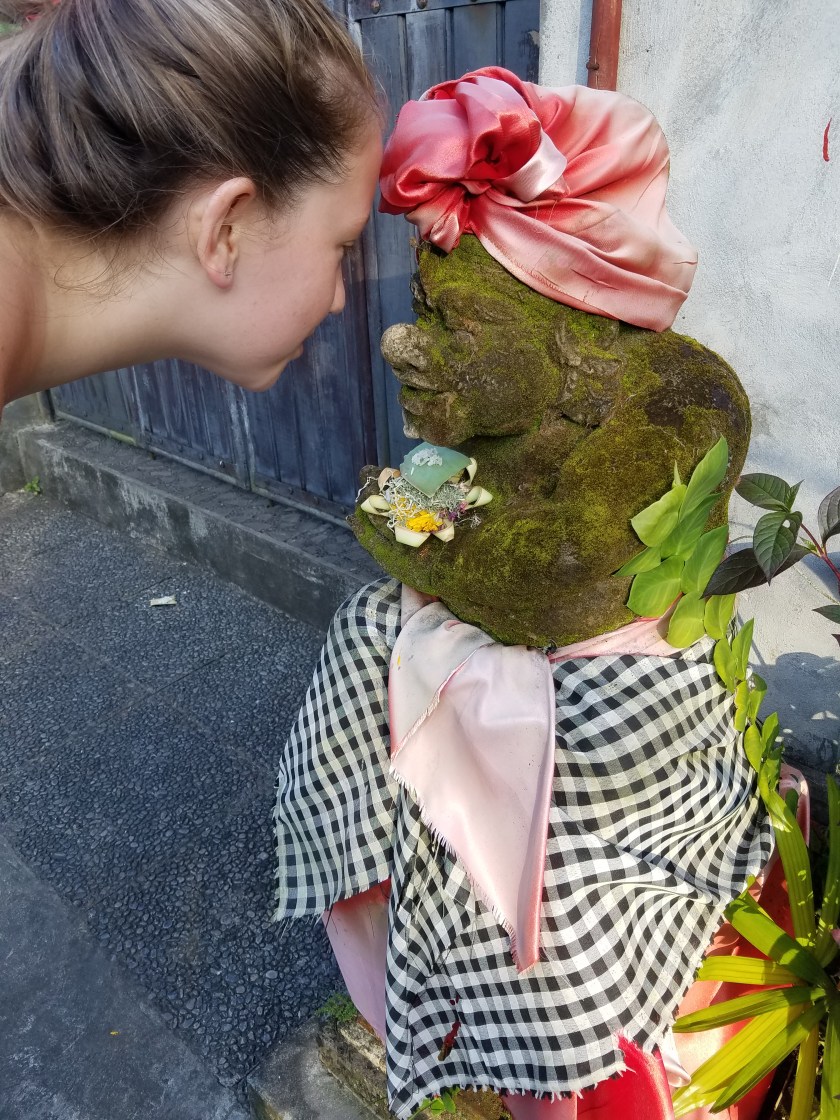



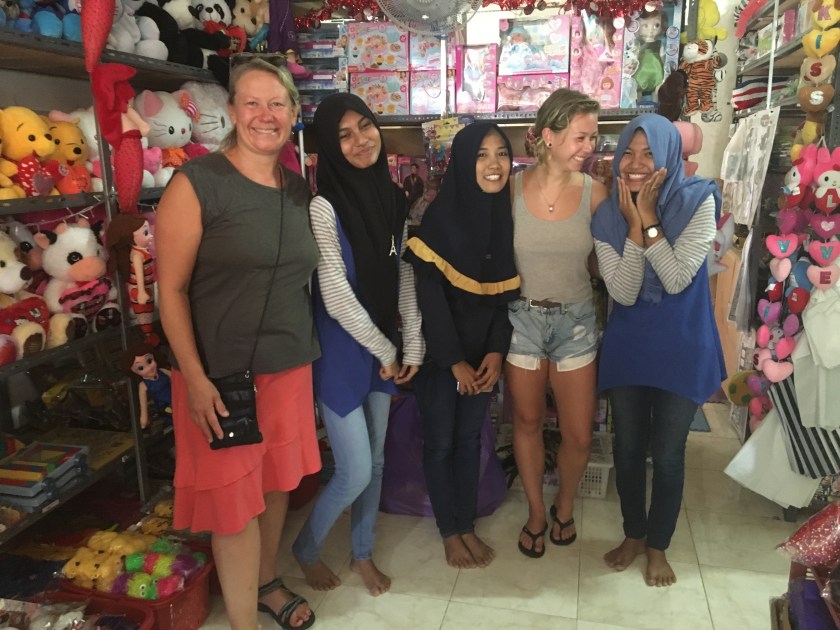
Helen turns 15!



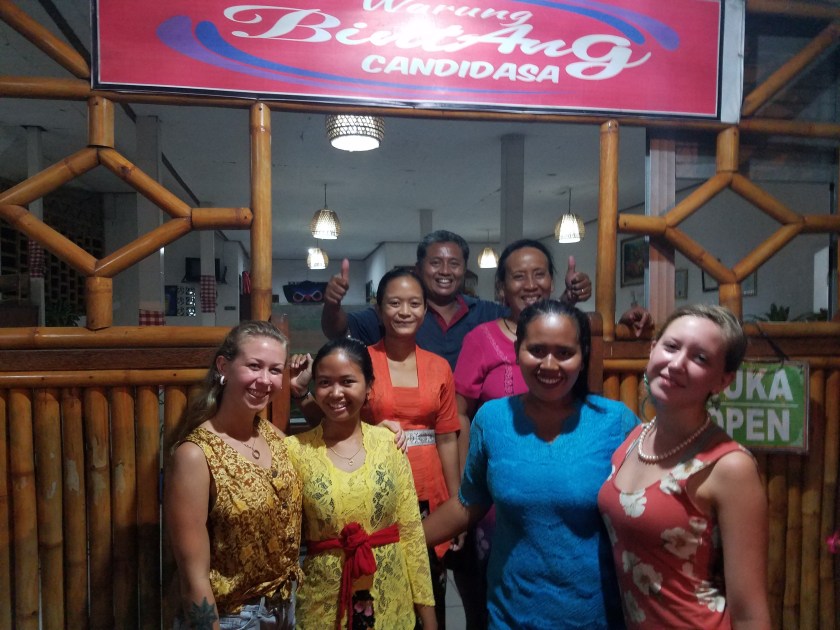
Every day this beautiful woman made several gorgeous flower bowls at our resort


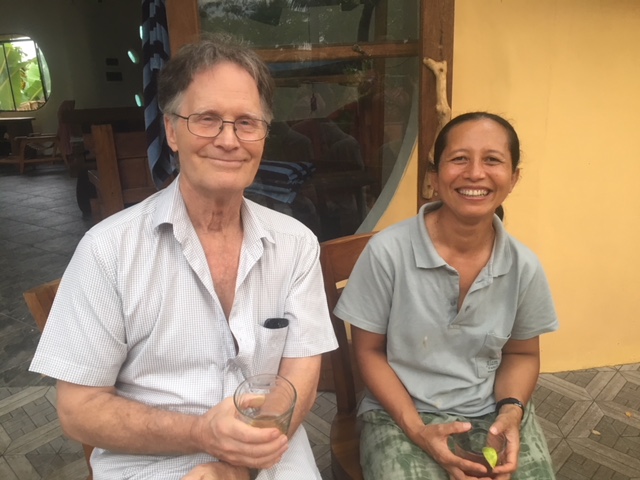
In Ubud we connected us with new friends Richard and Wayan (long time friends of our dear friends Judy and Ken Segal). Richard is from New England and Wayan is Balinese; they live in New Hampshire but spend two months of the year in Bali. This lovely and interesting couple brought us to two old villages, as well as on a walk through rice paddies with a view of Gunung Agung.
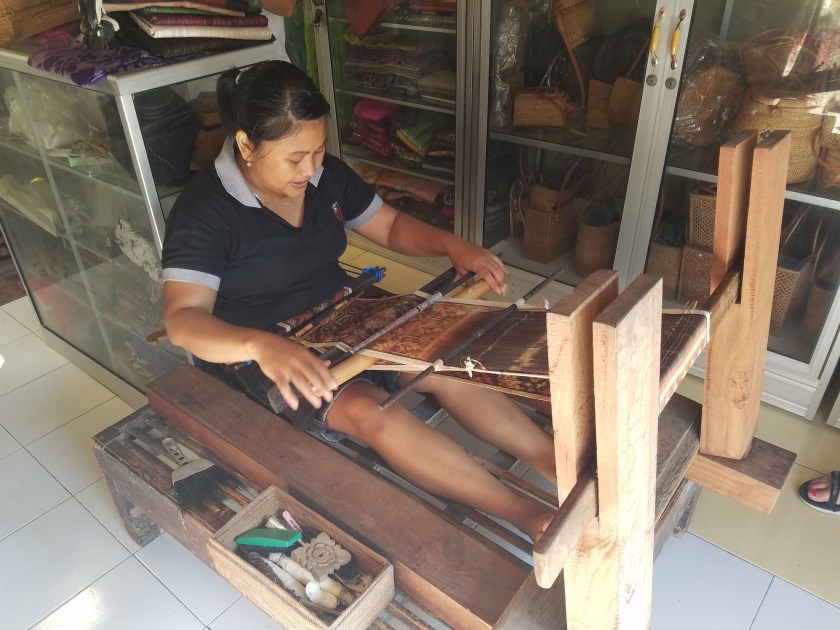
Little Tenganan Village, Bali (possibly the oldest village in Bali)


Superb basket weavers in Bali
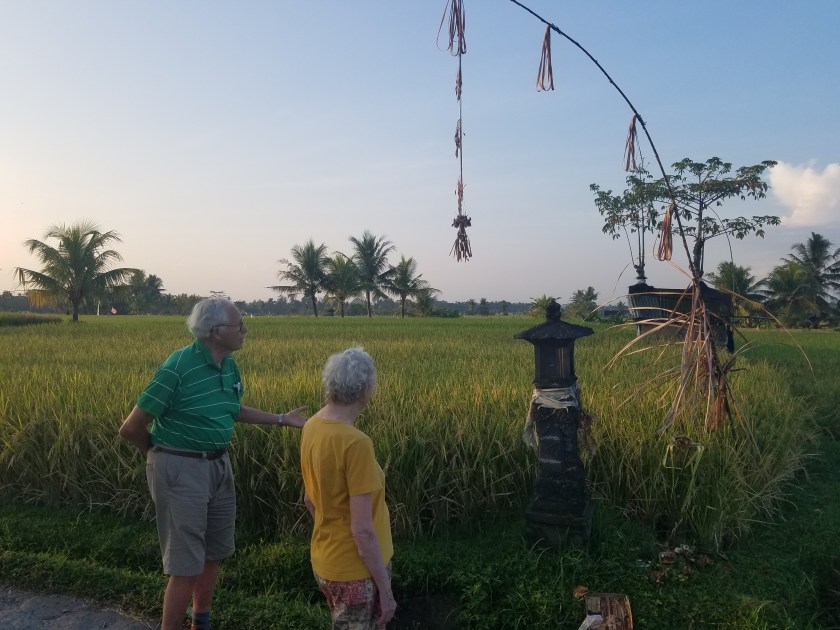
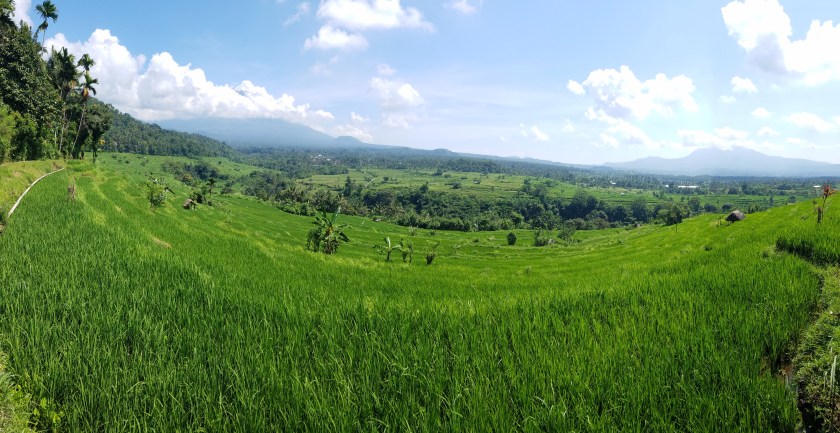
Rice paddies with view of Gunang Agung
It was a 5 snake walk…


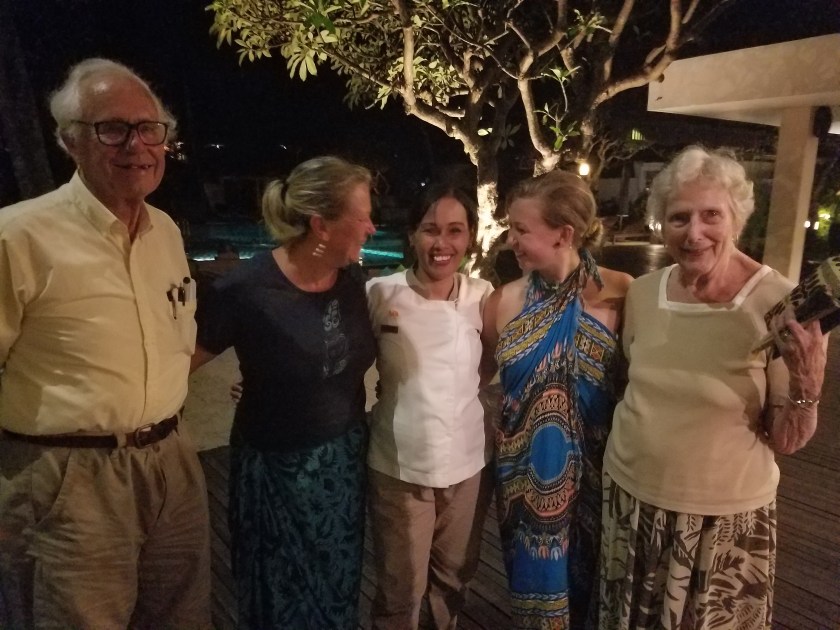
On March 24 we bid a sad adieu to Ibu and Poppa and started our 16 hour travel day. Two short flights and one long round of customs later we were in Chiang Mai, Thailand, our new home for the next two weeks. But that’s the next chapter…
Here’s a letter Doug wrote to his brother Steve summarizing our Bali trip:
“Hey Steve,
I’m writing again on a plane flight and this time we’re bound for Chiang Mai. We all got to hug Mom and Dad one last time this morning around 8, then our driver whisked us away from our Candidasa resort a drove us the 2 hours back to congested Denpasar and the modern new airport that none of us would recognize from the old days. Last night over dinner Dad again asked the question, first posed some weeks earlier, as to whether we’d still recommend Bali as a travel destination. The answer is complicated, but yes. Our perspective will also evolve, certainly, over the months to come, as we are able to contrast our 3 weeks here with other Indonesian islands and countries in SE Asia. On the one hand Bali has grown way out of hand as a popular tourist destination, and at least in certain areas it seems officials haven’t planned well for their vision of the island’s future. Here are a couple of scary sad examples, but keep reading. Bali is also still amazing, of course, and so glad to have had the chance to smell the incense rising from offerings and again see funeral procession towers amidst the clanging of gamelans.
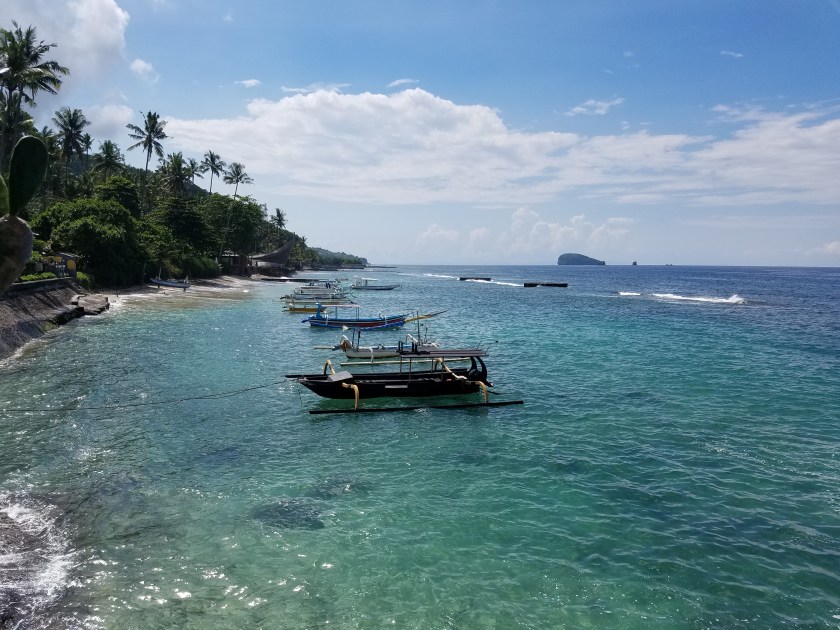
Ok, so how’s this for a couple of ridiculous, corrupt, bone headed development decisions. First, remember sleepy little idyllic Candidasa from the old days? This was a quiet backpacker’s haven until sometime in the 1980s when it was recognized as the next hot destination for tourists. Rich developers built resorts all along the sandy bay, mining the offshore coral reef as a source for their building material. Without the protecting barrier, waves soon eroded away the beaches so now a stone seawall protects the shore and additional stone barriers have been installed 100 feet off shore in an attempt to re-create what the reefs had done naturally. This is actually somewhat working, as apparently the inshore area is getting shallower as sand begins to slowly re-fill. Our resort, the Rama Candidasa, has a lovely open walled eating area perched a dozen feet directly above the pounding waves, and to one side an open area similarly raised, with an imported sand strip fringing pavement and a beautiful swimming pool. A couple of days ago while sitting with Dad on a lounge near the far corner of this area, a rogue wave struck at a different angle than typical and we were suddenly drenched by a falling wall of green seawater. Totally soaked. Our books dried out okay and fortunately my computer was still in my daypack and we had a good laugh about it but I’m blaming the developers for their stunning lack of foresight when envisioning the aftermath of their building orgy.
This next example is pretty spectacularly bad as well. On the flight from Perth I cracked my new Lonely Planet Indonesia book, printed in the summer of 2016. In it they talked about a highly controversial plan (called the Benoa Bay Reclamation Project) to spend hundreds of millions of dollars building a new “Dubai style” entertainment facility in a protected conservation area near the airport just south of Denpasar. Doing this would involve cutting down 75% of the bay’s mangroves and building several artificial islands that would be fringed by sand that would be mined from beaches on the nearby island of Lombok. The facility would feature resort hotels, a casino, a golf course, amusement park and improbably a motor speedway. The book spoke of an upcoming meeting between the environmentalist activist protesters and the outgoing president of Indonesia (Yudhoyono) who revoked the area’s protected status and greenlighted the investors’ plans. The outlook didn’t look good, and sure enough, one of the first things we encountered when leaving the airport was a vast stretch of intertidal wasteland covered with the stumps of mangroves. This eyesore stretched for miles, crisscrossed by an alarming network of raised modern highways, the bones of its future construction projects. The damage has been done now and what remains is years of development until the Disney style artificial islands have been manufactured as a playground for wealthy gamblers and racing enthusiasts. Really? I would have thought Bali’s “brand” was beauty and nature and spirituality but I’m guessing all that was trumped by the millions of dollars in short term profit such a project must be generating for a few influential businessmen.
Anyway, let’s shake off those awful images and move on. Just to wrap up a few thoughts on Bali, there is still magic to be found here. On a map the island looks pretty small, and is compared its giant neighbors like Sumatra, Java, Borneo and Sulawesi. But on the ground Bali is super mountainous, the roads are slow, and the tourist hoards seem concentrated in a few areas around Denpasar and Ubud. When we met up with Mom and Dad after visiting Komodo, we spent our first day driving from the south to Lovina on the north side of the island. We passed through areas of jungle and several old, traditional villages surrounded by terraced rice paddies, confirmation that outside of major resort areas the old Bali appears alive and well. One day in Ubud the 4 of us younger Strouts met up with another family “world schooling” their teenagers and drove way up in the mountains between Gunung Agung and Gunung Batur. We had a brilliant group bike ride back down 32 km’s on at first a forest trail, then quiet roads and paths through villages and rice paddies. We were delayed 3 times that day by funeral processions and passed numerous small temples and even a mysterious, dark waterfall, hidden down in a cave like ravine. It was a stunning excursion, coasting along absorbing the sights and the smells of incense and garbage and tropical flowers. So yes, Bali still has secrets for those who seek them and you know there’s real magic just beyond our sight.
On that note, our time on Bali happened to coincide with their annual new year (the Balinese use a traditional 10 month calendar) festival called Nyepi. They celebrate Nyepi eve with various purification ceremonies, followed by an after dark procession where each village parades giant ogoh-ogohs (bamboo and paper mache statues) representing all manner of horrible creatures and demons. At the end of the procession the statues are all burned, then everyone goes home and by midnight streets are deserted and all lights (and internet) on the island have been turned off. For the next 24 hours everyone stays at home. Nobody lights a fire and most people fast and meditate. Also no one talks. The point is partly so that spirits will decide that Bali is no longer habituated and move on to haunt more lively appearing islands. That was a spectacular evening for us. The six of us walked a mile or so down to a temple where the ogoh-ogohs were all on display, then watched, along with every other resident of Candidasa, as after dark they were paraded up and down the street, amidst the banging of drums and gongs and gamelans, along with dancers and various costume clad dignitaries. It was all pretty overwhelming and Dad got a bit dehydrated and wiped, but we managed to support him okay on a shaky walk back to our resort where he happily accepted a wheelchair for the last 100 meters back to their first floor bedroom. Later that evening after dinner, about 10:30, Ella and I walked back down to the temple where we had missed seeing the dozen or so statues getting burned. We were the only ones there except for a couple of locals resting on a gazebo type structure (called a bale, like a Samoan fale) a little way off, and they took off shortly after we arrived. It was surreal seeing the smoking ash piles, the silence a deafening contrast to the crazy commotion and energy of those teeming throngs just hours earlier. Wandering around we came upon a part of one smoking demon leg and in another location an unburnt finger with a long nail, and some hair, but otherwise they were all good and gone. We were quiet and subdued nonetheless, and hurried back to the safety of our civilized little corner of the island.
Getting back to our arrival in Indonesia, after spending our first night at a local Airbnb near Denpasar we hopped back on a plane for a short flight over to Labuan Bajo on the west coast of Nusa Tenggara (aka Flores). This is the gateway to the Unesco world heritage area of Komodo national park. We had 5 days before the folks showed up and spent 3 of them on a boat we chartered to show us around several islands, a couple of which were home to fearsome dragons, as advertised. That was a great introduction to Indonesia. The boat was large and comfortable, with a crew of 5 (the captain, our guide and 3 cooks/deckhands) and we cruised among a scattering of high green islets on glassy calm water. The corals were bright and healthy and the visibility excellent. Our first evening we spent half an hour watching an endless stream of fruit bats rising up from a mangrove island as a sunset lit up the sky all around.
We went on a couple of good hikes and the dragons were very cool to see (up to 200 lbs and 9 ft long). They were mostly pretty quiet but we saw several walking around, including a big one hunting on the edge of the primitive village of Komodo. It was rooting around in a broken down stone wall area and a woman told us it had just eaten a cat. All the goats in the village were rapt, standing stock still with eyes only for the big predator as it scratched and dug and tasted the air its big forked tongue. A little further on we walked past a mosque with some missing ceiling tiles and a small komodo dragon peering out. Again we were told the small dragon was hiding from the big one, having taken refuge there just that day after a near escape. That was also the same dragon, the villagers said, that had bitten a tourist from Singapore about 10 months ago. It’s interesting to google Komodo dragon attacks. One of the more sensational was a dive group that got into trouble in strong currents during a day trip out of Labuan Bajo 10 years back. After swirling around in the ocean for most of a day, exhausted and dehydrated, the 5 tourists finally landed on a sandy beach only to be set upon by a pack of aggressive dragons. They fended off the repeated attacks for 2 nights using sticks, rocks and their weight belts before eventually being rescued, un-bitten.
The guy from Singapore was an idiot. Not wanting to pay the small fee to have a ranger show him around, he set off on his own and soon found a group of dragons eating a dead pig. He got up close to them for pictures and we were told he wasn’t aware when another dragon stalked up from behind, grabbing him by the leg. Nearby villagers heard the screaming and managed to rescue the tourist, getting him to a hospital back in Labuan Bajo where he apparently survived. Pretty cool, huh? Imagine having big lizards wandering around the forest in Natick or at the lake? That would definitely ratchet up the adventure level when out for our daily dog walks.
One other very cool experience we had that weekend was an encounter with manta rays. On our last morning the boat weighed anchor early and drove us out to a location called Manta Point, an open expanse of water maybe a mile off a cluster of islands. Apparently the currents there are just what the big filter feeders like and they often stack up to feed, facing upstream with their big mouths open, gorging on plankton. Our guide suggested we not get overly excited, as their presence was by no means guaranteed. I was standing out on the prow of the boat as we approached the area and right away saw movement under the surface. (This had been my favorite perch for much of our 3 days on the boat and I’d seen a range of cool marine life, from jumping rays, boiling bait fish, turtles, and once a sea snake poking its head up, then describing a beautiful white s-curve descent as it headed for the bottom through crystal clear water.) That was when we got really excited.
We all had our suits on, though Ella decided not to swim as her new arm tattoo (did you hear she got a carpet sea star permanently engraved on her arm before we left Perth?) was still vulnerable to blurring from water exposure. We motored far enough up current to get ahead of the rays and Ella jumped into the runabout with some crew and a camera. The rest of us just jumped overboard, put on our masks, and looked down at the ocean floor 50 feet below us. We just hung there on the surface, letting the strong current wash us down stream. Within a few minutes the rays were upon us. I knew these creatures were big but not that they were actually massive. I just looked it up and the kind we were seeing have up to 18 foot wingspans. These were seriously large fish, and right on or just below the surface. We would watch them with their big open mouths appearing in the distance and gracefully gliding towards us, which was in fact us being swept down upon them. The boat crew estimated they were a group of at least a 100 rays, all clustered together, so that at any moment we could look around and see up to a dozen. I would be admiring one and then turn to see another brushing by me on the other side. When they swam underneath us all we could see was the black of their backs. At other times as they veered away from knocking into us we could reach out and touch their white underbellies. We’d been told not to make contact with them, as it’s possible to damage their delicate mucus coating, but we all experienced repeated contact, always gentle, their soft smooth wings lightly brushing us as they flew by. After several exhilarating minutes we were down stream of the group and were picked up by the runabout, driving back up to the top where we repeated the thrilling experience. After 3 passes we dragged ourselves out of the water, headed back to the big boat and were greeted with strong Indonesian coffee and banana fritters. All in all that was a fine few days and an affordable adventure I would recommend to anyone.
And now, almost a month later, we’re in a whole other country. Last night we flew into Chiang Mai and are staying in a small hotel in the old city, a warren of small streets and traditional buildings surrounded by walls and a moat in the heart of greater Chiang Mai. We just got both girls signed up for Thai massage classes at different nearby schools. Both meet daily. Ella’s will run for 2 weeks and Helen’s one, after which she may enroll in a silversmithing course or some other art class. I’ll tell you all about this next leg of our travels as it evolves. In the meantime, the folks must be just about home by now and hope you’ve been able to wish Molly and Mitzie a fond adieu. Crazy to think we’re two thirds done with our travels now and will see you, hopefully, at the lake in about 4 months, just before the annual club meeting. In the meantime, happy Spring and love from the tropics,
Doug”
 Strout Family Year of Travel