If you’d like to be notified when there’s been a new post, you can sign up for the blog notification below on the left. I promise to not spam you or sell your information. 😉
Four-second clips of Helen’s close encounters with a joey at Warrumbungle National Park:
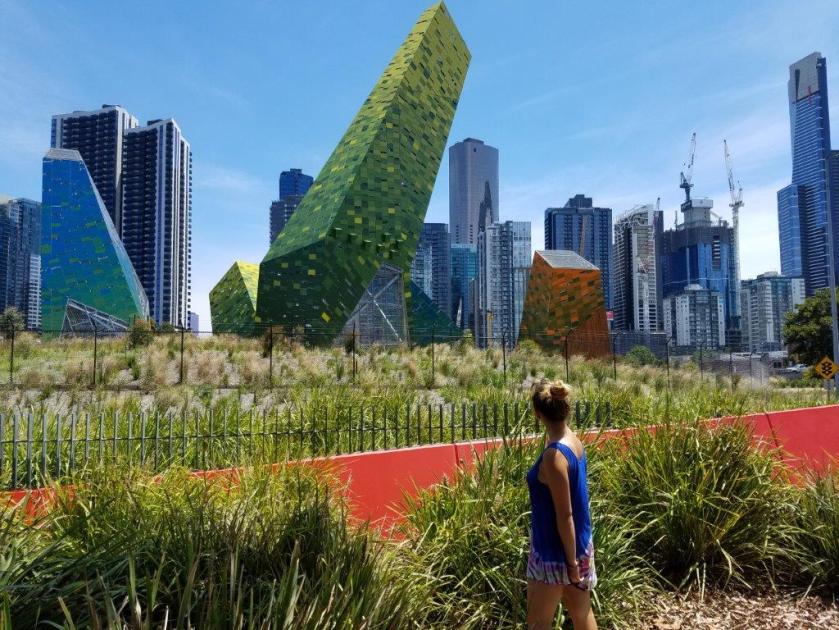
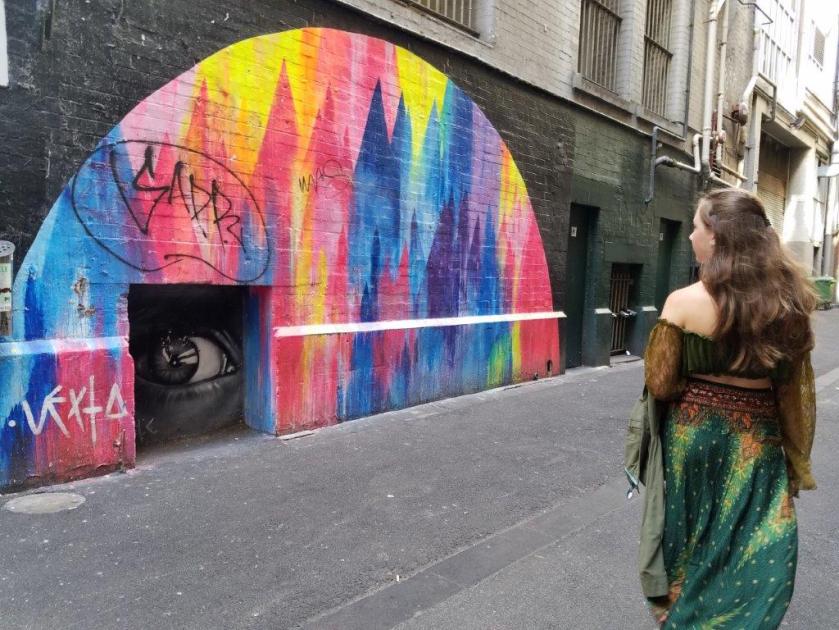
After our epic stopover in Berremangra we arrived in Melbourne on December 16 (yes, I’m a bit behind with my blog posts). Once we were settled into our 26th story apartment we all found Melbourne an easy city to navigate by foot and public transportation. The girls really enjoyed the freedom of getting around the city on their own, so we all got to have a bit of needed alone time. Fortunately we left Melbourne three days prior to its car attack terrorist incident, though we had walked where it occurred.
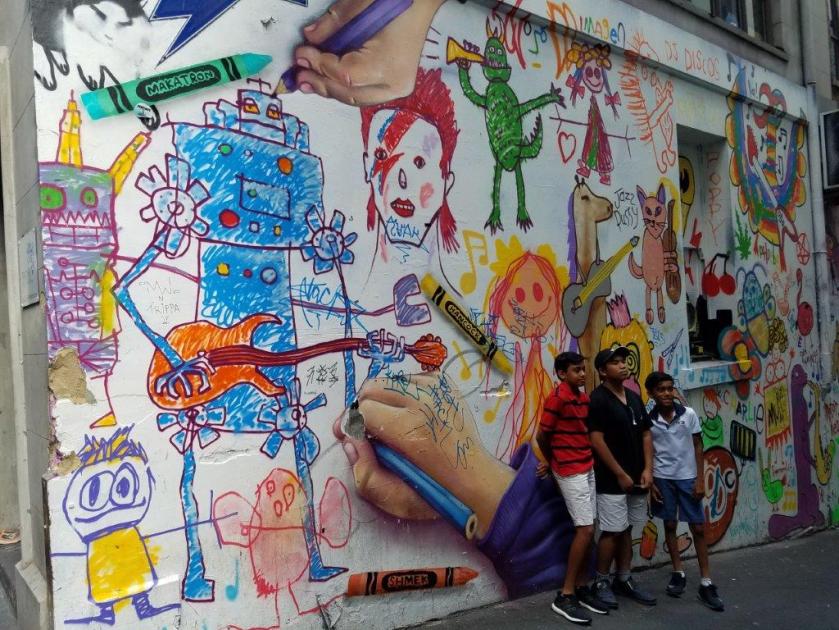
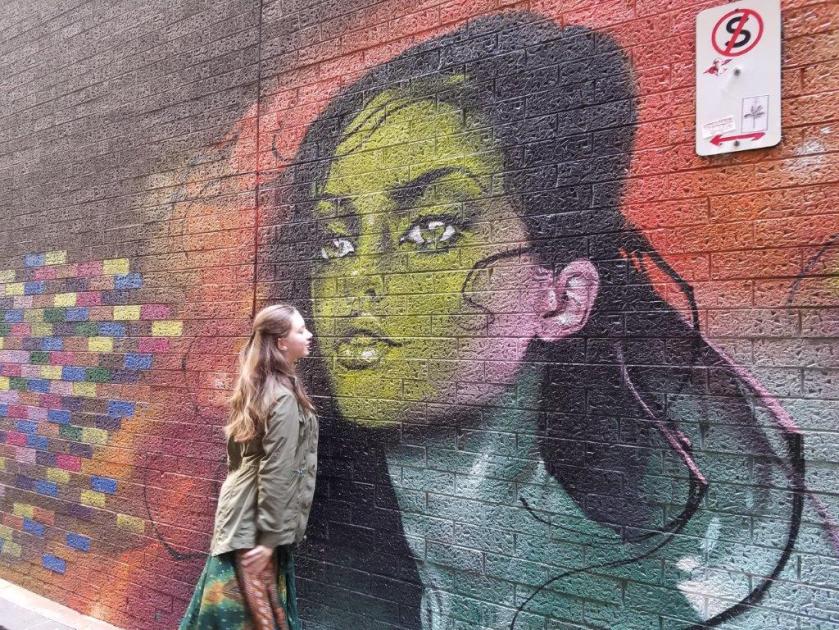
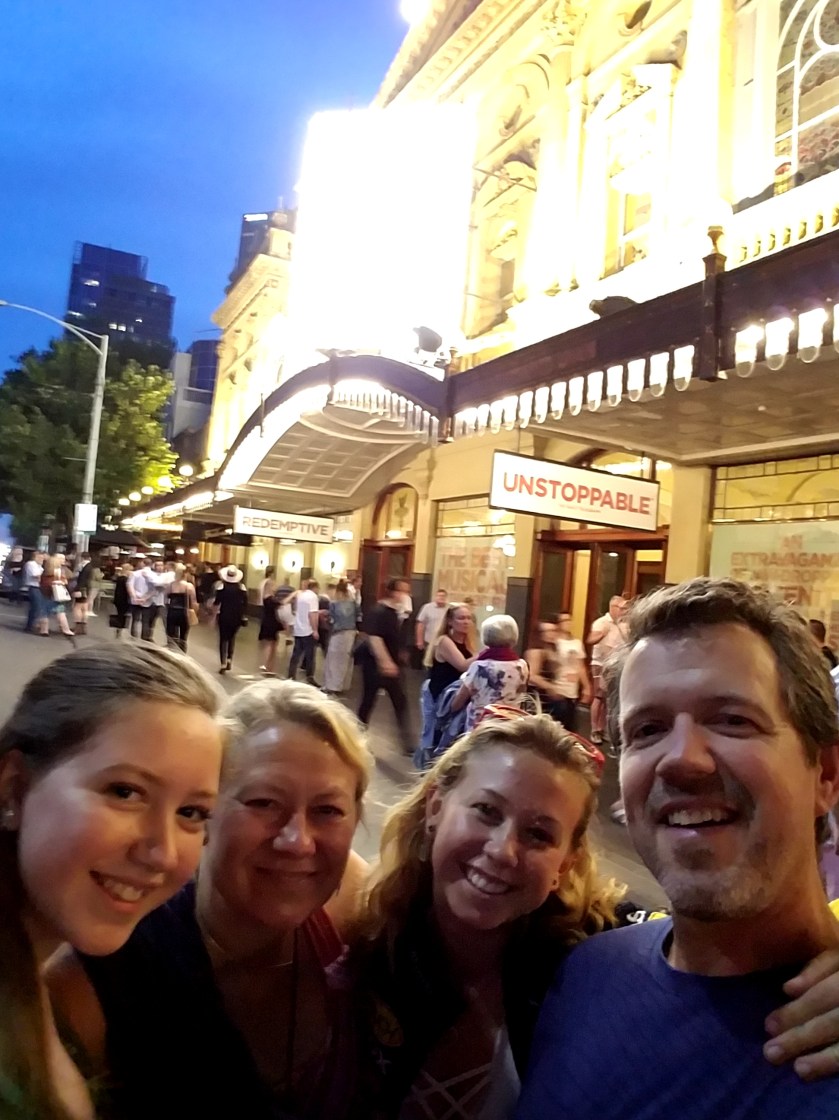
Melbourne is a beautiful metropolitan city of about 3.5 million people, and features great art, food, and gardens. Our first night there Doug scored us half-price last minute tickets to see the very funny, irreverent musical comedy “The Book of Mormon”. Another Melbourne highlight for us included the art exhibits in The National Gallery of Victoria. Helen actually was assumed by some viewers to be part of one interactive exhibit as she danced in a dark mirrored room on a floor with white swirling lines that moved with any foot movements, giving the effect of a live Van Gogh’s “Night Sky”. Ella filmed it and they both found the experience mesmerizing.

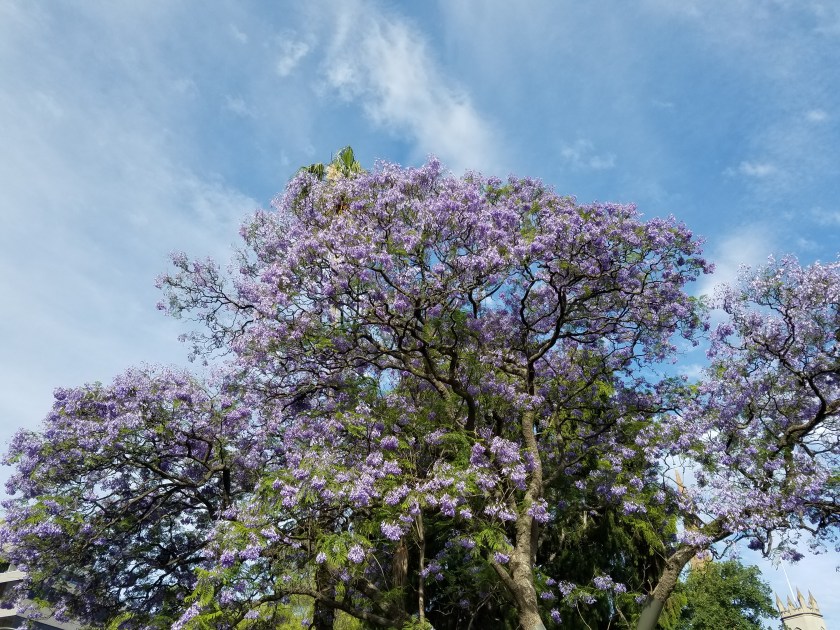
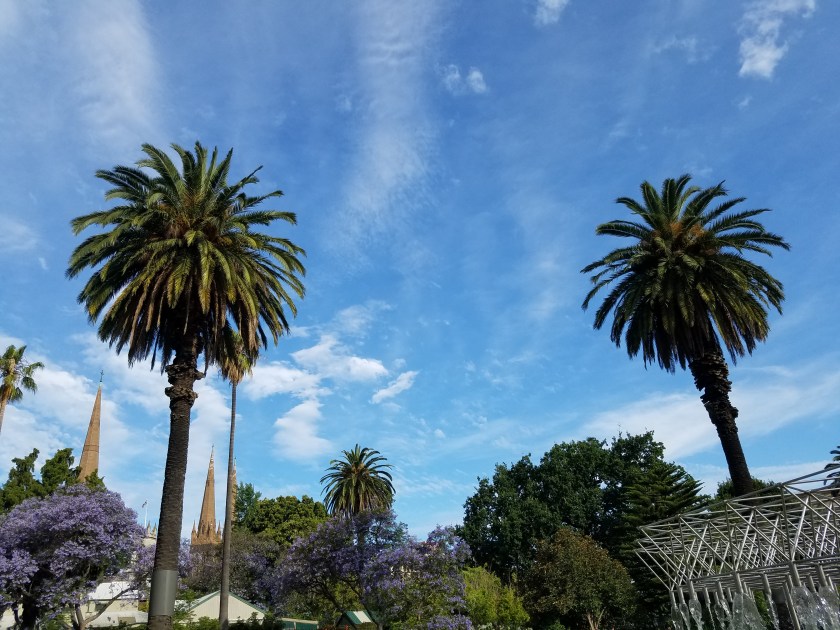
Melbourne also exhibits a lot of natural beauty such as the jacaranda tree. We’ve seen these beautiful tall trees in their early summer bloom throughout our travels in Australia. The sight of their purple blossoms along with the scent of so much jasmine about is intoxicating!
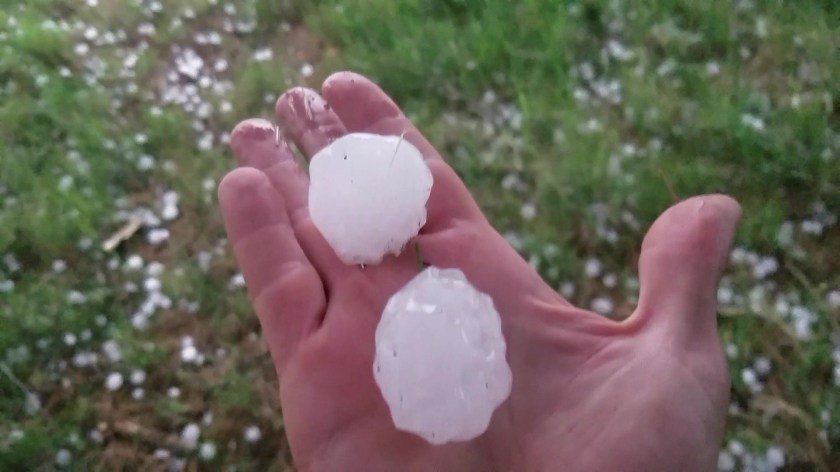
Helen–eager to interact with kids her own age and have respite from her family–researched and discovered an under 18 dance party. We were all impressed she would attend without knowing a single person. She had an amazing time and made many new friends she’s keeping in touch with. Doug once again connected with some local disc golf players and had a “first”; they all got caught in a sudden storm that dropped close to golf ball size hail. They were able to seek some shelter under a tree, though one bloke got a gash on his head and everyone’s cars were damaged. Our truck has perhaps 100 dimples/dents on the hood and roof, two shattered plastic side window shields, and a shredded FoxWing awning cover. We are having our car assessed and will find out soon if it can be repaired before we sell it in mid-February.
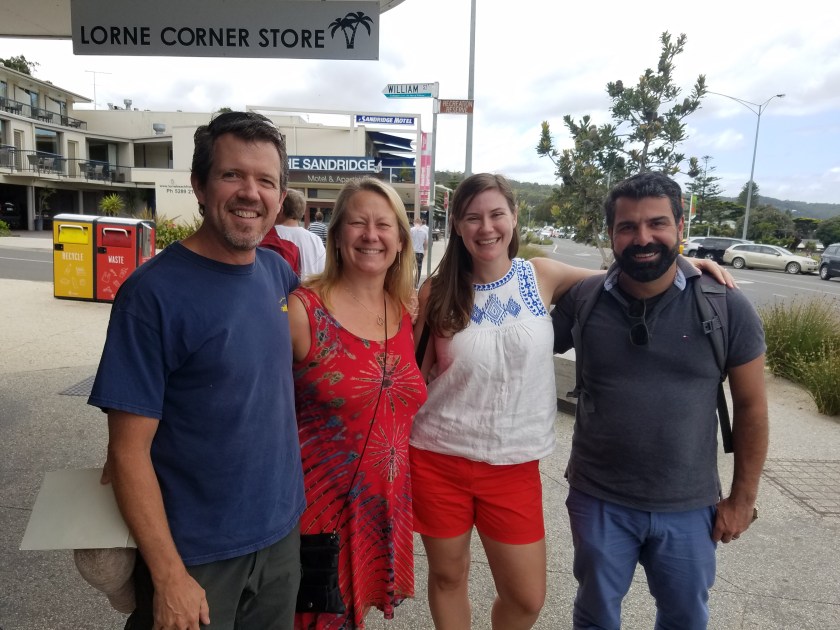
After four nice days in Melbourne we headed west for the Great Coastal Highway, with a stop in Lorne for lunch with Caitlin Willard and her husband Francesco. Caitlin is one of the physicians I worked with at Scarborough Family Medicine, and she and her husband were traveling in Australia for a few weeks before moving to her now new home in Venice, Francesco’s home town. It was lovely to see their familiar faces and share travel stories.
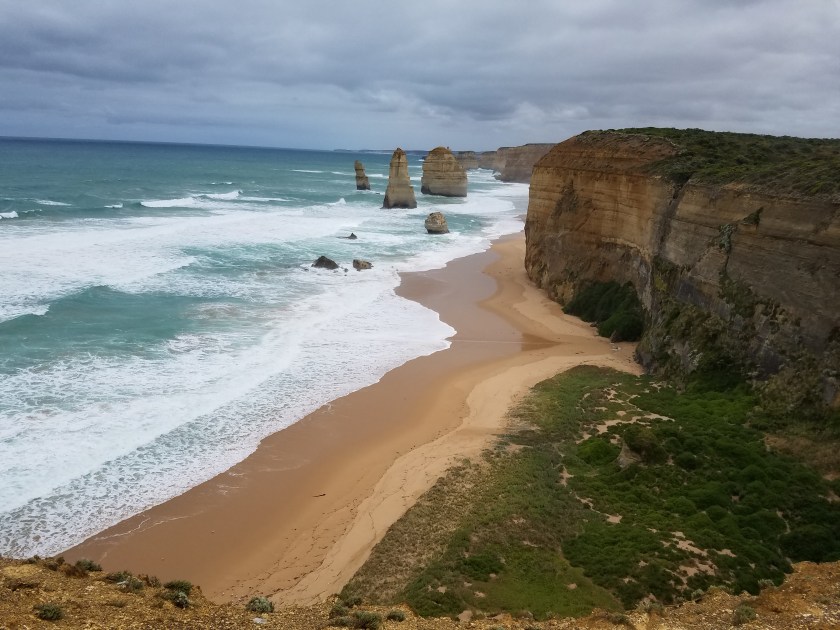
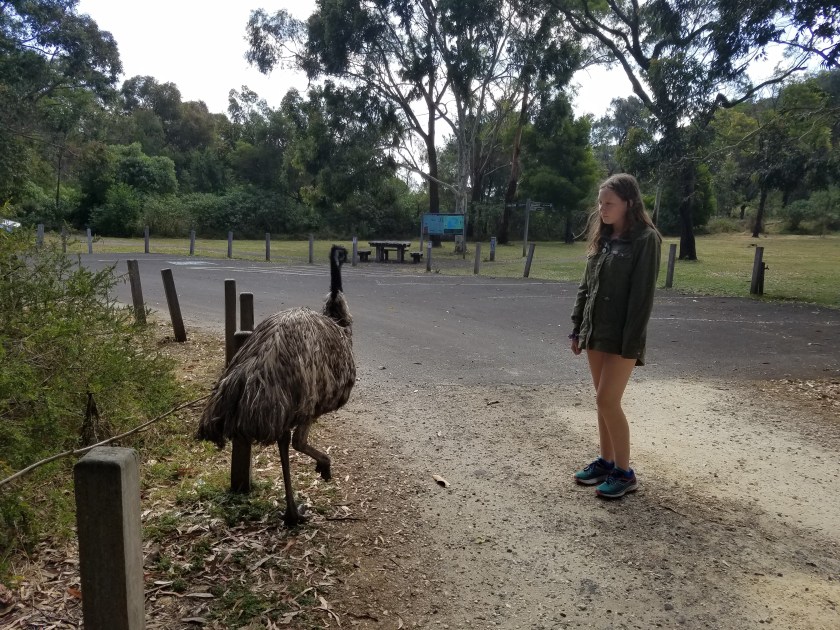
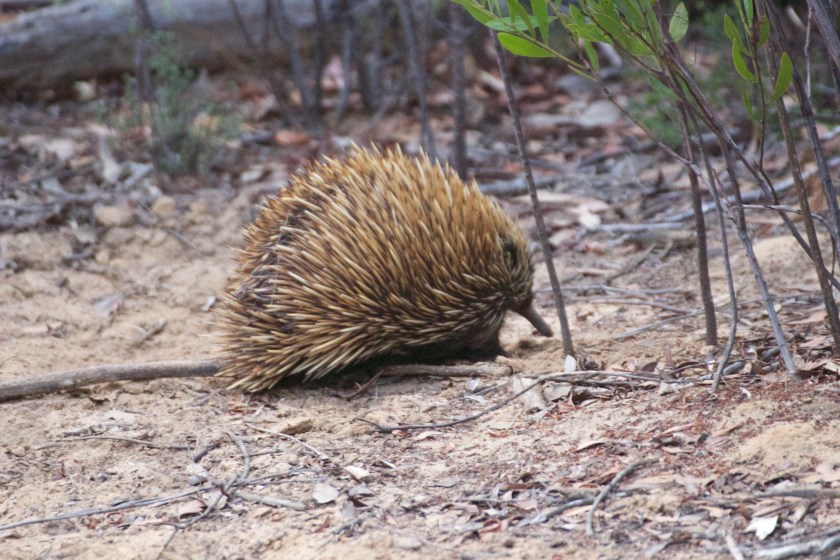
The Great Coastal Highway is aptly named, with gorgeous famous viewpoints all along the way. We saw our first echidna (which looks a bit like a cross between a porcupine, hedgehog and an anteater), which the girls even patted. We also saw our first emus, which resemble a Dr. Seuss version of an ostrich.

Coming back from a glow worm forest walk one night in Apollo Bay, Doug and I drove by a mother koala carrying her baby. She was not fussed by my stopping and videotaping her–it was more me who was fussed with her striding assertively to me.
Click link below for 14 second video of mama and baby koala
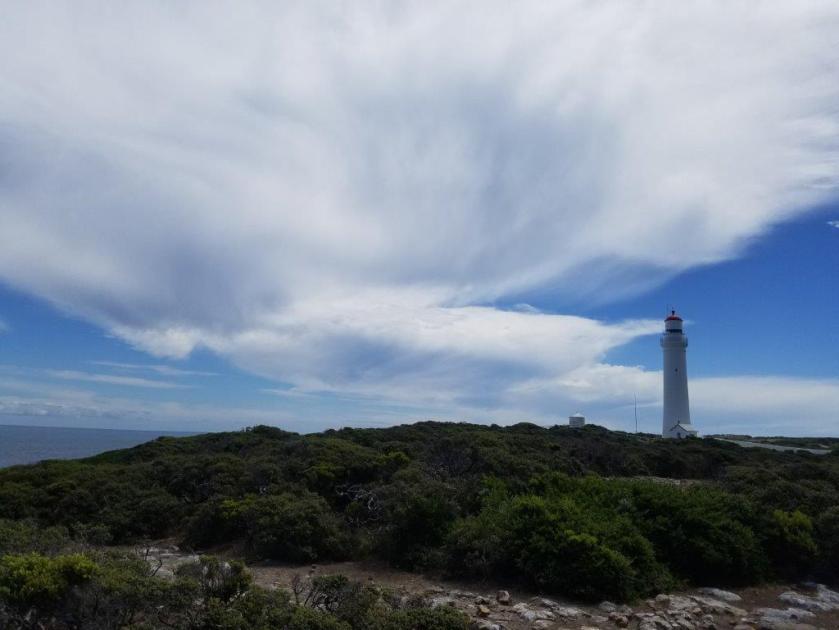
We drove by many familiar vineyards as we continued west, including Lindemans and Penfold. Australia has wineries all over the country, with this particular mid-southern region being famous for its cabernet sauvignon and shiraz grapes. As we neared our next destination of Adelaide we stopped at Cape Nelson, whose lighthouse and rocky shoreline reminded us of Two Lights State Park in Cape Elizabeth, Maine, though with stunning turquoise waters.


We arrived in the lovely little city of Adelaide on December 23 just in time to cook up some Christmas spirit! This was a challenge for us in 90 F degree weather, but we were up for the task (I know, rough…). Once again Doug discovered a local show for us to attend, a Christmas musical called “All is Calm” about the British and German troops having a cease fire on Christmas day in 1914. In this true story, enemy soldiers laid aside their weapons and shared songs, stories, drink and a soccer game, and even buried one another’s dead. The truce was short lived as their commanding officers ordered them to stop fraternizing with the enemy and forced them to return to killing one another. It was a poignant and well done show.
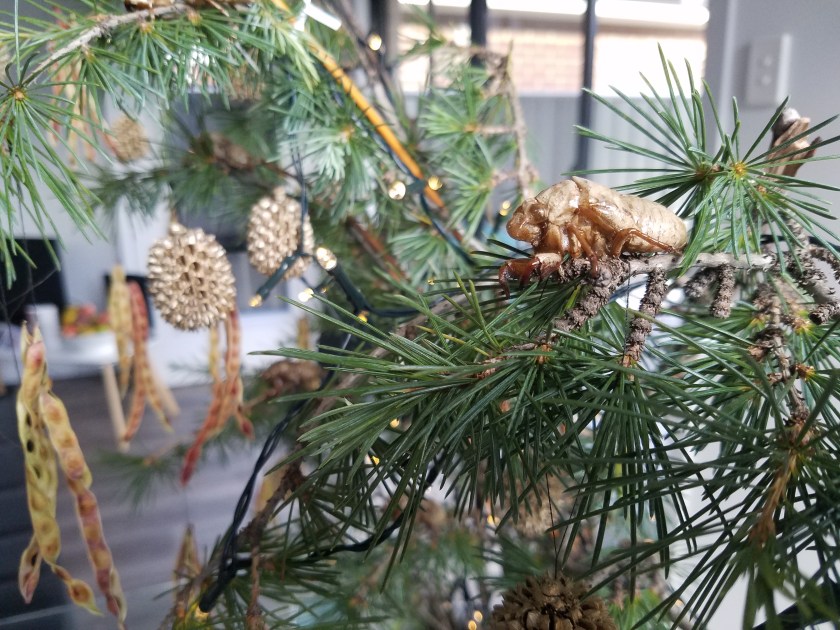
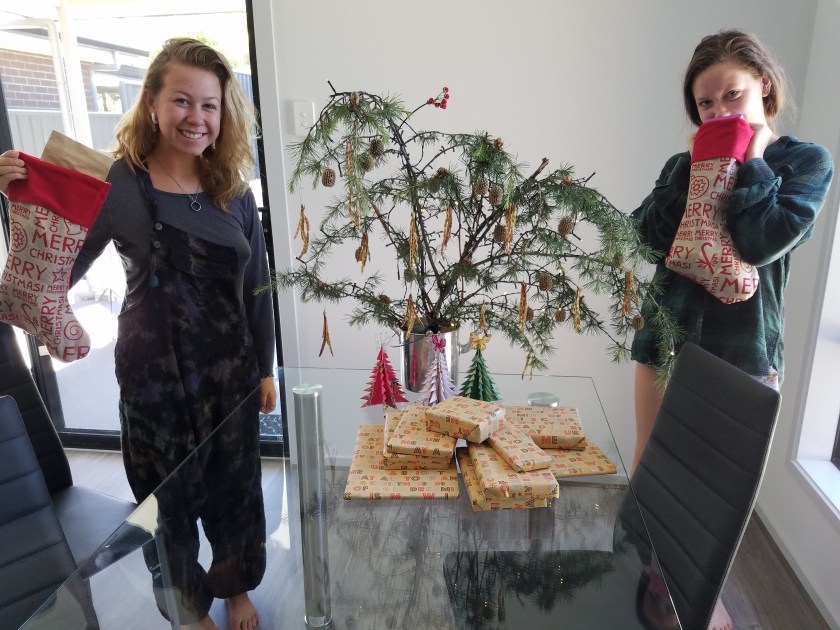
Christmas Eve day was spent shopping, cooking, baking cookies (we went to five stores before finding gingerbread cookie cutters–not a popular item here) and preparing our Christmas “tree”–a pine branch we decorated with fairy lights, gold painted cones and cicada husks, and seed pods. We all agreed it was indeed a very fine tree! We found a local church to enjoy our annual Christmas Eve service, then drove through some neighborhoods to view the very scarce Christmas lights.


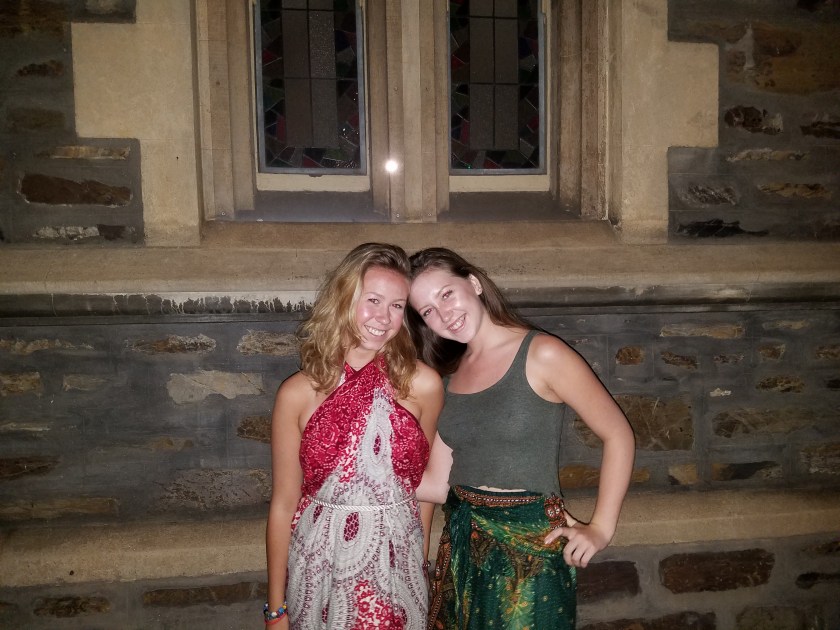
Of course, Christmas magic struck once again and Santa managed to find us in Adelaide. Miracles never cease….
It was Christmas Eve back home for our relatives, so we joined Doug’s family on Skype for our traditional reading of ‘Twas the Night Before Christmas. This was Doug’s parents’ (Alan and Caroline) first time Skyping/FaceTiming, and Caroline in particular was blown away by the experience.
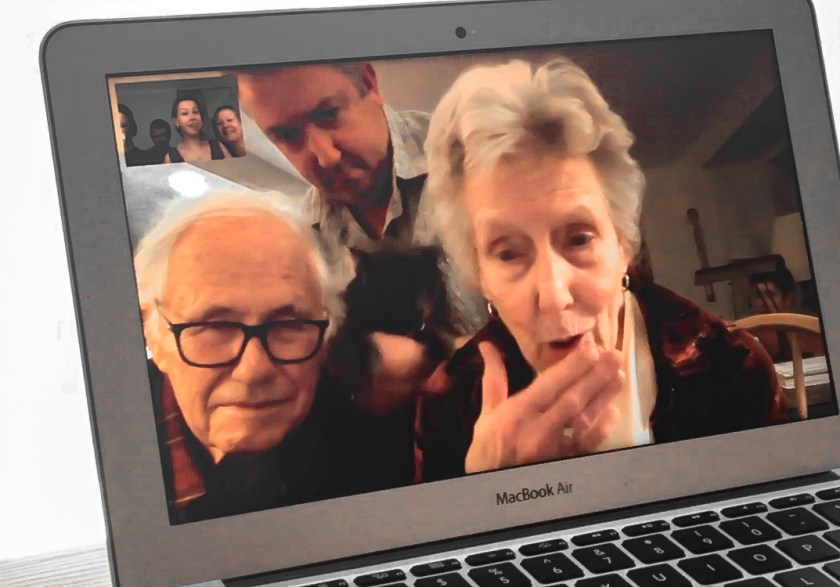
It was bittersweet to see them but not be there. There have been so many changes this year, with Caroline and Alan selling their home of 42 years, us being apart for Christmas, and most of all the death of dear Uncle John Sherrill, Caroline’s brother-in-law. John, who was 94, had been struggling with health issues for the past six months, and his suffering stopped on December 3, just days shy of his 70th wedding anniversary with Tib Sherrill. Aunt Tib and Uncle John have always been a huge part of Doug’s family and a large extended global family, as they have traveled, written so many stories and books, and taught writing all over the world. He is so deeply missed.
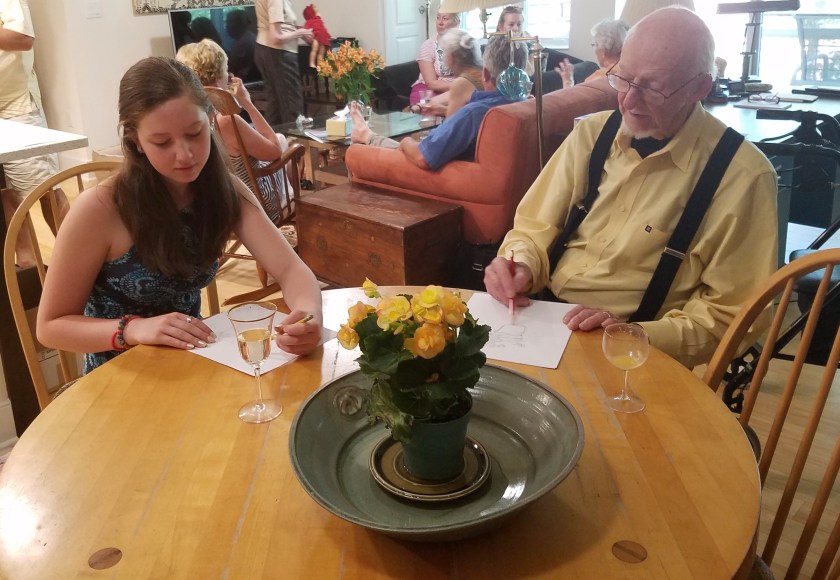
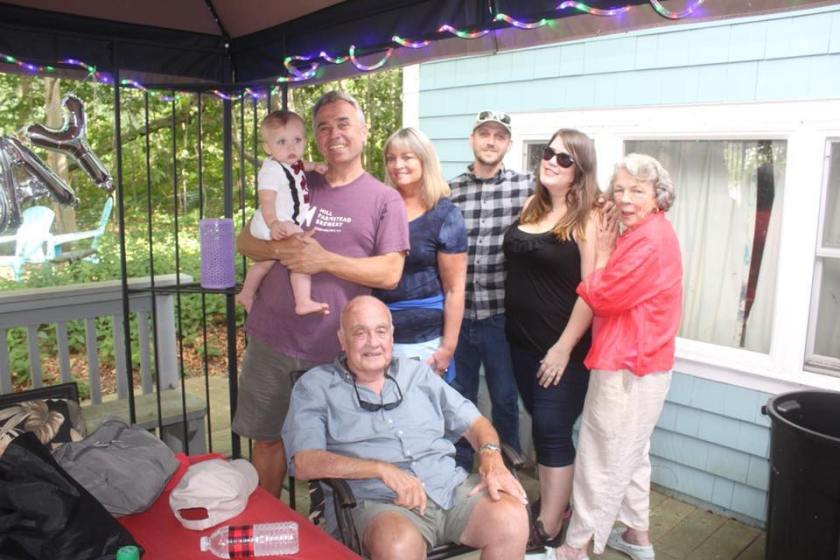
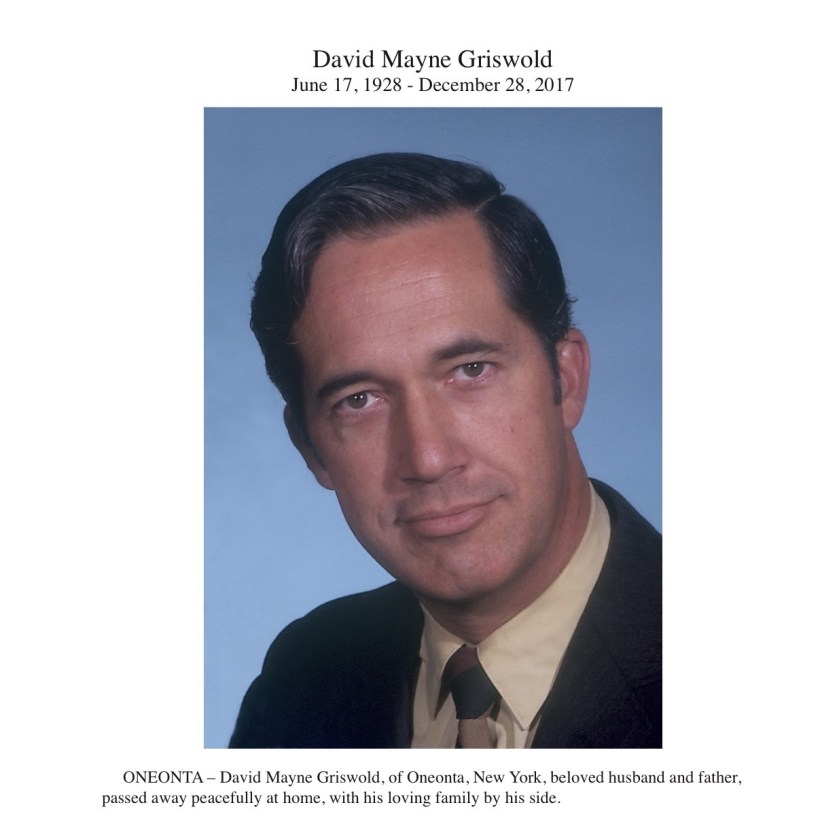
We were also saddened this month by the loss of my sister-in-law Lauren’s father, Frank Luchart, who died on December 3 at age 82 of a sudden heart attack. Then on December 28 David Mayne Griswold of our Lake community (who is also Doug’s father’s first cousin and oldest friend) died after a long struggle with cancer. All three of these departed men will be sorely missed, and their passing reminds us of how important it is to live our lives fully and with love, as they did.
Boxing day involved a drive to the nearest snorkeling beach 45 minutes away. While it’s not nearly as cold as the Maine coast water, we were glad to have our newly purchased wetsuits while bobbing around in the crisp water. The snorkeling wasn’t actually very good, but it was a first to snorkel on boxing day! Following tradition, we saw the post-Christmas blockbuster movie of the year, The Last Jedi. The only missing piece was the Natick Strouts Steve, Laurie, David and Rachel, who we share this tradition with. We then moved on to our second Adelaide Airbnb, a beautiful, charming apartment in a small old cathedral with enjoyable history, art, and luxury.
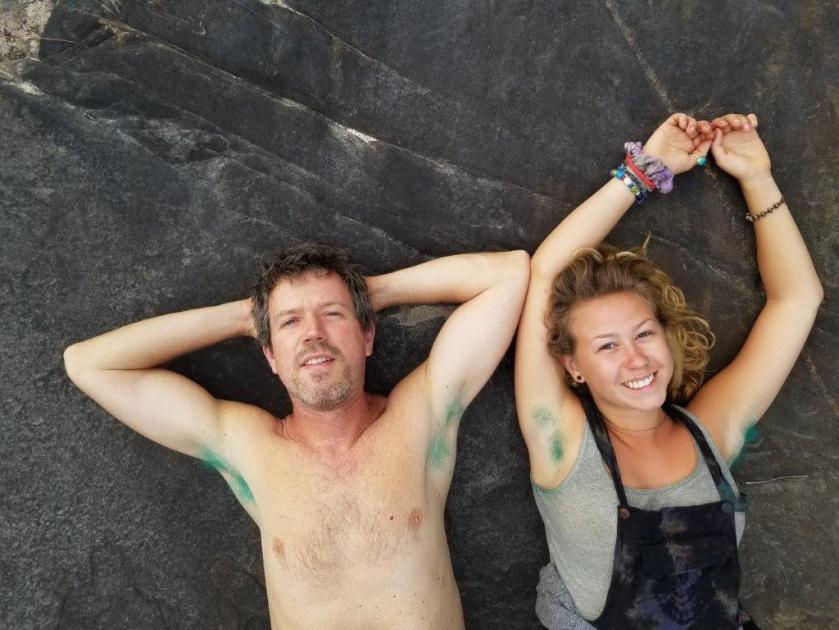
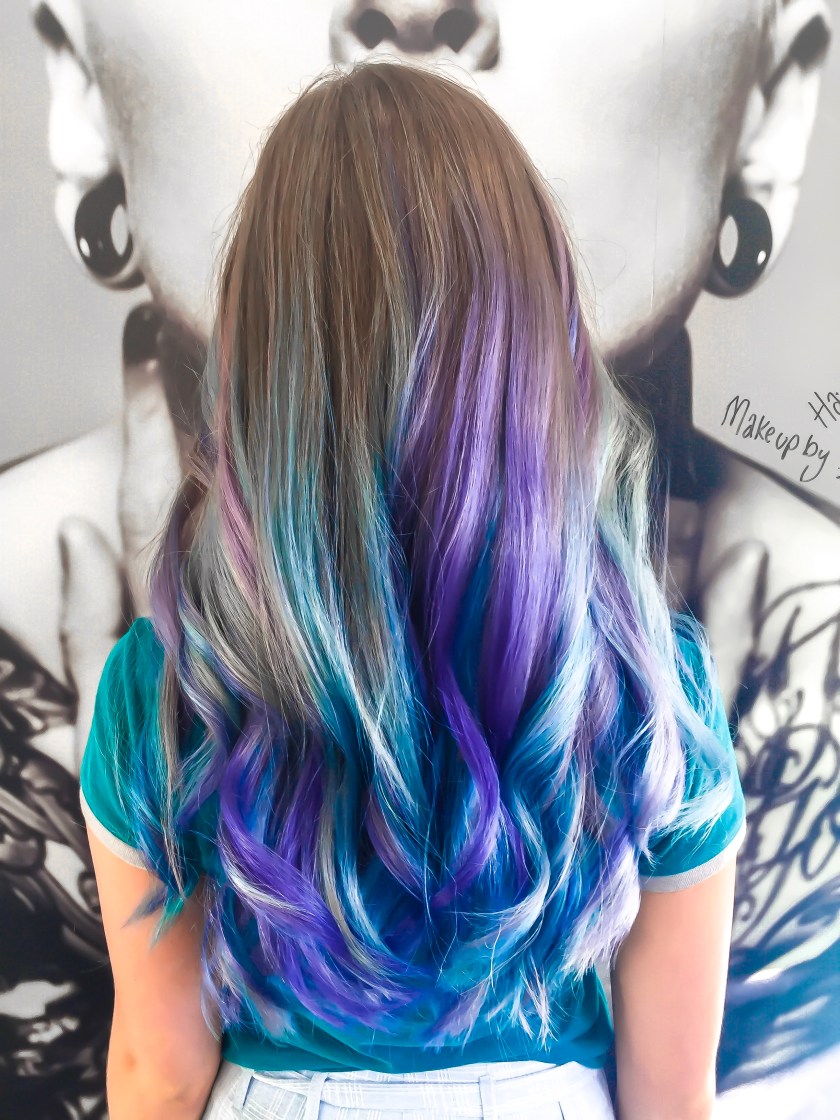
Back in Maine Ella and Doug had decided they’d dye their armpit hair blue. Helen had also recently begun planning a blue hair dye for herself, and so it was…. Teal blue pits for Doug and Ella, and silvery blue ombre hair for Helen. I’m feeling positively boring with my graying blonde, and am open to suggestions.
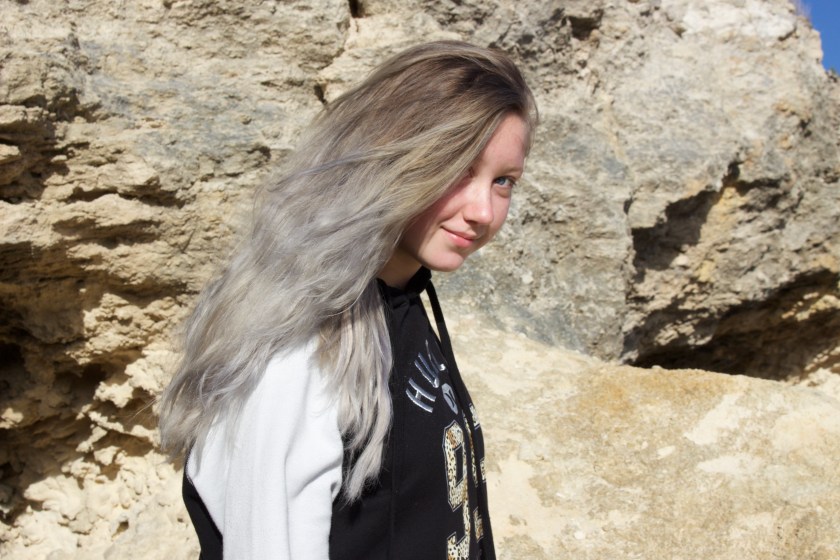
From Adelaide, we hopped down to Kangaroo Island (actually, we took a 45 minute ferry ride). Again we were reminded of Maine, but this time of Vinelhaven and Mt Desert Islands. We spent four days camping in three different sites, spending our New Year’s Eve at Wrecker’s Beach on the southeast side of the island in a campsite entirely to ourselves, where we enjoyed good music by DJ Ella, dancing, and Tasmanian sparkling wine. The gusty wind broke two of the four hinges on our FoxWing awning, which is essential for sun protection if we are hanging out by our campsite. Fortunately the next two days’ camping were cooler and in a shady spot, and Doug has rigged a temporary solution until we can get it properly fixed in Perth. At Wrecker’s Bay Doug saw a tiger snake slither across the trail near the girls’ tent, and Helen saw one the next day on beach rocks below our West Bay campsite. While most snakes in Australia are venomous they thankfully are not interested in us.
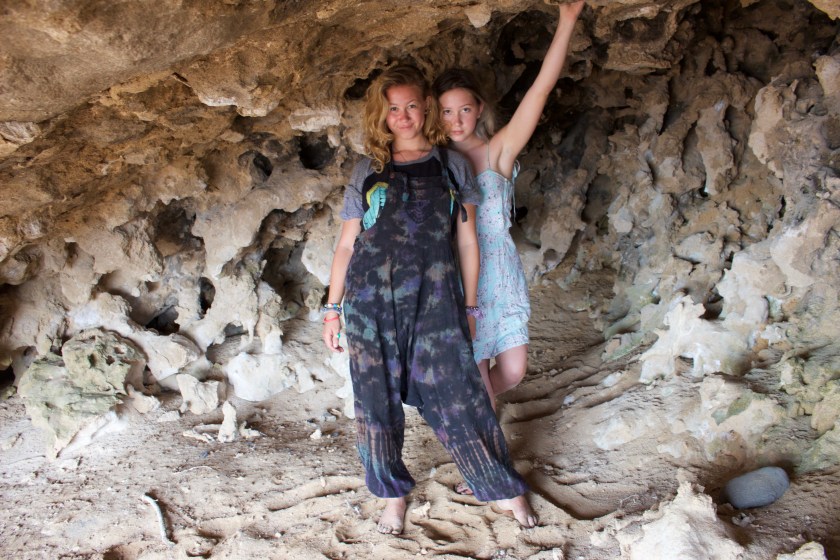
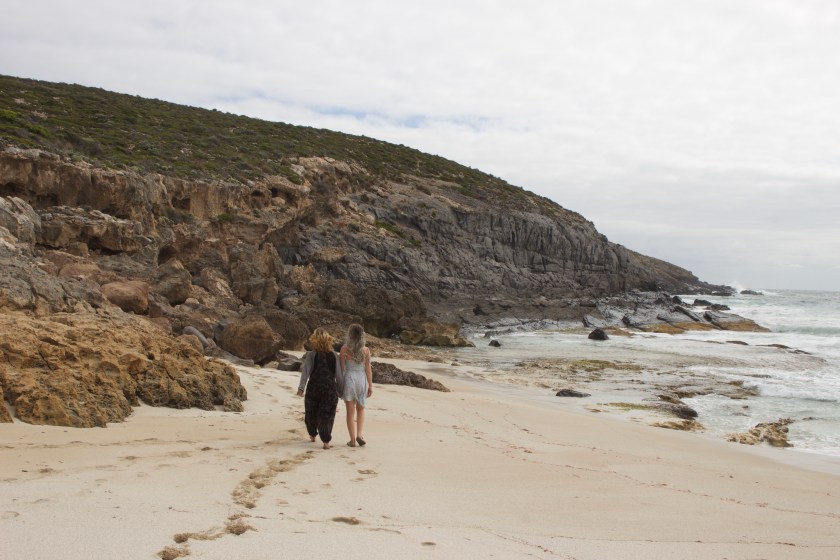
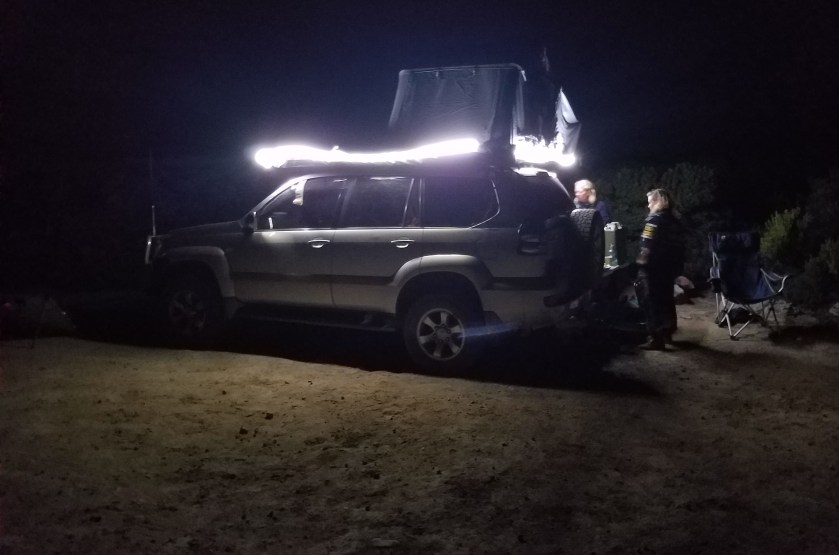
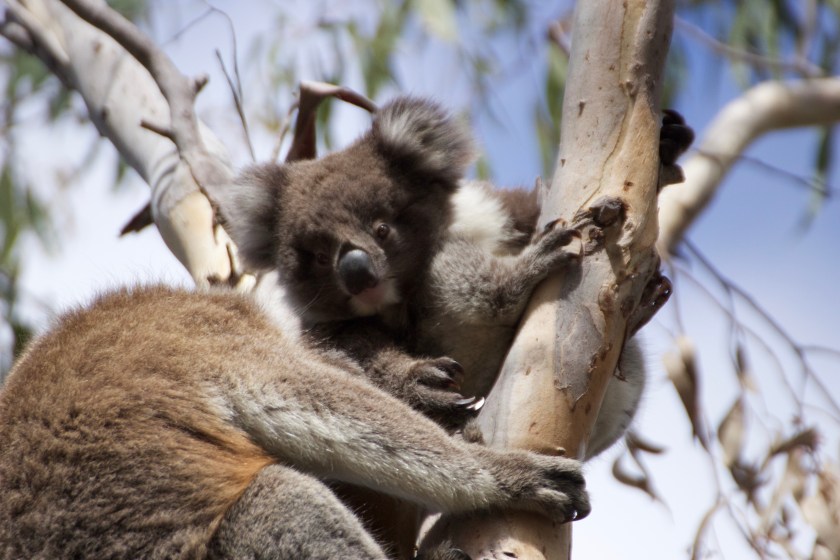
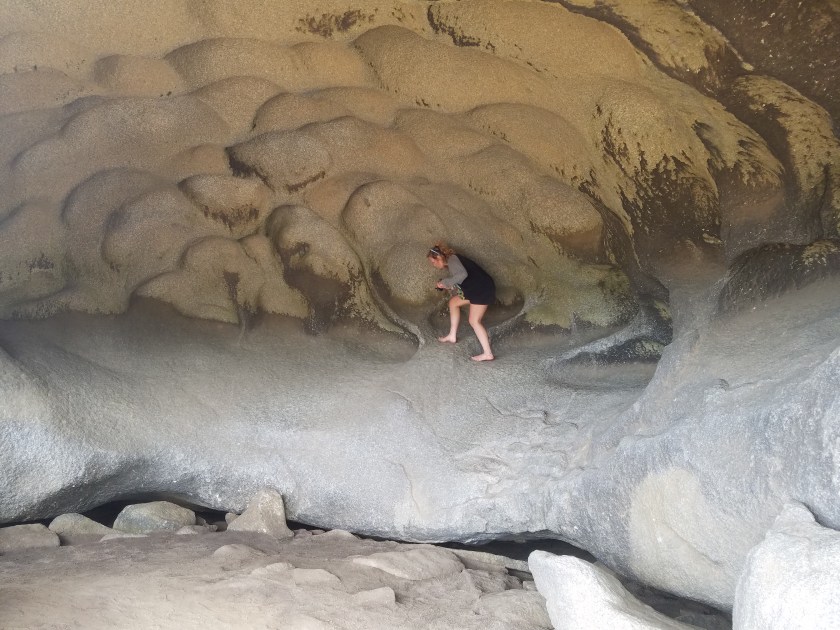
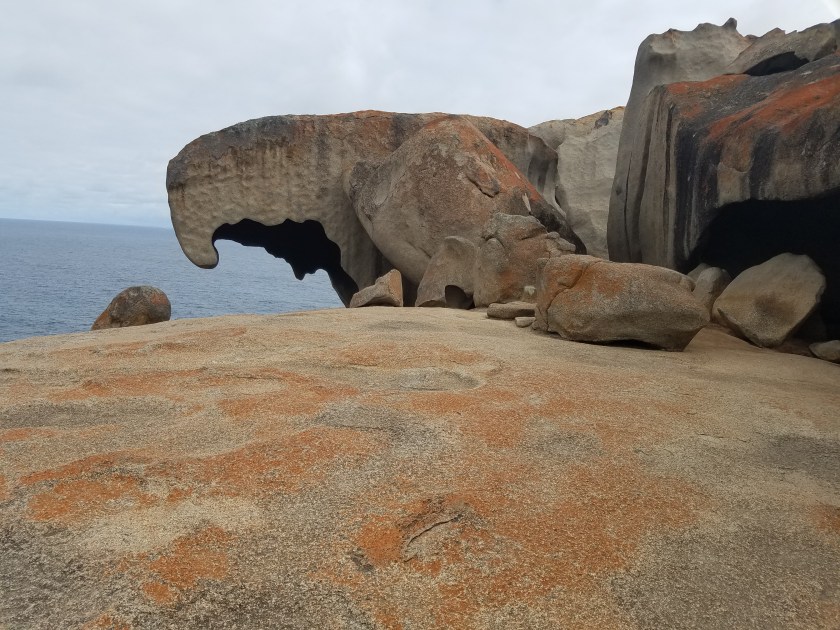
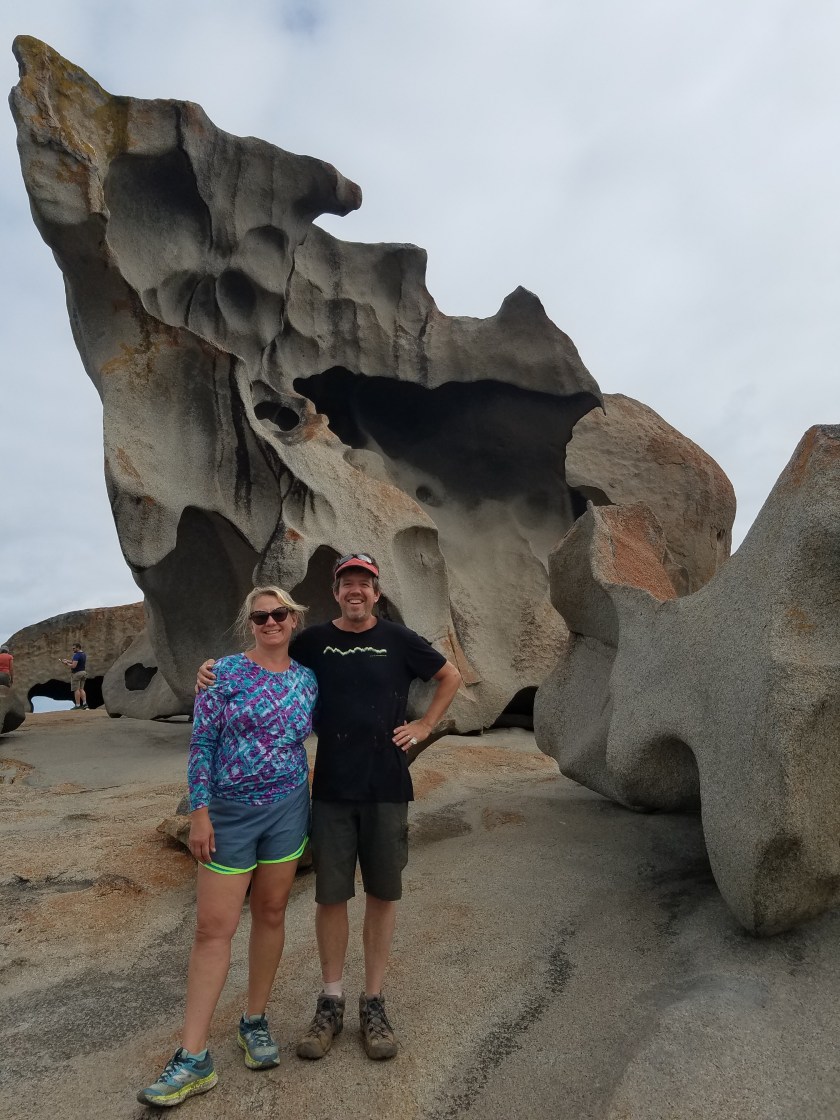
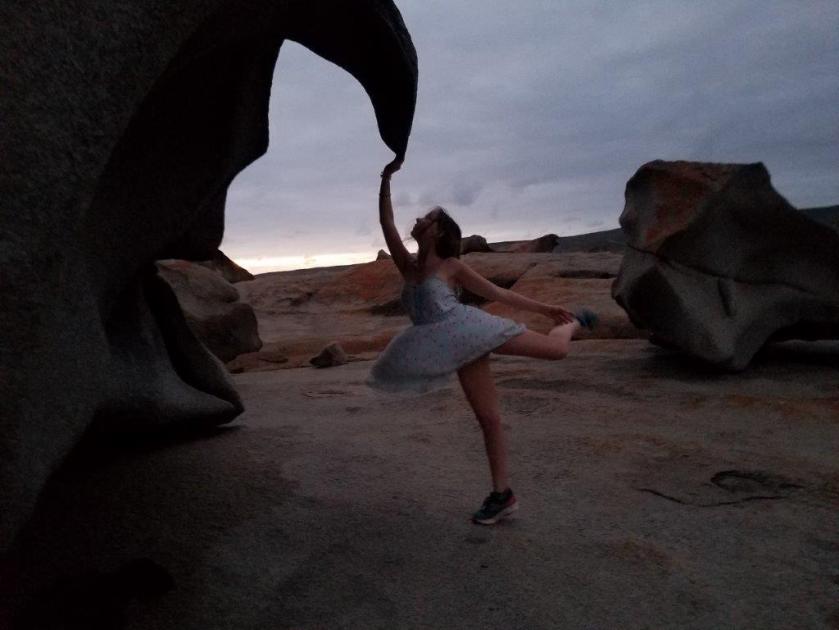
On Kangaroo Island there were many cool areas to check out, making me once again declare I had to return some day. We enjoyed as much as we could in four days while camping at Murray Lagoon, Wrecker’s Beach and West Bay in Flinders Chase National Park, and saw many beautiful rock formations along cool coastlines, sea lions, koalas, kangaroos, and echidnas, though were not fortunate enough to see any platypus that reside there.


Before we started on our next big excursion west we stopped in Melrose outside of Port Augusta to have real showers, do laundry, and stock up on water and food. This is our usual pattern–camp for a few days, then stay at an Airbnb for a few days. Our place in Melrose was in a cool late 1800s “heritage” building made of a wood called “pug”. It was quite nice inside and reminded us a bit of Birdbox, the Strout family cabin in Davenport, New York. One of the ways it differed was the huge numbers of very loud Little Corellas, a type of cockatoo, roosting in nearby gumtrees. Cockatoos are loud and squawky, and compete for nectar. Birds are what pollinate trees in Australia, not wind as is typical for our New England trees back home. I am learning a teensy bit more about the amazing Australian birds in the book Where Song Began, by Tim Low, an interesting though dense read for any of you bird lovers.
images of little corella cockatoos
7 second video by Doug of Little Corella flock:
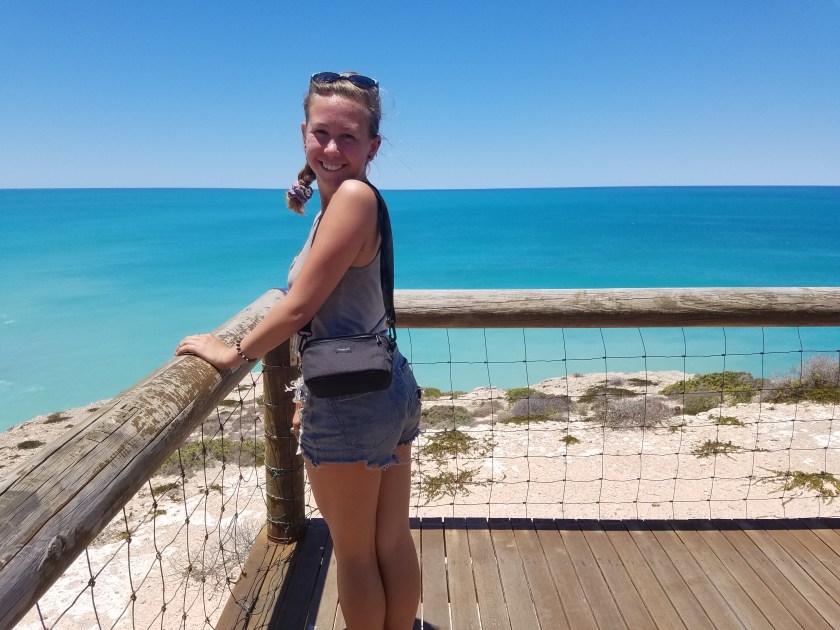
Many of you have heard of the famed Nullarbor, its name literally meaning “no trees” (nullus arbor), an apt description of the nearly 1700km featureless stretch along the Eyre Highway, between Port Augusta in South Australia and Norseman in Western Australia. It’s one of the world’s most unique roads as it includes the longest straightaway on the planet, 146.6km (about 91 miles) of arrow straight tarmac. We drove this stretch in 3 days, camping both nights. Our second day of driving turned out to be the hottest weather we have all experienced with the temperature topping at 49 degrees celsius, or 120 degrees Fahrenheit. It was scary hot, and all day we saw mirages on the long, straight highway ahead of us. We did get out of our air-conditioned bubble a few times, including once to explore the Australian Bight, a southern point of land where humpback and right whales migrate September through November (so we did not see any). Getting out of the car was like opening an oven door, and only feasible because we knew we’d quickly be back in the cool interior. We later learned an American tourist hiking in this recent heat got separated from his friend on a walking trail and lost his way, ultimately perishing just 750 meters from the car park at Uluru (Ayers Rock). Needless to say we did not hike or explore beyond views of our car that day.
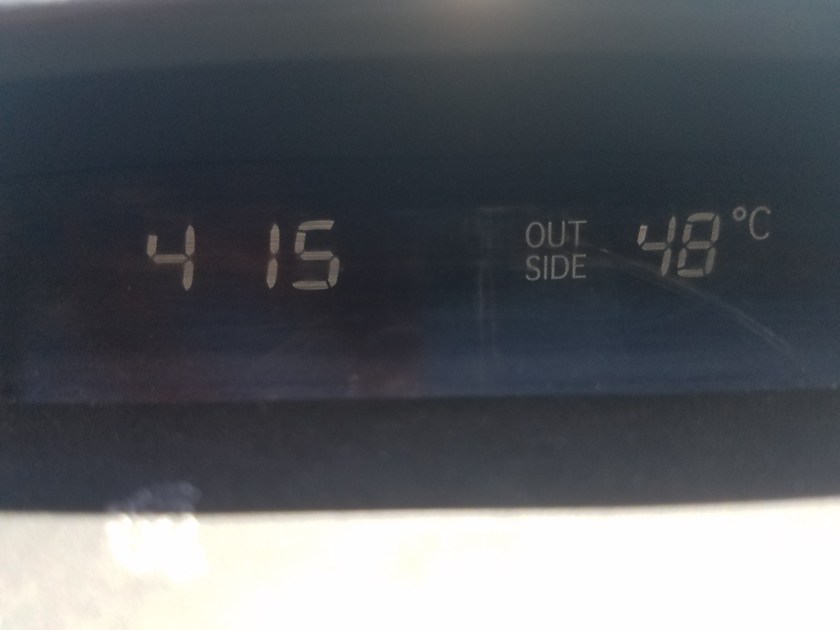
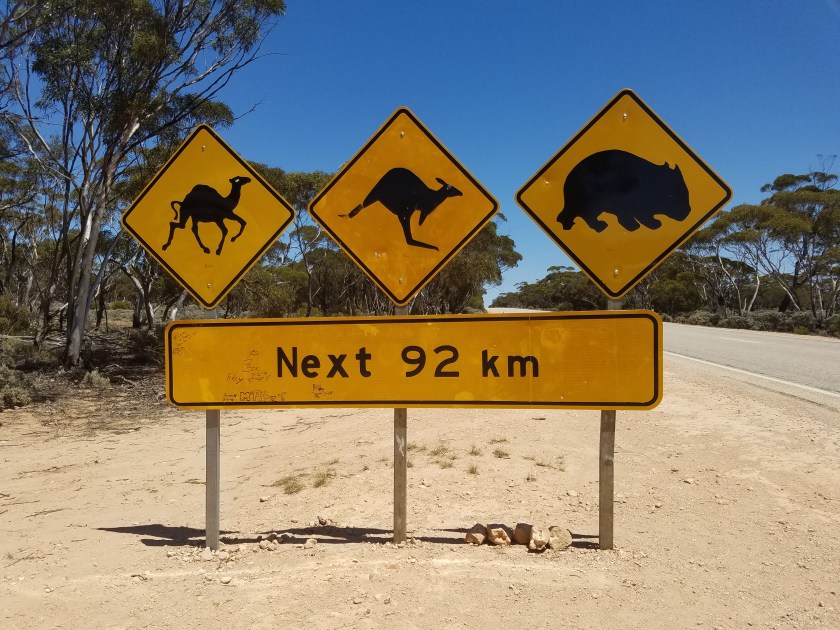
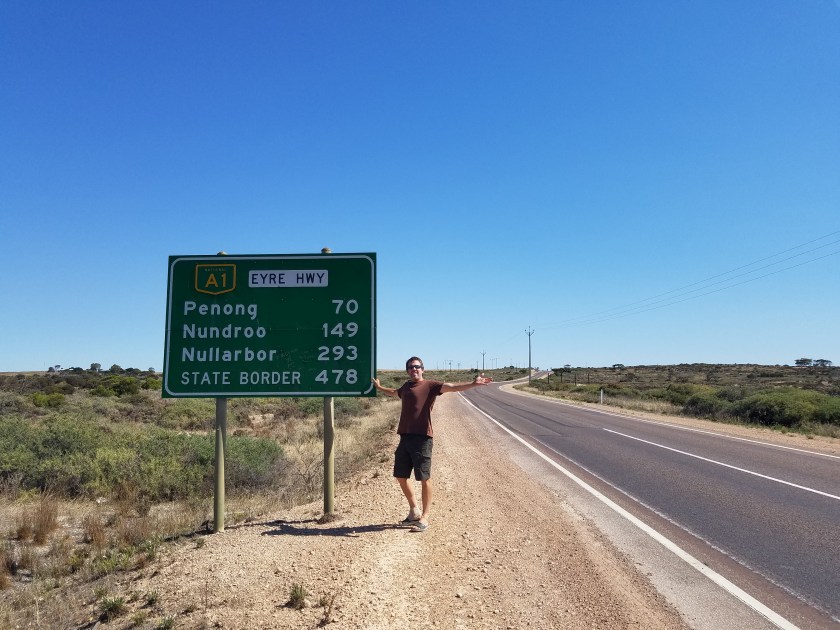

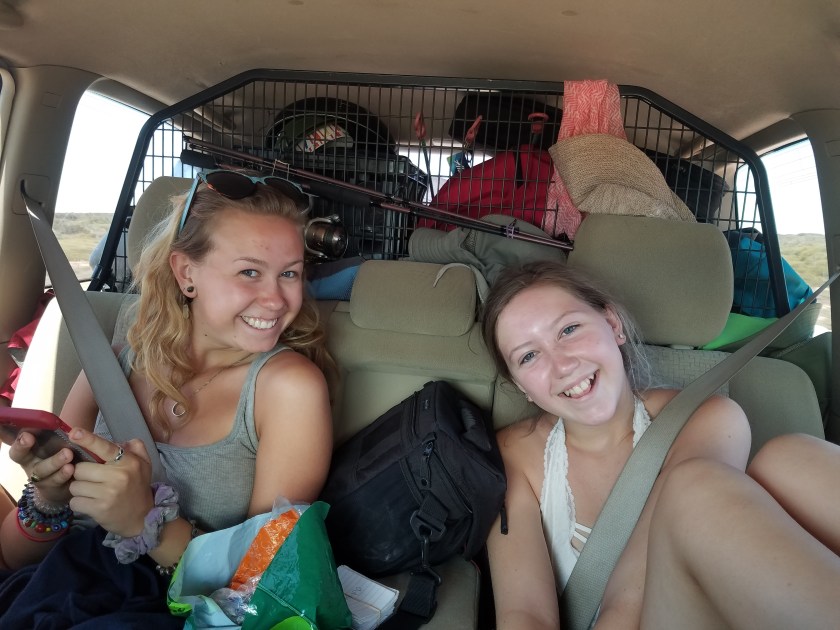
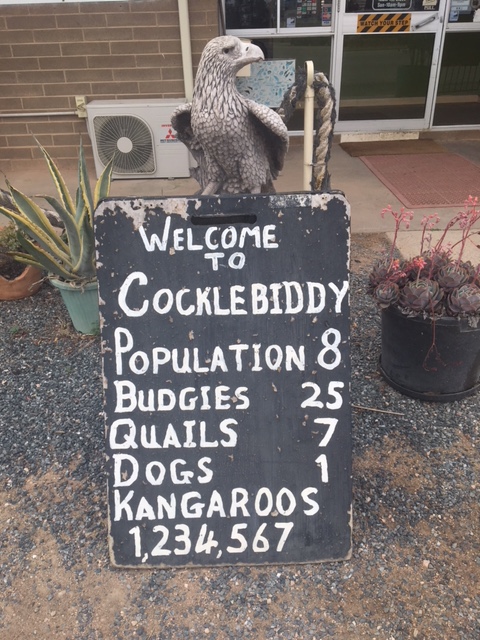
That second night camping on the Nullarbor was intense, with the temperature dropping in the late afternoon from 120F/49C down to 66F/19C in just a few hours, accompanied by strong winds with gusts up to 50 knots. Before the storm hit we stopped at a road house in Cocklebiddy where there were meals but no motel rooms available, so we paid for a tent site. We’d been told there might be some rain coming through, but we were not at all prepared for the lightening and severe, howling wind that literally ripped pieces off of our roof top tent and crushed our dome tent flat. Two of us retreated into the car, and we all packed up early after a horrible but memorable night’s “sleep”.
Needless to say our efficiency apartment the next night in Esperance seemed absolutely luxurious. Real beds and hot showers…mmmmm, mmmm. As if that wasn’t enough, Esperance (which translates into “Hope”) is famous for its crystal clear turquoise waters and snow white sand beaches. It didn’t disappoint, and our lovely apartment hosts gave us some local advice on how to go beyond the usual tourist destinations. This involved lowering our tire pressure to 18psi, plowing through a wide 3-foot deep salt water pool, and driving round trip on 67km of white sand beaches, dunes and rocks. We drove east with a stop at Lucky Bay in Cape Le Grande National Park, then on to Mt. Arid National Park, driving on the most gorgeous beaches and turquoise water I’ve ever experienced, while listening to fun tunes by DJ Ella including Talking Heads’ “On the Road to Nowhere”, and Steve Miller’s “Fly Like an Eagle”… There was a lot of whooping and hollering and grinning!
Epic beach drive video (11 seconds):

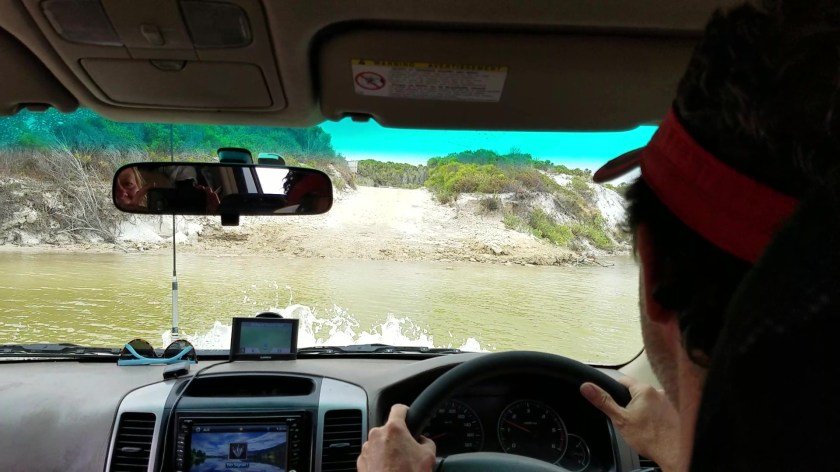
At Mt. Arid NP we camped on a grassy, flat area between dunes and looking out on a secluded beach. The first night was calm and we were lulled to sleep by the surf. The second night the wind shifted and I found myself once again retreating to the car as the loud flapping of the canvas made it impossible to sleep, and the wind once again broke another one of our four FoxWing hinges. We moved the next morning to a more sheltered site next to us, which instead invited the famous Australian flies (a bit smaller than our house flies back home). They were more abundant here than anywhere we’d been, though Aussies appear to take them in stride. When I asked one woman how she dealt with them she shrugged her shoulders and said, “Hey. It’s Australia.” I had to work on being patient with the annoying bugs, especially as they seek moisture in eyes, noses, ears and mouths. Yuk. Both Helen and I appreciated our head nets.
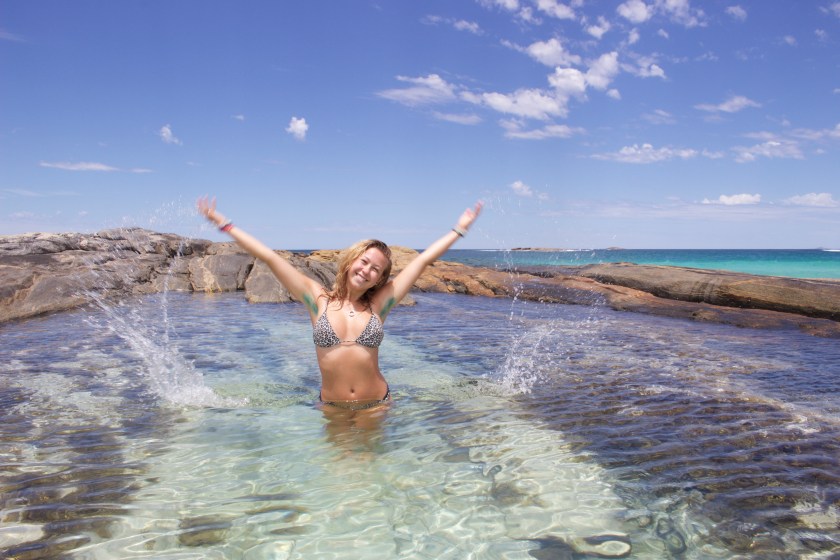
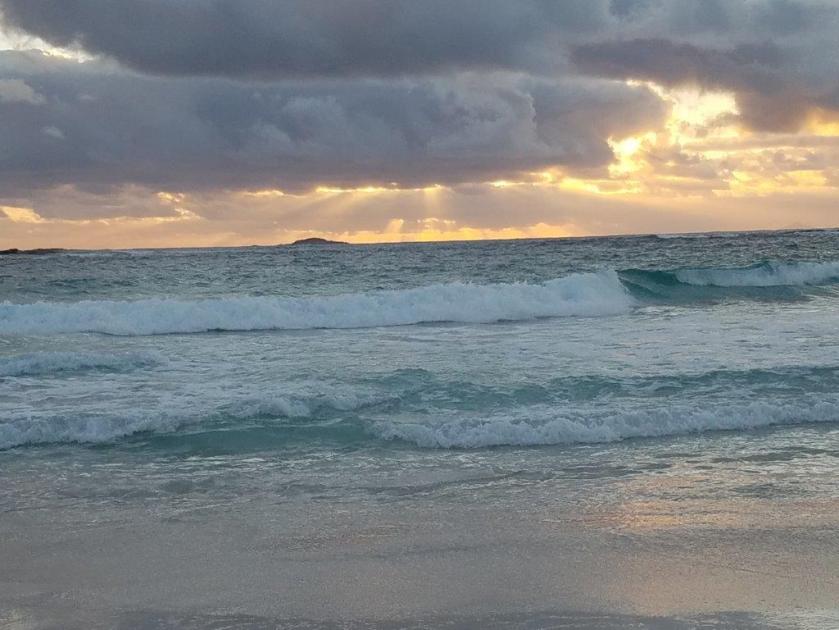
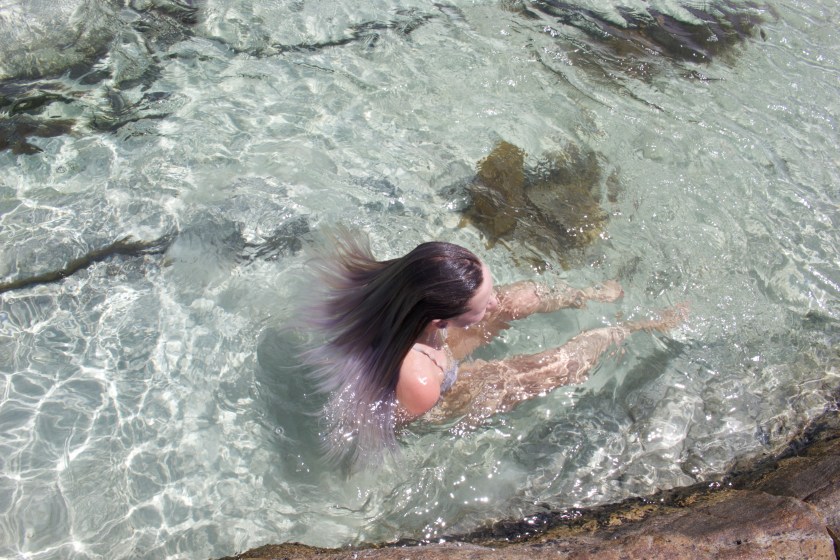
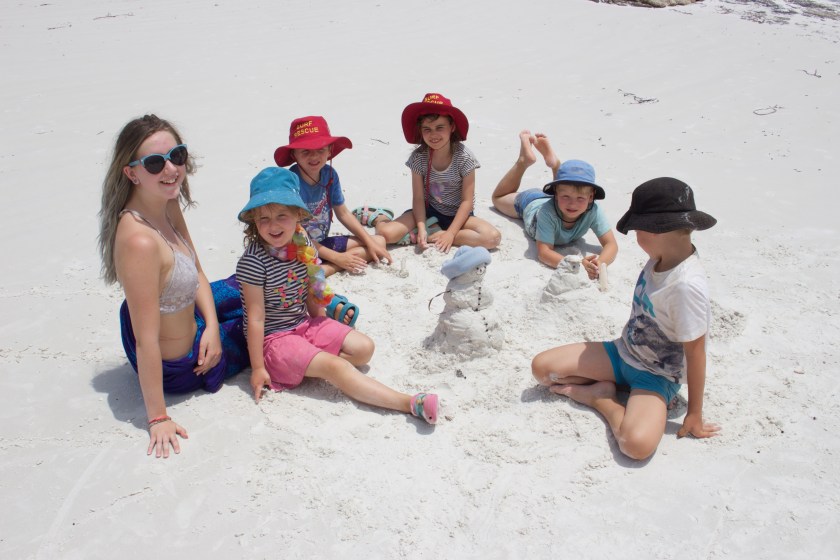

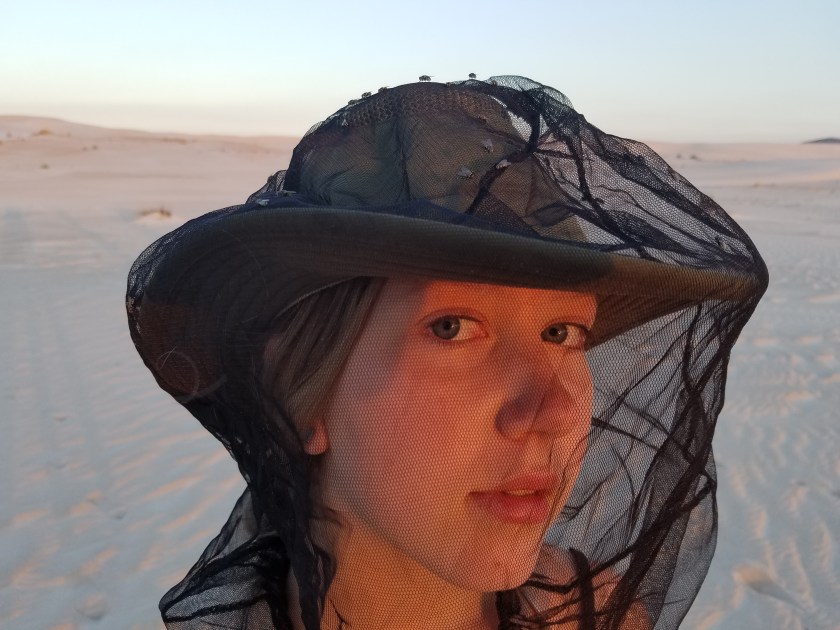
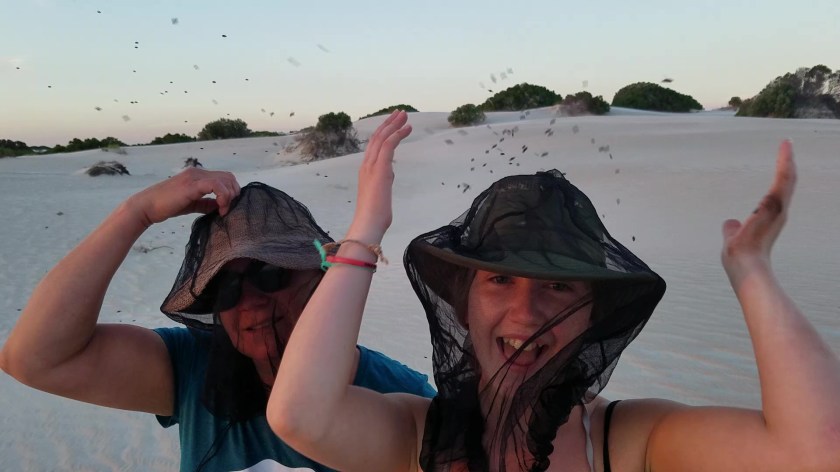
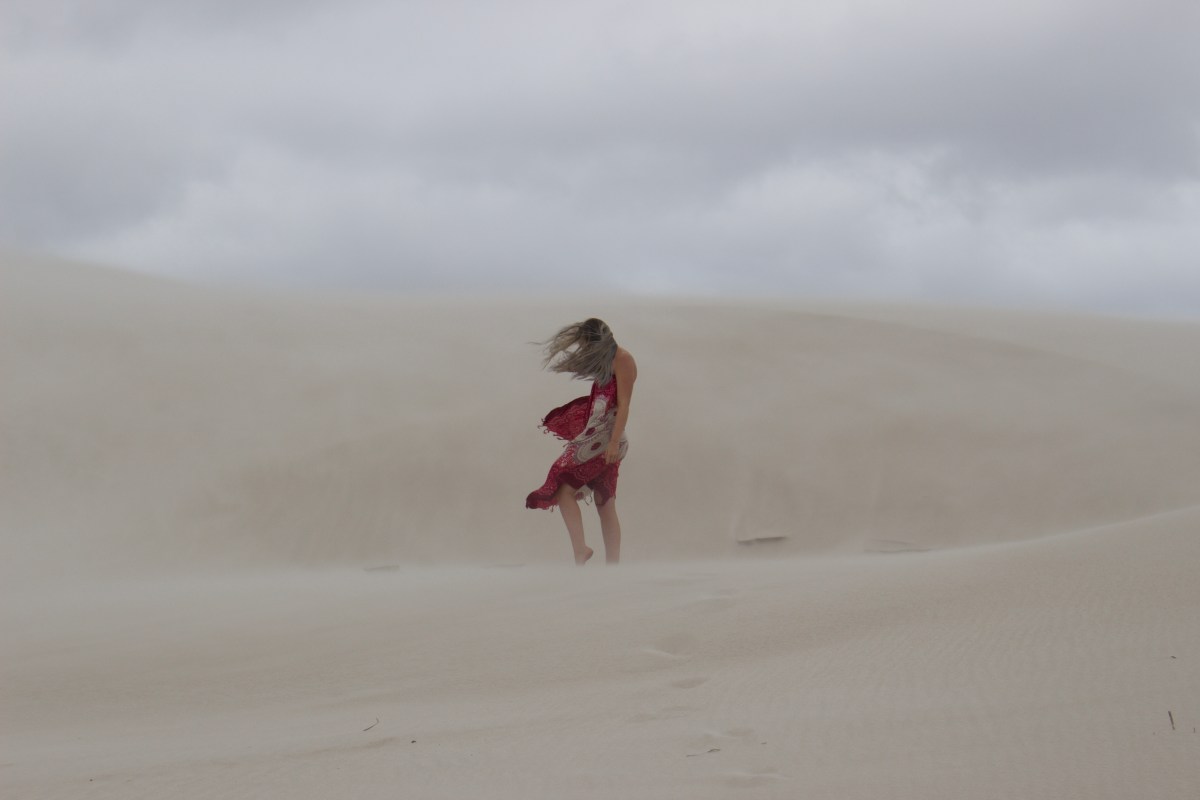
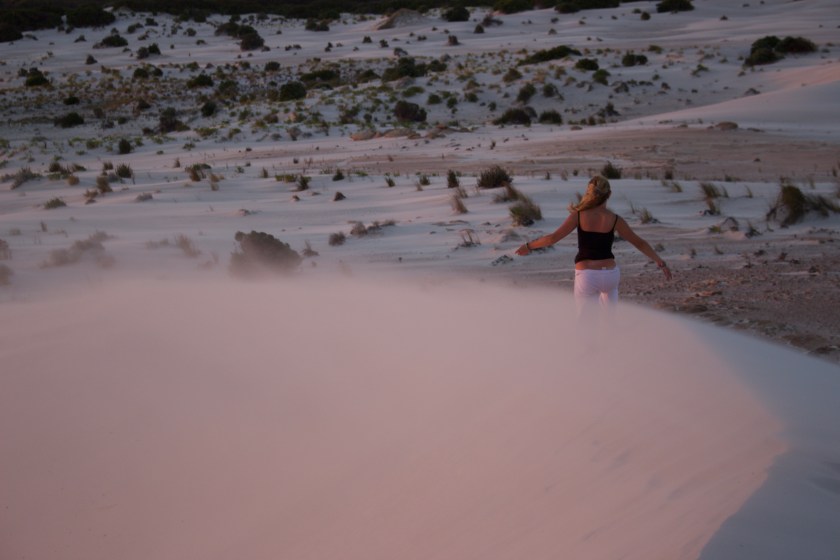
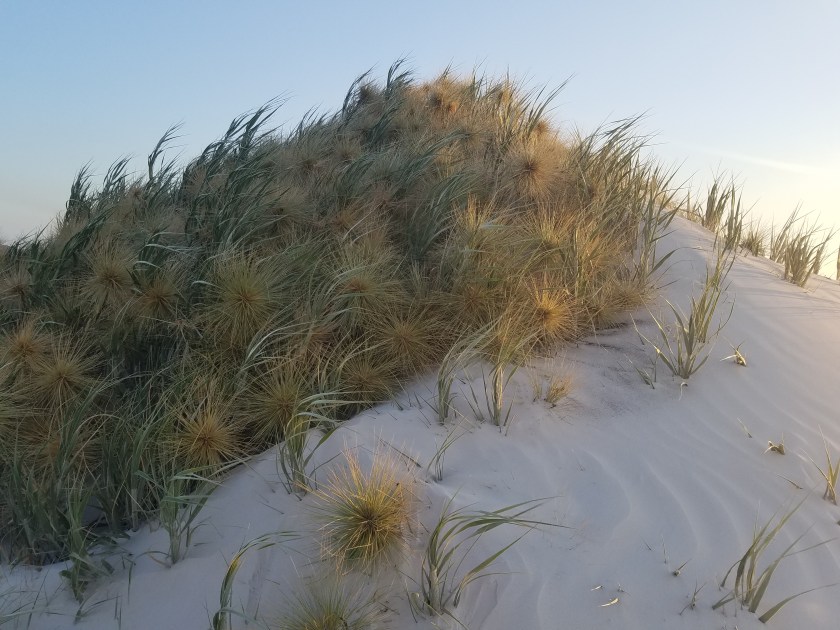
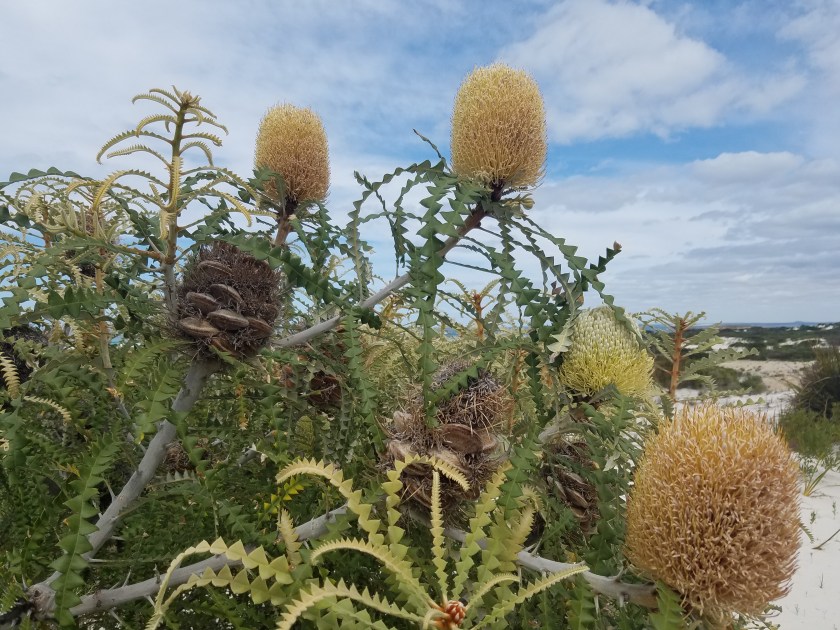
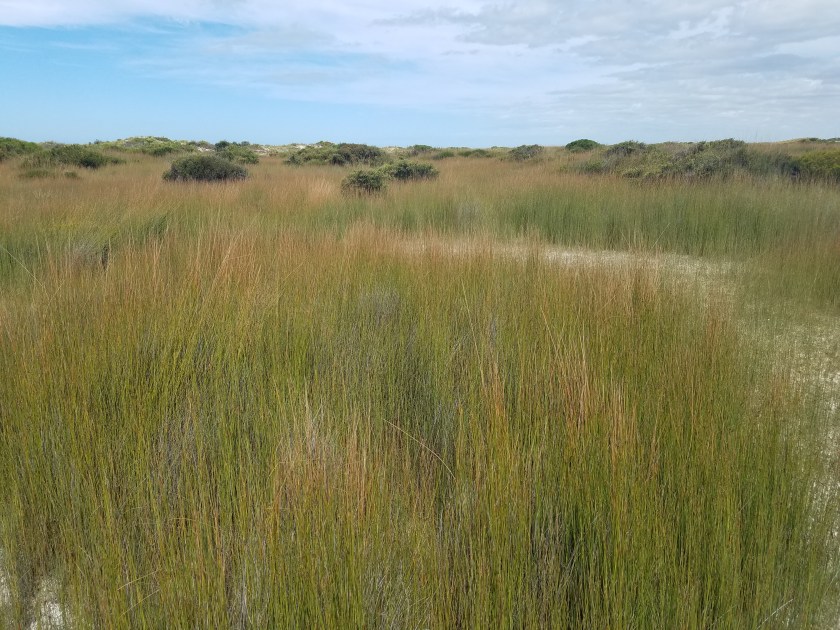
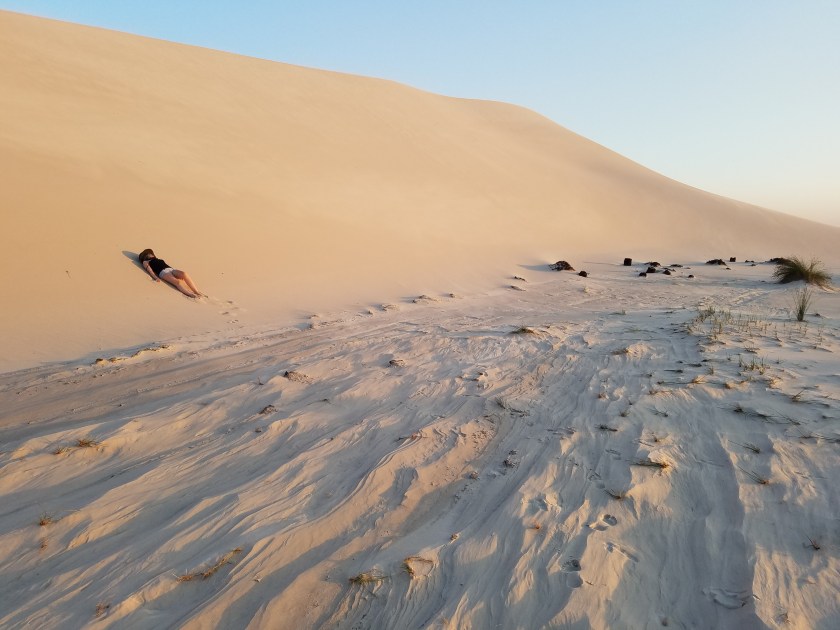
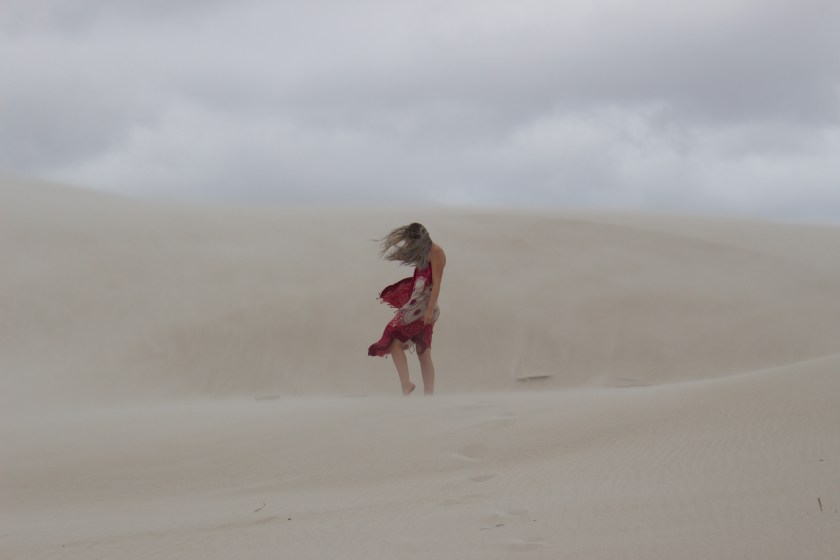
No flies or wind however could detract from the sheer beauty of the landscape. The water was absolutely clear turquoise (but with strong surf and rips), though we did not see any marine life even while snorkeling. The sand is arguably the finest, whitest sand ever as a result of it being quartz. Entering the dunes directly behind our campsite was like crossing into a magical white desert dreamworld, complete with emus running and sand “mountains”. The girls enjoyed an epic sand dune photo shoot our last morning there in the cool wind and mist.
Dune photos by Doug.

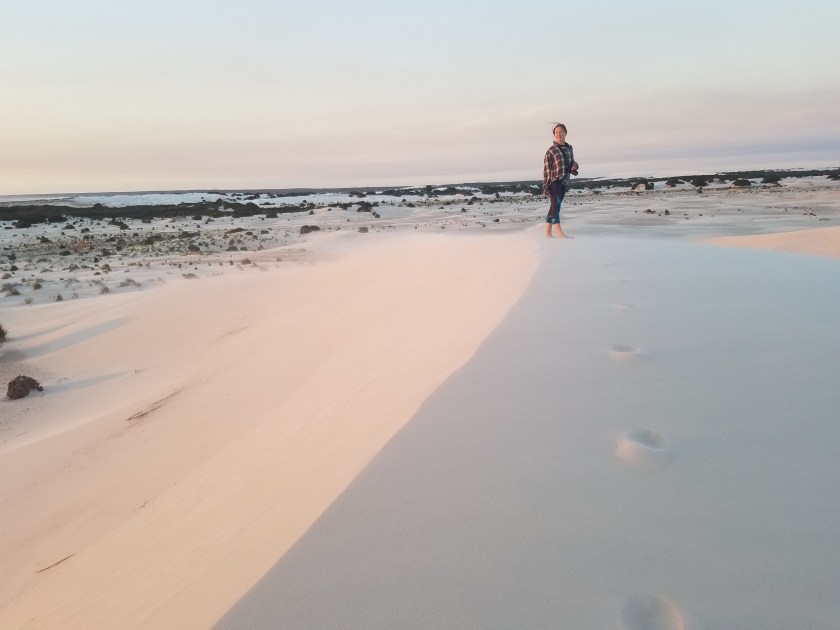
Ella rolling down the dunes.



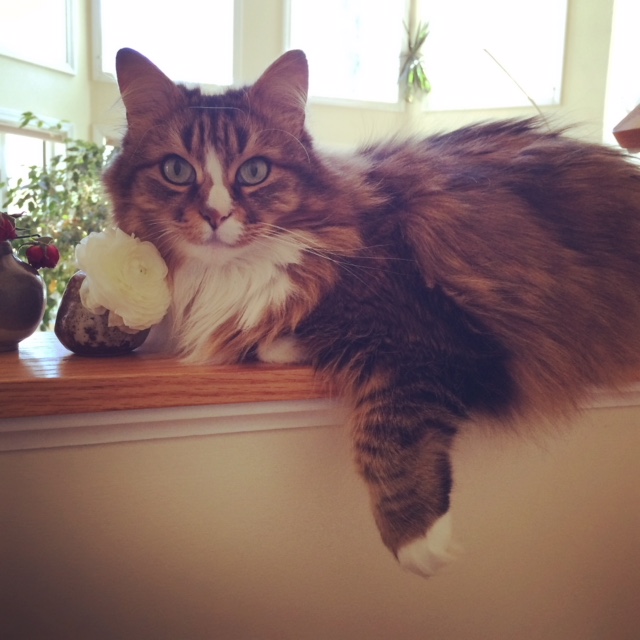
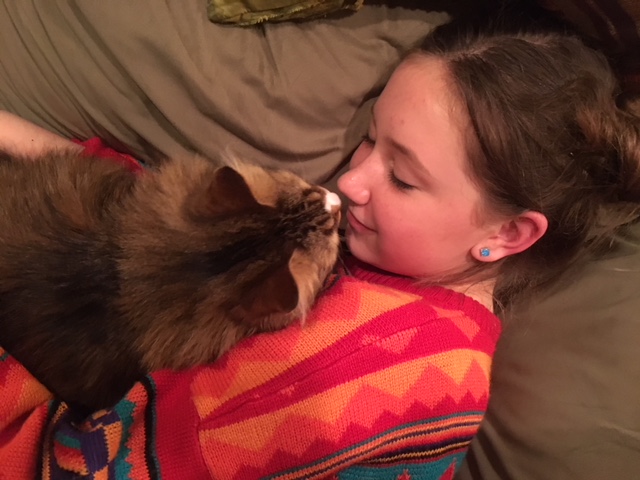
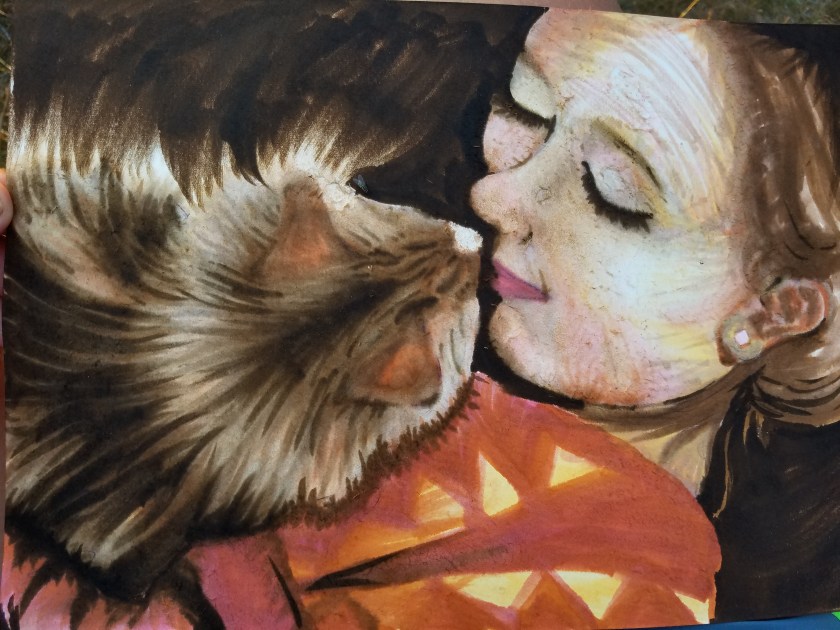
Reading this post, I realize how often things are reminding me of familiar places back home. It’s now been six months since we’ve been away from Cape Elizabeth, and we are missing home. This is a good sign, reminding us of how much we love our life, family, friends, and pets. On that note, it appears our dear cat Whisper is gone. She has been missing since August, never being seen after bolting from her new temporary home. She was the quintessential “scaredy cat”, but also our loving, purring, sensual, beautiful, affectionate, fluffy, 11 year old pet. Our hope is she somehow was lured by Greenies treats or tunafish to an older person’s peaceful house and found a new home, but very sadly she’s no longer with us.
Here are some emails (most recent first) Doug wrote to his family that contain a lot of detailed information about our travels, for anyone who wants to read more.
We’re in Perth now, about to embark on more adventures, so stay tuned.
With love,
Anna
January 12, 2018
“Hi all,
It’s Wednesday morning about 7 and I just got settled after taking down our broken Foxwing awning, re-securing our roof tent rain fly, and brewing myself a cup of coffee. I’m sitting in the passenger seat of the Landcruiser now as a nice refuge from this relentless wind and the flies. It is our 3rdday camping out on Cape Arid, about 120km east of Esperance, WA.
The flies, I should mention, aren’t too bothersome but tend to go straight for the face. They’re a bit smaller than our houseflies back home and the poor little guys are really thirsty, seeking moisture wherever they can get it, with their most likely prospect being up our noses and in our eyes, ears and mouths. We do actually have a couple of head nets that we might try pulling out today for the first time. I bought them for Maine if the mosquitos or blackflies ever got too bad but so far they’ve never been out of their little synch sacks.
The wind is blowing about 30 knots, shaking the car as I write, and is starting to wear on one’s nerves a bit. It picked up yesterday around midday and I keep hoping it’ll settle down. If not, we may look for a more sheltered site today. When we rolled in here Monday our site seemed perfect, a deserted, grassy spot nestled in some dunes set back a couple of hundred feet from the beach. I oriented our vehicle, in fact, so that our car awning was positioned downwind, having learned a lesson after snapping 2 or our 4 pole hinges out on Kangaroo Island last week. Then yesterday the wind shifted and picked up, coming in from pretty much the opposite direction. Our camp isn’t super easy to shift, as we’ve set up the canvas annex under our roof tent, with Anna and I sleeping above and the girls in the enclosed space below. Such a sweet setup, and actually the first time we’d gone through the bother of erecting the annex since camping for 4 days around my birthday back on Peably Beach in NSW. Typically we’ve just been staying at camping areas a couple of days and it’s easier to just set up our dome tent instead, or in the case of the Warrumbungles when we needed mobility to drive to different hike locations in the park.
Anyway, our plan here is to hunker down for 4 nights and fully immerse ourselves in this incredible park. Not wanting to move, yesterday I just set double guy lines on each pole with nice big tent pegs that I hammered into the hard sandy soil. Still, wind will have its way and those pegs required periodic tending to throughout the afternoon. Then last night I thought I had it all secured best yet but still several shook loose, snapping a 3rd pole hinge in the process. Sigh. Guess it’s time to for a group huddle and decide on either staying here with no sun shelter, or moving on to another location for our remaining 2 nights.
Okay, so you’re going to notice a certain thread to this email. The wind. It’s now about 7 Thursday morning. Yesterday after breakfast we opted to shift our camp to the other, more sheltered, side of our grassy clearing. Beautiful day. Up in the mid 80’s and we took full advantage of the most famous feature of this park and this stretch of Australian coast. Esperance, just to our west, brags that Lucky Bay in Cape LeGrande National Park has the whitest beach in the world. When we arrived in town last weekend a local explained that while Lucky Bay is very nice and all, and a mob of kangaroos does often hang out on the beach which is an understandable hit with the tourists, the beaches actually continue a bit further on up the “stunning” scale as you continue east, further from civilization. This guy, Nick (the owner of the motel efficiency we stayed in for 2 nights as we regrouped and retooled after crossing the Nullarbor) further explained that the best camping and beach experience couldn’t be reached by road but instead required extensive beach driving. To date the only beach driving logged had been the few kilometers we’d navigated on Peably Beach, months ago, which had been thrilling and also a bit freaky, with boggy sand dunes and the low tide estuary crossing. Nick was pretty passionate, as beach camping’s his favorite thing, and got me all wound up with detailed instructions and location descriptions using google maps on my computer.
Monday we packed up, got a 1 month park pass good for entry into all the NPs in WA, loaded up on groceries and also dropped in to a local, newly opened optometrist office for a quick visit with the son of Julie and Graem, whose home we had house sat for back in the Blue Mountains. Turns out his wife and 2 year old daughter had also dropped by so we had very pleasant exchange with them before turning our backs to town and heading out to the coastal wilderness. The first crazy thing we did was visit Cape LeGrande and Lucky Bay, to judge for ourselves this supposed white sand of theirs. The crazy thing we did was eschew the perfectly good road that leads there but to instead hop on the beach just east of town and drive a considerably more direct 23kms along the sand which brought us all the way to Cape LeGrande. That was so exciting. Back in town I had lowered my tire pressure from 38 psi down to 25 and understood the beach was often used for driving by locals and was hard and straight forward. This was true for maybe 2/3rds of the beach but the rest was decidedly soft and in most places right along the water line. This was one of those long shallow coast lines with waves breaking a good distance off shore and then gently traveling quite a ways in, sometimes erasing the tire tracks we were following. In the boggy spots I’d be cruising along in 3rd gear, going about 60km/hr, and would begin to slow as my tires spun. I’d shift down to 2ndgoing ever slower and trying not to imagine getting stuck. Those spots were a lot like driving in deep, soft snow, with my front tires sliding around into the various troughs left by previous vehicles. The sun was bright, the water like gin, the tunes were cranking and needless to say we were all whooping and grinning like idiots.
Sure enough, at the end of the long beach, right where a long granite cape stretched out, there was a spot we could access a parking area and just like that we were back in fold of tarred roads and speed limit signs. We drove up and around to Lucky Bay and had a quick look. There was a full looking caravan park that might have had a spot we could have stayed, and along the beach there were maybe a dozen vehicles car camping, and maybe another couple of dozen day trippers in the parking lot. We didn’t see any kangaroos but did read an information board explaining the reason for the dazzling white beach. It’s a phenomenon of the whole area resulting from the sand being made finely ground quartz, very hard and rough on a microscopic level which creates an effect known as “frosting”, (that snow white look) and also causing it to squeak a bit when walked on.
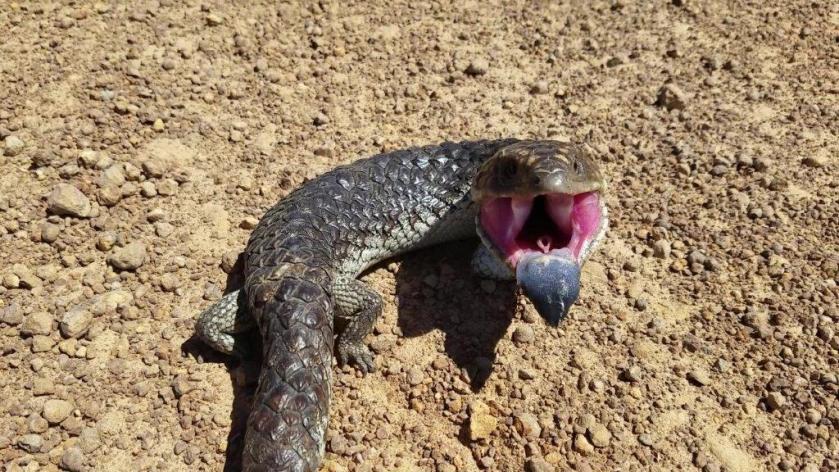
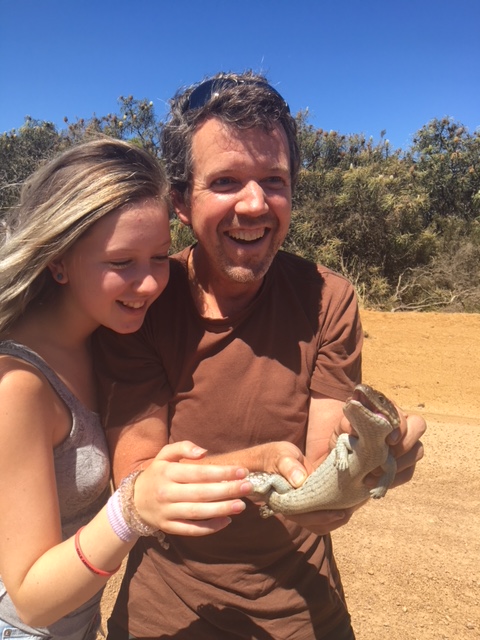
Most would have arrived in Lucky Bay and happily stayed, but we’d been primed for far off adventures to come so drove out of the park and continued east another 80kms to Cape Arid. Along the way we helped a big shingleback lizard to cross a gravel road, stopping to pick up and admire the large, slow, hissing, improbable looking beast. Check out an image on your computer, or wait til we post one on our blog. Then, arriving in Cape Arid National Park we did our 2nd crazy thing of the day. Instead of checking out the campground to see if an available site remained (remember this is school holiday season and the area’s busiest time of year) we instead took a few minutes and further lowered our tire’s psi down to about 17. This by itself is crazy. At 17 psi tires look flat, though I’ve been assured they could be further reduced, in a pinch, to about 7 or 8 psi, creating even more surface area if, say, bogged down in the sand. The big danger, apparently, of a super low psi is that tires can roll off their rims if you corner too fast or hard. Yikes.
Tire pressure lowered, (using a cool tool I’ve acquired along with a compressor for later re-inflation) the first thing we had to do to access the beach was drive down a ramp directly into a 3 foot deep, 150 foot long trench of water. I took it slow. The sandy bottom was hard as I’d been told, and we didn’t stall, though it was one of the freakier things I’ve done, driving slowly through clear water that pushed up over the hood and seeing fishes swimming out of the way of our vehicle. Then we were up on the sand and heading east, traveling another 22kms across a series of beaches and over 4X4 tracks around granite headlands. I set my odometer for these beach drives and figure by the time we get back to the road tomorrow and re-inflate our tires we will have driven on 67kms of sand. And what beaches, snow white with turquoise water about as clear as any I’ve seen. Cold water though. Well, cool, if you compare it to, say, our Maine ocean in summer. Fine to splash around in for 15 minutes on a warm afternoon but for a proper snorkel excursion we’re still glad to have the spring wetsuits we bought back in Byron Bay.
So now I’m back in the car, writing this as the rest of the family is beginning to stir. The wind is still strong and has shifted again, now blowing in from the direction it did the first day and making our new location once again exposed and perhaps intolerable. I’ll wrap up now and once again do a family huddle to review our options.
Friday night now and settled in an Airbnb for 2 nights here in Albany, about 5 hours west of Esperance. Yesterday, our last morning at Cape Arid, the weather had taken a decided turn and actually spit on us a bit, along with the blowing. The forecast was for eventual improvement but 2 nights of loud shaking tent noises had been enough to make Anna and Ella a bit sleep deprived. The prospect of a real bed in a real (quiet) building tipped the scale on spending a 4th night at our site so we packed up and drove back out to civilization. Driving back up the beach we did have a scare after getting briefly stuck in soft sand. The car spun sideways in a long, boggy stretch and stalled before I could react, just feet from the edge of the creeping tide. I got it going and tried rocking but just seemed to sink deeper. Anna and the girls got out and pushed as we continued to rock and then I was moving again, afraid to stop til I reached some marginally firmer ground a few hundred meters down the beach. That was scary. We were speaking with a guy today in Hopetoun, a quiet little town next to Fitzgerald River National Park where we spent last night, and he was familiar with that stretch of beach and said a number of vehicles have been lost there over the years. He clarified that if the tide hits your wheel it’s pretty much game over. That turned out to be some high stake beach driving and I’ll be happy to avoid boggy sand situations for the rest of this trip.
So my last email ended with us still a couple of hours south of Port Augusta, SA, well east of the Nullarbor. We had a great trip across, taking 2 nights and 3 days to drive the 2000km’s from there to Esperance. Our first night we were winging it for a location to camp, detouring toward the endo of the day down to a place called Streaky Bay on the top of the Eyre Peninsula. We stopped along the coast at a place called Smooth Pool. The tide was out and it was a bit cool so we settled for an hour of yoga on the smooth, warm rocks instead of our intended snorkel. There was a primitive camping option nearby but no bathroom option. We probably should have just stayed, but feeling indecisive we continued on up the coast, checking out several camping areas that were full. Then Ella discovered a free place with a bathroom at the Haslam jetty using a camping app (WikiCamps) on her phone. We rolled in there with the last of the light and remarkably found space available to set up our roof and dome tents.
The next day we up and out early and drove a lot, crossing the Nullarbor, detouring down a long road to get a view of the Great Australian Bight, then eventually crossing the border into Western Australia and finally stopping at a road house camping area in an area known as Cocklebiddy. Mostly the view as we drove was empty, flat, straight and pretty featureless, with low scrubby bushes and an occasional stunted eucalypt. Ella did see a camel as we neared our campsite in Haslam, but for the most part the 2nd day we saw few animals except roadkill, mostly kangaroos, strewn along the 2 lane highway. And it was hot, even for the Nullarbor. The temperature that day reached 49 Celsius or about 120 F. That’s so crazy and the hottest weather I’ve ever experienced. (It wasn’t lost on us as we drove along that day that our temperature was about 100 degrees warmer than it was for you all back home.) We got out several times, once for about 30 minutes to walk down a boardwalk to view the Bight, then later to check out the famous Bunda Cliffs as we continued further west. Breathing in that kind of heat was in a funny way a bit like breathing in extreme cold, with that same kind of searing sinus sensation. Our vehicle performed flawlessly, but what would it look like to break down in an environment like that? There were other cars on the road. We passed at least 2 or 3 an hour so rescue would eventually arrive, but what an incredibly inhospitable environment if not for our little bubble of air conditioned comfort.
Then another crazy weather thing happened on arrival in Cocklebiddy. Toward the end of the day the temperature started to drop and we could see thunder storm cells out on the flat plain. The road house we stopped at (a gas station, restaurant, motel and camping area and the only civilization for a few hundred kilometers) served us dinner but didn’t have a room we could stay in. We settled instead for a campsite near the bathroom and were given tokens for a hot shower. The temperature continued to drop so that within about 4 hours it had gone from 49 down to 19 C, or about 66 F. Later that night, after getting into our tents and falling asleep the wind picked up and I was woken by Ella who said she was afraid the roof tent would blow off our Landcruiser. I didn’t yet realize how bad it had gotten and agreed to switch places with her. Up on the roof it was wild, really loud with the whole vehicle shaking and it did seem like we might indeed end up blowing off. I calculated that this probably wouldn’t cause Helen or me much injury so tried to sleep as best I could. We learned the next morning that the winds were blowing about 50 knots, and Anna and Ella in their dome tent got squashed like bugs. They said the tent was literally lying flat down on them so they abandoned it for the shelter of the car, with Ella sleeping in back and Anna reclining in the passenger seat. Fortunately it hardly rained at all, and as far as I can tell the lightning stayed well away. The next morning we were up early and mostly our roof tent was unscathed except for some broken strap anchors that tore loose, all of which I can still jury rig for functionality. We haven’t tried setting up the dome tent since, but 2 aluminum pole sections were bent in the shape of a U. I managed to unbend them a bit but am guessing the next time we set it up our tent will look decidedly lumpy if it still functions at all. That was some crazy wind, and it reminded me how strong and fierce the elements can get. I really can’t imagine wind twice that strong, hurricane strength, or over 3 times that strong like the one that smashed into St Croix a few months ago, or Puerto Rico.
Day 3 was much cooler, down around 20, and we again drove and drove, finally pulling into the first real town, Norseman, we’d seen since leaving Port Augusta. We had a late lunch at the cafe, did a short 4X4 detour out on a nearby salt lakebed, then drove south the last 200km’s to our much appreciated efficiency at the Archipelago Apartments in Esperance.
And so glad now to be settled into a comfortable Airbnb for 2 nights, with wifi for the first time since Monday morning. My big priority here will be getting our Landcruiser spec’s up on carsales.au (along with everything else we wish to sell on a site called gumtree.au), something I hoped to do before leaving Esperance. We also need to firm our plans up a bit for our continued travels west to the Margaret River area, then up to Perth and beyond. We met a couple back in Esperance who have a farm about 6 hours northeast of Perth and have invited us to stay with them. It’ll be sheep shearing season and the cows need milking so we may get to experience some ranch life before our final stay in Perth begins on 2/16, when we’ll sell the car and retool for our flight to Bali at the end of February. Anyway, that’s enough catching up for now. I hope you all are well, maybe even getting out to enjoy the January thaw I noticed on Accuweather just now.
Love from near the 120th meridian east,
Doug”
January 3, 2017
“Hi all,
Sitting in the shade now on January 2nd, thinking I need to put that long sleeve shirt back on. The one I’ve been repeatedly taking on and off since getting up this morning. It’s maybe 70 degrees now and dry, decidedly cool in the breezy shade but blazy warm in the sun. We’re camping in Flinders Chase National Park on the west coast of Kangaroo Island at a primitive campground on West Bay. This is one of those only-accessible-by-4-wheel-drive sites, but not due to it being gnarly, steep and rock strewn, or requiring river crossings or beach driving. Pretty sure it’s got its 4X4-only designation because of the awful 22km corrugated road leading in here that would shake most vehicles apart. We’ve been on the island for 3 nights now and slept at 3 different sites. The main roads have been fine but this has been my first experience with full on washboard and how to best cope with it. Our first day we drove in to a site on a pretty bad one and drove slowly, maybe 20-30kms/hr. The shaking was so bad we ended up losing our front CD antennae which unscrewed itself and whipped off unnoticed. Later that day Anna and I actually drove about 20kms back down the road looking for it. The dislodged piece was only about 2 feet long, black, and very stick like. We weren’t hopeful. None the less, after turning around and heading back in we both had a hunch, almost a tickling of the senses, and at the same moment said we must be almost on top of it. I slowed way down and within a few feet Anna spotted it, off in the scrub a little ways in from the edge of the road. A very cool and remarkable find and I’ll have to add this experience to the short list of the times in my life that that dowsing sense has kicked in and allowed me to improbably re-connect with lost objects.
I’ll need to research this further, but my washboard strategy is now to take them at speed, maybe 60-70kms/hr, when the road is straight enough. The ride seems far smoother, though I know I’ve got shit for control should a kangaroo leap out ahead of us. I think there may be something about lowering tire pressure that can also help and I have a 4X4 camping book that may have a section on the subject. Interestingly, just after returning to our last site, triumphant with wayward antennae in hand, a similar rig to ours showed up also missing their antennae, which had just shaken off on their ride in. Later Anna spoke with a guy, a local KI guy, in fact, who said he always breaks something driving his old ute on that road, most recently rupturing his fuel tank. Serious stuff.
That day was New Year’s Eve, and we were the only ones spending the night at our campground. Our site was just in from the water (in a conservation area called Wreckers Bay on the southeast corner of the island) and took our dinner that night (burritos and champagne!) down to the beach and watched the last light fade til the almost full super moon appeared through clouds. On the way down to the beach for dinner I saw my first Australian snake of this trip, a young tiger snake, mostly black, about 3 feet long. It’s quite poisonous and considered Australia’s most aggressive snake, though I don’t believe any snakes in this country are particularly bad that way. I had a good look as it slithered across the trail in front of me, about 10 feet away from where the girls had pitched their tent. When Anna caught up moments later she called me a lucky duck for getting to see it and the girls were similarly envious of my cool nature spot. Hours earlier, Helen was using the campground outhouse and told us how a small
‘cutey little guy” bat flew around the stall with her, getting within inches of her head while she admired it’s agility. Isn’t that great? I love how A, E and H all enjoy so many animals and, mostly, hardly ever freak out. Except spiders, which both girls are pretty keen on avoiding, and ticks are a bit of a phobia for Helen. Fair enough on both counts. I should also confess I’m a bit pre-occupied while snorkeling with possible shark encounters, especially around here with so many seals in the water. I was reading recently about an opportunity up near Streaky Bay on SA’s Great Australian Bight, where we’ll be in 2 days, to swim with a colony of sea lions. The guy who takes people out has a shark repeller that has been proven to be effective, using electromagnetic waves to somehow keep them away. We’ll try to get him to take us out, though his site says morning is the time he ordinarily goes and we won’t be able to make it to that area til early afternoon.
Calling that guy is one of a long list of things we’ll be doing tomorrow, starting with an early morning camp breakdown (8am ETD) that will get us back to the other side of the island and a late morning ferry departure. We’ll end up driving about 8 hours altogether, ending up a few hours north of Adelaide in Port Augusta, just east of the Nullarbor. Another thing I’ll need to handle is a repair (or replacement) of our Foxwing car canopy. At Wreckers Bay I also managed to break it, or rather a gust of wind picked it up before I could secure it and 2 of the 4 wing rods snapped where they hinge-attach to the vehicle. I’m guessing that whole unit is about 10 years old and that the hinge was age stressed and brittle. Once we get back in internet range I’ll see if I can find a dealer in Adelaide who might possibly have replacement parts. Otherwise we’ll need to un-install it and re-rig, as the next leg of our trip, the next 7 weeks really, will feature much blazy desert heat and a camping shade zone will be critical.
Backing up a bit to keep some continuity to these emails, when I last wrote 2 weeks ago we were still in Melbourne. I had a bit of an adventure our last day there. It was a hot day, up in the mid-90s and thunderstorms were predicted for the late-afternoon. Throwing caution to the wind, I hooked up with a couple of local guys to play a round of disc golf at a beautiful course (Ruffey Lake Park) west of the city. It was a crazy atmospheric scene there, with thunder and lightning off to one side and the other, but the sun was still shining when we arrived so we decided to play. At around hole 7 we were aware of a churning sound coming from the sky above, then a single white lump of ice, maybe an inch across, fell on the grass close by. We picked it up and admired its size and about then another 3 or 4 bounced down around us. We looked at each other, then ran for a nearby pine tree just as the sky opened up and close to golf ball size chunks of ice hailed down around us. We all got nailed by ice, but only ones that had first caromed down though the branches of the tree. Except for one of the guys who took one right on his head as we raced for cover. He had a good sized bleeding lump on his scalp. These were some seriously large hail stones, unlike anything I’d ever experienced. They poured down from the sky for 5-7 minutes without any rain, thick and crazily bouncing, and then stopped for a while as we walked about in amazement before the rain finally started. When we made it back to the lot our vehicles were all pretty trashed. Theirs worse than mine, I think maybe my Landcruiser has stronger metal, though it was still covered in dimples. Other cars had smashed windshields but again the Landcruiser did okay in comparison. We called our insurance company as we drove out of town the next day and should be covered for the needed body work, less our $900 AUD deductible. In Adelaide several days later I went to a smash repair shop, as they’re called here, to get an estimate and the technician said all the hail damage experts in the area were heading to Melbourne to work on all the damaged vehicles. He also told me of a storm about 18 months ago, north of Adelaide, that generated grapefruit sized hail. Mostly cars involved in that event were considered total losses for insurance purposes. Crazy natural phenomenon, big hail, and not something to experience away from shelter.
Our trip down the Great Ocean Road from Melbourne to Adelaide took 3 nights and was pretty, if uneventful. Lots of gorgeous coastal scenes featuring high cliffs in various states of decay, as the relentless pounding of southern surf has eroded the sandstone into all manner of pleasing shapes and designs. This road is considered one of the world’s great coastal routes and is well advertised. Consequently, particularly for the first several hours west of Melbourne, tourists were much in evidence, with buses unloading large groups of mostly Asians (Chinese?) to parade down wide boardwalk paths to various scenic vistas with names like the 12 Apostles, the Grotto and the London Bridge. We ate some good seafood and stayed at a caravan park cabin, an Airbnb and then the 3rd night in one of a line of yurt-like tents with beds and power located at a vineyard, with our own wood fire in a drum out front that someone one on an ATV drove up and started with a big dousing of kerosene, flavoring the smoke for the next hour as we never the less enjoyed the magnificent big sky sunset and then those ever more familiar southern constellations.
In Adelaide we stayed 7 nights in 2 Airbnb’s, arriving on December 23rd. We all liked the city, neatly laid out in an easy to navigate grid with lots of parks and green spaces, spending the first 4 nights north of the CBD and then the remainder of our time in an old renovated church just east of downtown. Our first night there we bought tickets to a musical called All Is Calm, remembering the great impromptu Christmas truce between Allied troops and the Germans in 1914 during the Great War. This recounted the remarkable true story of when on Christmas Eve first a German soldier rose up out of their trench, singing a carol and then an English soldier went out to greet him, leading to hundreds of soldiers from both sides having a party together, exchanging gifts, drinking and singing, then burying their dead on both sides and eventually playing a game of soccer. The dialogue was all quoted directly from letters and poems written by the soldiers present, interspersed with acapella singing, both martial and seasonal. The effect was powerful. It was asked that the audience withhold applause til the end, when we were finally able to stand up and let the all-male cast know how we felt about their performance.
The next day we decorated an evergreen branch that I found on a walk, dressing it with a battery powered strand of 100 small white LED lights, along with strings of small pinecone-like nuts and needles, along with several cicada shells kept from our time up at Dunn’s Swamp. Great care and ceremony was taken with all these preparations, along with gingerbread cookies which were made and decorated. Christmas Eve we attended a local Lutheran church service, then dinner back at our place featured traditional favorites devilled eggs and pasta salad, along with Ella inspired creations of a yummy radish salad and a cauliflower spread. It all somehow worked, and the Christmas Spirit came unto us and there was much rejoicing. The next morning there were stocking surprises and gifts (mostly art supplies and books) along with a wonderful overnight-soaked French bread and syrup and fruit breakfast. Then we called home and had a rejuvenating hour of skype time with you all. It was amazing to see and share a small part of your Christmas Eve and even hear Steve reading T ’was the Night Before Christmas. And the Spirit continued live and well.
The rest of our time in Adelaide continued quiet and comfortable, with various restaurant meals and a visit to the movies (The Force Awakens!). And Helen went somewhere and had her long hair dyed blue. The effect is pretty stunning, actually still her normal brown color at the top and paling out down to a silvery blue at the ends. Ella and I, not to be outdone, got bleach and dye and now have teal armpit hair. The effect is similarly striking.
Then on our last day in Adelaide, just 3 days ago, I went for a run at a nearby national park and managed to sprain my ankle. It hurt pretty bad at the time and I had to walk out a couple of miles, which was bad. I consulted with a pharmacist and opted against a visit to the local emergency clinic, instead settling for ice packs, an ace bandage and an ankle support brace. It’s still a bit swollen and discolored but all in all I feel I dodged a bullet. It’s really not too bad and I expect it to heal quickly and really not slow me down much at all. Thank goodness. The injury’s made me appreciate again my (and our) good health and how doubly important this is during our year of travel. I’m resolving to exercise and stretch more than I have been and really work on keeping myself in shape, and to avoid in future running down rocky scree slopes.
Okay, so we’re now in a little country town called Melrose, just south of Port Augusta, SA. This morning we caught the 11:30 ferry back to the mainland from KI and drove the 5 or so hours up here, after several stops in Adelaide, replacing a break light and buying 2 new hinges to replace the broken ones on our Foxwing canopy, among various other errands. It’s about 9pm now and Anna and Ella and I just got back from watching maybe 1500 Little Corellas (large white parrots) getting ready to roost for the night in gumtrees near the Airbnb where we’re staying. We’re about to sit down to dinner so I’ll just go ahead and press “send”.
Love you all so much and excited to be heading out across the Nullarbor, finally, tomorrow!
Doug”
December 19, 2017
“Hey all,
Just looking at the last email I sent, describing upcoming plans for camping after leaving our friends in the Blue Mountains. I did then send that short email from Dubbo a few days later describing our exciting, then somewhat tedious, breakdown on route. I’ve learned much about clutch systems since then. Such as apparently there are different ways they can go bad. We had the kind of bad where we could get the car in gear but the flywheel wouldn’t engage well with the axel, causing friction which in our case caused the housing around the clutch to melt and ignite, creating a goodly (small campfire) sized blaze directly under the middle of our Landcruiser as we sat on the side of the road with the engine idling. About the same time we noticed the smoke a car pulled over, then another, yelling to us that our car was on fire. I’ve read a bit now about the danger of this initial fire leading to something more all-consuming, and it seems that having a diesel engine (with less combustible fumes than petrol) significantly lowered the likelihood of a Hollywood style explosion. That said, it was a relief to get the fire out quickly, thanks mostly to the 2nd good Samaritan car who had a fire extinguisher on hand, appearing at the same time I was attempting to get at the flames with a heavy 22 liter jerry can of water, more difficult as I was on the edge trying to slosh towards the middle. Our fire extinguisher (which we spent maybe 2 minutes frantically trying to find) was on its side in an open box of stuff, covered with a dish towel in the back of the vehicle. Its new home is under the driver’s seat right across from the first aid kit which is under the passenger seat.
One more interesting note on our clutch. The mechanic we used, Pat Crowley, showed us the fly wheel when we picked it up after 2 days of repairs. It looks like a metal plate and was the talk of the garage. Apparently some mechanics also visited from other garages to take a look at it. What impressed them was the complete lack of its usual protective coating, a rugged material normally about 4mm thick, that covers both sides but had been worn away. In his 40 years repairing cars Pat had never seen a flywheel so completely destroyed. The garage was planning on keeping it with the intention of turning it into a wall clock so that mechanics could continue to marvel at its utter destruction.
This requires further clarification. When we first realized we had a problem (high revving without much pickup) we were about 4 hours northwest of the Blue Mountains and 30km’s from the nearest town, Dunedoo. After pulling off the country road and realizing we had no phone reception, we decided to continue on slowly, hazard lights flashing. We made it to Dunedoo late Sunday afternoon, spent the night at the local motel and I was at the garage the next morning when they opened. After first being directed to the other garage in town a knowledgeable mechanic quickly diagnosed the problem but regretfully told me he’d recently lost 2 of his crew and couldn’t get to our repair until after Christmas, suggesting instead we continue to the big regional center, Dubbo, another 80km down the road. At this point our car was still drivable, albeit at low speed with (cringe worthy) high revving. When asked, the mechanic assured me that continuing to drive would only further destroy the clutch and not damage the rest of the vehicle. He couldn’t guess how many more km’s we might get, but as our towing service maxed at 50, I gambled that we (best case) might make it all the way, or at least make it to within the free towing radius before fully breaking down. As it turned out, our car’s performance deteriorated quickly not far out of town as we struggled up a long, slight grade, traveling at ever slower speeds, as I tried to keep the rpms from crossing the red line. We finally were forced to pull over about 20kms out of town and did, sadly, have to pay our towing service for the extra few km’s we were towed beyond the max they allowed for. Thus the totally, utterly destroyed flywheel and subsequent car fire. And on one further side note, we’ve since upgraded to a beefier roadside assistance service (the first was complimentary with our insurance) that, among other nice things, includes a full 100kms of free towing.
Okay, more than enough said on that sad subject, though I should add that we did all enjoy our 2 days in Dubbo. Great old town (so many country towns in Australia seem throwbacks to the 1950s) with wide, shaded streets and façade covered storefronts in pedestrian friendly downtown areas. My highlight in Dubbo was connecting with a local guy who designed and helped install a beautiful 18 hole disc golf course in one of the town parks. I played with him twice, and on the second day managed to set a new course record, beating the previous one by 5 strokes. This sounds impressive til you realize that the course has only been around a few years and that here in Australia the sport is still pretty much undiscovered. Competition is scarce, in other words, but it was still gratifying to have the local pro take my picture with intentions of posting my achievement on the local course Facebook page.
When leaving the Blue Mountains we had planned for 7 nights camping in 3 national parks. As events conspired we still went to the first, Warrumbungle, and then a 2nd that my new Frisbee friend (Kevin) recommended, on our way back to the Blue Mountain area, where we had previously arranged to look after another set of friends home while they were away for 5 days. Warrumbungle was brilliant, with some world class hiking trails and rock climbing. It reminded us a bit of the southwest, with rocky karsts sticking up at improbable angles from lower rock areas, the result of a 2 million year old volcanic eruption over a much older (800 million year) sandstone seabed, with subsequent contrasting erosion patterns between the hard lava rock and the softer sandstone. It was hot and dry. We went on several trails, including the park’s most famous day hike (the 15km Breadknife and Grand High Tops circuit) one afternoon, climbing up and along a crazy beautiful ridgeline as the sun was going down, the colors popping, then subduing until we made it back around to our car just after sunset.
I’ll also mention this park had a major fire in 2013, burning over 80% of the park, completely destroying its facilities and even much of its trail infrastructure. We had a long chat with a (half) aboriginal ranger one day and he described the event. When asked he guessed that there was a 100% mortality rate for the park creatures that couldn’t fly, and described seeing kangaroos falling over as they fled, killed by the lack of oxygen as it was consumed by flames. This fire had been preceded, not surprisingly, by a long period of drought. Then, within 2 weeks of the fire, the area received over 2 feet of rain in one storm, causing flooding at levels never before seen. The campground we stayed it was under 10 feet of water, just days after a fire had ravaged the same area. Imagine the ash choked runoff and debris left behind following this double whammy calamity. Anyway, the area has been much studied over the last 4 years and the animals and plants have made a surprising recovery. I could go on. We were most aware of incredible birdlife (so many brightly colored parrots and cockatoos) and lots of grey kangaroos and rock wallabies.
Okay, one more cool thing I’ll mention about the Bungles, as the area is known locally, is a giant and world famous observatory, situated within the park due its having some of this hemisphere’s clearest and darkest night skies. We actually visited another smaller observatory one evening, open to the public, and got to look through powerful telescopes at stars and nebulas and even another galaxy, the only one visible from our planet and also only visible in the southern hemisphere. Looking up at the night sky here this galaxy looks like a small cloud that doesn’t move but is in fact, millions of stars. Interesting, isn’t it, that every one of the other stars we ever see are from our own galaxy. We were told lots of other cool stuff that night, and even remembered just a few things, like how there’s a nebula that can be seen with a good set of binoculars in the sword on Orion’s belt, and also how to locate the southern spot in the sky equivalent of Polaris (that all other stars and planets spin around), even when the southern cross is too low on the skyline to been seen. We learned all this standing on a deck with about 10 other visitors while a guy (who reminded us all of Martin for some reason) explained the many wonders of the cosmos. In the yard area surrounding us were about 8 small domes, each containing a telescope. While we were there, the domes would from time to time rotate a bit, controlled remotely by astronomers who were accessing them for their research from all over the world. It was so fun to be there, seeing those big telescopes sliding into different positions, imagining some scientist back in Boston doing her research on black holes, staring at her computer screen and observing our night sky.
We spent 3 nights at the Bungles, then drove a few hours back in the basic direction we’d come from, spending our last night of camping at a spot called Dunn’s Swamp in Wollemi national park. Also a very cool place, on a river flooded to a substantial size long ago by a weir built downstream. We had a most excellent swim there the next morning before heading on to our housesitting gig. The coolest thing about Dunn’s Swamp, other than the generally impressive sandstone rock formations (very climbable which the girls enjoyed) set in a pleasingly exotic scribbly gumtree forest, was a major (every several years) cicada hatch. It was loud. The girls at first were collecting their shells which were clinging to the trunks of the trees. The shells were bigger than ours back home and cool enough that there was discussion of painting them gold to make ornaments and such. Then Helen discovered one, fresh from underground, that was still moving and hadn’t yet hatched. That morning we ended up observing several cicadas as they (over a couple of hours) hatched out of their shells, dried their wings, then climbed on up the trees to join in the family song. Many pictures were taken and videos made and it was all pretty special, seeing these impressive big glistening insects emerge from their dirty skins.
Then it was several more hours down the road, on to our hosts in Oakville (on the eastern edge of the Blue Mountains), arriving around dinner time and enjoying the company of Julie and Graem and Julie’s mother Jean before they left the next morning on a 5 day cruise from Sydney to Frazer Island. It’s actually Jean’s home, a beautiful, several million dollar ranch style affair, complete with swimming pool and waterfall feature, a gym, and many rooms and eating and living areas, inside and out. Helen, in fact, had her own apartment above a garage and used all the rare alone-time productively, we’re told, creating songs and writing and painting. The rest of us were spread out in the main building. Ella in recent weeks, beyond lots of reading and writing, has been studying Indonesian with me, and to a lesser extent with Anna and Helen. She’s a quick study and has created an impressive great stack of flash cards that we’ve been reviewing daily. So great to see her (both girls) motivated and lit up with this self-directed learning that’s been serving as education while we travel this year. On that note, we had a good (90 minute) skype conversation with Meredith, our home school educational advisor, the last morning we were there. It was affirming to discuss educational strategies and hear her approval in the direction of the girls’ studies. We don’t know yet exactly what next year’s transition back to mainstream schooling will look like for each girl, but feel good knowing that this year’s “world schooling” process will allow them to integrate back into a system that serves their future educational aspirations. Helen, with her Algebra II CD lessons, French III Rosetta Stone system, writing and reading and art, will be poised to continue with her school peers as a sophomore, though she’s considering some combination of school and home school, the better to allow more time for creative art oriented pursuits. Ella will be a senior and may also do some combination of Cape classes along with home school and/or community college courses, setting her up to be accepted into the college (yet to be determined) she wishes to attend. Meredith is confident that both girls will be able to continue with their grade levels and Ella will be ready for college in 2019. It’s less clear whether Cape Elizabeth will grant them Cape diplomas or whether they will end up with generic certificates of high school completion. Cape, like all high schools, has particular course graduation requirements and it could be that the girls’ transcripts may not quite match up. It may also be that an enrolling conversation with school officials could serve to allow for a bending of these rules, as we expect high schools like to have high graduation percentages and both girls have been attending Cape schools their whole lives.
So last Friday we finally headed south, almost 8 weeks into the Australia leg of our trip. We drove across the Hume highway, 9 hours south and west towards Melbourne. We spent a night at an Airbnb half way, in a town called Berremangra, arriving in Melbourne Saturday afternoon. The Berremangra stop was rather magical. It’s been dry and hot now for weeks and all day as we drove the clouds were building. We arrived at a colorful old ranch house on a sheep station surrounded by rocky hills, no other homes within miles. After unpacking we put on shoes and climbed up a big hill (expecting to see snakes) to watch the sunset. It was a big view and in all directions we could see storm cells with lightning and rain. Helen climbed a tall rock and she and I both watched as a big (45lb) wombat climbed the hill towards us, as it’s den was at the base of Helen’s rock. I got a pretty good video of it, along with so many pictures of the scene in general. It was all pretty Tolkien, what with the storm cells and wind and the surreal sepia tint of the sun setting light spread across miles of view. We climbed the mile or so back down with the last of the light and just ahead of one of the storms, which doused our building within minutes of our return. A memorable evening and so very Australian.
And now it’s Tuesday. This is our 3rd day in Melbourne and our plan soon is to find the local ice skating rink this afternoon, as the day is hot, about 95 degrees. We’ve been staying at an Airbnb apartment on the 26th floor of a high rise right in Melbourne’s Southbank area, surrounded by other skyscrapers. Crazy being in the heart of a big city, looking out our windows at tall buildings and cranes, waking up to the sounds of jackhammers and car traffic drifting up from below. The first day we found an open area car park for our vehicle, which is too tall to enter the city’s more numerous car park buildings. Every 12 hours I need to remember to pay another $15 through a carpark app on my phone. We’ve been walking everywhere and using the city’s free tram service. The girls, in fact, just got back from visiting the National Gallery of Victoria, Australia’s oldest art gallery and Melbourne’s most visited museum. Yesterday Helen and I had a very successful visit there and Helen was inspired to take her sister back today. The other big city thing we did of note was attend a Broadway caliber performance of The Book of Mormon. I happened to be on the computer our first morning looking at local things to do and saw the show was in town, checked the website and discovered “rush” tickets could be bought for ½ price as it was the day of the performance. We were all so psyched. A great musical if you haven’t seen it yet, outrageous and irreverent and we all left the Princess theater with sore jaws from grinning and laughing.
Tomorrow we leave the city, heading south and west along the Great Ocean Road, one of the world’s famous stretches of coastal highway. We’ll spend the next 4 days getting over to Adelaide where we’ll settle in for Christmas at yet another Airbnb. And what a strange Christmas it will be, so far from home and family and looking out our windows at all the wrong sorts of trees and with the wrong sort of weather. I wonder what it’s like for people who have always lived in a warm climate and celebrate Christmas. Do they get the same magical feeling coming downstairs on Christmas morning when the floors don’t creak and the house isn’t cold, and there’s no snow on the ground outside? We so look forward to connecting with you all, at least on skype, Christmas eve. Could we even arrange to listen in on one of you reading “T ’was the Night before Christmas”?
Until then we remain your family down under, sending our love from within sight of another galaxy,
Doug”
 Strout Family Year of Travel