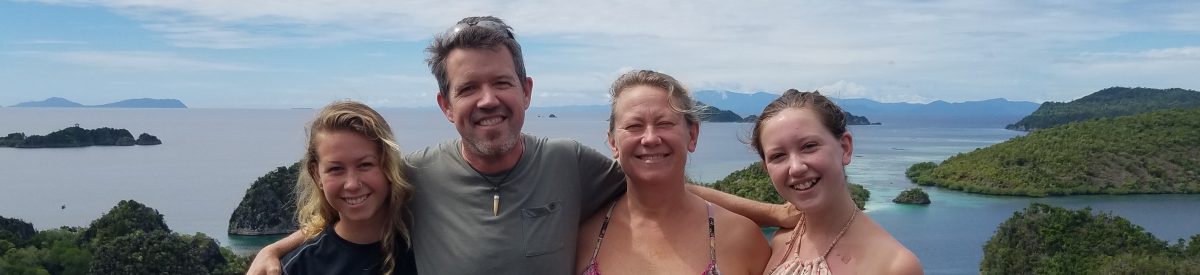
We arrived in Sulawesi (Indonesia) on our 23rd wedding anniversary May 20, with the focus of getting our tourist visas extended. Over several days we checked out a bit the hot, gritty port city of Makassar. Despite poor internet, we were able to plan our next couple of weeks in Sulawesi, see the new Avengers movie on the big screen, and enjoy some delicious seafood.
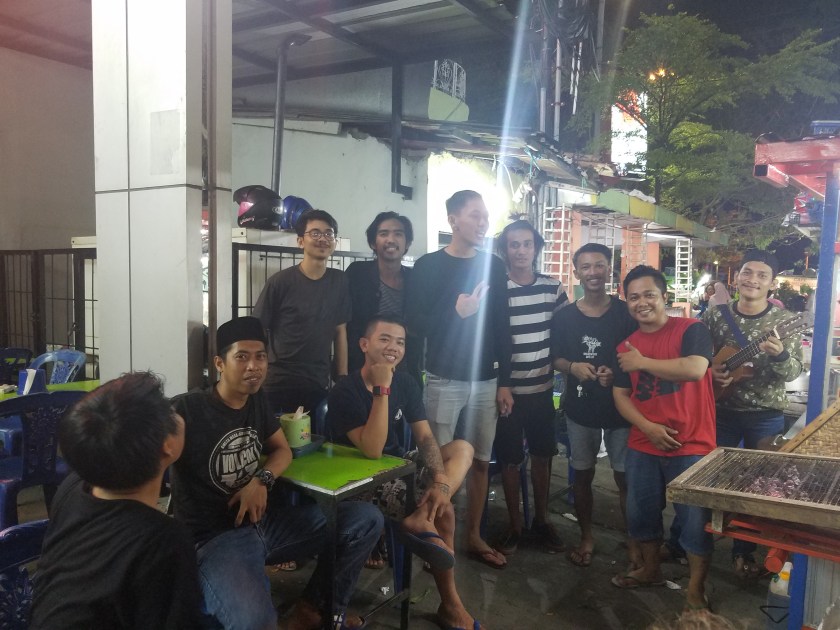
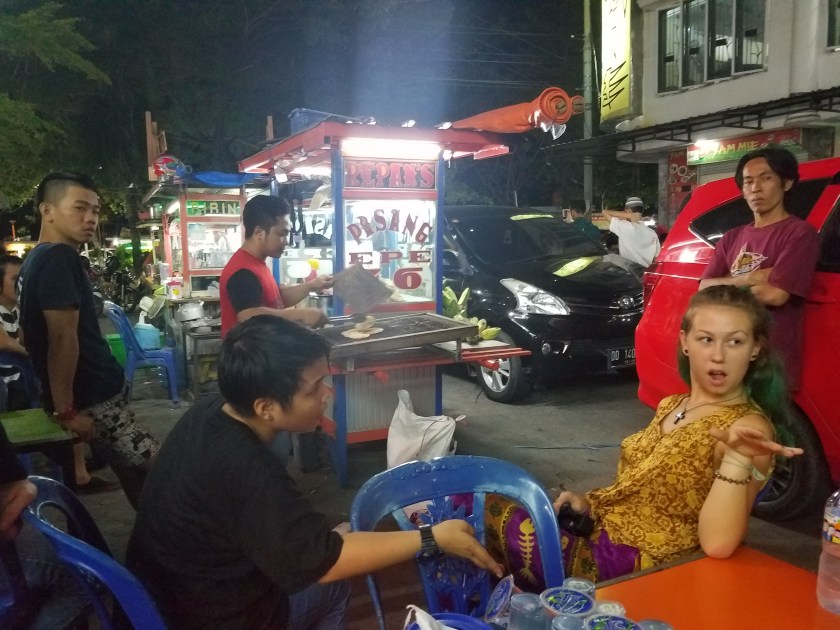
Hanging out with the locals at a pisang epe (pressed banana) stand in Makassar
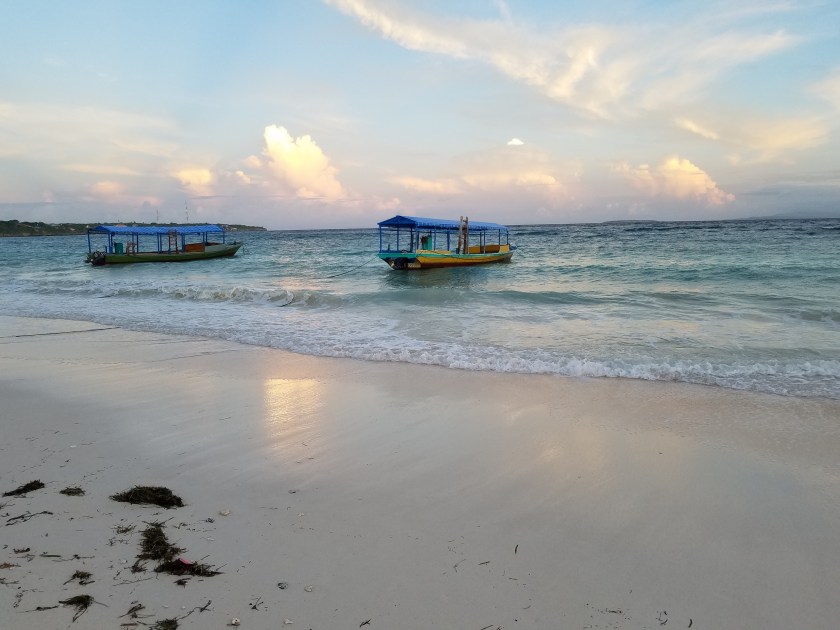
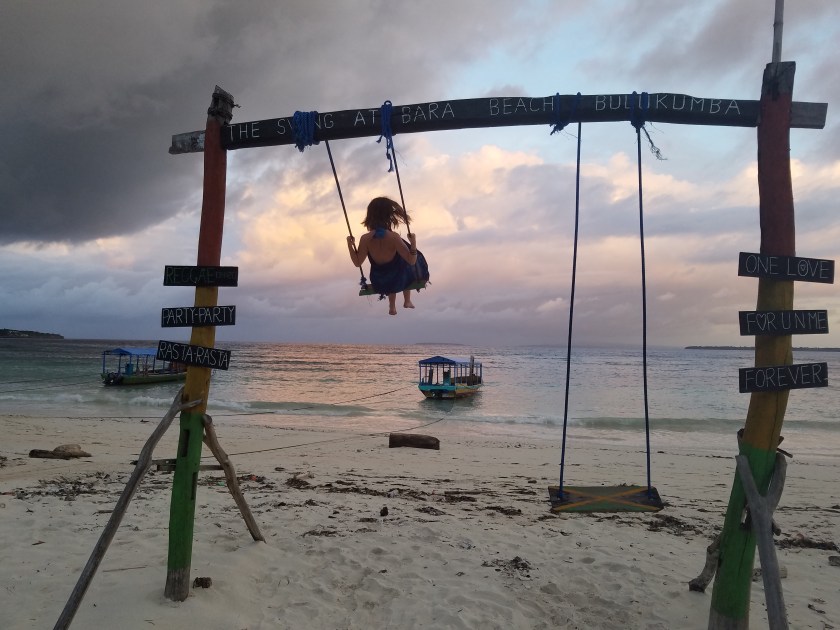
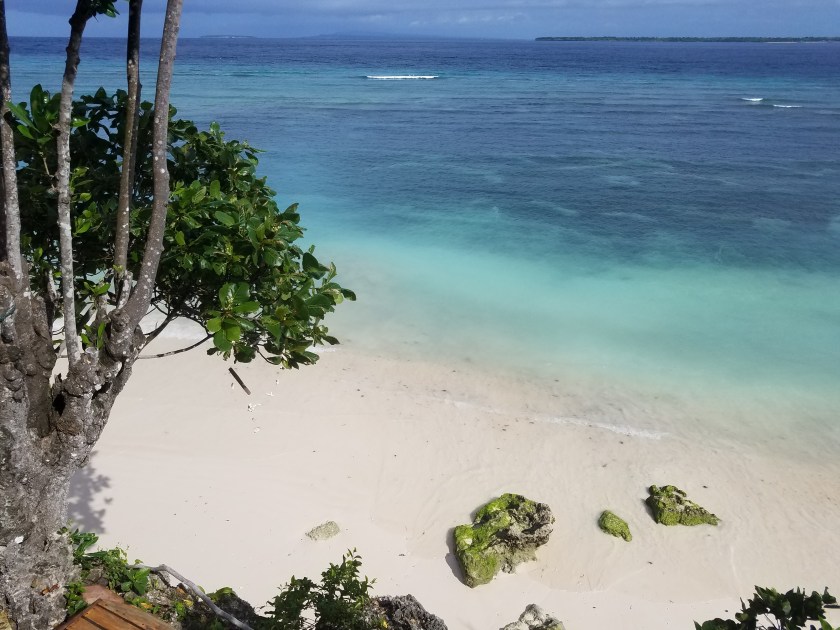
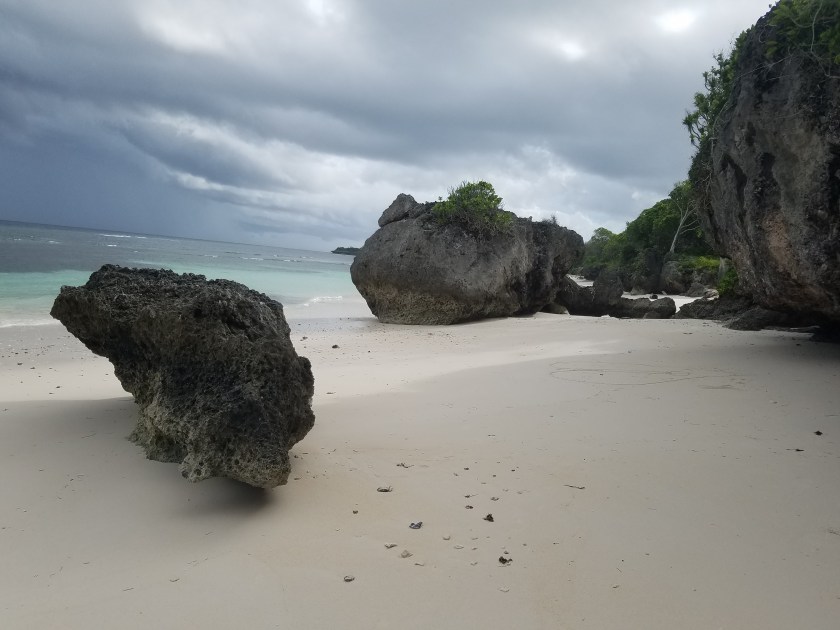
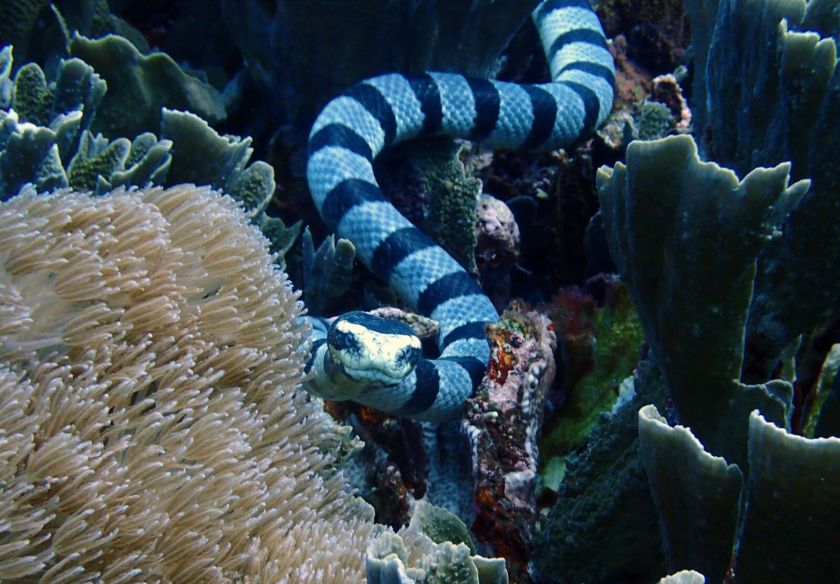
New visa’s successfully in hand, we squeezed into our driver’s car and rode five hours to the southeast coastal town of Bira. We had hoped to stop for lunch along the way but due to Ramadan absolutely no restaurants were open, so it was rambutan and crackers for us. At Bira Beach we rented a couple of simple bungalows at Bira Dive Camp through Scuba Republic http://www.scuba-republic.com/dive-resort-and-bungalows/bira-dive-camp/. Our dive master Hannah—a 28 year old marine biologist from Utah—was an enthusiastic, well informed teacher we loved being with. We had several successful dives seeing tons of cool creatures, including green turtles, manta rays, reef sharks, sea snakes, cuttlefish, lion fish, octopus, and nudibranchs! Bira Beach (Pantai Bira) was especially quiet due to local tourism shutting down for Ramadan, which was nice for us.
Photos by Doug
-
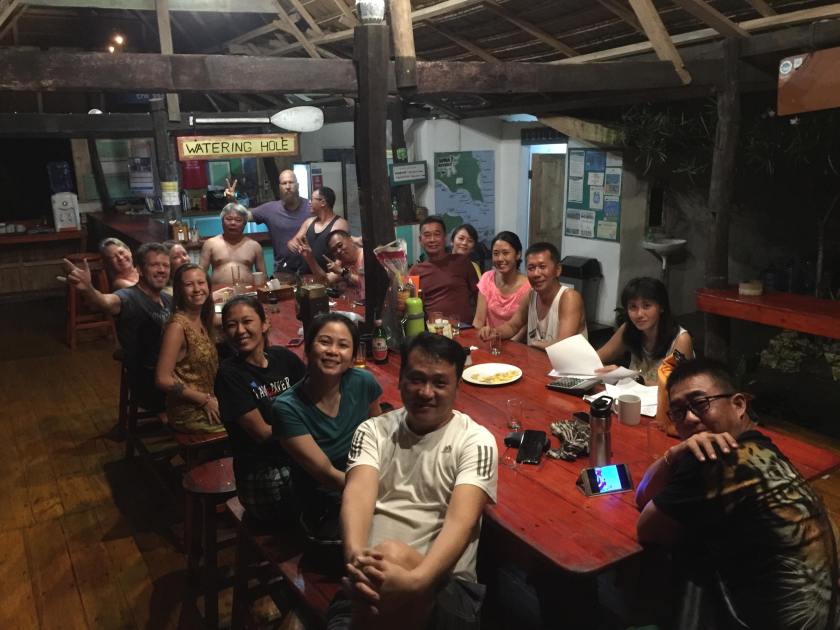
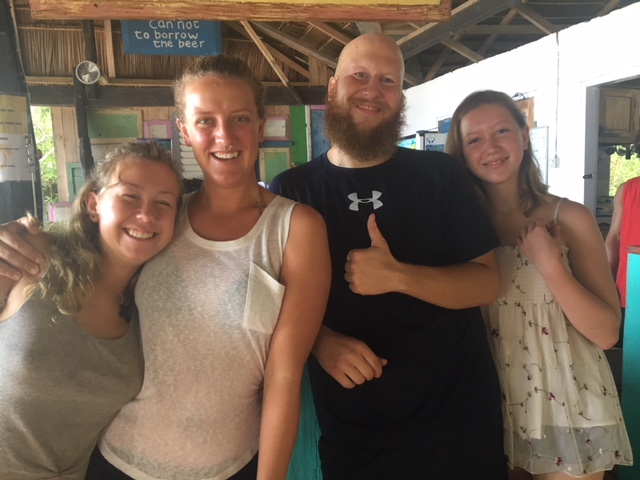
The Malaysian Invasion at Bira! Fun group of divers calling their club the Hooligans.
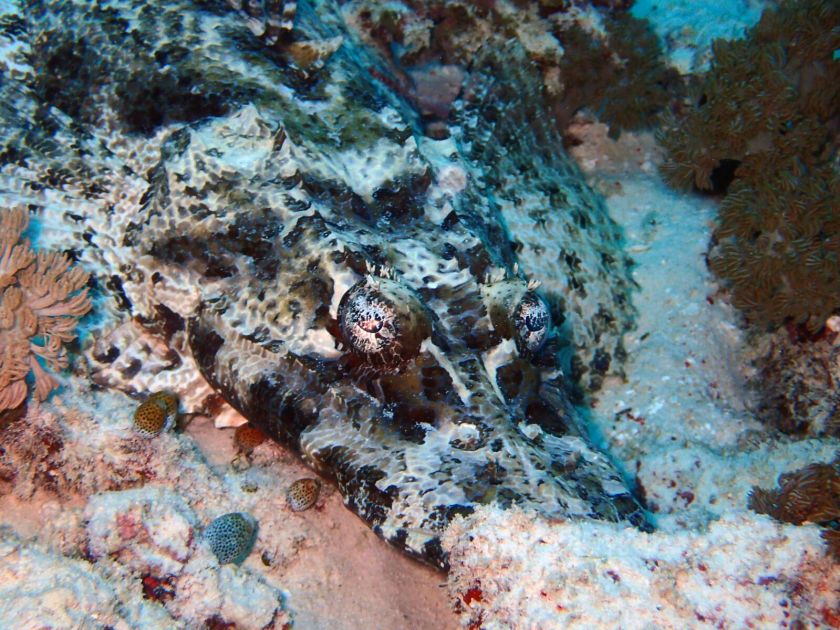
Underwater photos by fellow diver, Alex from Belarus. More dive shots to come once we get some camera challenges sorted!


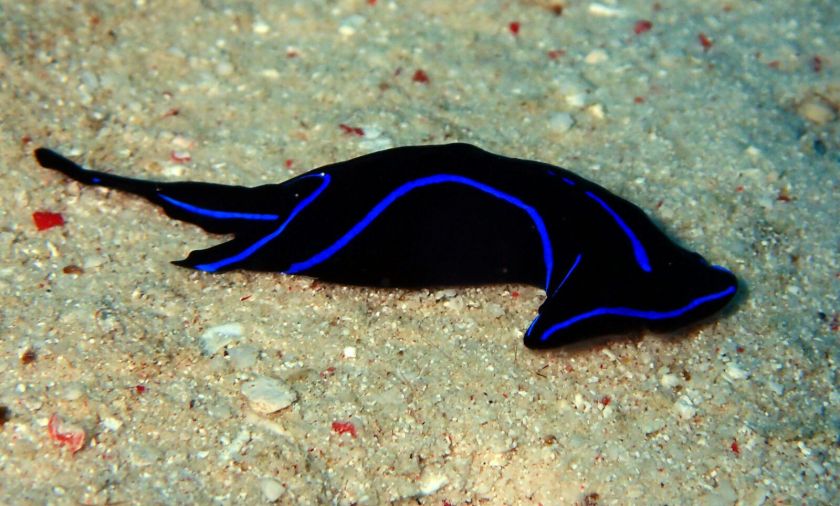
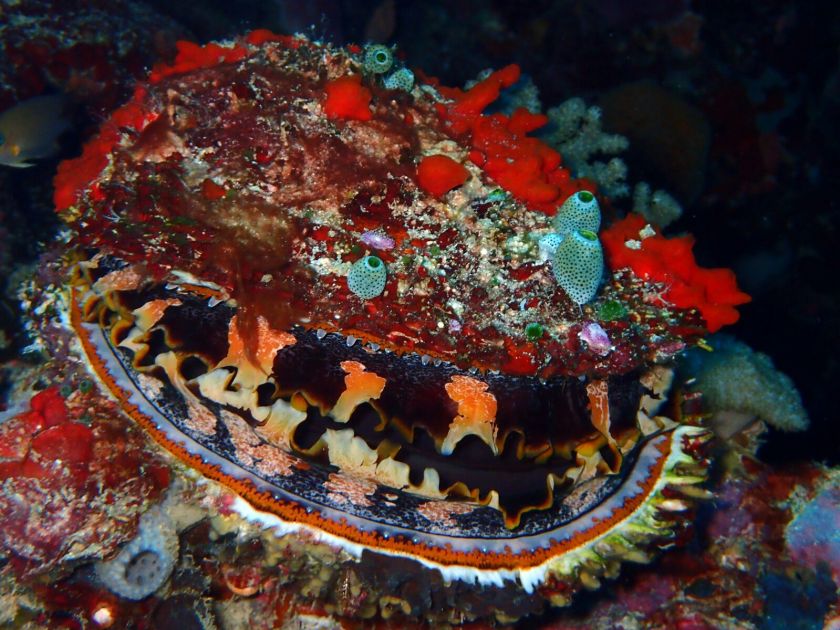
For more crazy nudibranch images check out https://www.google.co.th/search?q=nudibranch+images&tbm=isch&tbo=u&source=univ&sa=X&ved=0ahUKEwjkjffh7KbcAhVDDiwKHU10DNMQ7AkIRg&biw=1331&bih=667
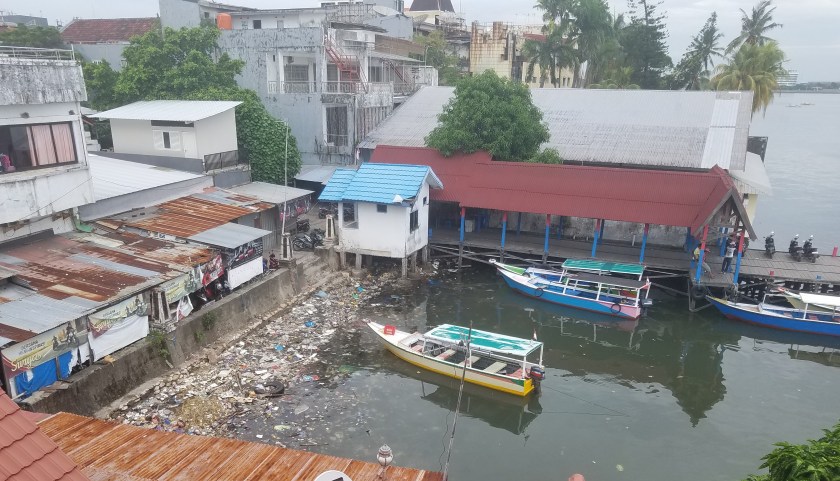
Helen enrolled a small group of people to join us for a beach clean up, making a wee dent in the trash problem. Trash is a big issue in so many parts of Indonesia, where there are nearly no public systems for collecting trash and no recycling options. People either burn it or throw it outside. It’s a real problem that has begun being addressed in some regions; we heard of just a few efforts to educate and engage locals (especially the young generation) about trash, but we witnessed people of all ages throw trash in the water and on the ground, clearly seeing no connection with trash and environmental health. Fortunately Indonesians aren’t heavy consumers. Though we Americans have waste management systems I’m quite sure we still produce more trash per capita than any other country.
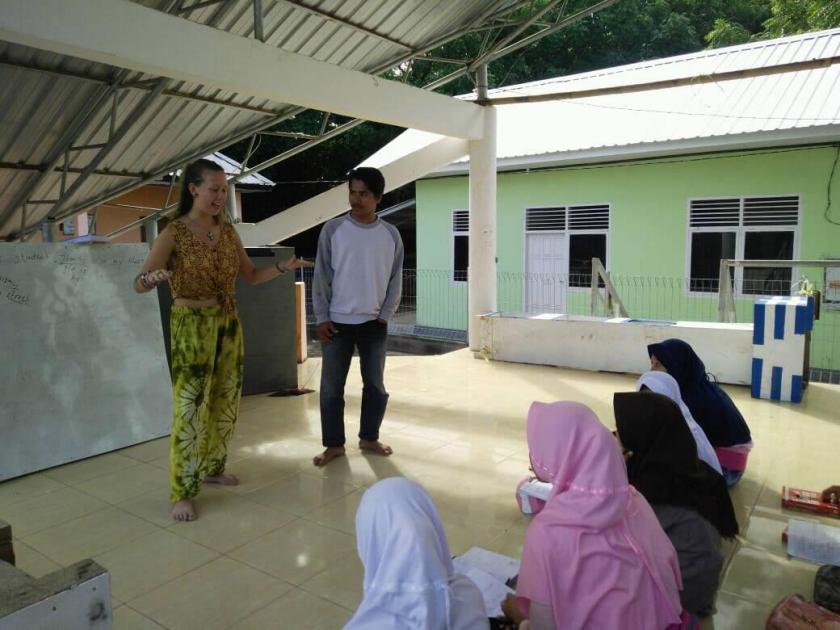
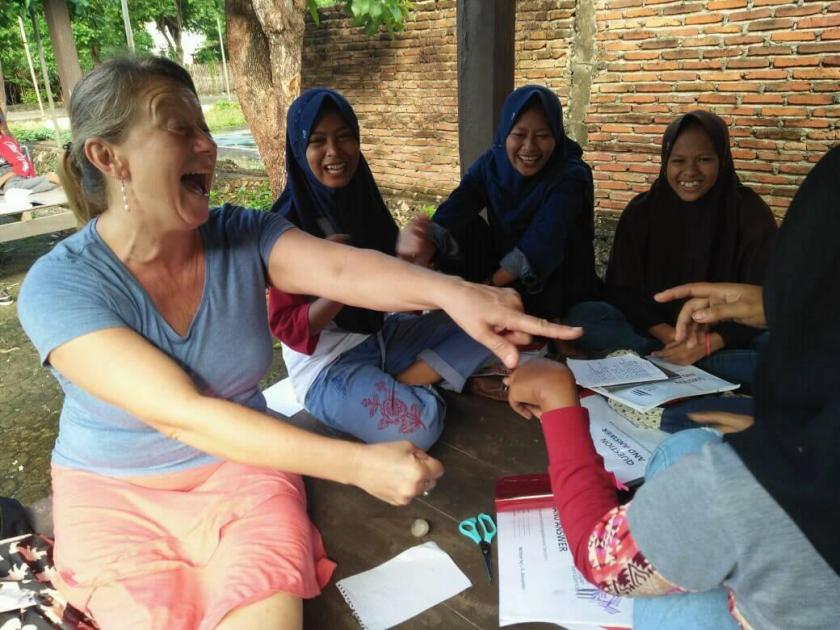
While doing an errand in the town of Bira Ella and I happened upon a local English teacher who asked us to help with his class the next day. It was one of those cool, organic experiences we stumbled into. The class is free (through a government grant) to students of all ages. At one point we got the whole group together to learn important American culture such as the hokey pokey and peel the banana. You know…
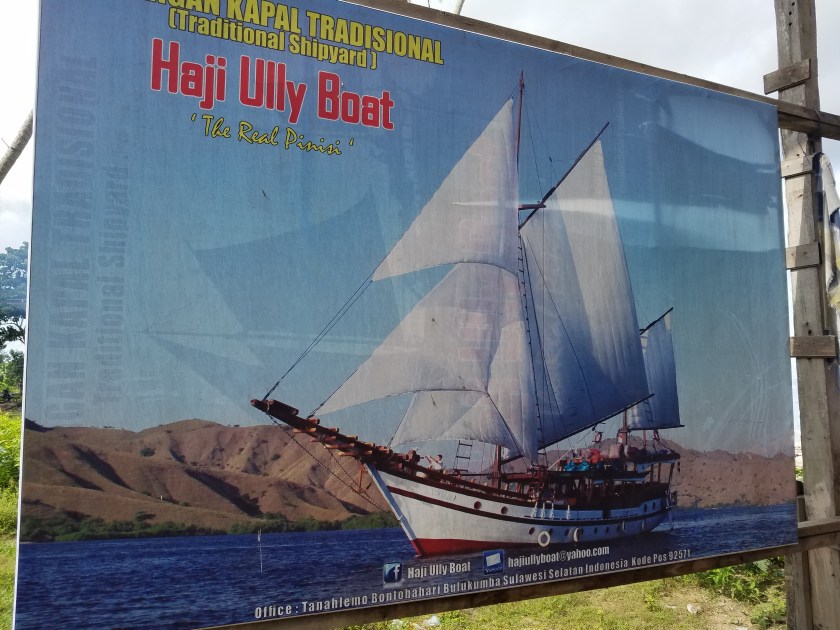
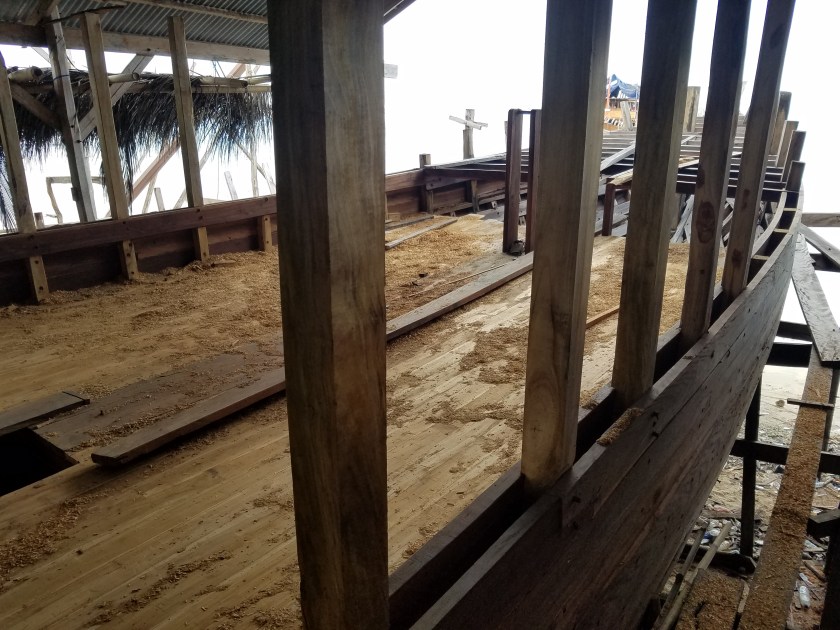
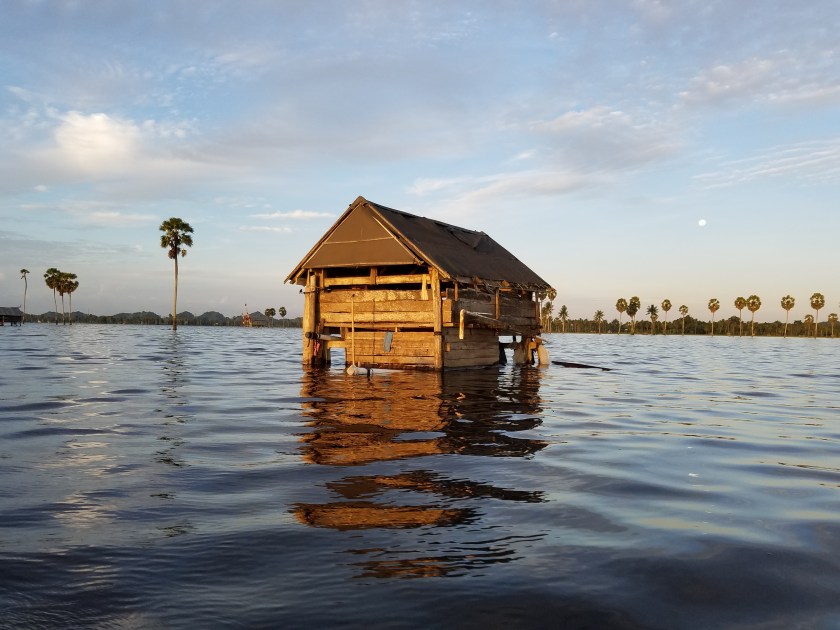
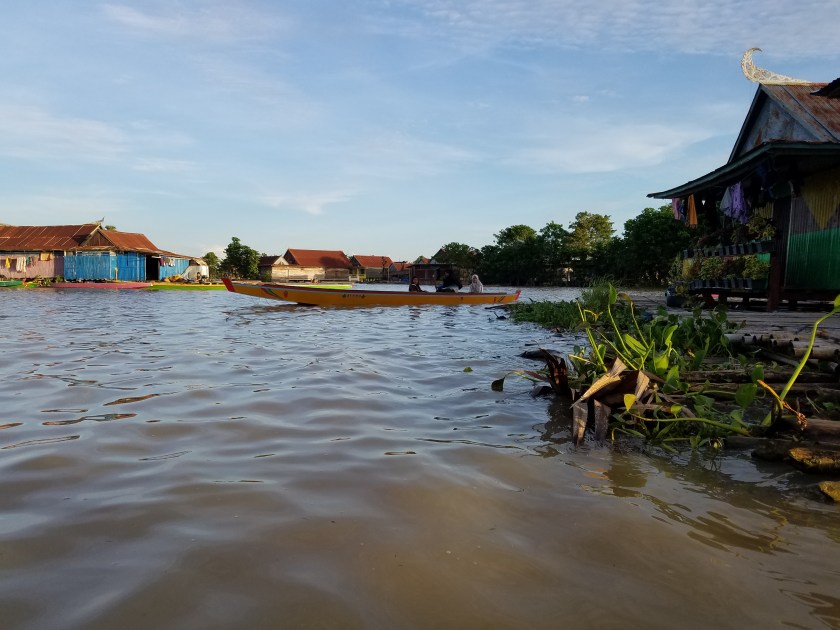
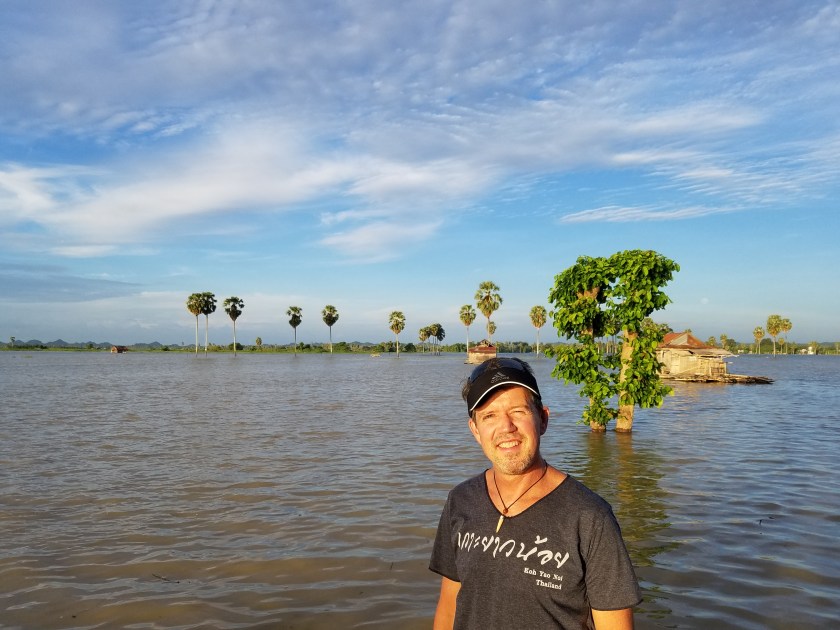
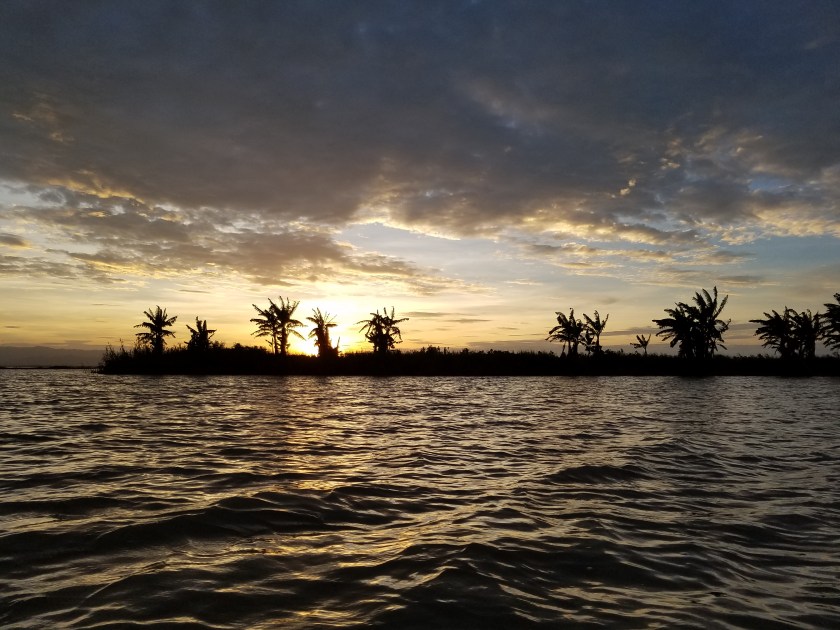
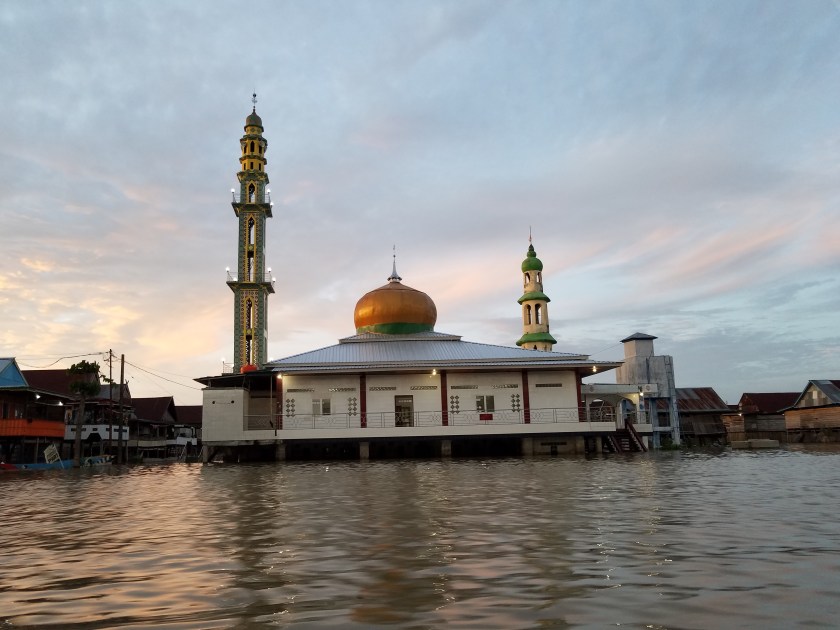
We said good-bye to the quality staff at Bira Dive Camp and stopped at the boat building yard in Bulukumba en route to Sengkang. In Sengkang we visited the interesting Lake Tempe for sunset (only tempeh and no fish in this lake?). Tempe is Sulawesi’s largest freshwater body and home to a small village of simple stilt houses built in the two meter deep water, scattered with a few submerged palm trees, patches of water hyacinths, and lots of edible fish. Small skiffs with long shaft outboard motors brought the small number of visitors to the village, where one of the homes was available to stop for a snack of tea and fried banana.
Traditional boat building in Bulukumba, South Sulawesi
http://boatbuildingindonesia.com/bulukumba-south-sulawesi-indonesia.html
Tempe Lake
We continued north several hours to another highlight of our year—the magical region of Toraja in Central Sulawesi. Torajan people live to die, in many ways. For over 600 years their culture has centered on making it to puya (heaven) and several strong traditions remain. We spent 5 days with a local guide Johnny who brought us to a traditional funeral, multiple ancient graves and several villages. Tourists are welcome to attend traditional funerals though are expected to bring a gift of cigarettes, sugar, a pig, or money for the family. Months before the funeral temporary bamboo structures are built as shelter for visiting families and guests. By the time family can all be together so the multi-day funeral can take place the deceased may have been dead for many months, preserved with formaldehyde.
Torajan Funeral photos by Doug
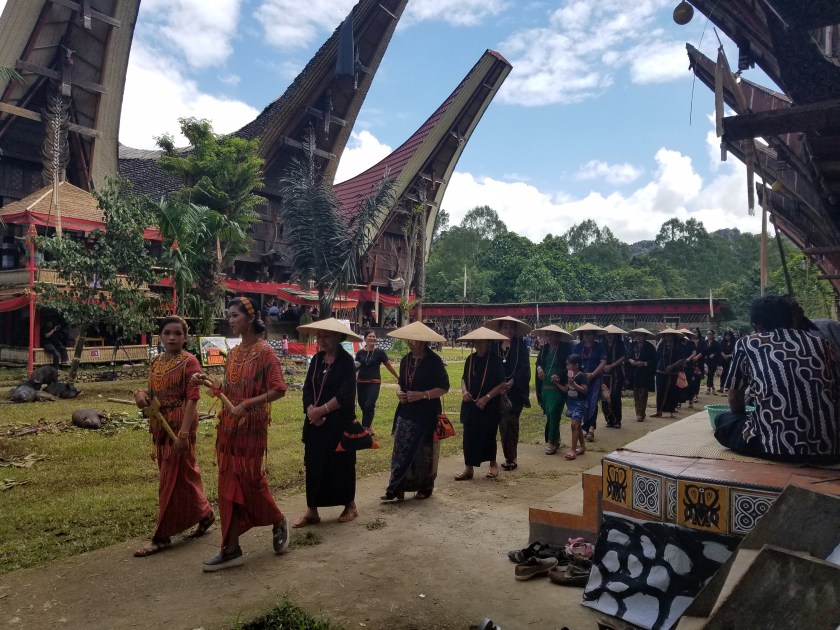
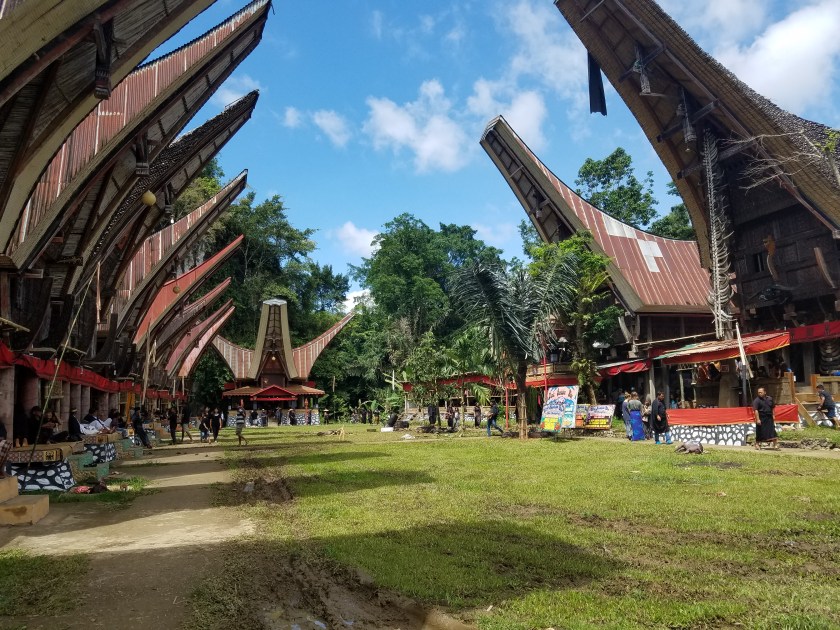
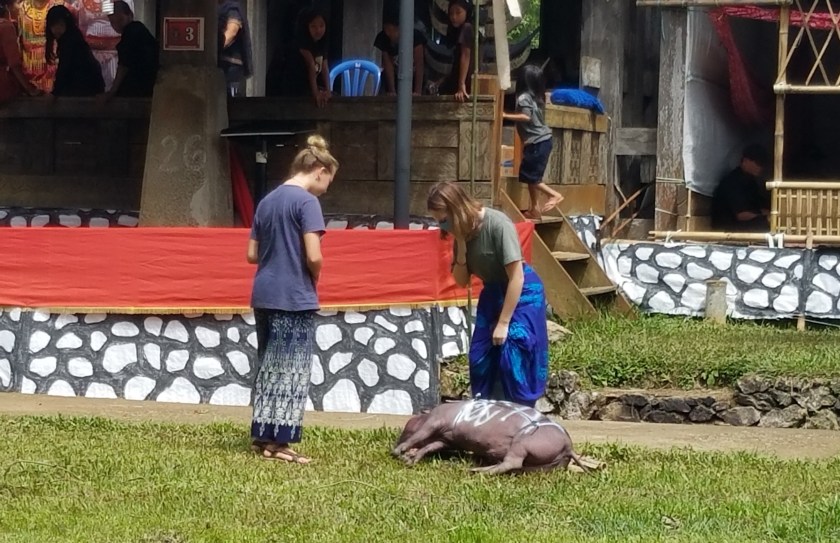
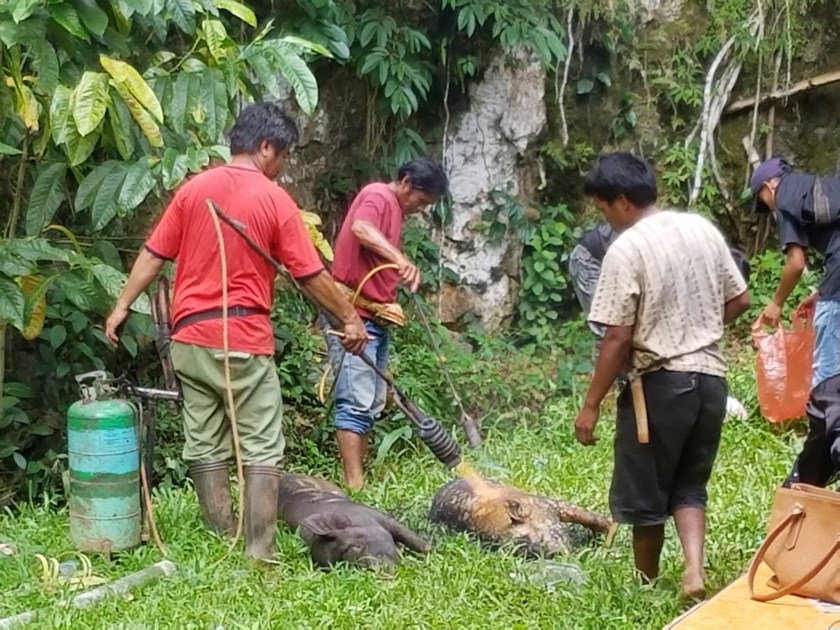
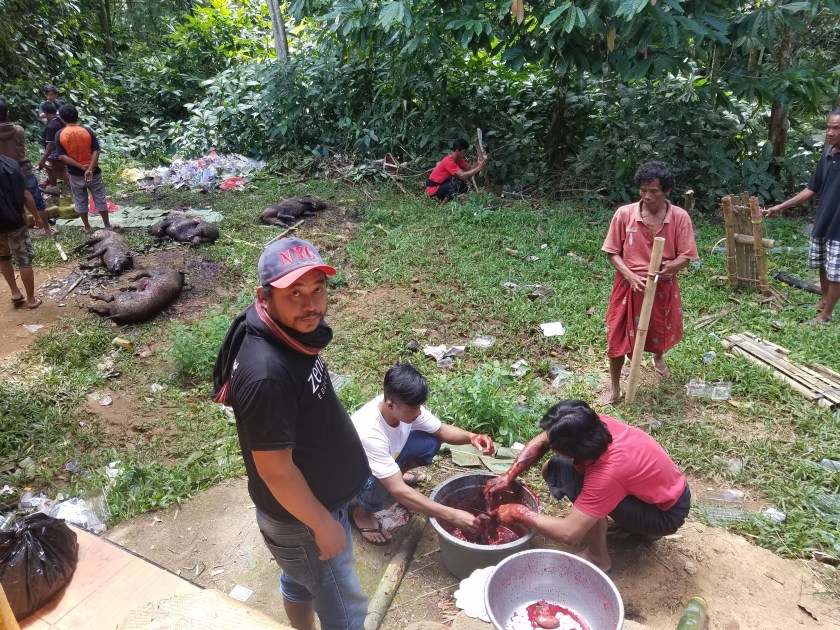
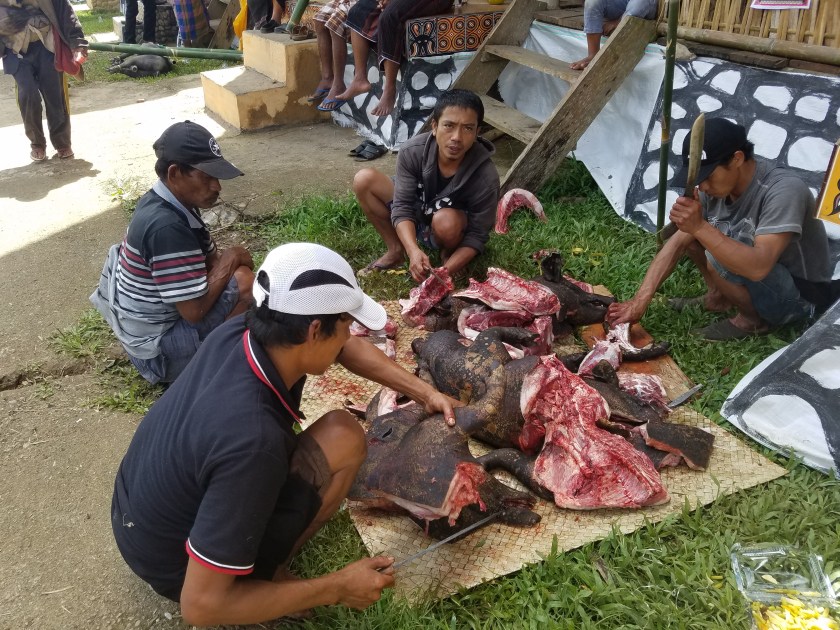
Many pigs and buffaloes are slaughtered at a Torajan funeral, as it is believed the smart pigs and the strong buffaloes will assist the deceased to puya. Some of the meat is cooked at the funeral and the rest is shared between all of the families to bring home. It was tough to witness the pigs tied up (I now know where the term hog-tied comes from), hauled away, slaughtered and butchered. The squealing made us cringe, or cry in Helen’s case. While it felt harsh and gruesome we all felt it was a better way to eat meat than the way most Americans do—from factories where animals with no quality of life get pumped with hormones and dyes. At least here there’s no question of where your food is coming from. Nonetheless we were happy to miss the slaughter of multiple buffaloes that was to take place the next day.
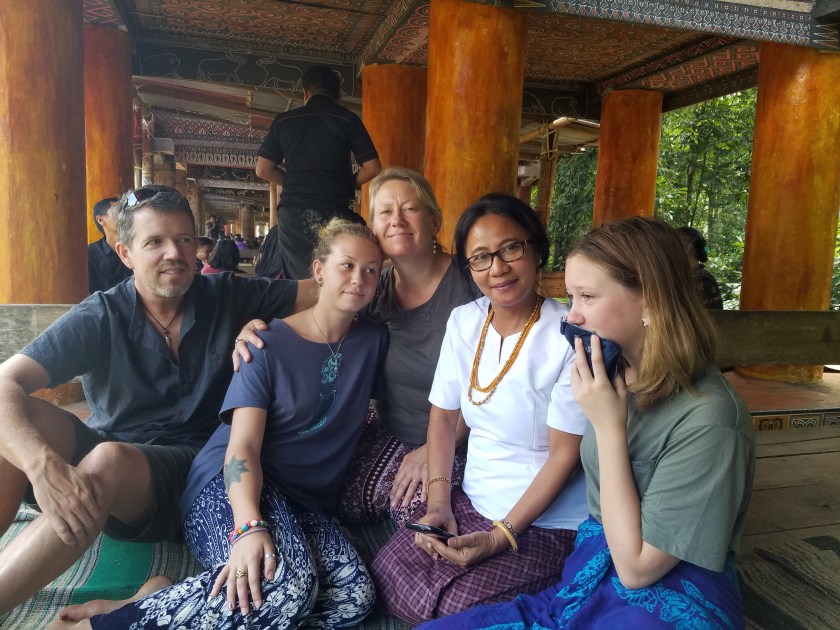

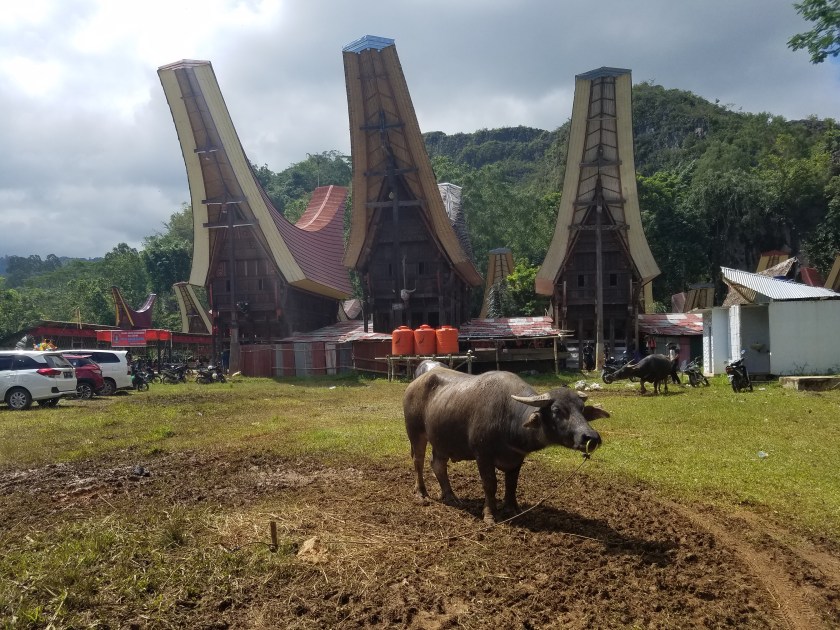
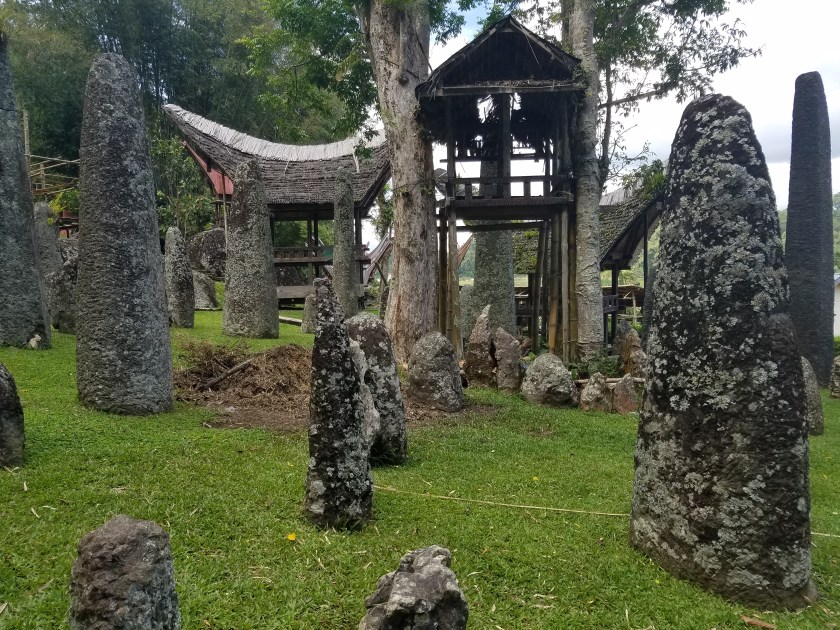


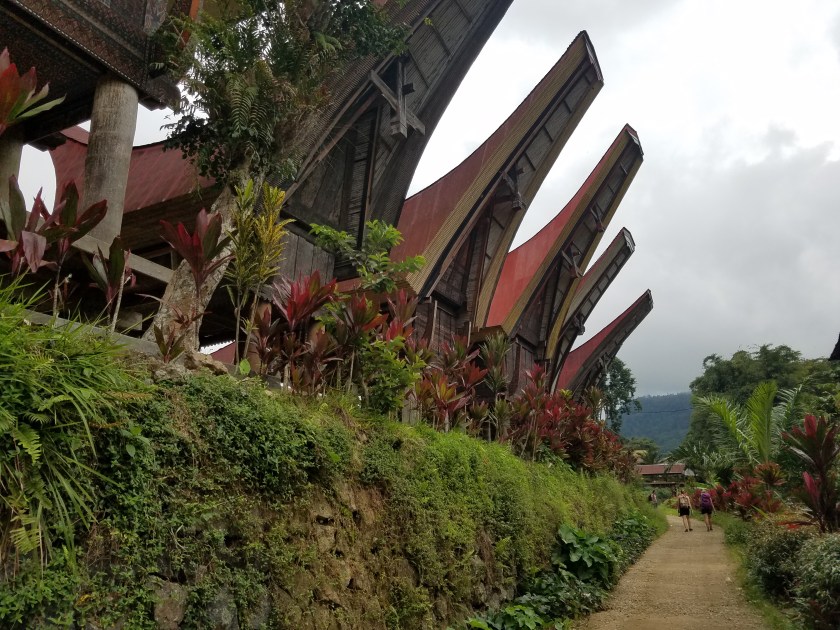
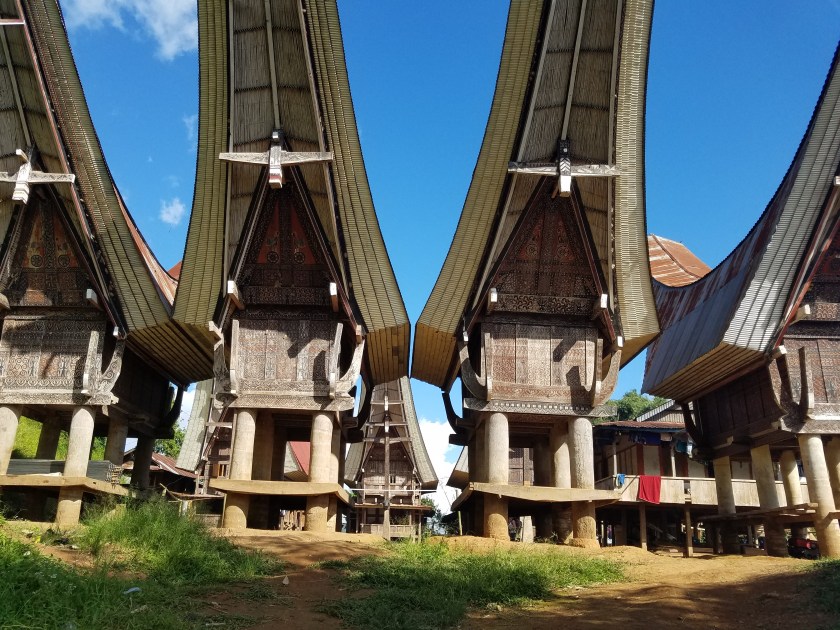
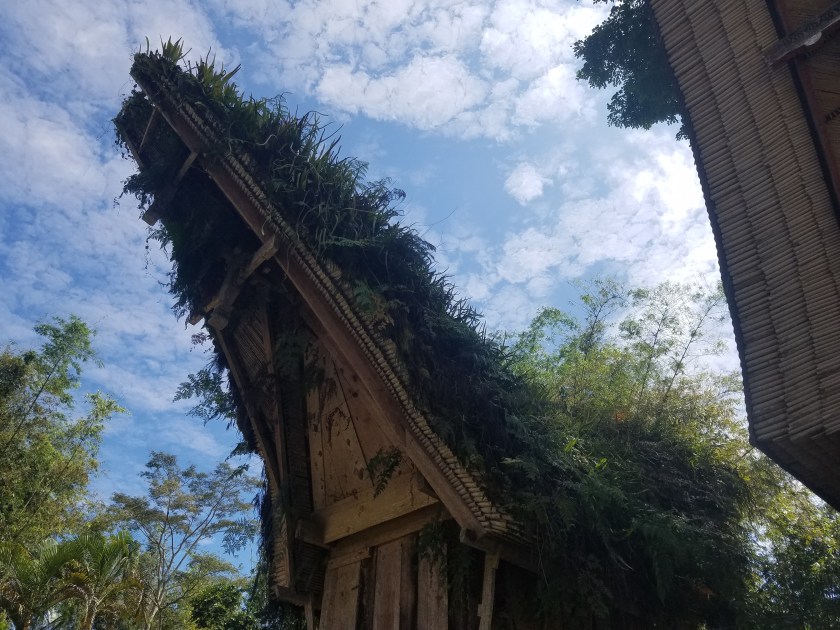
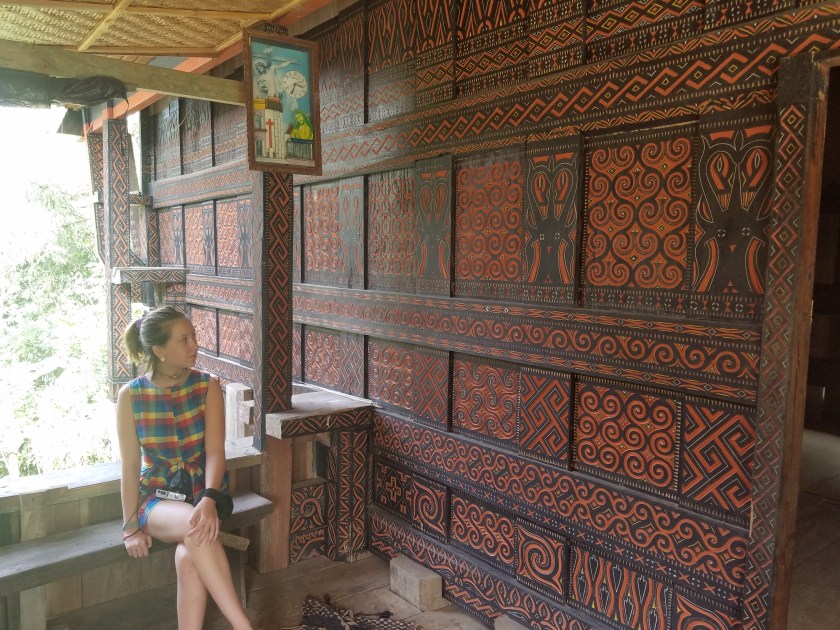
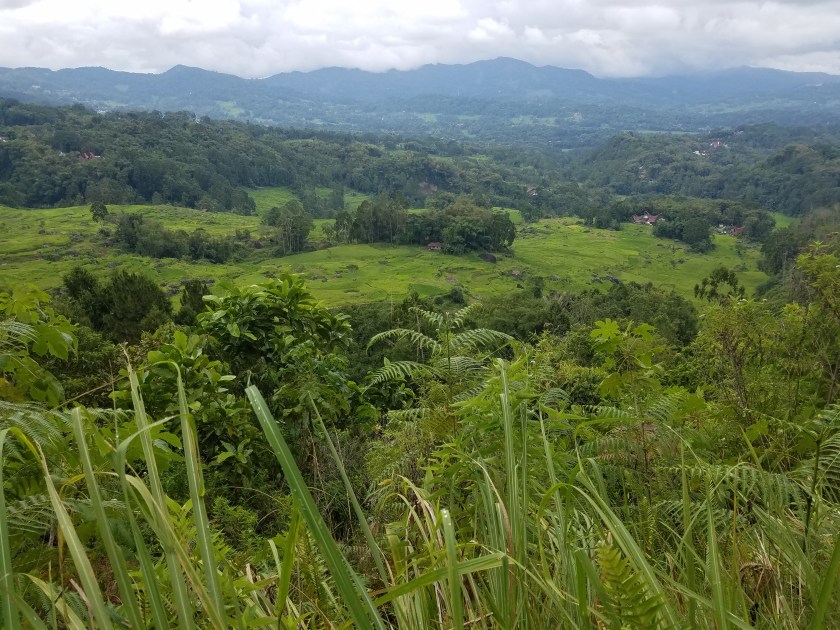
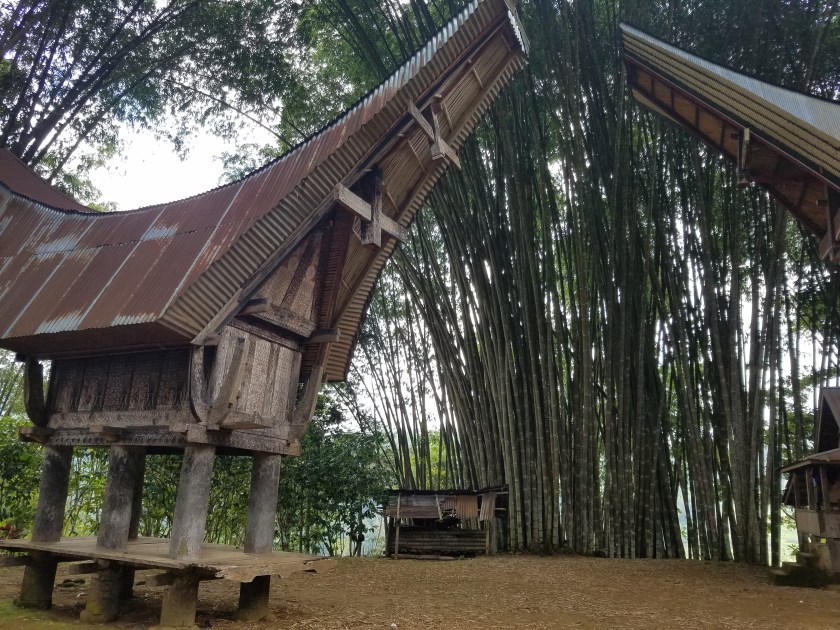
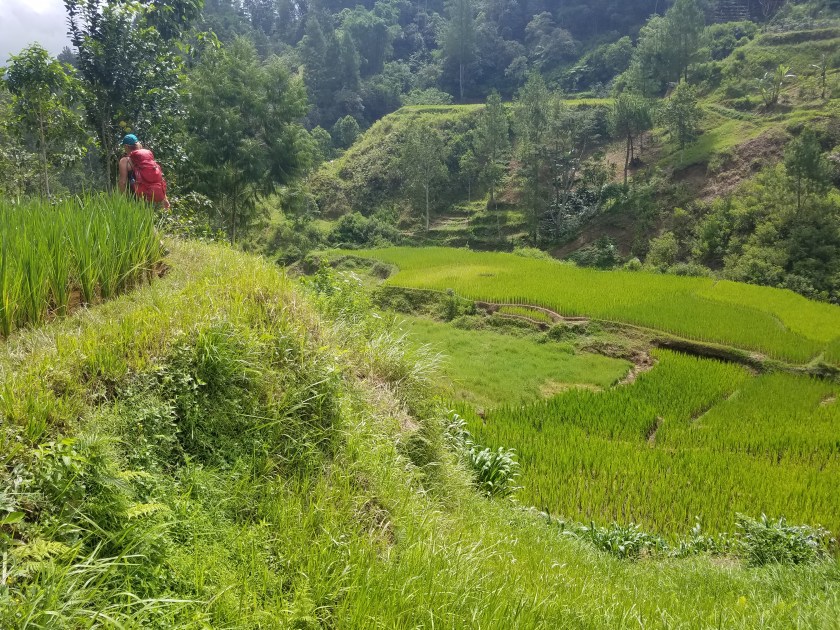
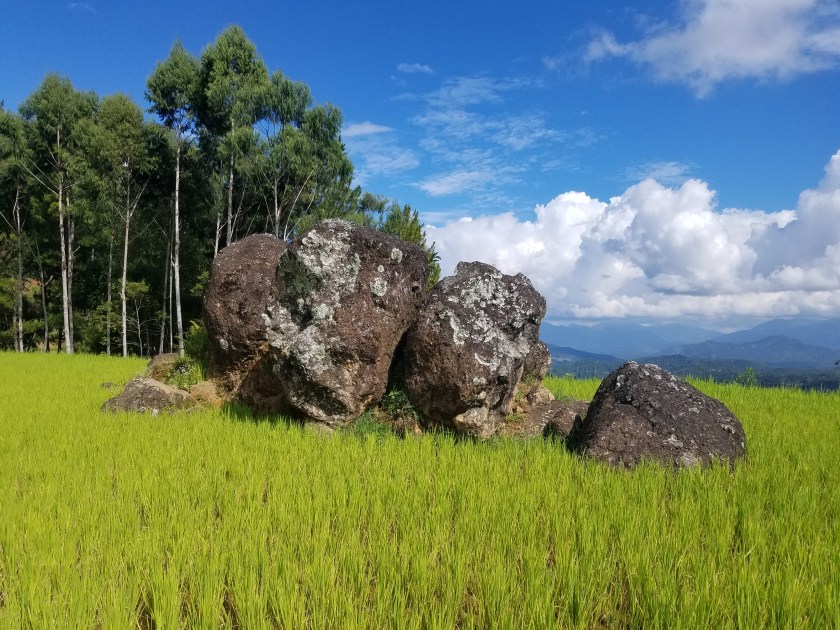
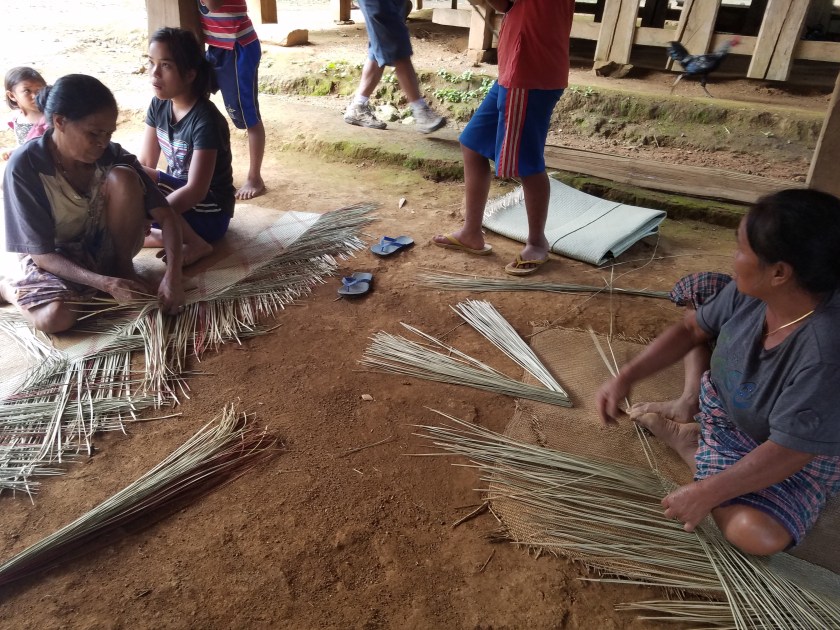
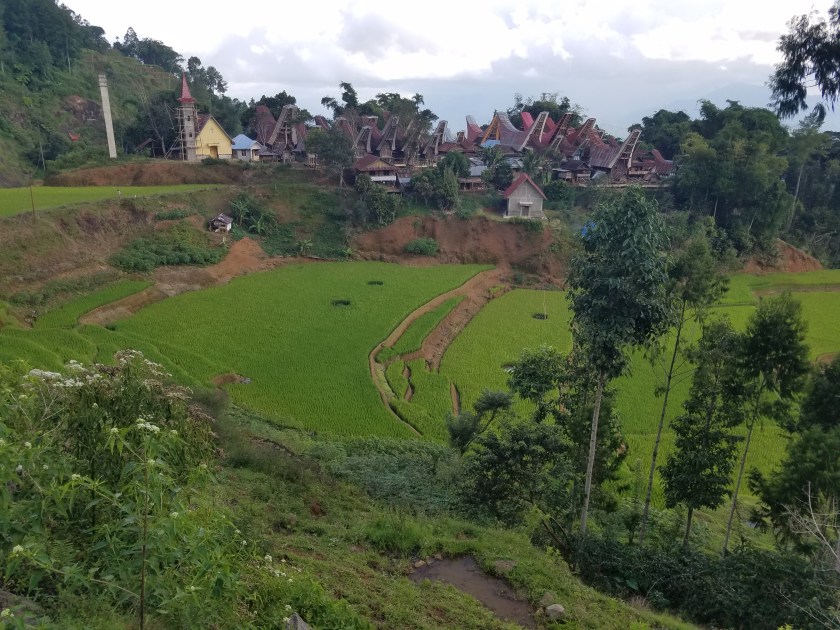
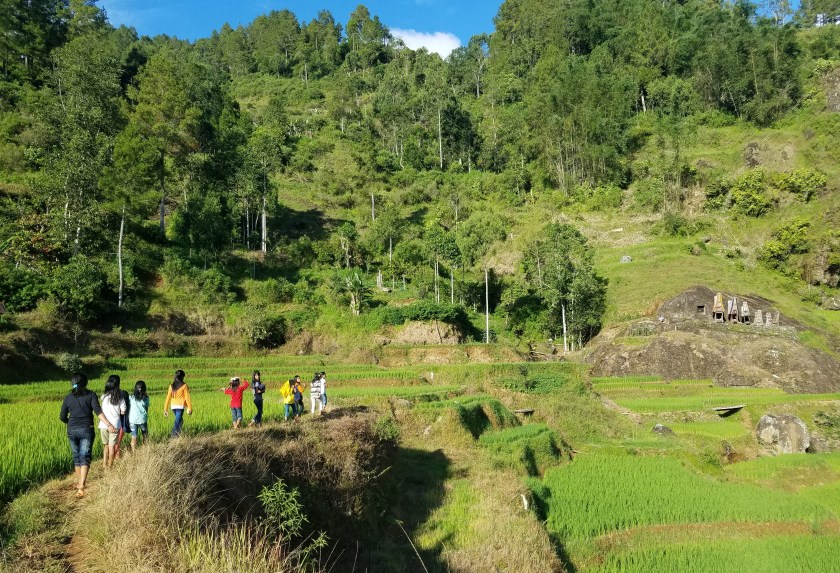
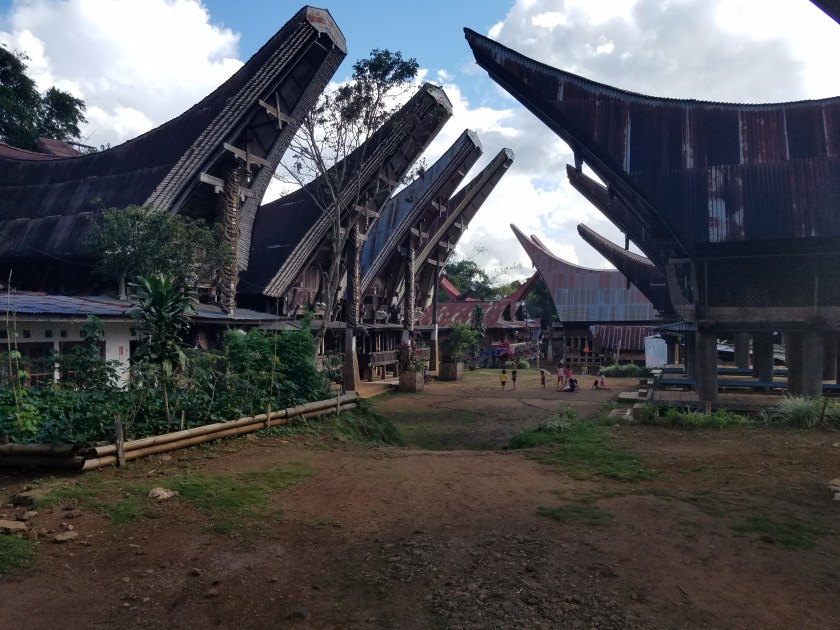
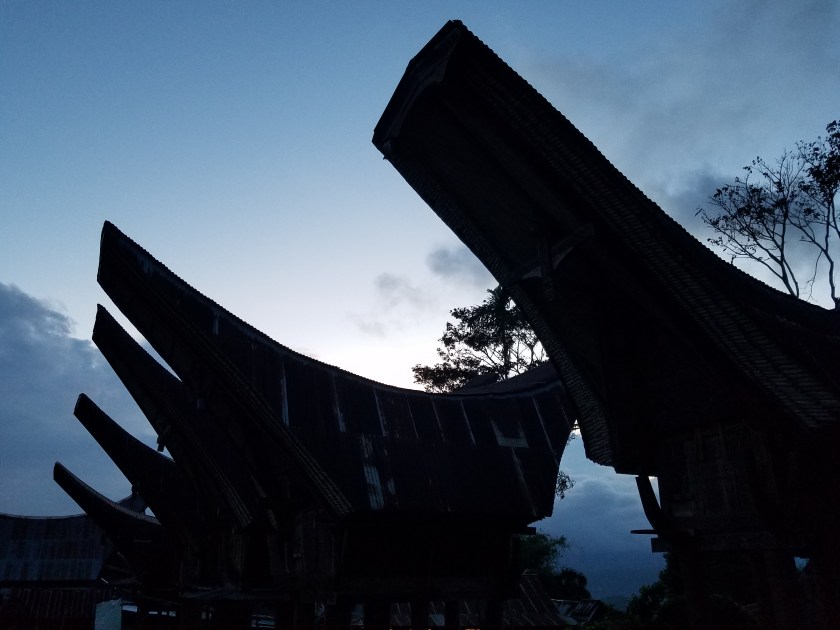
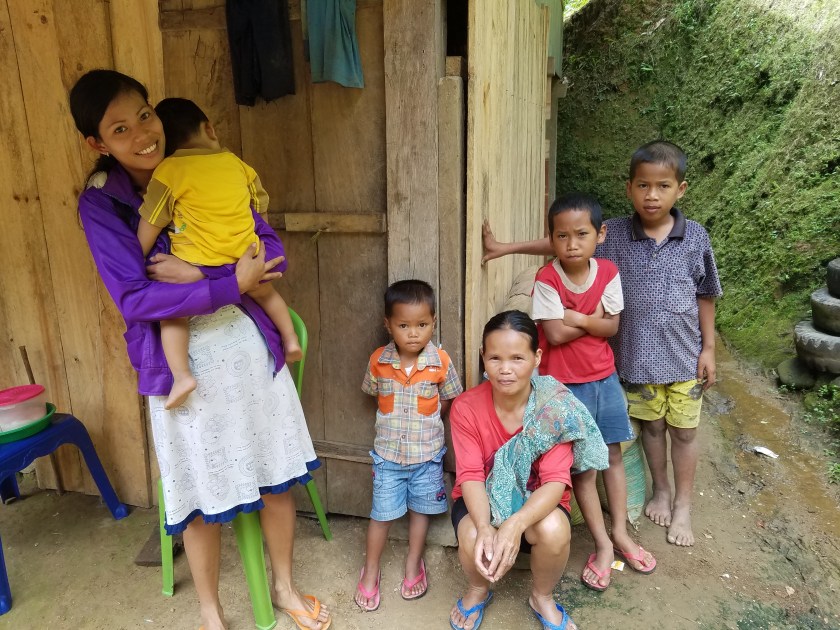
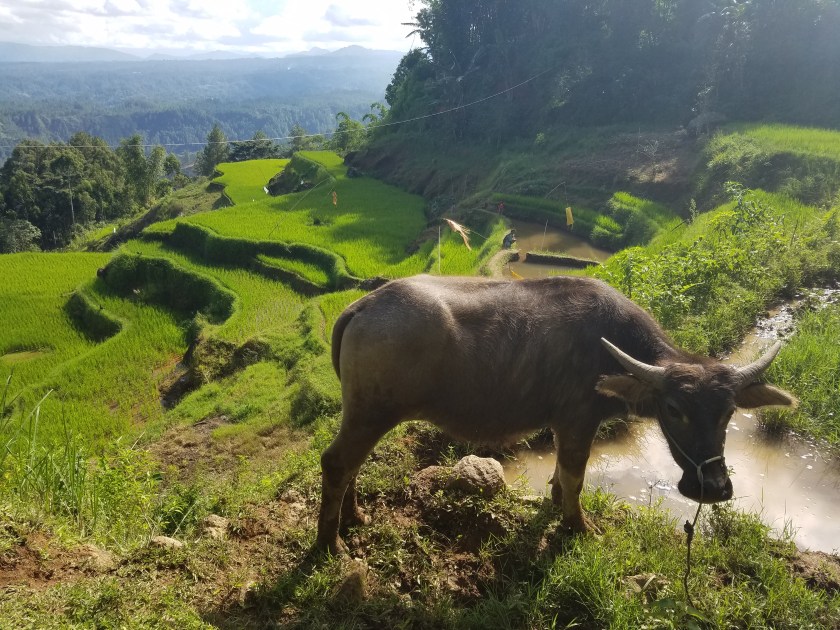
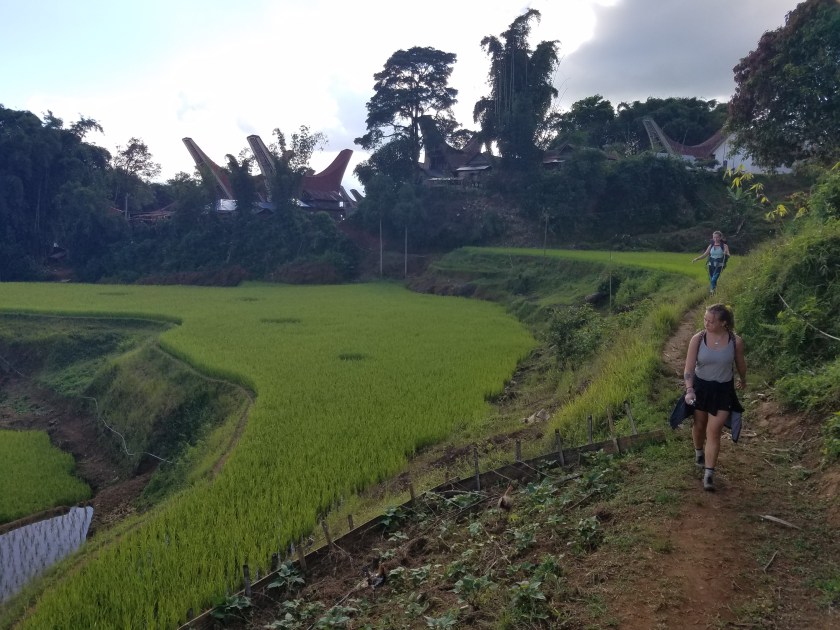
Traditional Torajan homes are called tongkonans, and are fashioned after the boats ancestors used. (Interestingly related ancestors likely sailed to Sumatra as well, where the Batak tribes there have a similarly strong death culture and similar house structures.) For three days Johnny led us trekking through rice paddies, forests and traditional villages. The beauty of seemingly endless lush, terraced rice paddies backdropped with hand cut stone graves, swooping houses and grazing buffaloes was breathtaking. Village children are used to travelers bringing them gula-gula (candy), which we tried to keep up with. We spent two nights in intricately carved tongkonans, one right in the heart of Lumpah–a village of mat weavers.
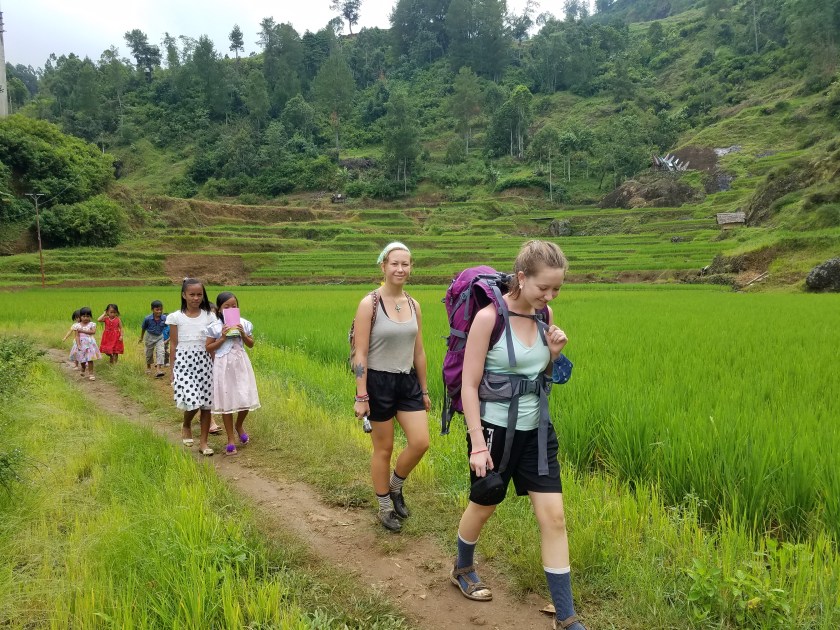
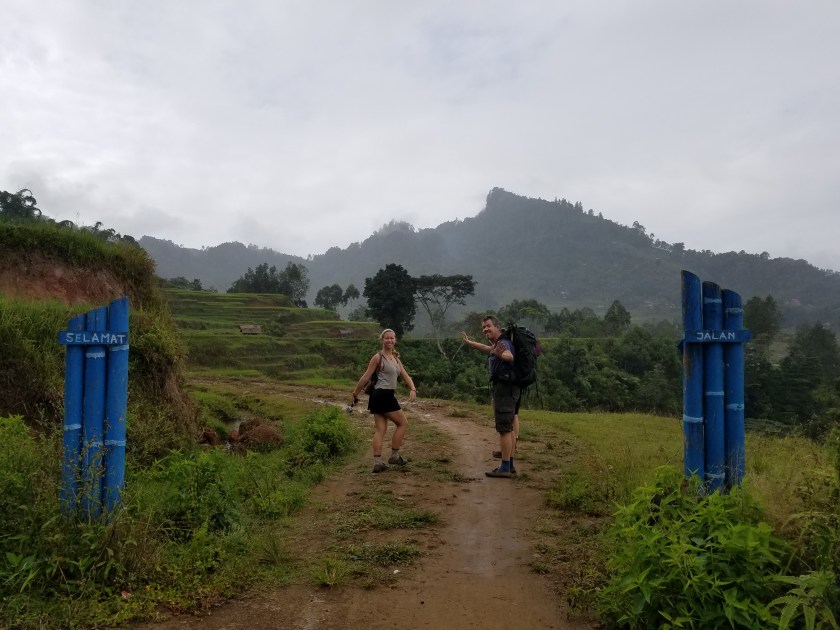
3 day trek through Torajan villages of tongkonan houses, rice paddies and jungles




black rice on left, white on the right


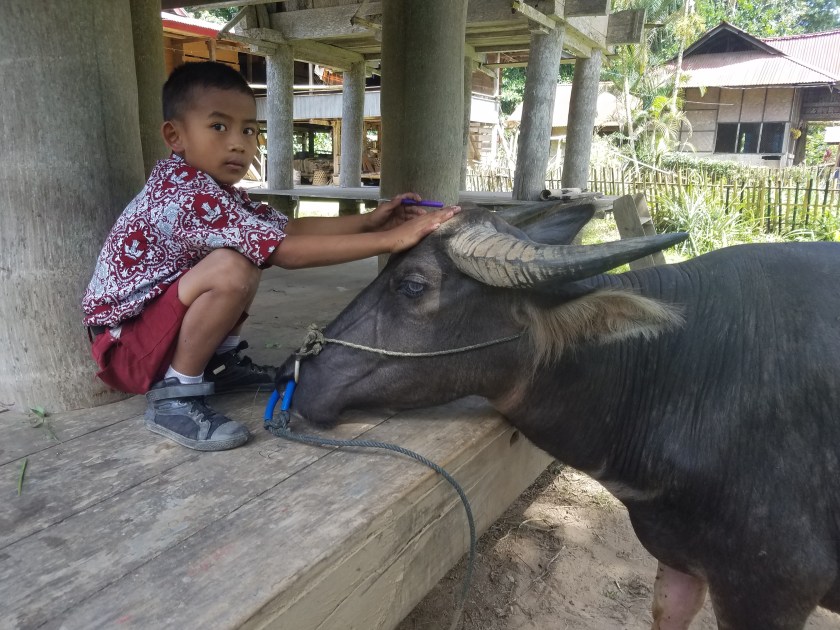
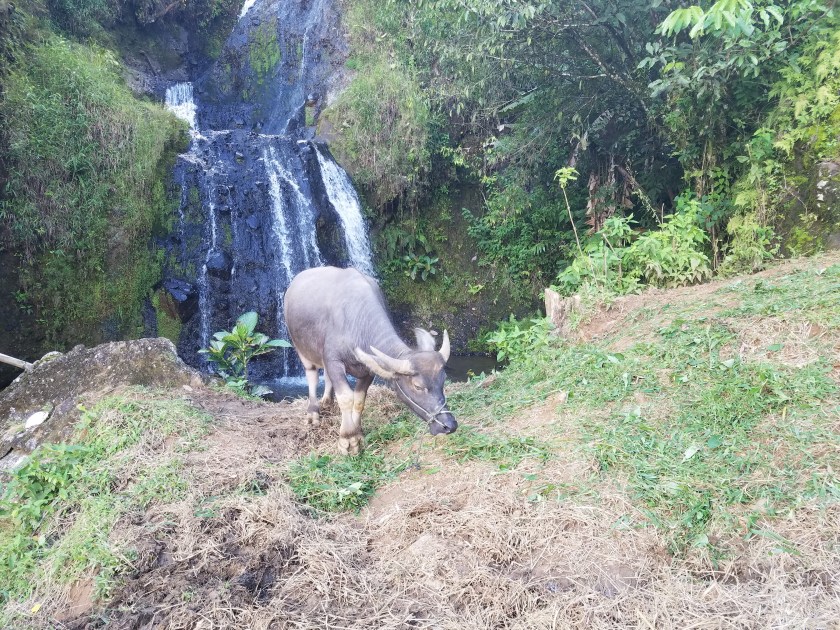
So many beautiful cows and buffaloes along the way


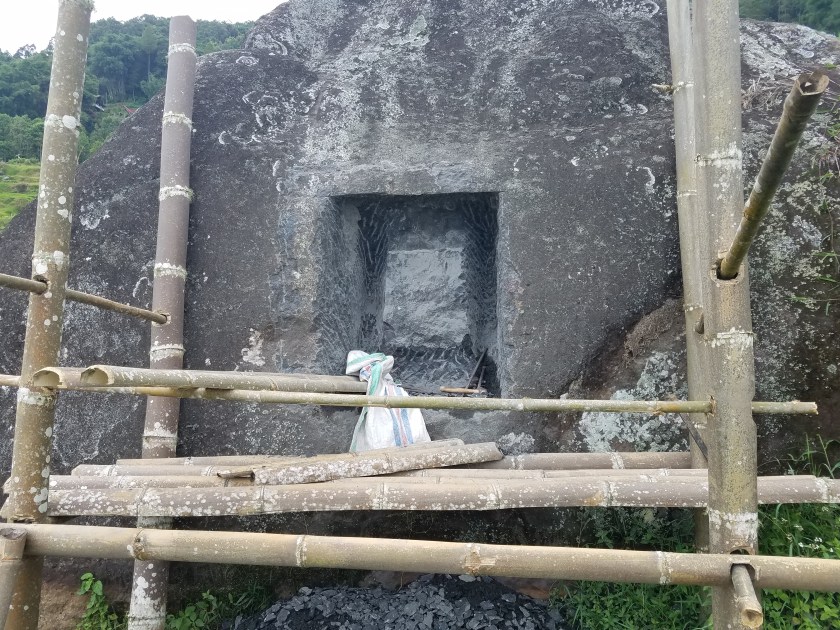
The simple temporary bamboo house built for the stone mason, and the hand held chisels he uses to cut the above stone.


We might have gotten a little dirty…


Some of us relax with yoga, others with beer


Our house for the night, but look what the cat–or buffalo–dragged in…


-

Beautiful
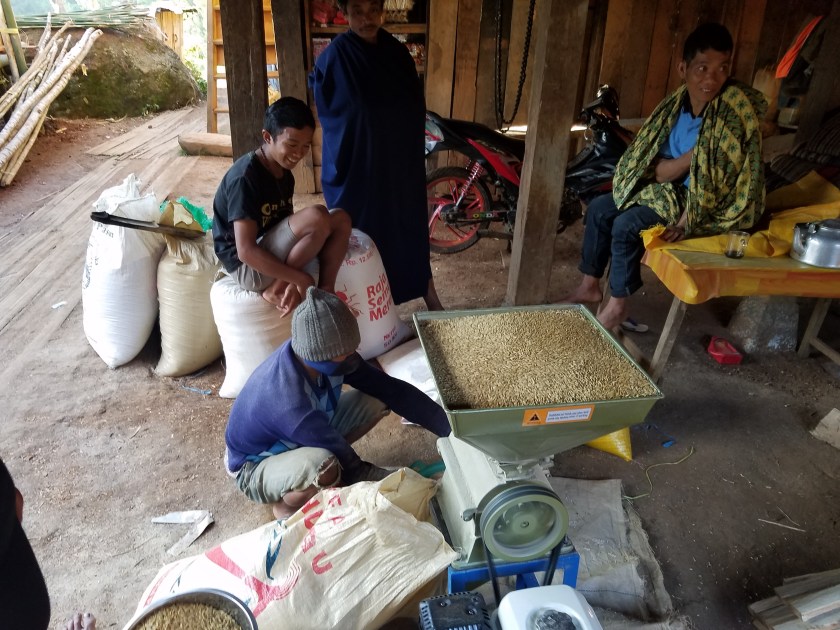
Traditional tools used to hull and grind rice


Looking down at rice terrace, and a baby bamboo shoot


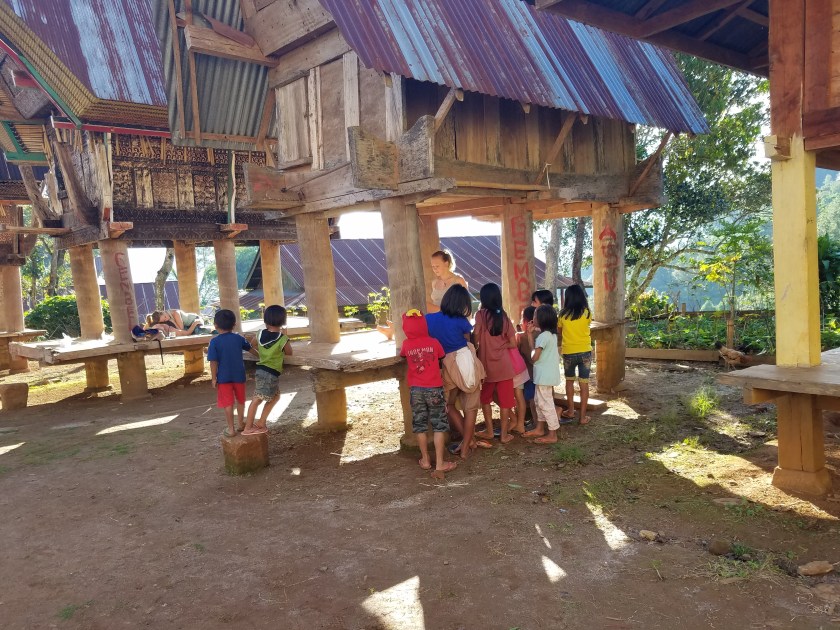
-
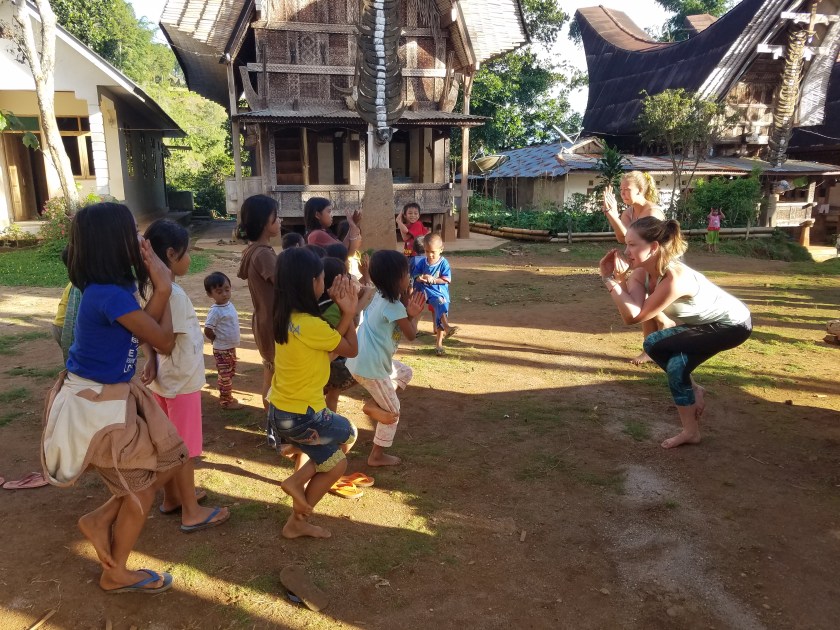
Ella and Helen leading village children in yoga; the girls were serious, the boys silly. Our tongkonan house is the one in the middle.
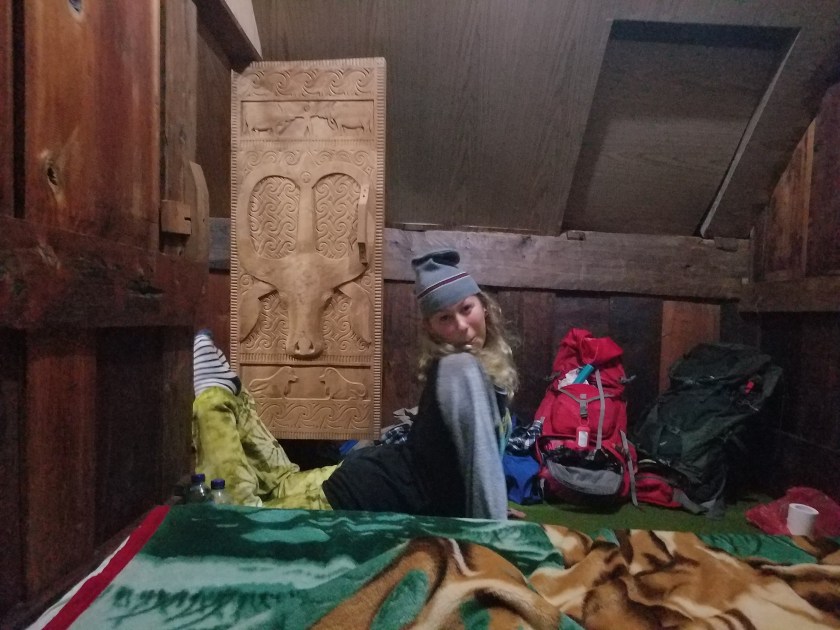
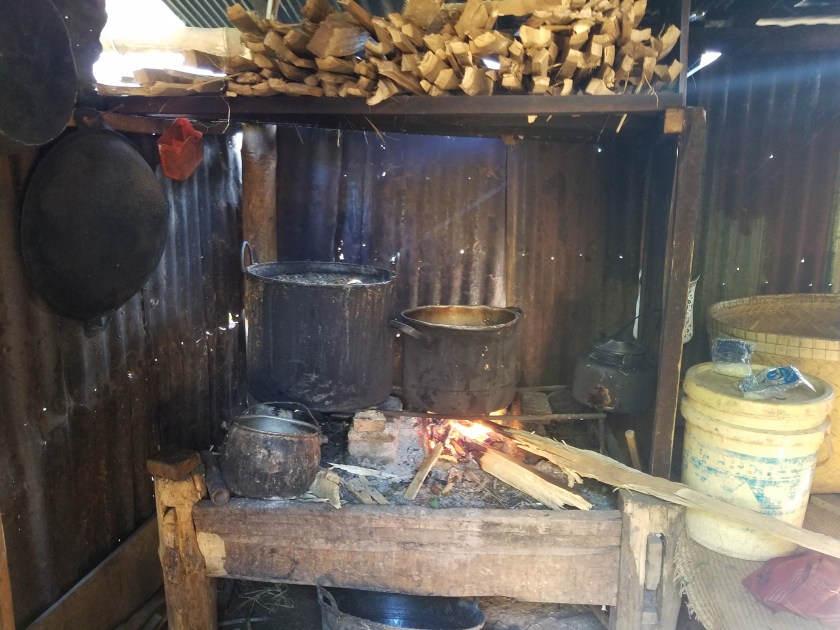
Our Tongkonan house bedrooms


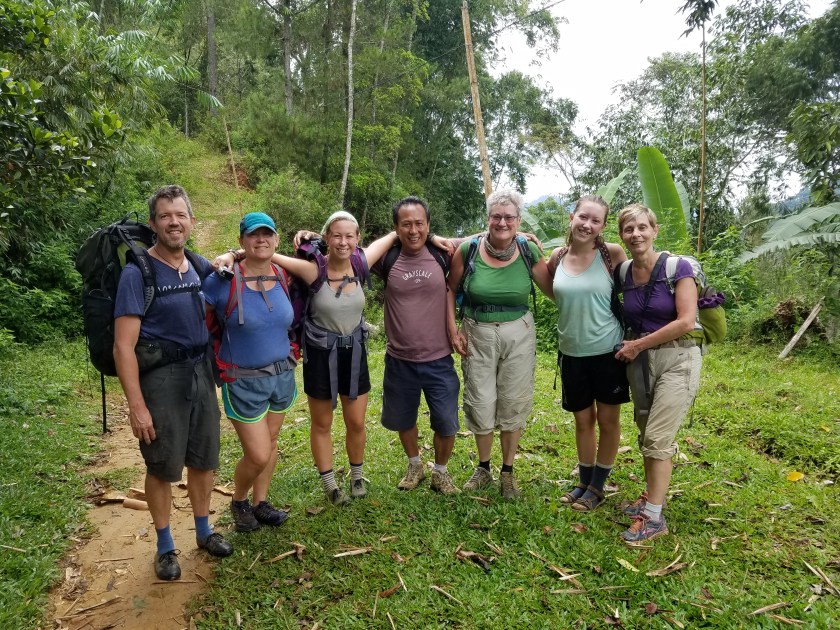
End of 3-day hike!


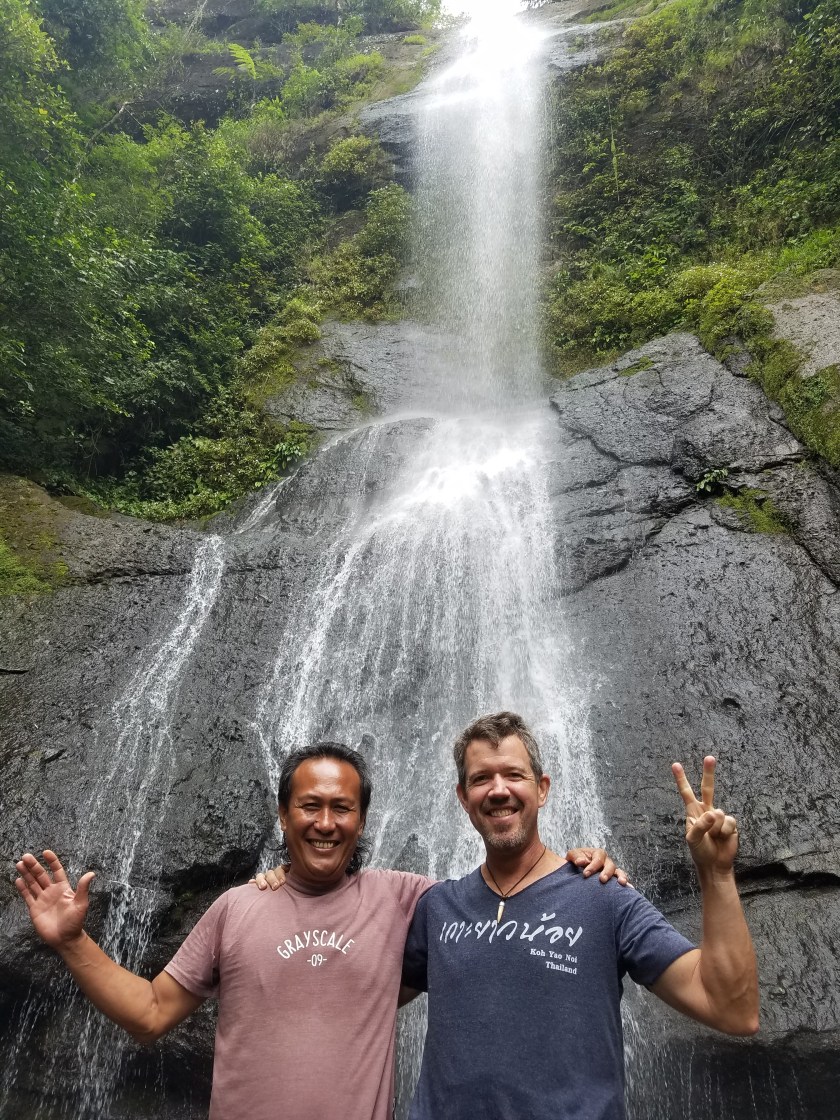

After this stimulating and tiring three days we had one last night at the loving Riana’s Homestay in Rantepao (which we recommend). We caught the morning bus for an 11 hour ride to Makassar in time to have one night’s rest before flying to Sorong, Papua the next day and resting a night before catching a two hour ferry to Raja Ampat!
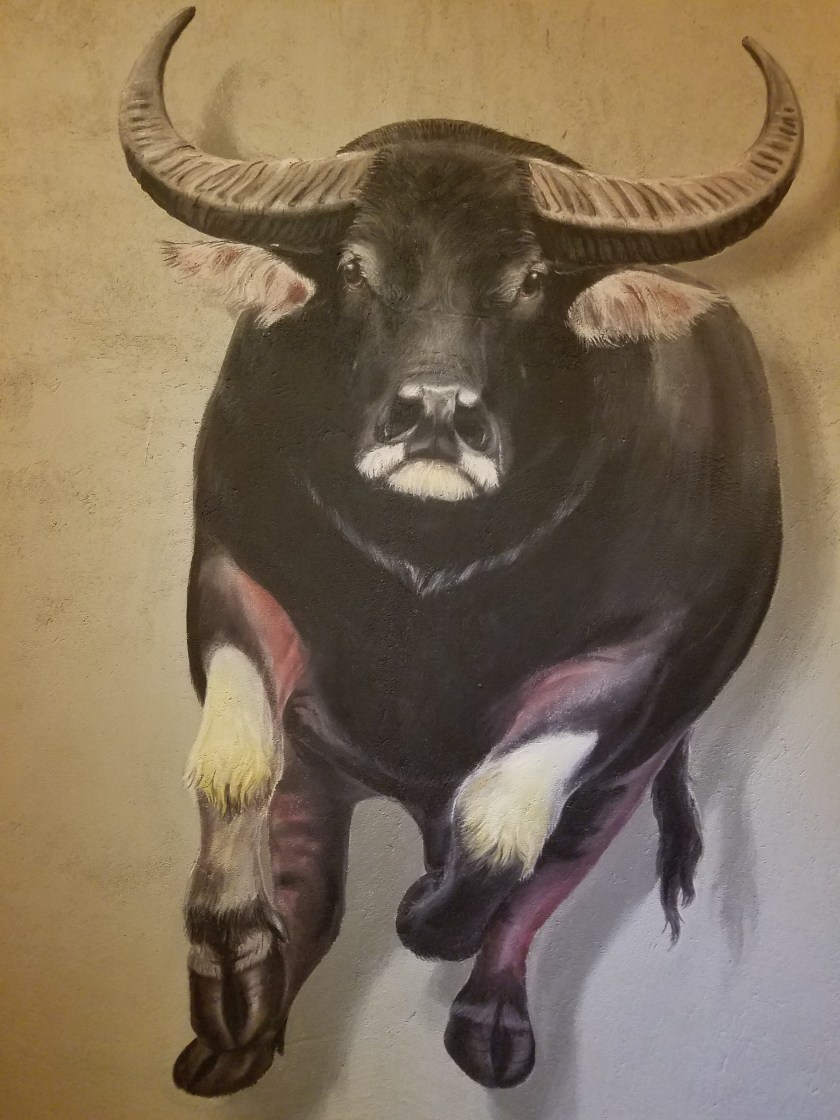
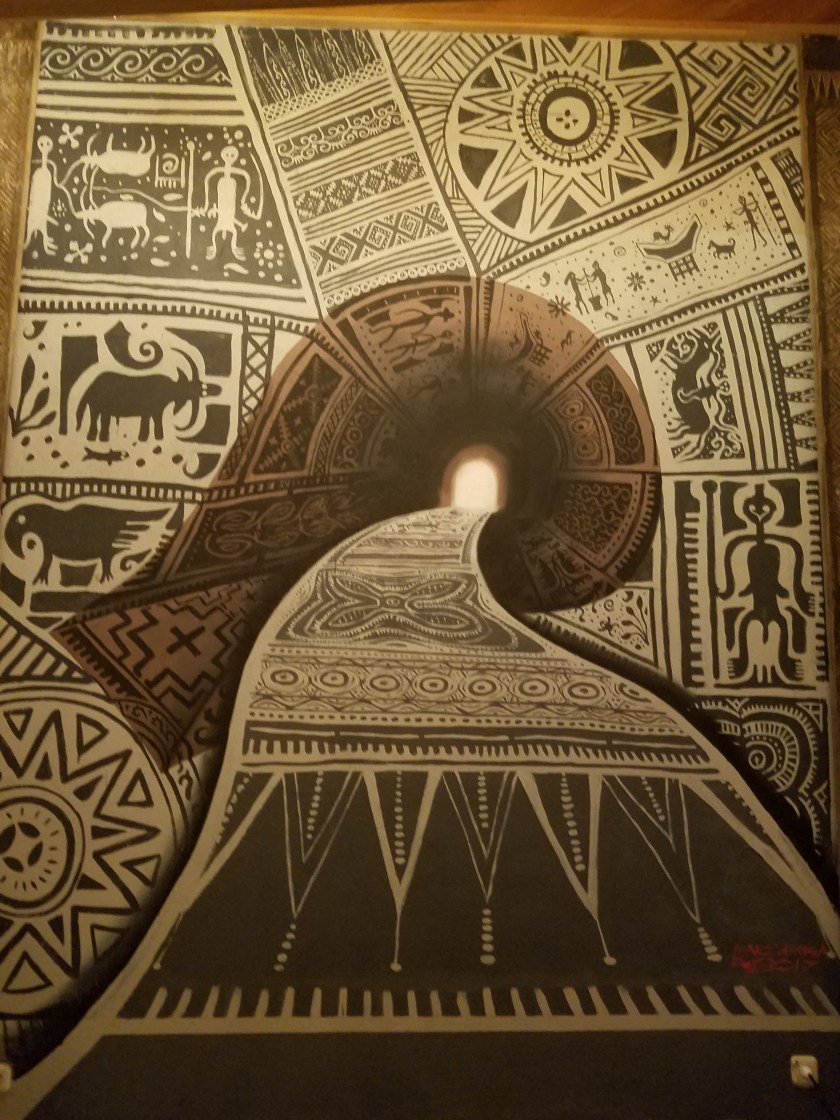
Fabulous artwork at the wonderful Cafe Aras in Rantepao
Letter home from Doug, June 6:
“Hi all,
We are on the nine hour day bus from Toraja to Makassar right now, stopping every few minutes to pick up passengers as we begin our slow trip south from Rantepao. We’re all looking forward to this day of inactivity after a busy and fulfilling stretch of travel. The last 3 days we hiked about 24 miles (much of the time stepping carefully on narrow paths between terracing rice paddies) and spent our nights in local Torajan hill villages. So glad we were all feeling fit and healthy as parts got grueling with steep, slippery trails and big elevation changes. This morning as we sat on a bench waiting for our bus I was pleased to overhear Ella telling a local couple with a young baby these last days have been among her favorite of our whole trip. As you know, Tana Toraja is an amazing area and one we’d all recommend to travelers planning a trip to Indonesia.
In my last email I mentioned we were diving on the southern tip of Sulawesi. Let me back up and re-cap the last 2 weeks we’ve spent on this island. On May 20th we said goodbye to the Duewels on Java, flying the 2 hours up to Makassar and checking into an old Dutch colonial hotel overlooking the city’s downtown harbor area. At that point we’d been in Indonesia almost a month and spent the next several days visiting the local immigration office where friendly staff helped us with visa renewals. We also explored a bit of the gritty waterfront, staying out of the many karaoke bars we’d been warned were prostitution fronts. Anna and Ella were fooled by another brothel fronting as a sushi place, thinking a few maki rolls would be nice and only suspicious in hindsight as an immaculately dressed young woman led them through security and a steady stream of male customers to an empty restaurant deep in the building where a surprised chef filled their orders. Makassar was steamy and dirty and colorful, with friendly locals, lots of fresh fish and a pleasant evening custom of sitting outside socializing while snacking on grilled bananas and tea.
Our third day on Sulawesi a driver took us in a tightly packed hired car 6 hours south and east to Pantai Bira were we checked into a low budget dive center on a beautiful, if trash strewn, stretch of sandy coast. We spent 5 nights at the Bira Dive Camp, socializing with at first just the staff and a couple of long term European clients working on achieving their Dive Master certifications. Over the weekend the social scene amped up as a dozen hard charging Malaysians (calling their dive group the Hooligans) showed up, loaded down with scuba gear and many bottles of whiskey and tequila. We all bonded the night before checking out and have the contact information for one of them, an irreverent Malaysian defense contractor with his own boat and air compressor who’d love to host us if we ever find ourselves on their west coast half way between KL and Penang.
(Quick aside that we just took off on a 2 hour flight from Makassar to Sorong, Papua, where we’ll catch a ferry in the morning out to Raja Ampat. Yesterday’s 9 hour bus ride became 11 and jostley enough that I gave up trying to write.)
From the south coast we drove, again by hired car and driver, 6 hours up to Sengkang on the edge of the biggest lake on Sulawesi, Danau Tempe. That late afternoon our driver took Helen, Anna and I to a nearby river where a skinny long tail boat drove us a couple of kilometers past homes and mosques and out onto the shallow lake, choked with water hyacinths and dotted with small buildings on stilts. Way out on the lake we stopped at a stilt home village and were serve tea and fried bananas as we watched a sunset develop above an impressive spine of mountains. The next morning climbed up into that range during a windy, 7 hour ride that brought us to the capitol of the Toraja regency, Rantepao. Our first day there our driver and a hired guide, Johnny, took the 4 of us to a nearby funeral ceremony (medium-sized by Torajan standards) where 20 water buffalo were to be slaughtered along with many pigs. This was an amazing cultural experience and surprisingly we were the only non-locals in attendance that day. Toraja is, of course, famous for their spectacular funerals but the high tourist season isn’t until July and August. During our whole 6 night stay in the area we saw maybe a half dozen western faces, including a Dutch couple we met hiking north of Rantepao.
The Torajan people, it seems, are obsessed with 2 things in their lives, their elaborately built “dream homes” (tongkonans) and death. All families aspire to having a tongkonan (intricately carved and painted boat shaped houses raised on stilts and adorned with buffalo horns) but they are expensive to build and mostly owned only by upper class landowners who gain their wealth primarily through cultivation of rice and fine Arabica coffee. I can’t remember all I heard about the significance of these homes but this is an ancient culture and their animistic spirit world is strong, featuring prominently in much of what they do despite their recent conversion to Christianity. To give you a flavor of this, all tongkonans face north to south. Grandparents always sleep in the south end, the kids in the middle room and parents in the north. When someone in the family dies, the body is treated as still alive for the next week or so, just very sick. During this time the body is placed in a seated west facing position (Torajans will never sleep with their heads looking west), meals and cigarettes are brought to the dead person and family members and friends come to visit and talk with the newly deceased. After this initial period the body is finally considered dead and is laid down facing south in the middle room, remaining in the home for weeks or months (sometimes even years in royal families) while funeral preparations are made. Partly this length of time is determined by finding a date all (often far flung) family members can arrange to attend the funeral. These days bodies are embalmed at some point but traditionally this was achieved just using a certain ground up leaf powder rubbed on the body. Our guide explained the smell only lasts for a few days then isn’t an issue. For as long as the dead family member remains there, family members continue to talk with the body and sleep in the same room with it.
Torajan funerals are usually a 2 day weekend affair. The body in an open coffin is on display for all to view. Everyone connected to the deceased’s family is invited and all guests (us included) bring gifts, typically sugar and cigarettes or sometimes just money. Families also pool resources to bring water buffalo and pigs which are central to the funeral. The slaughtered animals provide two functions. First, meat is parceled out to the community and acts to repay all who contributed to the funeral’s many logistics. The second purpose is spiritual, as the dead person’s departing soul has a long and difficult journey in reaching puya (heaven) and needs assistance from the animals’ spirits. Pigs with their great intelligence are guides and buffalo lend their strength to carry souls who become tired. When reaching the gates of puya the dead are asked questions about their lives by a tall man and his big black dog who can detect lies. Answers are weighed and judged souls either attain entrance or remain forever outside in difficult conditions. Sound familiar? Ella first commented on learning this that it’s small wonder missionaries back in the early 1900’s had such success converting almost all Torajans to Christianity. Even so, their new religion appears thin and incorporates old beliefs and little seems changed regarding traditional custom and ceremony.
All this to say that Torajan funerals are bloody affairs. We attended one on a Saturday and thankfully missed the ritual slaughtering of all those water buffalo scheduled for the next day. We did witness the final hours and moments of many large hogs, however, upset not so much by the gore as their suffering and terror and final screams. We were told a prayer is said when throats are cut but otherwise we were surprised the animals, whose purpose was to guide human souls to the afterlife, weren’t handled more respectfully that day, hog tied and panting in the sun. Ella and Helen spent some time pouring water in the mouth of one pig, trying also to offer some comfort with their presence and touch.
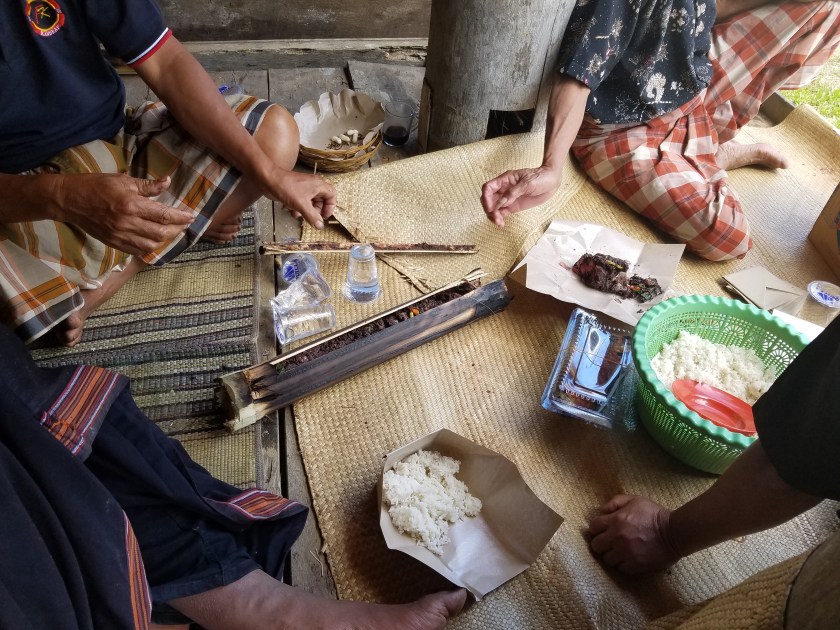
A niece of the dead woman spent some time with us, sitting together on a mat in one of the temporarily constructed bamboo guest enclosures. She was great, about our age, keeping her arm around Helen’s shoulders during some of the horror of the slaughtering, then later bringing us food (rice, vegetables, fresh pork and fish all eaten with fingers and served on wax paper, along with coffee, tea and palm wine). Periodically a line of village members, all dressed in fine traditional cloths, paraded past our enclosure and along the row of tongkonans that formed the funeral square, as a man with a microphone kept a running account of which family had contributed which particular pig or buffalo. At one point he announced the need for a car to be driven into the square to pick up a family member who had fallen ill and needed a hospital. Later, our hostess told our guide (a close friend) that the cousin who’d become ill was in his 50’s and in fine health but had gone off into some nearby woods to pee and had inadvertently urinated on an ancestor’s gravesite, falling gravely ill within minutes of his return to the family pavilion. Yikes. Needless to say we were all careful after that to be especially respectful around the many stone, cave and tree graves we visited.
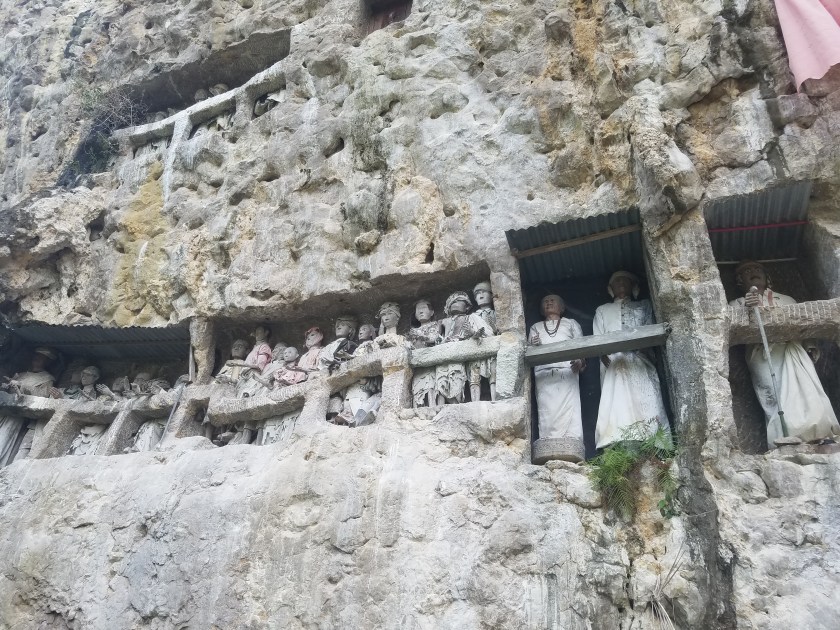
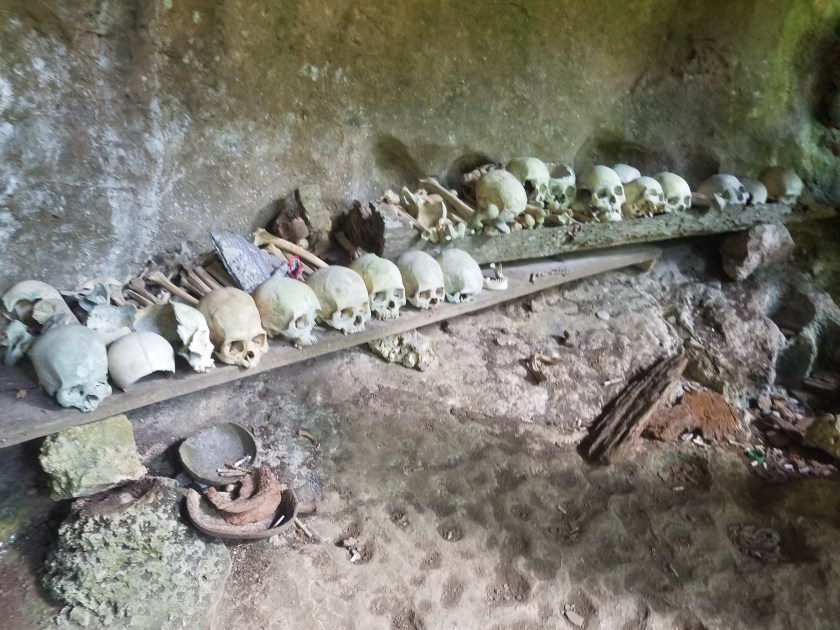
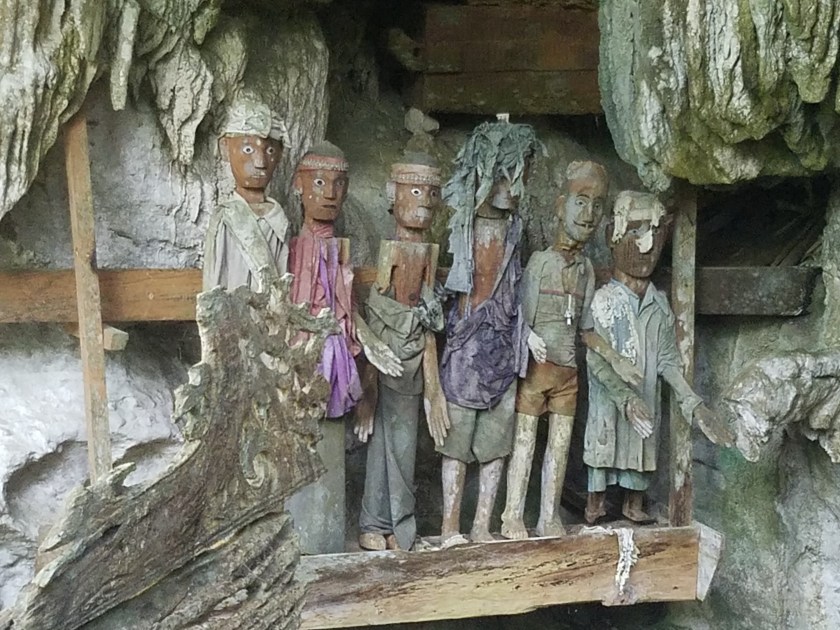
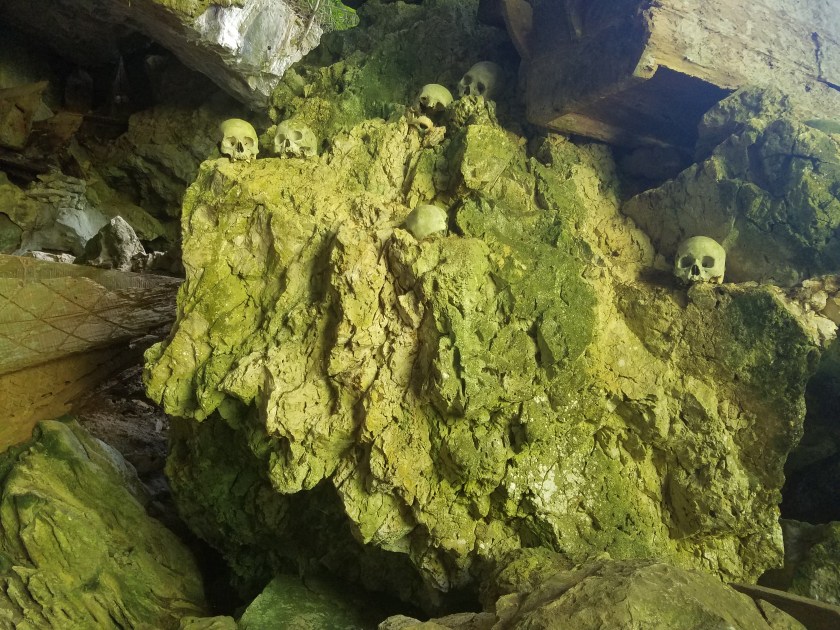
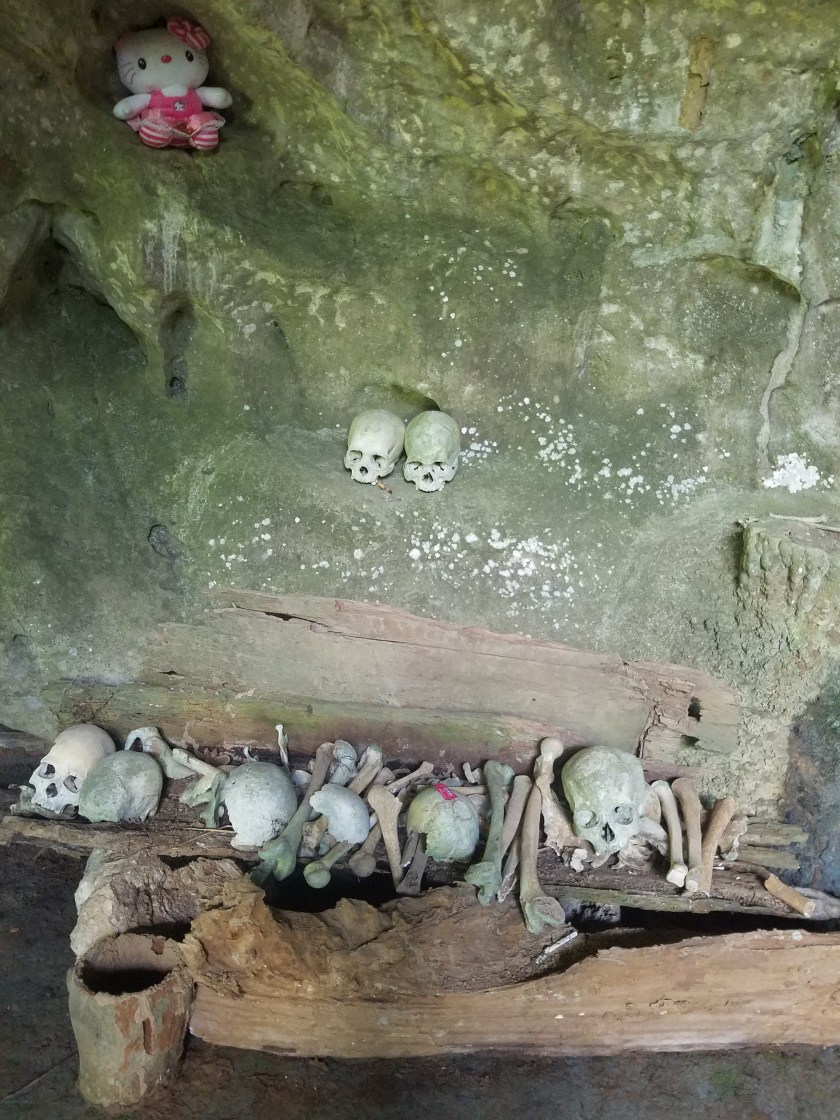
I should mention here these interesting grave types that come in several forms. First were house graves, similar to the ones we saw in north Sumatra, situated invitingly on people’s properties and usually overlooking scenic rice paddies. Then there were stone graves, chiseled enclosures on large granite or volcanic stone outcrops, some six hundred years old and a version of the cliff cave graves, some of which were older still. Finally, when a baby dies before its first teeth, they are quickly (usually the day of their stillbirth or early death) placed in carved or natural openings in burial trees where their pure spirits remain, growing with the tree until age 14, when they are flown to puya and always gain entrance. Our second day in Rantepao we visited tree graves and a cave where we saw many ancient bones and skulls, along with their effigies and remains of boat shaped old coffins. We also saw cliff gravesites, one famous one (that perhaps we visited 45 years ago?) for a royal family with noble effigies standing on balconies in front of carved and natural openings high on the cliff. The wood effigies were particularly powerful to see, carved in the deceased’s likeness and dressed in clothes that are still ceremoniously changed every 10 years or so when the old cloth rots, always after harvest season and to the accompaniment of more pig and buffalo sacrifices.
It was a crazy place we traveled through where magic is still real and practiced openly. Our homestay host in Rantepao (a well-educated and traveled father of 6 named Daud) told us an interesting story one evening after we had been chatting a while and commented on his interesting snake-design tee shirt. He showed us 2 scars on his leg and said he’d been bitten by one as a child. Asked for details, he described running an errand for his mom across a field when he encountered a cobra. It was coiled with its hood flared but about 3 meters away so Daud wasn’t overly concerned, thinking himself at a safe distance. The snake then leapt at him and struck, coiling around his leg and biting him 2 times. He later learned that this snake had been guarding her nest and was therefore uncharacteristically aggressive. Years later, he still suffered from headaches and pain that had begun following his treatment and recovery from the childhood injury. He finally visited a traditional healer who cut Daud’s ear and sucked on the blood with his mouth for 3 consecutive mornings. His headaches and other symptoms never returned. Days later, recounting this story to our guide, Johnny told us this was a famous man in Tana Toraja who cured many (he said around 1000) people from primarily snake bites and rabies. Sadly and poetically, the old man had died around 6 years ago from the same illness he had cured so many times in others. Apparently when people (from all over Indonesia) visited him, he could simply look at them and say whether he could cure them or that they would instead die. The last man he treated had rabies and was already mad and frothing like so many others he had successfully cured. This patient bit him as his ear was cut and the healer himself contracted rabies and died 3 days later. The old healer apparently gained his strange gift following a dream, and 2 years after his death another local Torajan awoke from a dream having gained the same ability to cure people from rabies and snakebites by ear (or sometimes scalp) cutting and sucking. Strange, huh? And a comfort now having a new healer around for folks living in an area known for poisonous snakes and rabid dogs.
The Dutch couple we met hiking pointed out there are no old dogs in Toraja. The grim suspicion formed following this observation was confirmed the next day while hiking though a small mountain settlement. A medium sized dog with a freshly bludgeoned head lay in our path as its owner fired up the same type of butane tank powered flame thrower we’d seen much used at the funeral to burn the hair off dead hogs. Perhaps surprisingly this didn’t bother us as much as I would have guessed. Both girls were quick to point out this shouldn’t be seen as worse than eating pigs, and the dog’s death had most likely been swifter and less traumatic than that of the local pigs and buffalo. Not to mention the seldom considered butchering of our western world’s meat stock each day, conveniently hidden behind sterilized factory doors. Sorry if that was a bit dark. It is interesting how different cultures relate to their domestic animals. Cute piglets and puppies each grow into potential protein, and I’d guess many poor societies consider animal adoration one more rich person’s luxury they can’t afford. Anyway, the girls both approve of the visible origin of dinner meat here, a bloody Asian market makes a sharp counterpoint to our neatly packaged parcels on display at Hannaford. Wow. Prepare to find me transformed this summer following a year spent traveling with a family of conscientious consumers.
I’m going to wrap this email up here and try sending it using a weak hotspot Anna’s phone may generate out here on Raja Ampat. We arrived at our homestay earlier today, a primitive place with a generator used to power lights between 6pm and midnight each day. We are the only guests, and our 2 bungalows jut out a bit over yellow sand and lapping waves just 20 feet away. The 3 days we spent hiking in Toraja, I should just add, were stunning. We traveled among high mountains sided with ridiculous rows of terraced paddies, visiting traditional villages and homesteads only accessible by foot or motor bike. The locals we met were consistently friendly and welcoming. Our second evening Ella and Helen led a group of 20 children for an hour of yoga as the sun set over rice paddies behind the community’s many ornate, boat shaped, stilted houses. Later, an owl landed on a front cross beam of the tongkonan next to ours and we watched as it surveyed the central square in the gathering dark. Toraja is a magical land and these are still magical times.
Love you so much and see you at the Lake,
Doug”
 Strout Family Year of Travel