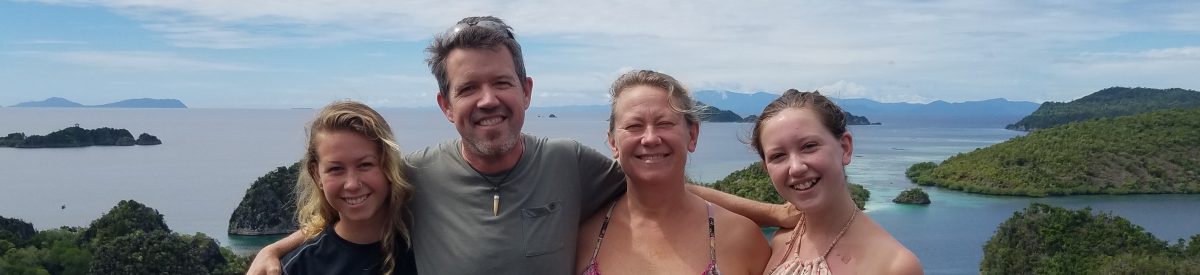
Mid April through mid-May, 2018
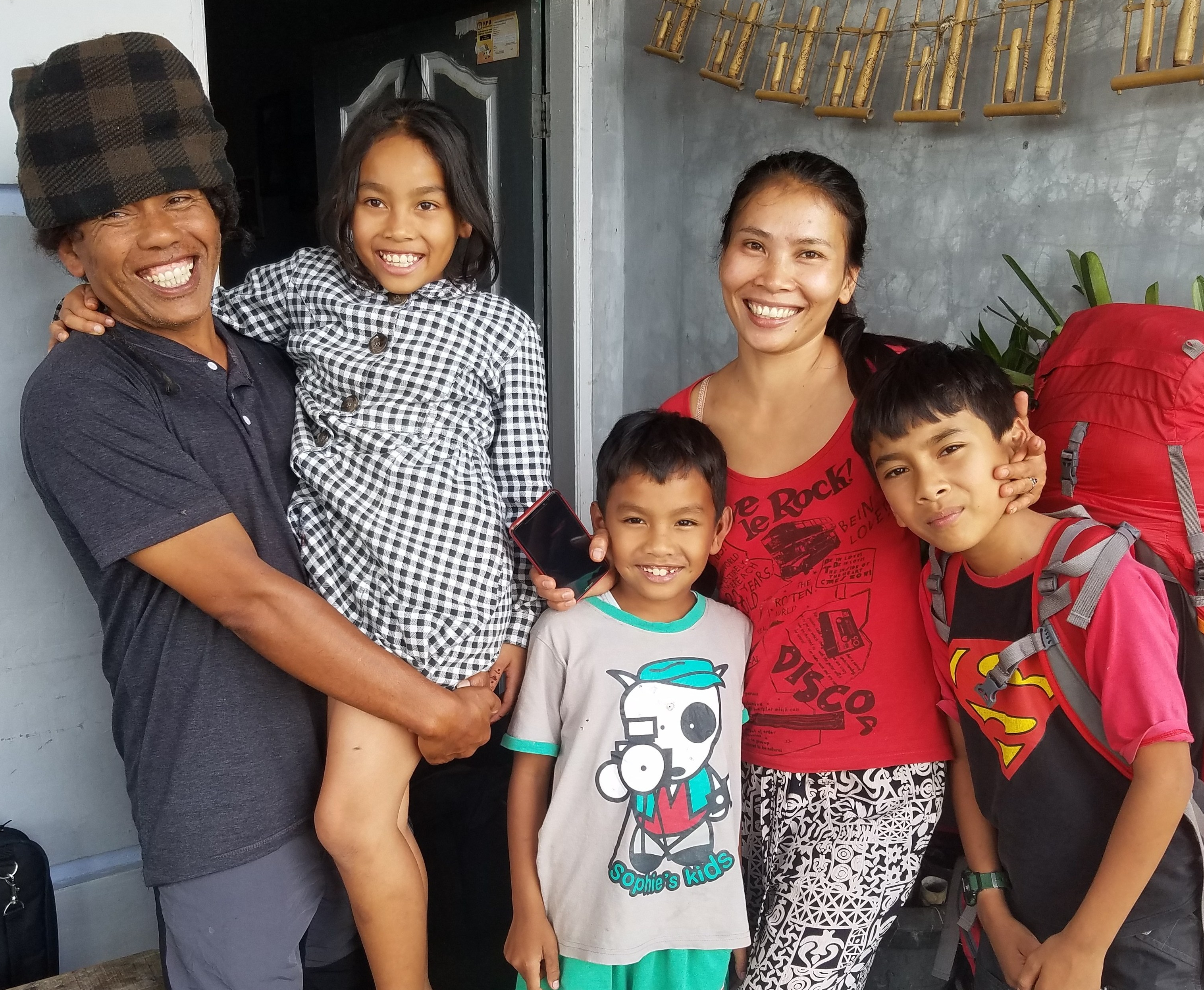
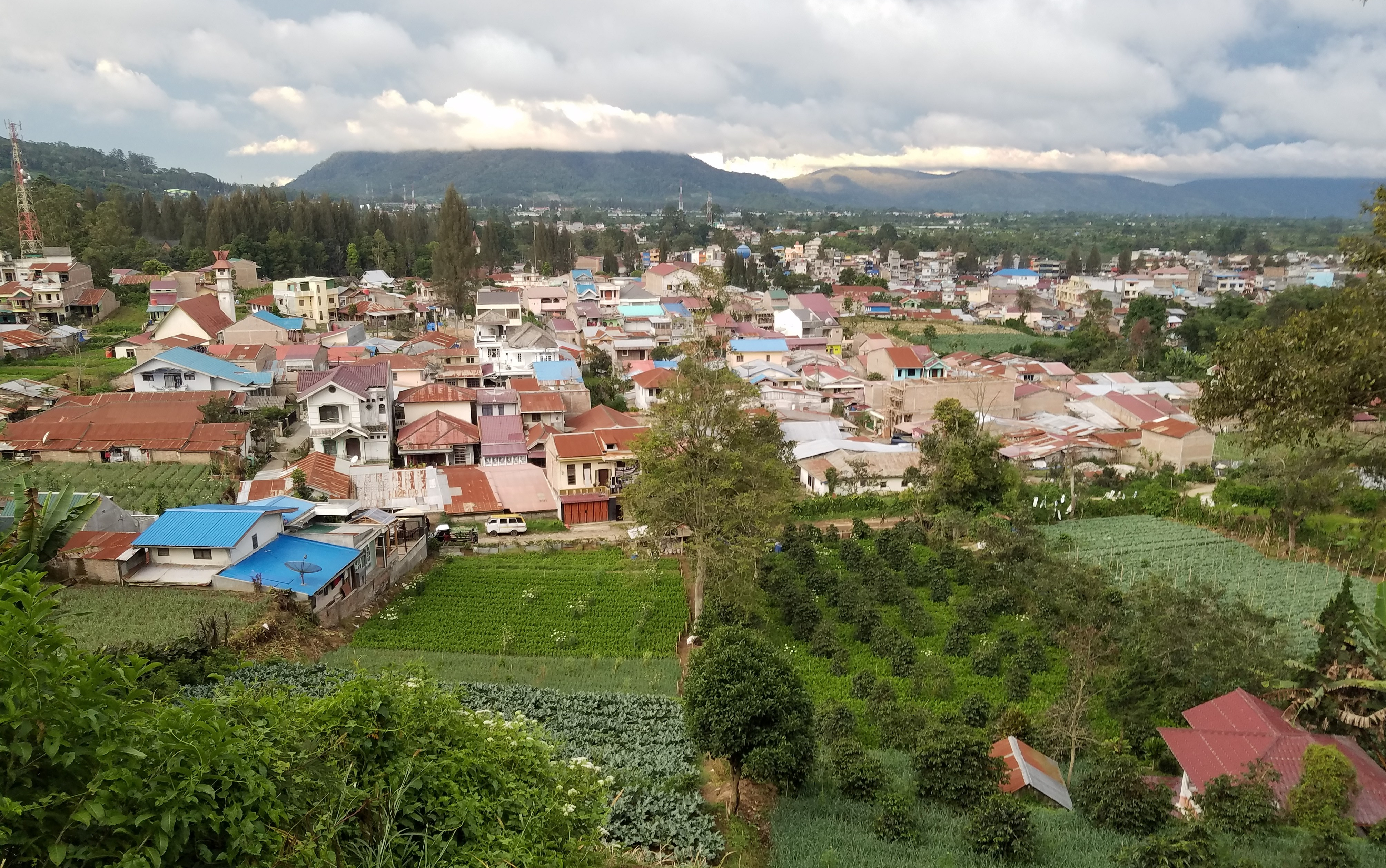
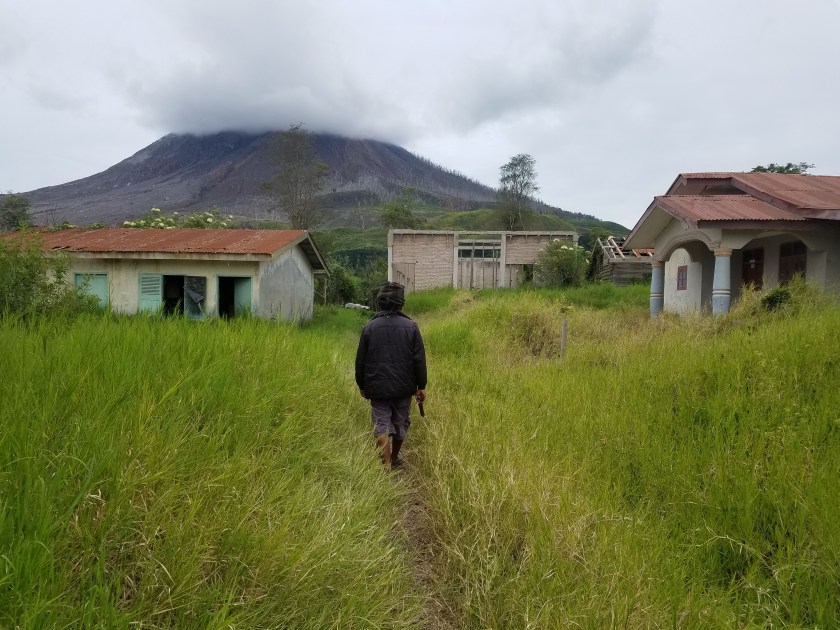
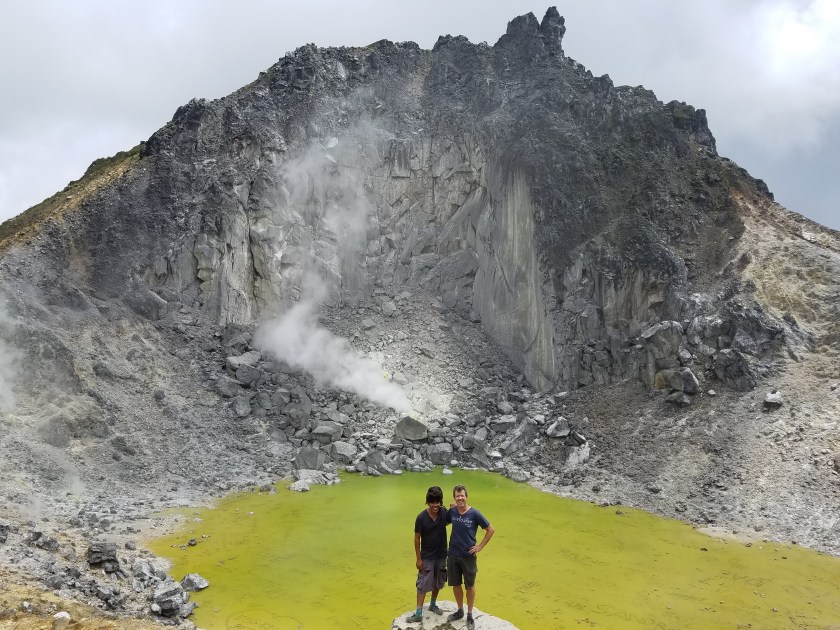
On April 23 we were met in hot Medan by a driver who brought us two hours to the cool mountain village of Berastagi. Here we settled in for the next four days at a special home with a family of 5 who run Smiley’s Homestay (see booking.com). Smiley (short for Ishmael), his wife Cecilia, and their three children Naufrol, Sani and Sebita were absolutely lovely, smart, and so helpful. Smiley is an easy going, loving 53 year old man from the Batak tribe, and has been a tour guide most of his adult life. His beautiful wife Cecilia made the best food we’ve had since traveling in Southeast Asia. While in Berastagi we hiked the Sibayak Volcano, explored town, attended a Batak wedding, and enjoyed some natural sulfur hot baths. Smiley took us to a village that had been evacuated in 2014 due to Mount Sinabung’s eruption. There were no local casualties from the eruption, though some photographers hoping to capture the perfect picture were killed from hot gas flows.
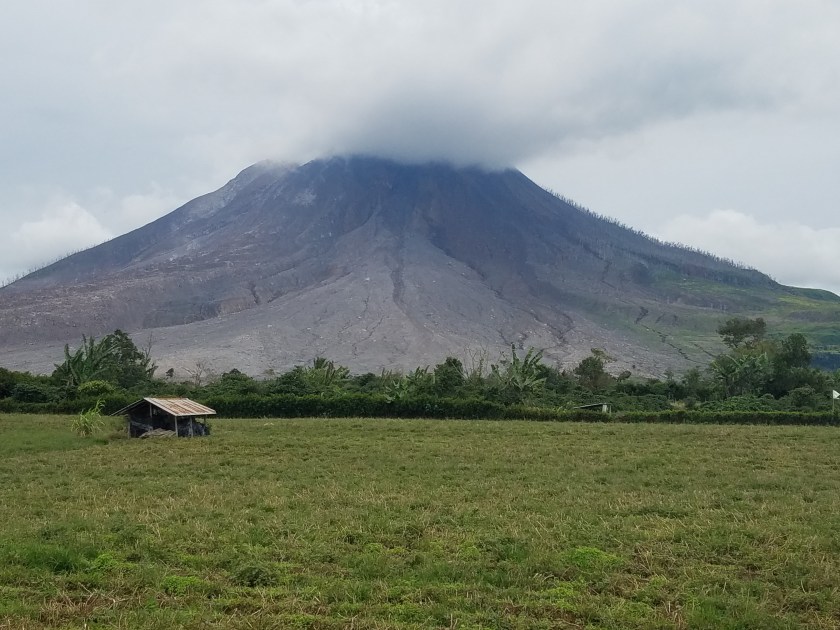
Abandoned village at base of Mount Sinabung, several years post eruption


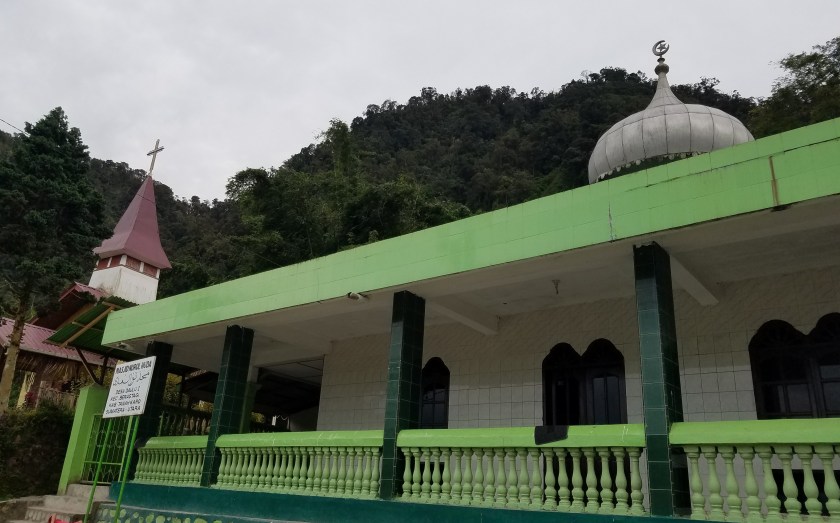
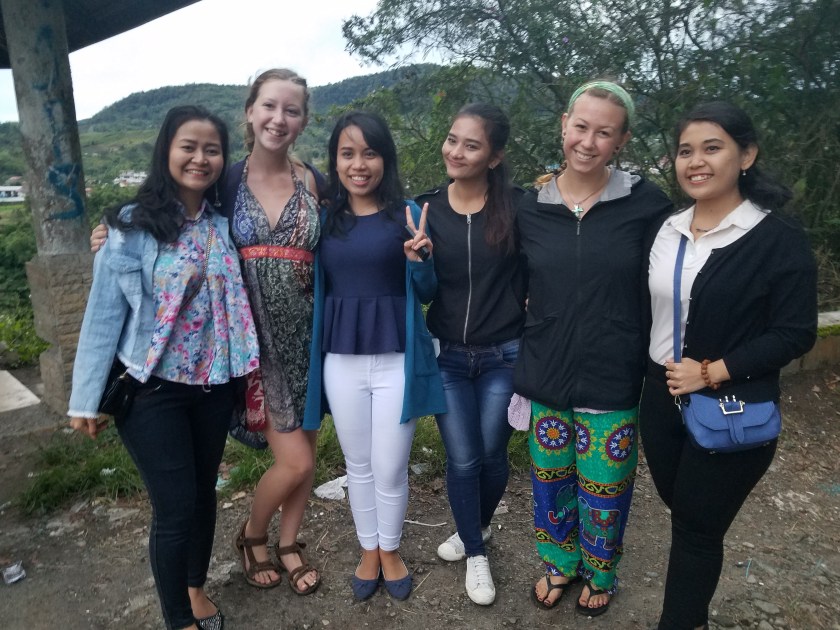
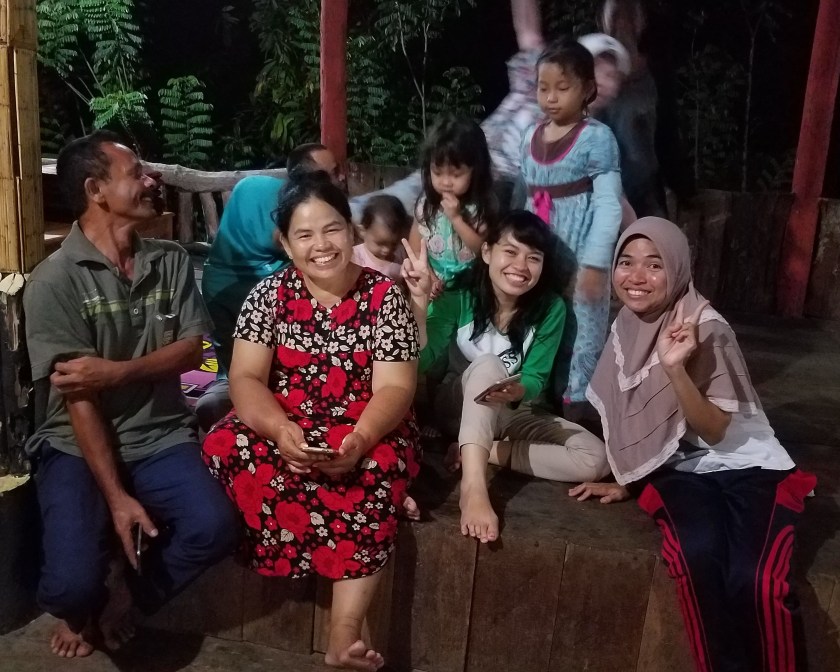
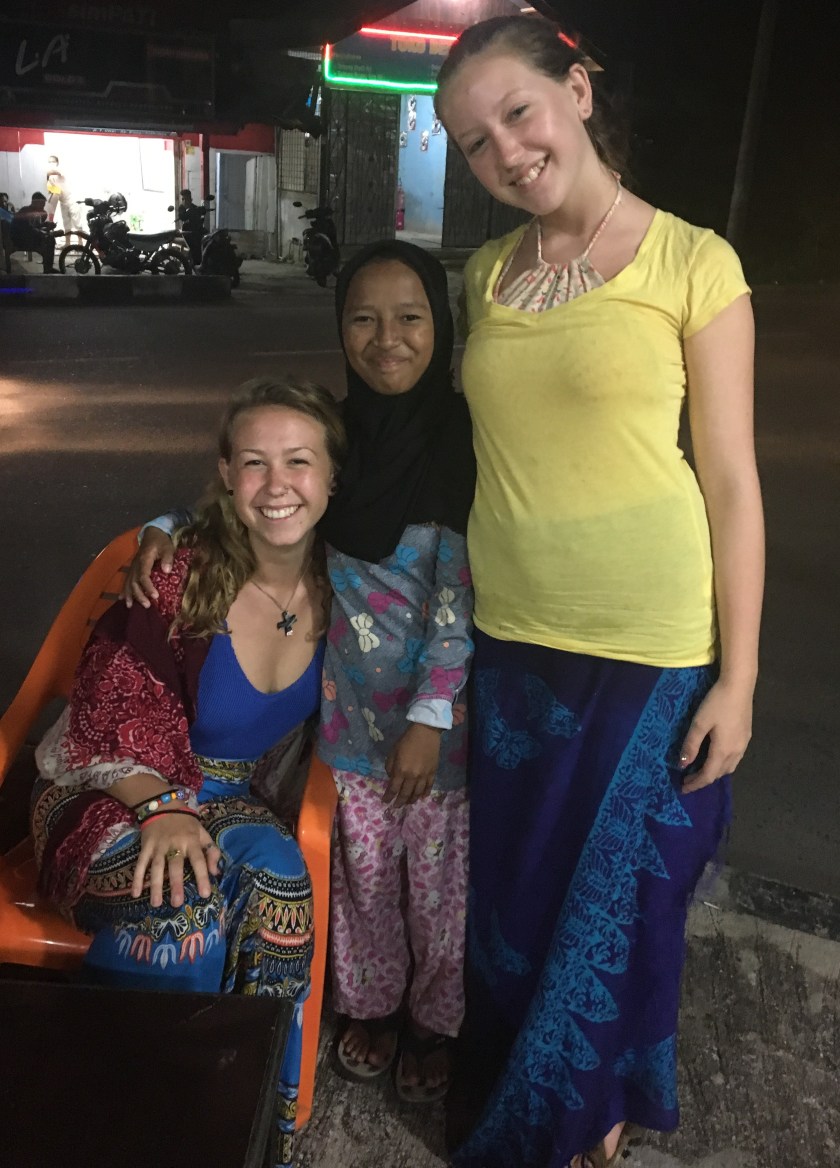
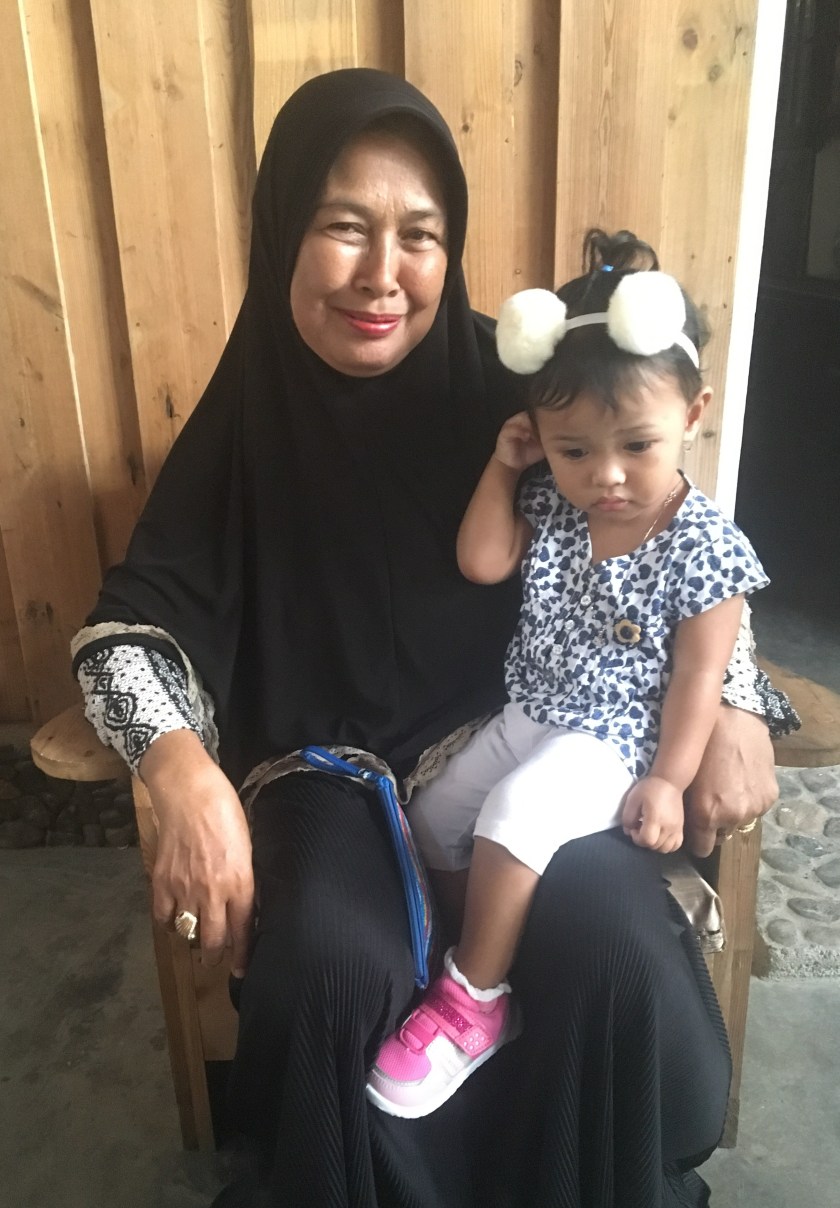
Helen with Sebita, and the girls with a friendly neighbor


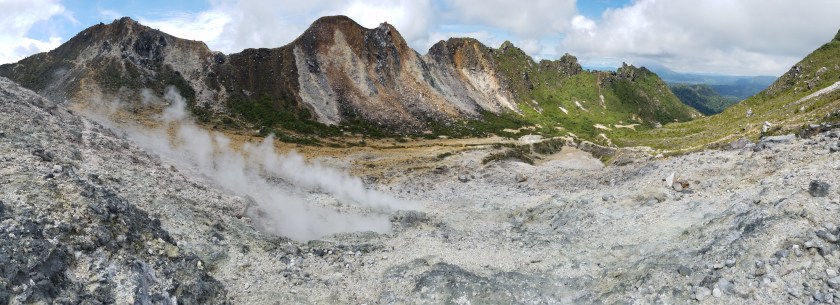
Steaming Mount Sibayak with Smiley in Berastagi, Sumatra


So many friendly cats!


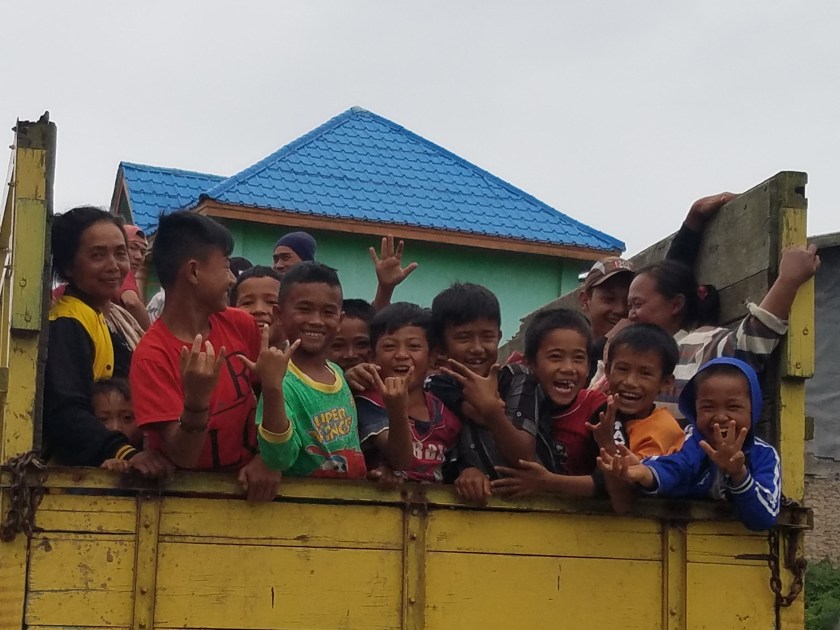
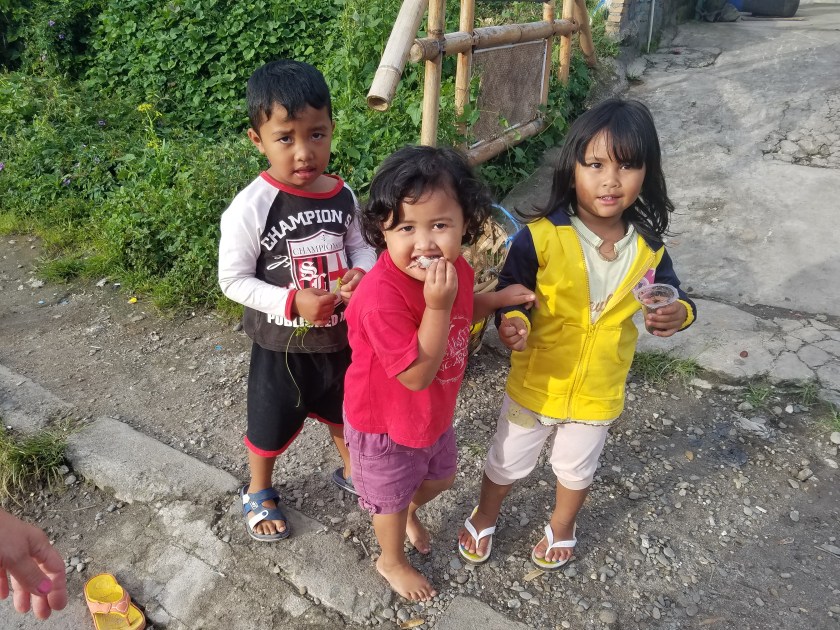
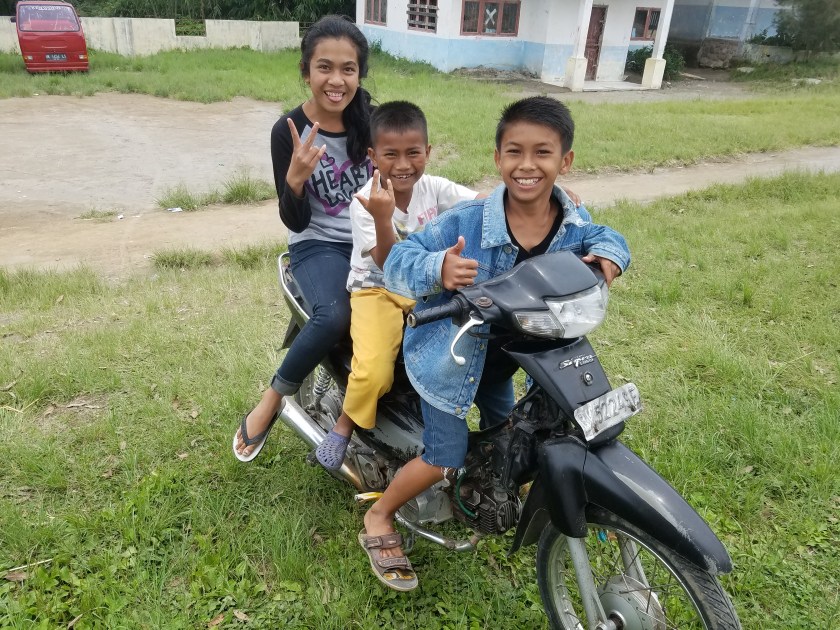
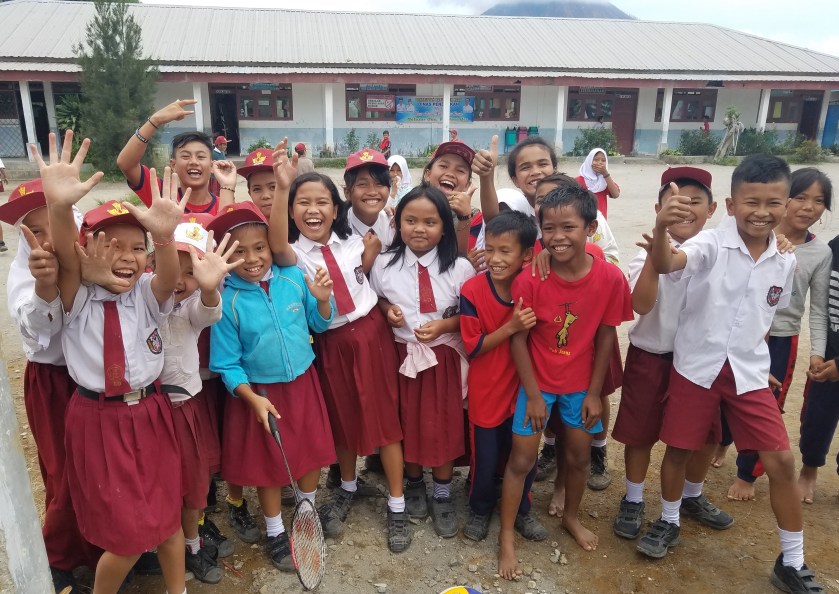
Village children



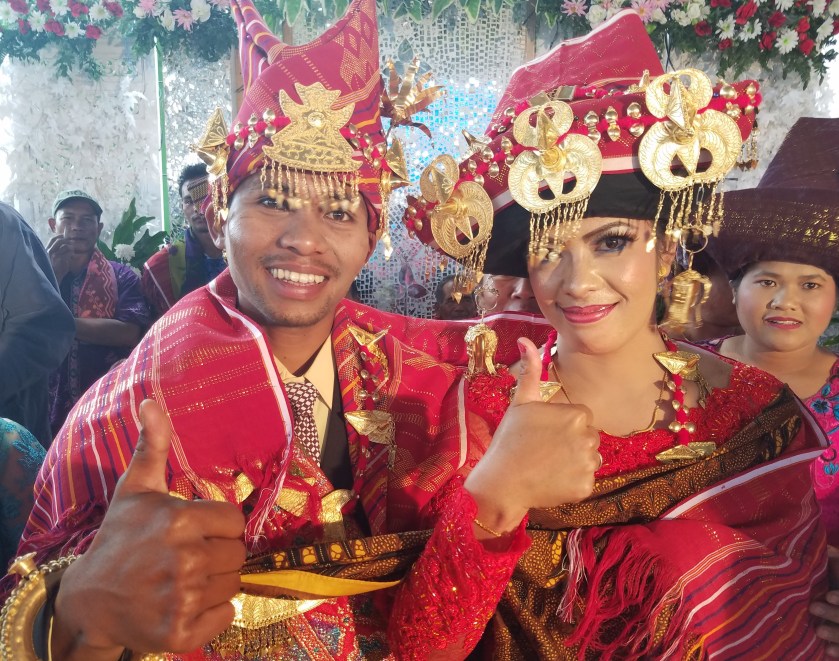
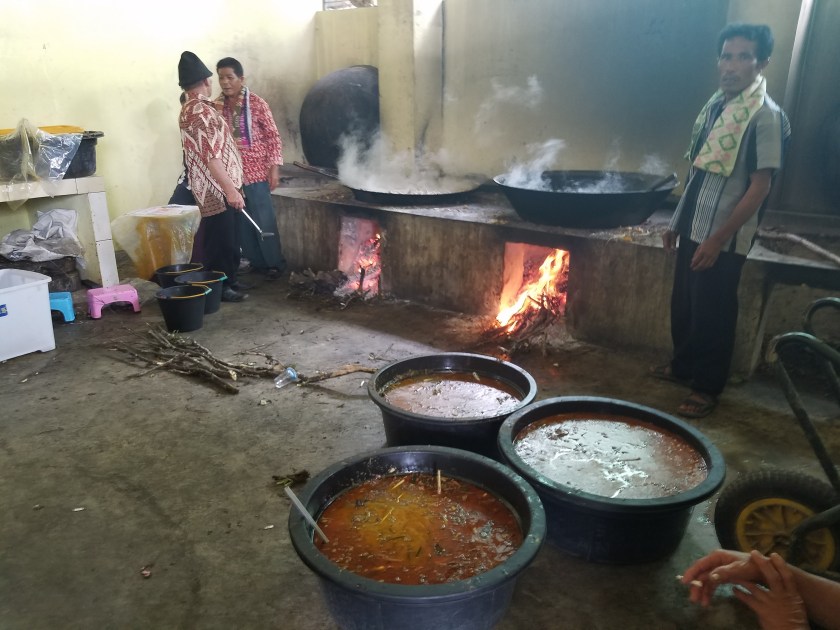
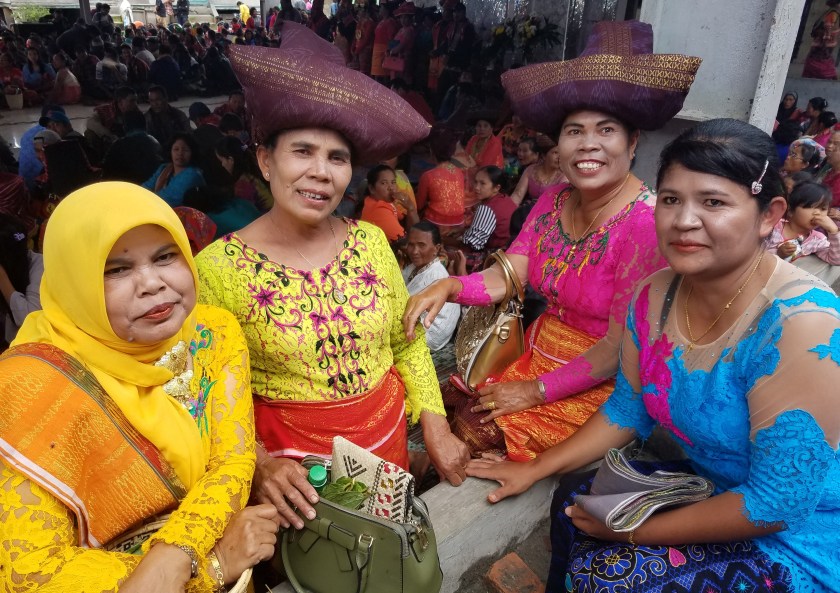
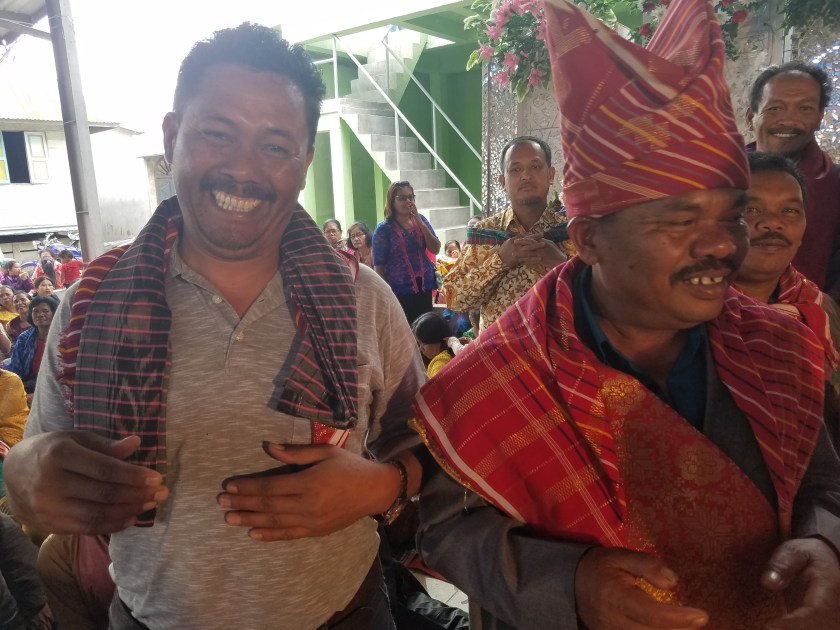
The cultural highlight was attending a Batak wedding ceremony, or at least part of the three day long event. The whole community–including foreigners—is welcome. We were the only westerners there that day, and were encouraged to meet the bride and groom, take photos, and even stay for lunch. The wedding took place outside under a large roof, where guests sat on floor mats talking (seemingly oblivious to the constant announcements of the MC), the men smoked cigarettes and the women chewed betel nut.* There were several men in a community kitchen cooking large vats of buffalo curry to go with the barrels of white rice. Many hands helped serve the 300 or so guests.
*According to Wikipedia, what is commonly referred to as “betel nut” actually consists of a few slices of areca nut wrapped in a betel leaf along with calcium hydroxide (slaked lime), and may include other spices for extra flavoring. Areca nuts are chewed with betel leaf for their effects as a mild stimulant, causing a warming sensation in the body and slightly heightened alertness. It is very common and an important part of cultural rituals in many Southeast Asian countries. It is also a known carcinogen and stains teeth dark red.
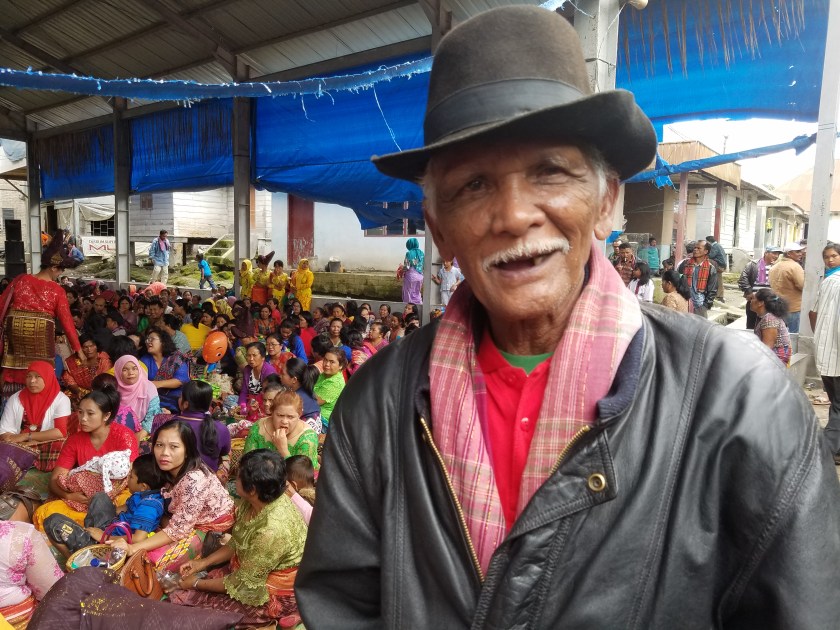
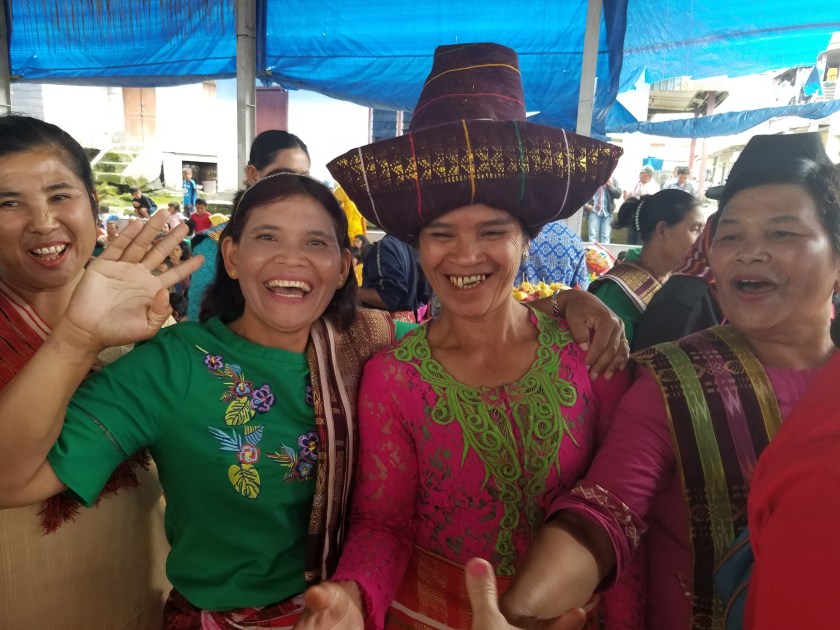
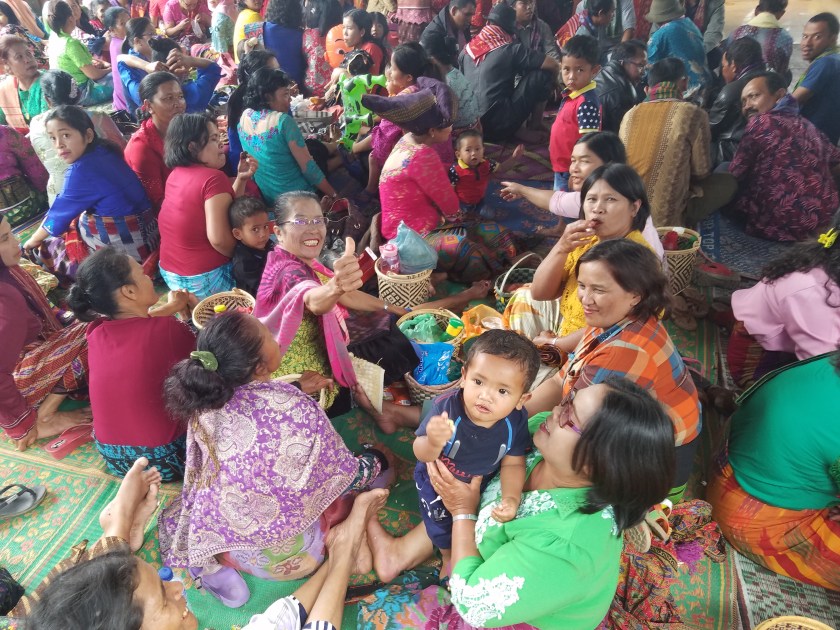
Buffalo curry for hundreds!



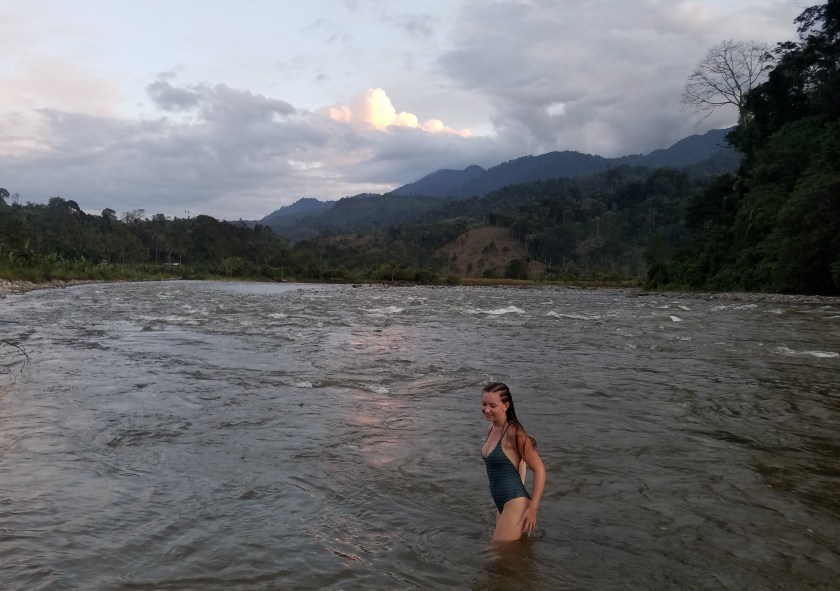
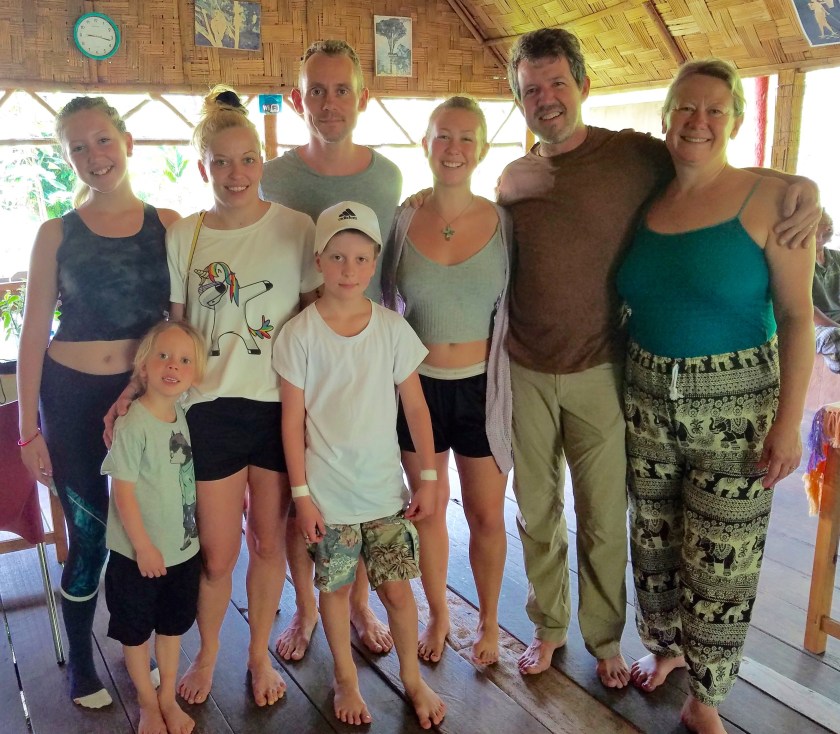
One of the many things Smiley arranged for us was our jungle trip to Gunung Leseur National Park. From Berastagi we drove 6 hours to the town of Ketambe and bathed in the local, cooling river. We met a fun family on vacation from Denmark, who joined the staff of our guest house in singing “Happy Birthday” to me. It was the first time I’d had my birthday song sung in Bahasa Indonesia, Danish and English!
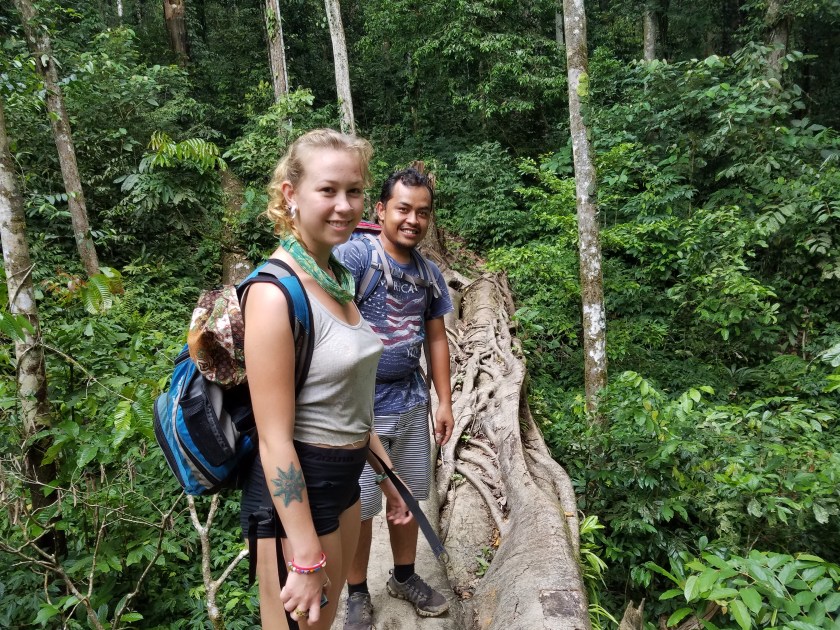
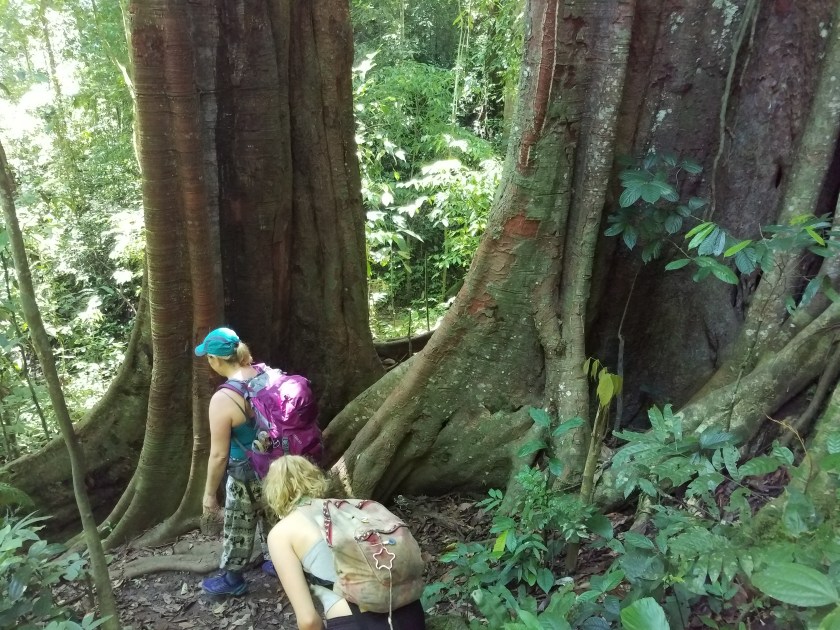
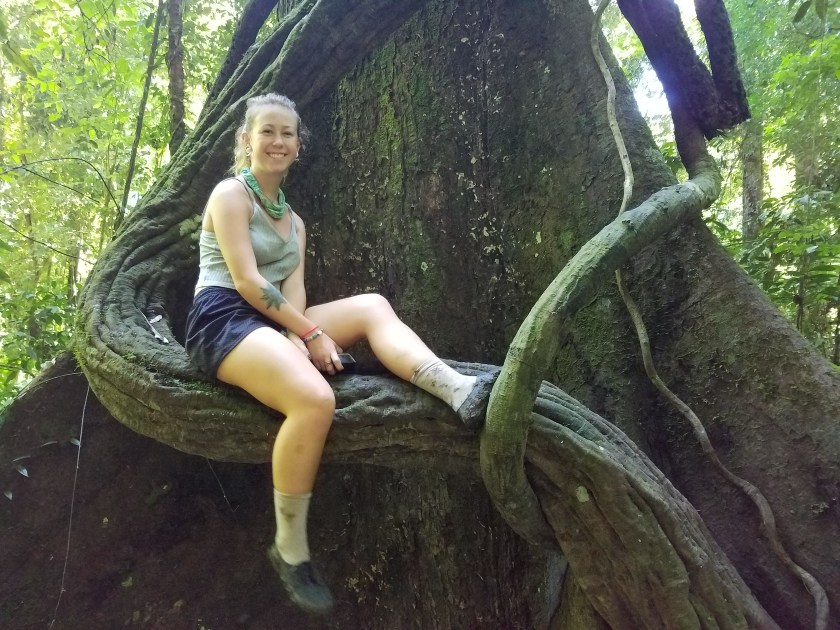
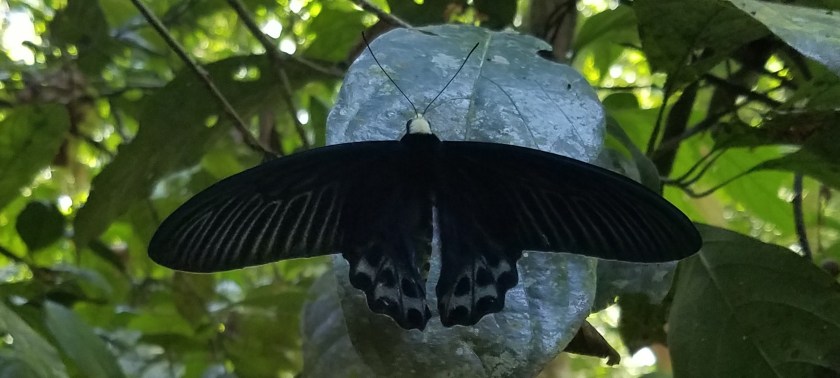
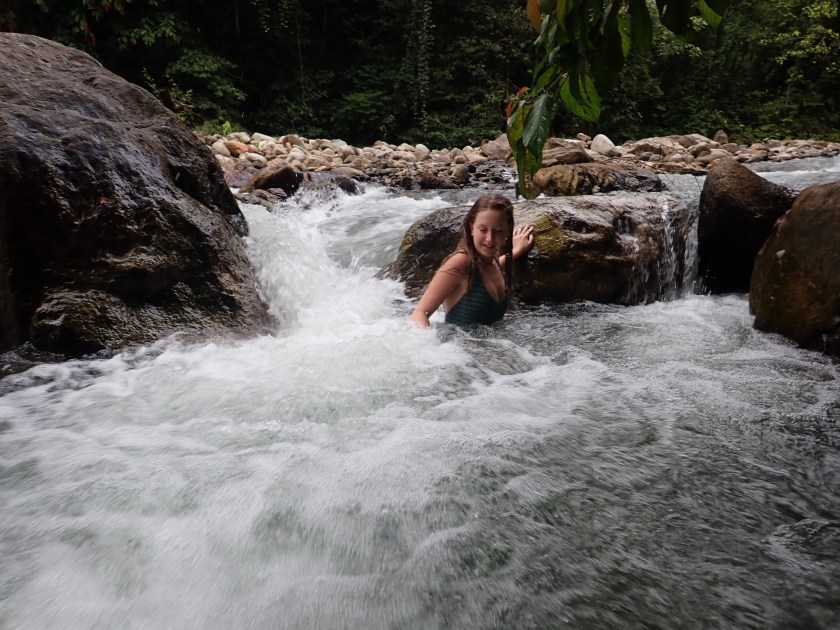
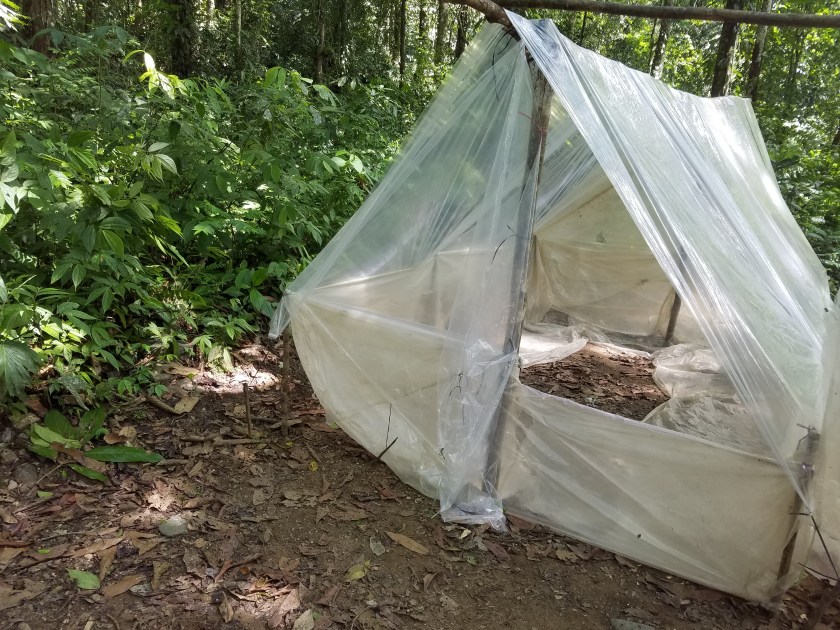
After a night in a simple room (those past luxurious Bali stays were a brief treat) we headed to the jungle with our guide, enjoying the multiple butterflies, birds, insects, and both Thomas’ Leaf and Makkah monkeys on the way to our camp. Following a meal of noodles and krupuk, our guide led us on an orangutan search in the jungle. It didn’t disappoint, as we saw a mother and baby (perhaps 18 months old) swinging and eating 30 feet up in the trees. The mother monitored her baby who was negotiating the slight branches, all four limbs outstretched at one point. The orangutans’ red hair and exceedingly long arms with curled hands were beautiful. Watching the mother bend branches to assist her baby then reach out and swoop him into her arms was so moving. Hearts filled, we returned to camp where our porters had built a simple tent of clear plastic sheets and sticks. After a refreshing swim in the river, a meal of rice, vegetables and curry, and a fun evening chat with the guides, we settled into our tent. With simple, flat mats and no pillows it was the most basic accommodation we’ve had thus far in our trip. But the moon shone through and river sounds flowed, making for a pleasant night.
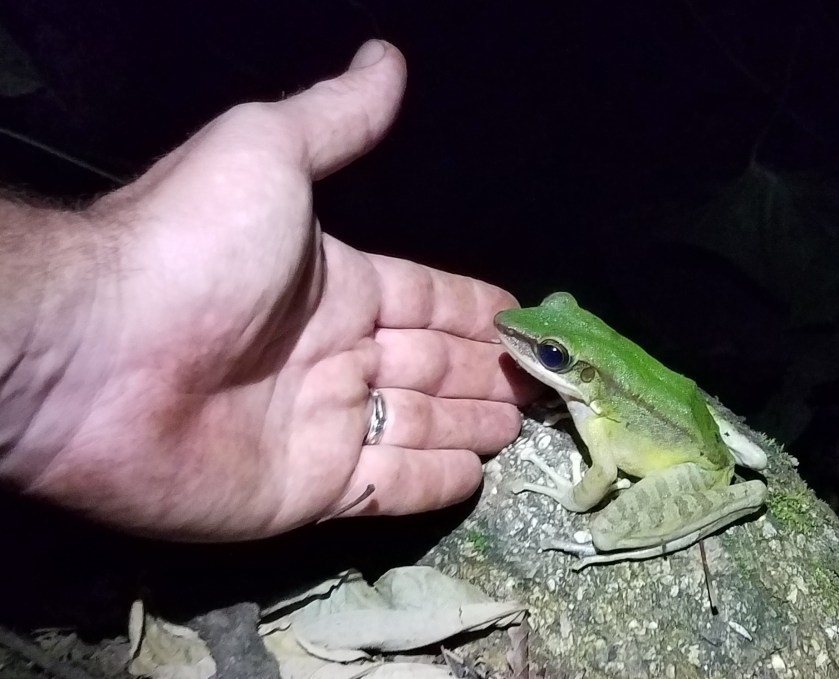
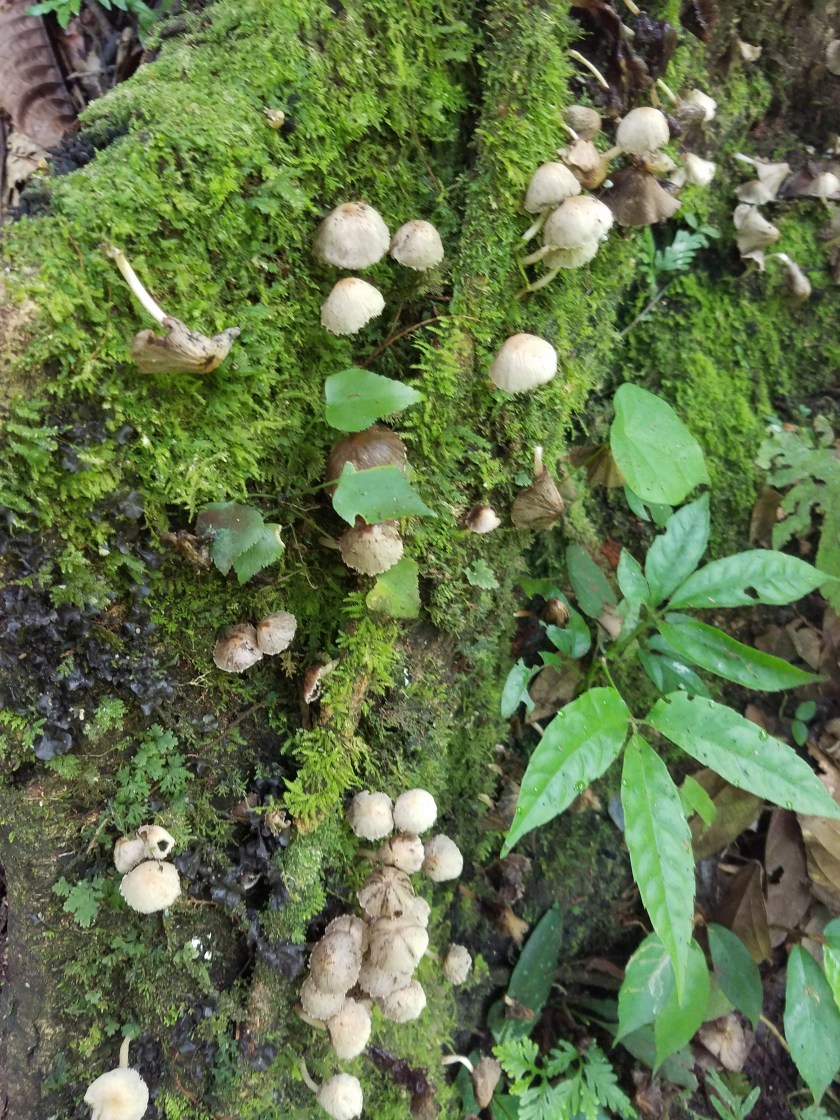
Images from Gunung Leseur National Park in Sumatra, Indonesia


The girls photographing mama and baby orangutan


Orangutan photos by Helen
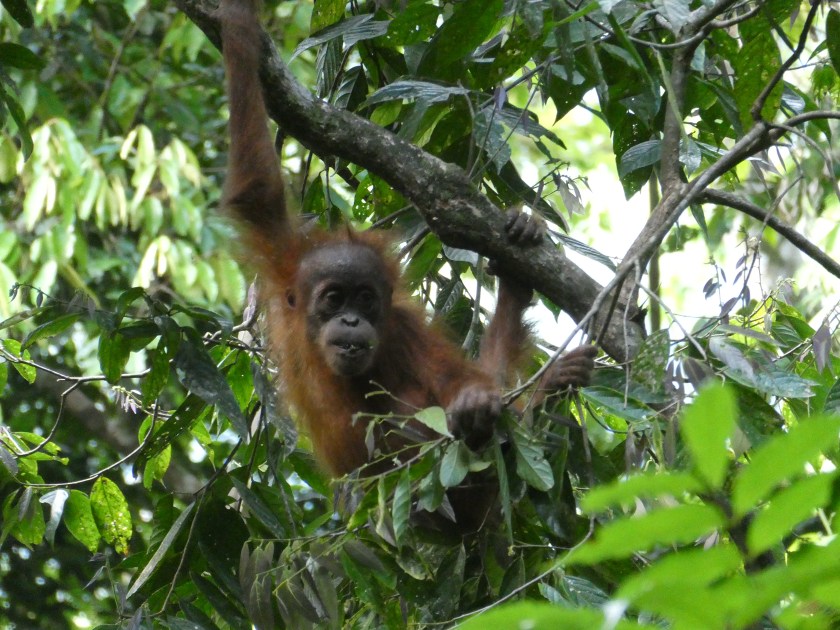
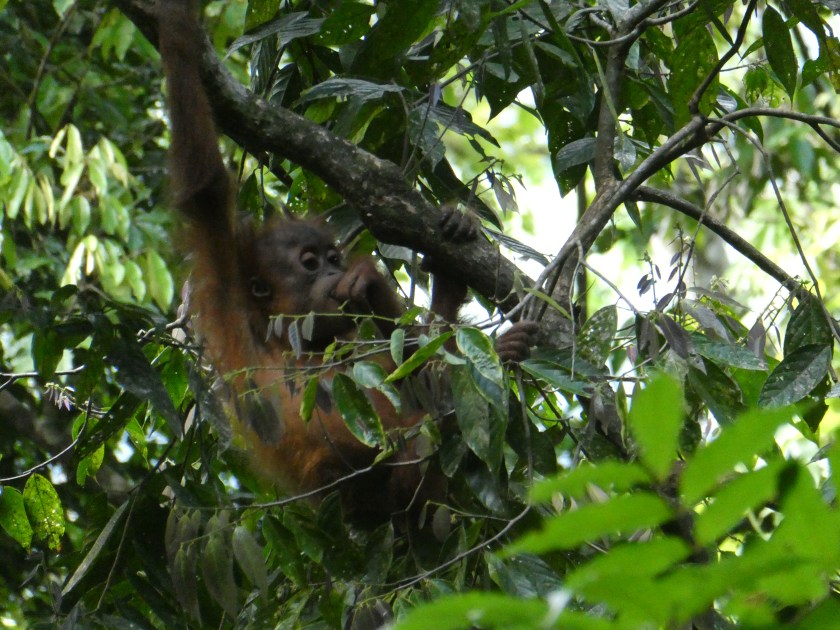
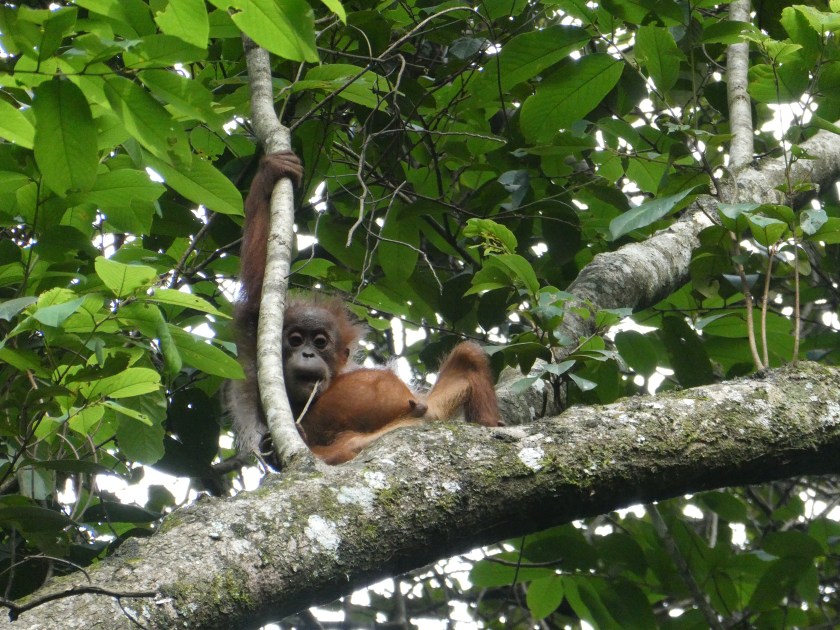
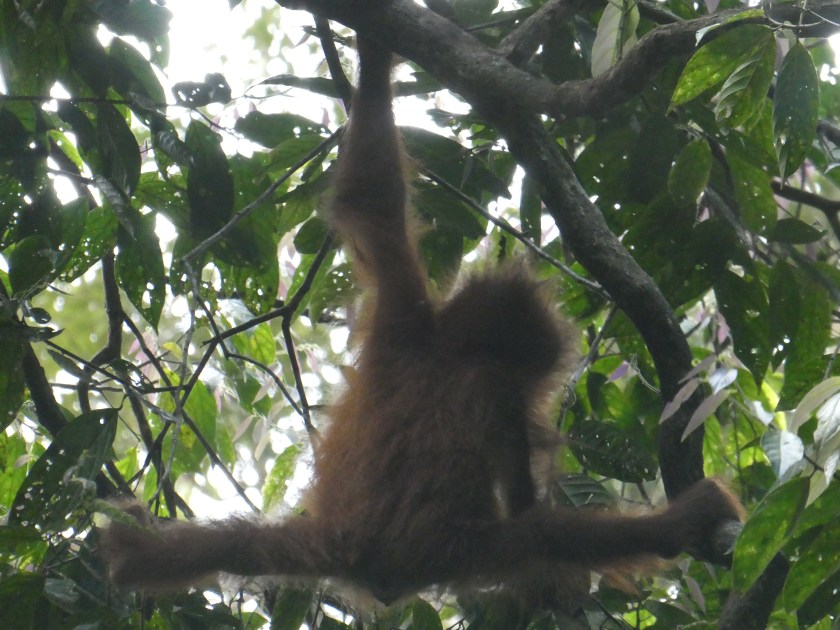
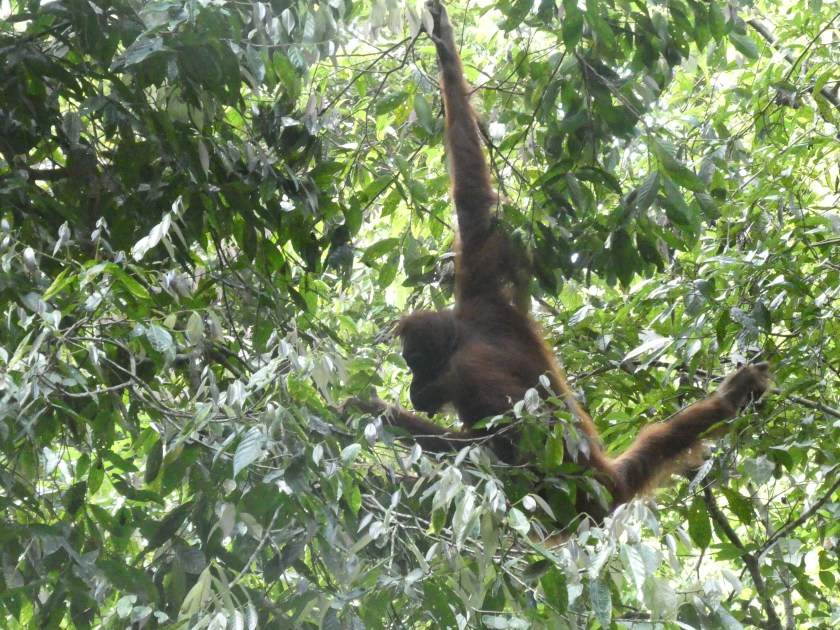
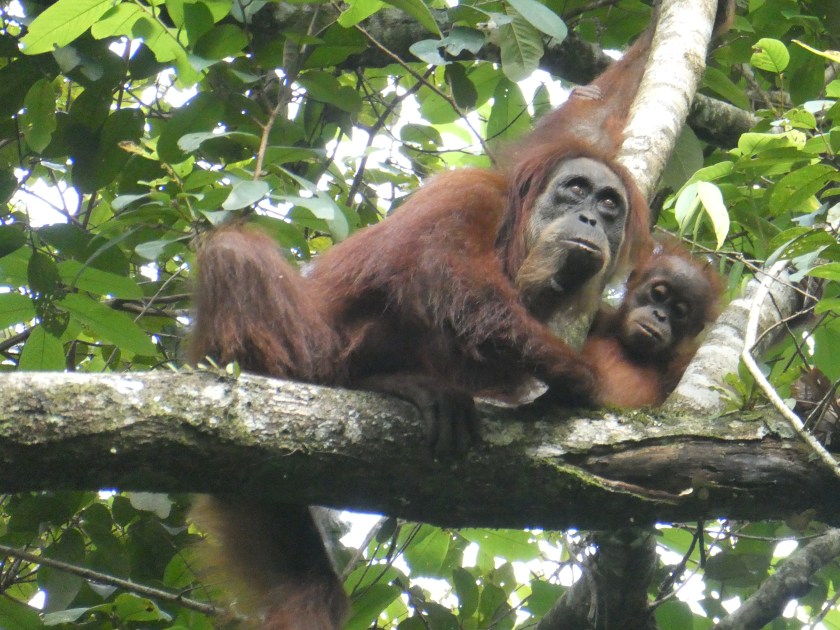
So many beautiful creatures


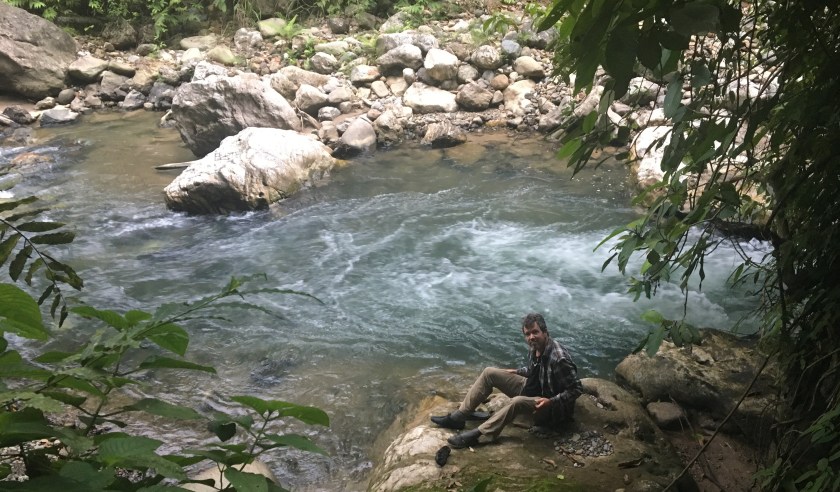
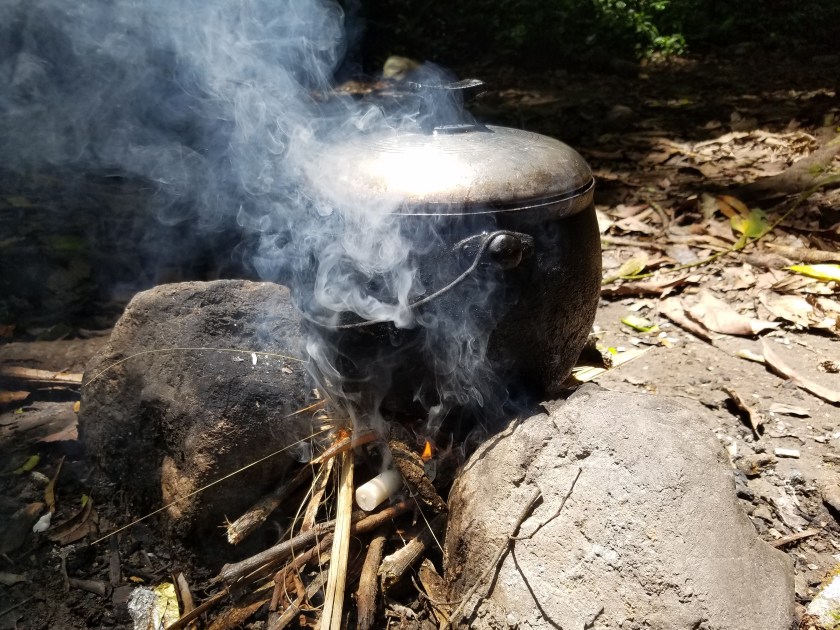
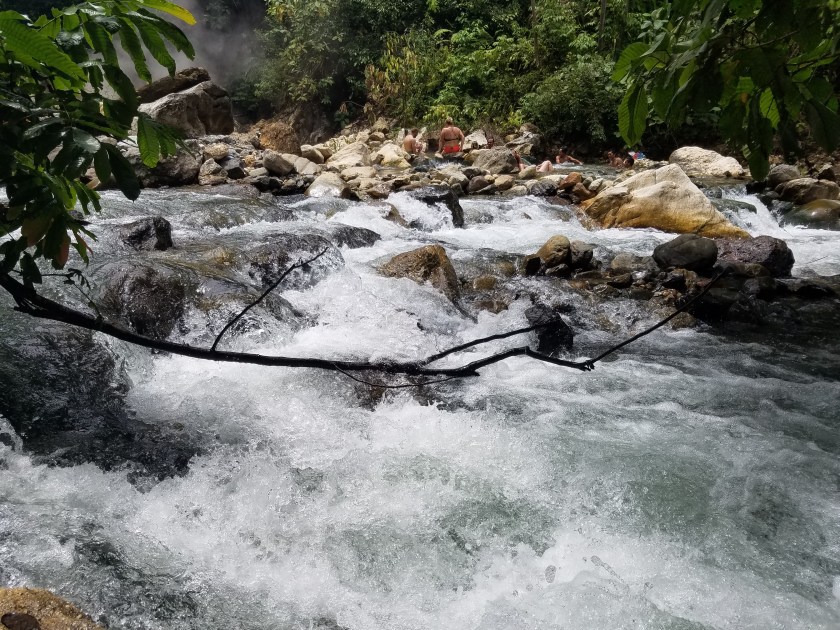
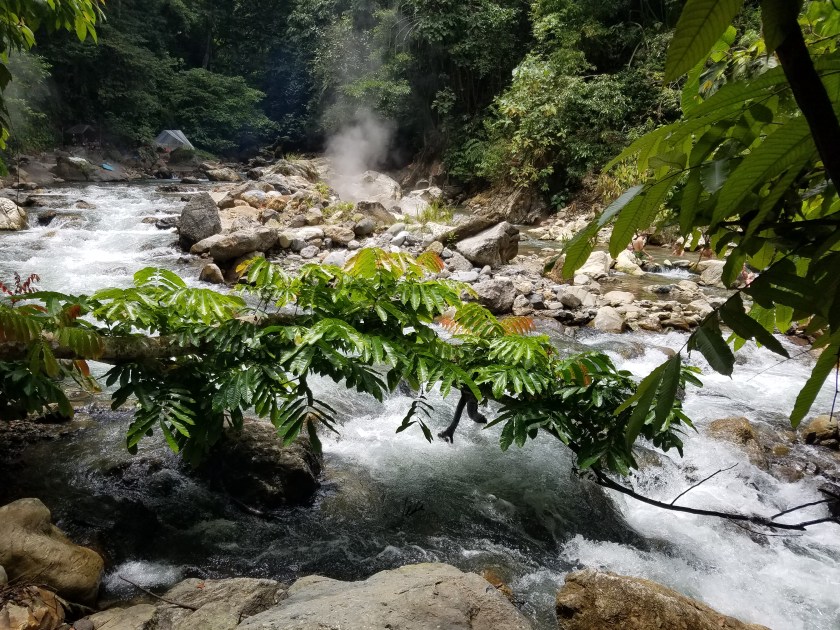
After breakfast the next morning we crossed the river and hiked an hour to a series of volcanic river pools–some warm, some cool, and some hot enough to actually boil eggs and cook vegetables. Unfortunately our hike went downhill after this, as Helen became ill with faintness and vomiting. While Doug ran ahead to get more water, a porter from another group offered to piggyback Helen most of the way back to camp. After lunch and packing up, I was the next one to feel ill. We all had a struggling walk back to our guest house (with Doug and our guide taking turns carrying Helen) where everyone proceeded to get sick. Food or water poisoning? We were all well enough the next day to return to Berstagi, where Cecilia made us ginger tea, prepared hot water bottles for those who were still suffering, and made a beautiful meal complete with a birthday cake.
Hot springs at Gunung Leseur National Park

My 52nd birthday wishes and cake from Smiley, Cecilia, Naufrol, Sani and Sebita


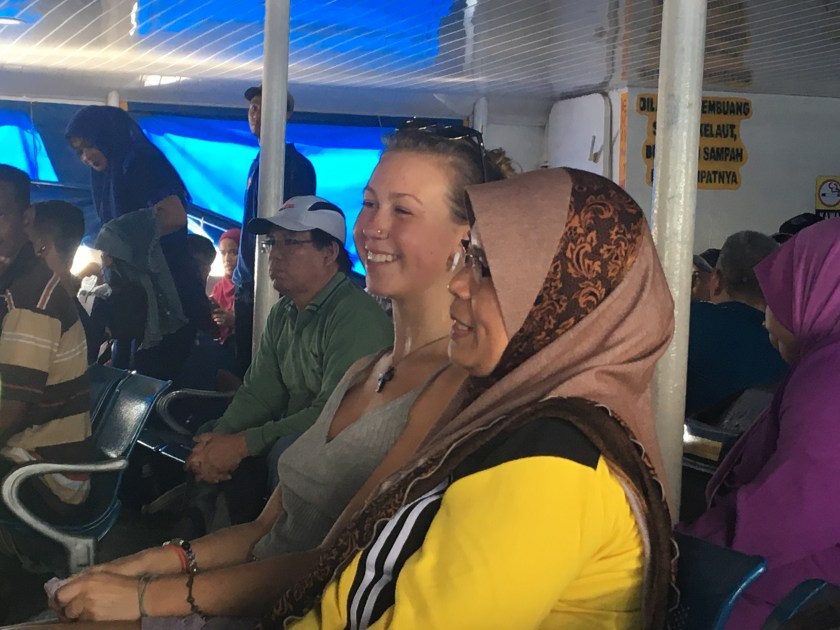
The next day we shared a warm good-bye with Smiley and family and got a wild two hour ride to Medan, where we purchased bus tickets for the overnight bus. Let me explain why rides can be especially wild here. Usually there are 2-3 cars and a motorbike or two sharing any piece of a two lane highway, and there are no passing versus non-passing areas. If you think you can make it, go for it! Some of our drivers have been very “assertive” in passing. Stopping at red lights is optional—you just have to look and make sure no one is coming. I did a lot of humming to myself, praying, and averting my eyes. Our luxury bus ride, advertised as non-smoking and non-stop, was 13 hours long, smelly (the smoke from the conductors’ cigarettes wafted back), and it stopped at least a dozen times. We all agreed to check that experience off as done and choose the one hour plane flight for about the same cost next time. We arrived early morning in Banda Aceh (ban-dah ah-chay), swarmed at the exit door by men checking out us westerners, asking where we were from, offering “Taksis”. The onslaught was a bit tough given we were all sleep deprived, hungry, and looking for our arranged driver who didn’t show up. We hired two low key drivers on becaks to bring us to the ferry (first stopping at several broken down ATMs) where we joined locals on the two hour boat ride to the island of Pulau Weh (pull-ow-way). We were the only women on the ferry without hijabs; Banda Aceh is the most Muslim area in all of Indonesia.
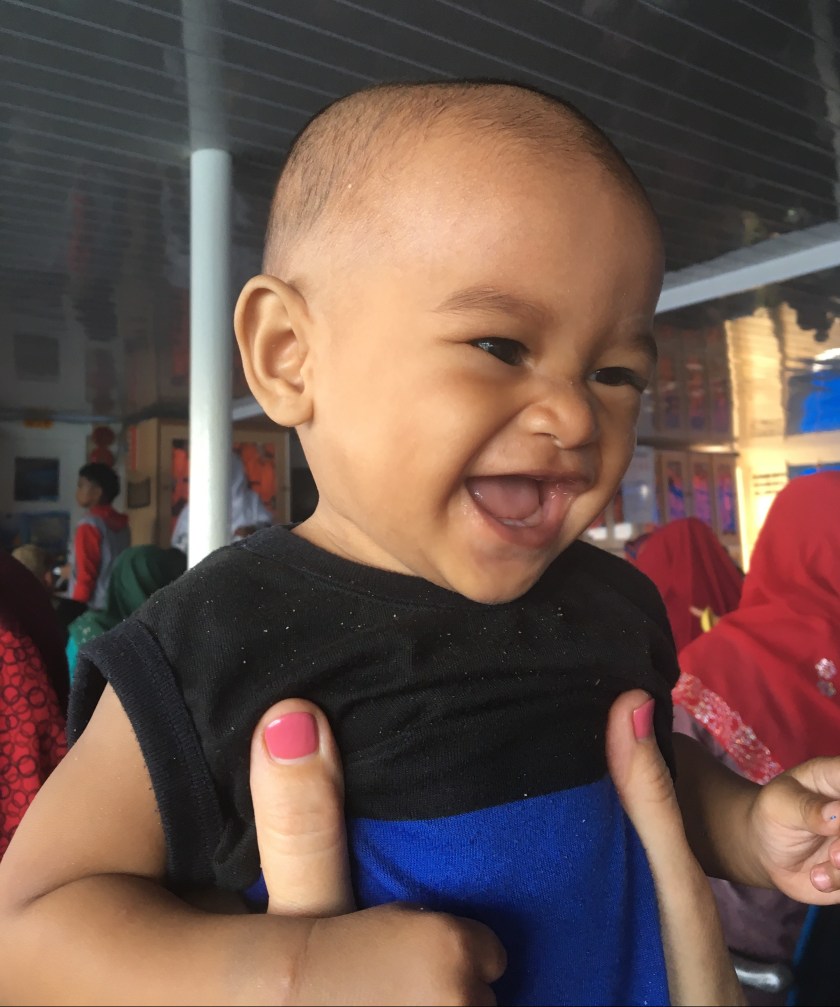
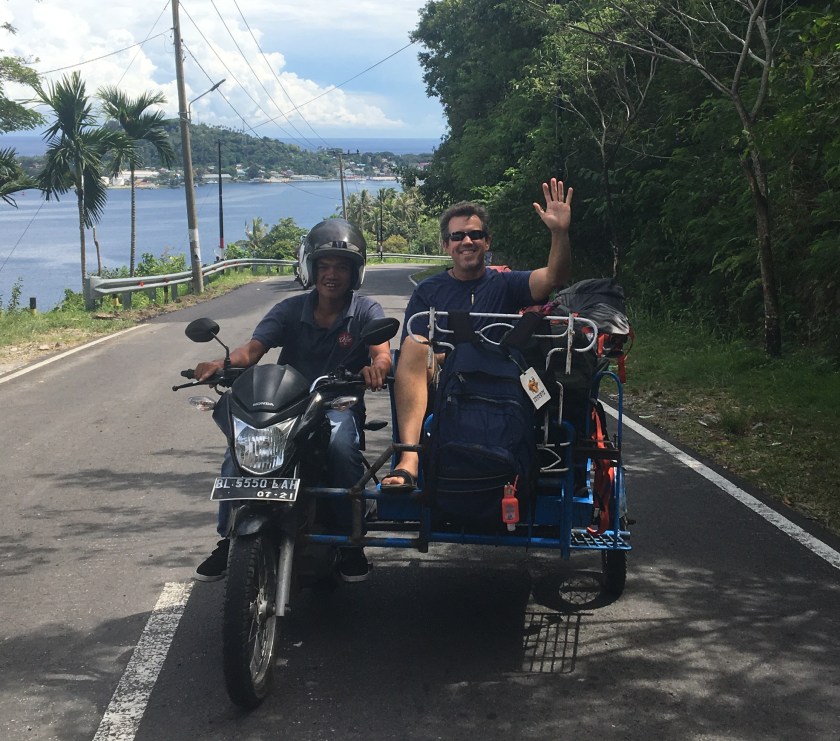
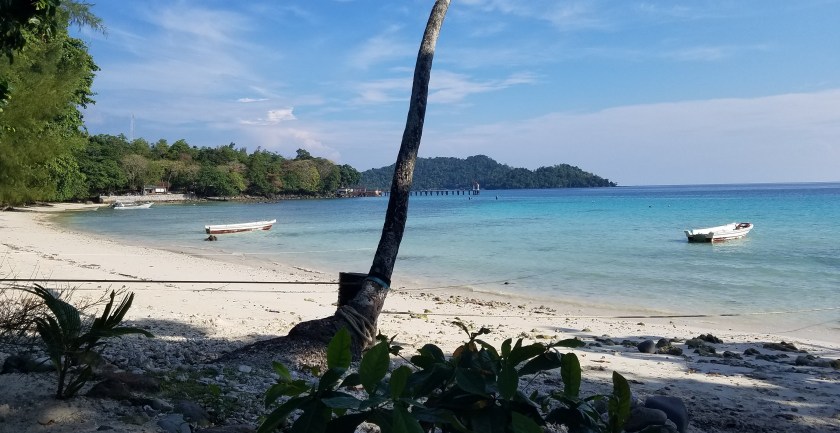
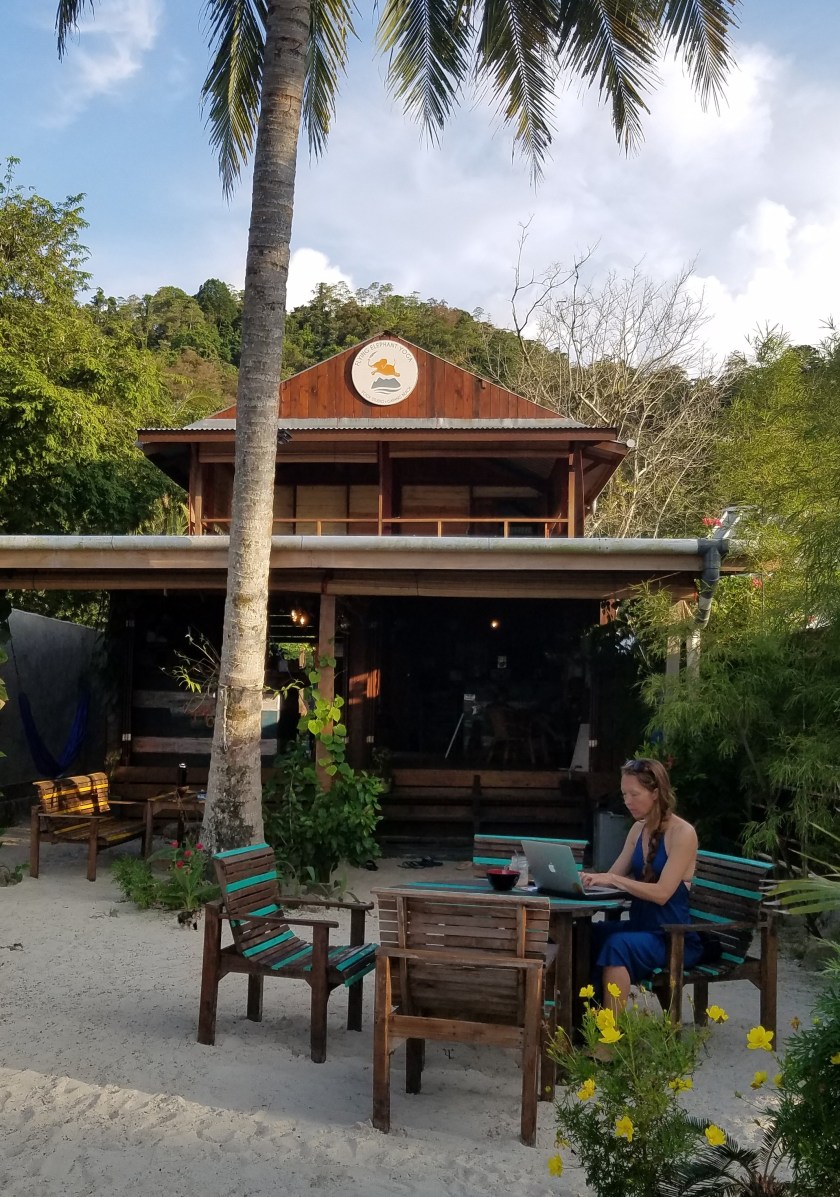
Awaiting us in Pulau Weh were two becak drivers arranged by our hotel, who took us on the gorgeous drive through villages with stunning water and mountain views to our end-of-the-road destination of Gapang Beach, an intimate, quiet community with a nice mix of locals and tourists. There were three SCUBA diving businesses and several small restaurants, all facing an idyllic stretch of clean beach. Here kids ride bicycles up and down the stretch of dirt road, divers move in and out of the water, and a few well cared for dogs occasionally engage in a game of chase with one of the multiple cats. One of the dive centers—Bubble Addict http://bubble-addict.com/–was a fun place to hang out with other tourists and a couple of locals. We joined an organized BBQ one evening where a Swedish tourist duo (there for the diving) performed their upbeat violin music.
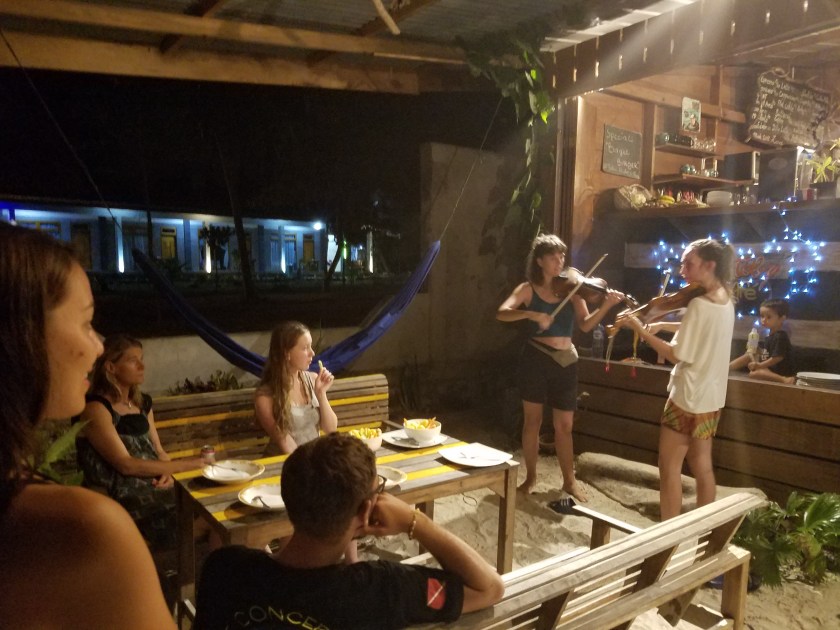
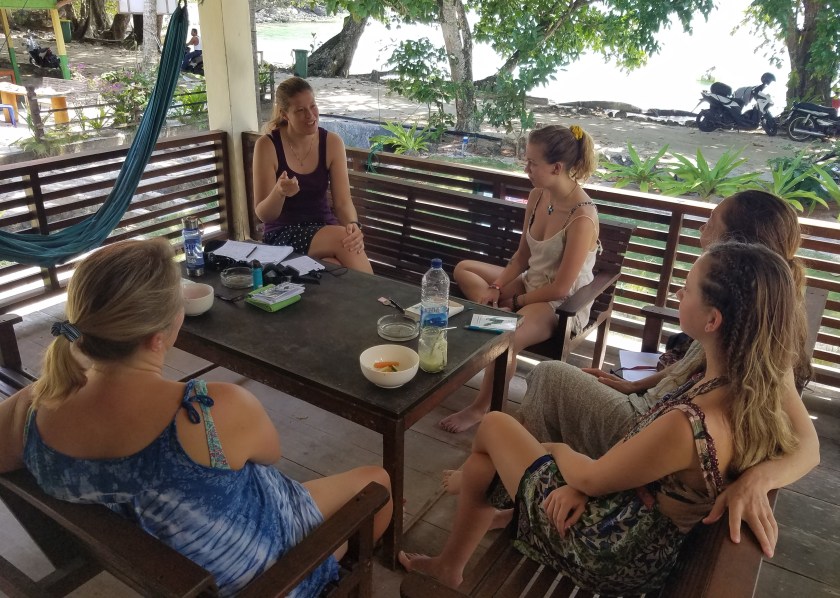
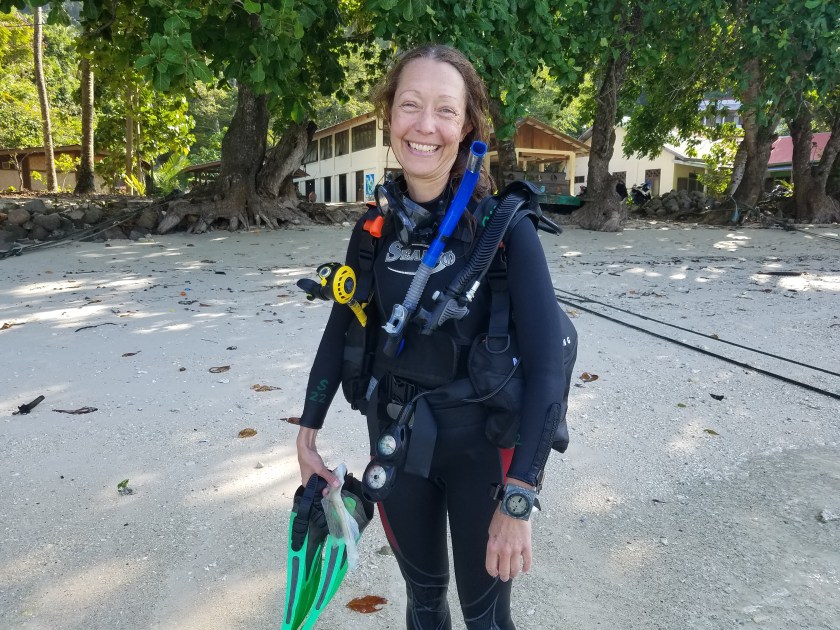
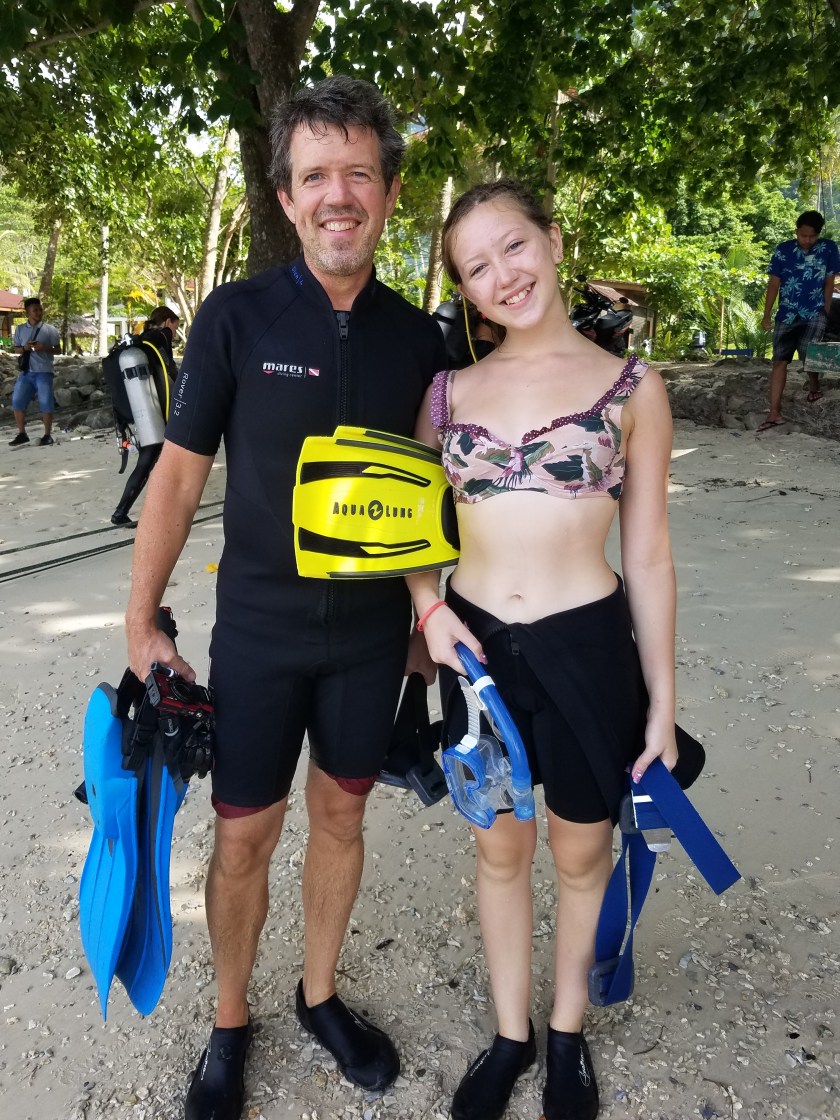
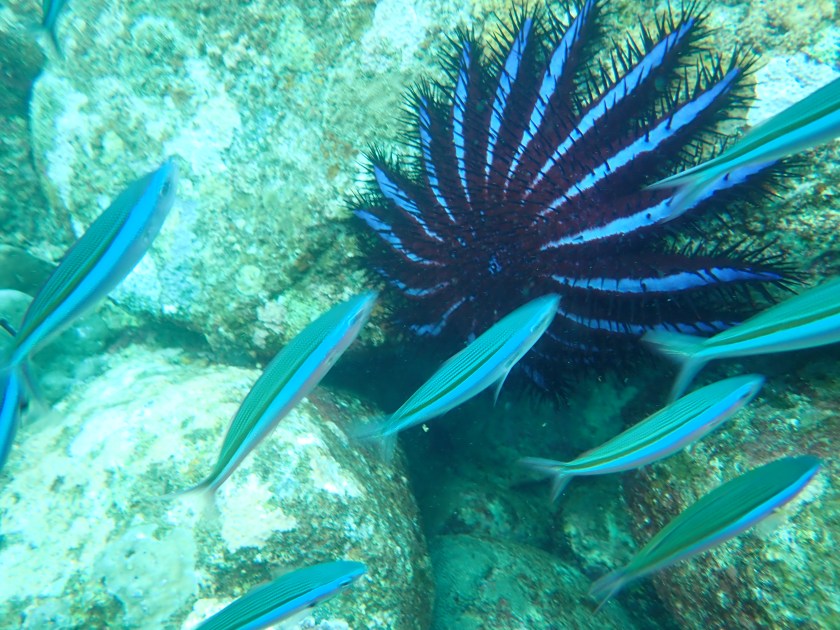
The biggest joy during this stretch was being joined by our dear friend Kari VanTine! Kari had been having her own travel experiences in Myanmar, where she stayed at a very regimented, strict traditional Buddhist monastery for almost seven weeks, then moved on to Kathmandu, Laos, and Bali before joining us on Pulau Weh. Kari has been a friend of ours since 1994, was my attendant at Ella’s and Helen’s births, and is their godmother (or fairy godmother, we prefer). How cool to be on the other side of the world with her!! We all completed our PADI Open Water Certification course over the next three days at LumbaLumba Dive Center https://www.lumbalumba.com/ with our top notch instructor Marliese from Holland. It was a rigorous two days of reviewing the water skills (we had completed the first two days of classroom, equipment and pool time in Bali) and four dives, but we did it! A whole new world opened up, one we can share as a family (as Doug became PADI certified in Cairns, Australia 30 years ago). Doug joined others on several dives while the rest of us completed our course.
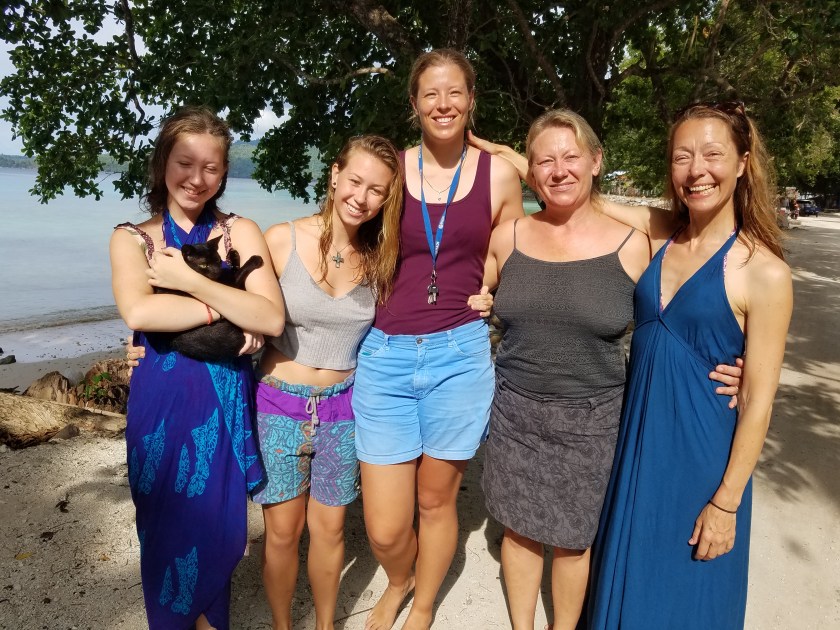

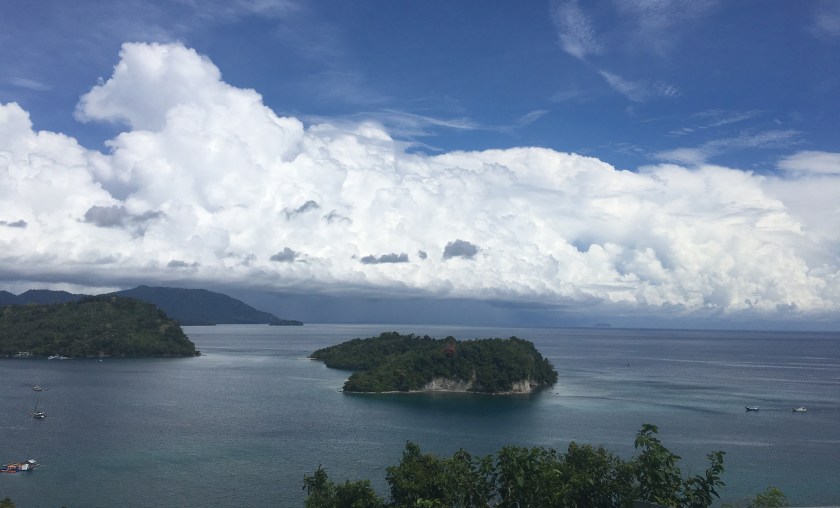
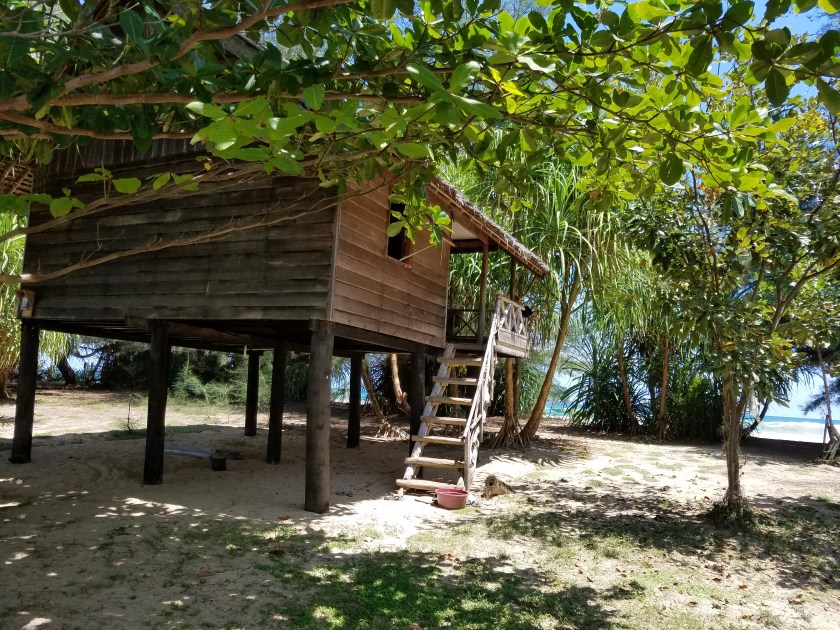
It was truly hard to pull away from Pulau Weh (sorry, you know me and puns…), but we had to move to our next adventure on the northwest coast of Sumatra, in the small village of Calang (Chah-lang). We were met in Banda Aceh by Smiley’s friend Omar—a petite, warm and smiling man we all took an instant affinity to. Over the next few hours our driver brought us from Banda Aceh to Calang, where we arrived in the dark to our simple beach front bungalow at the end of a bumpy drive over fields. Our new host Hasono got us set up in the simple bungalow set on stilts, consisting of two compact bedrooms with a large mattress on each floor, and a porch with a simple table, chairs and hammock. There was an eerie quality to the powerful surf invisible to us in the night. It was this same surf that rose to 30 meters on December 26, 2004 when the devastating tsunami struck Indonesia, Thailand, Malaysia, Burma and India. Hasono (now 30) and his parents were separated but all found one another in the rubble that had once been their thriving tourist business of 10 bungalows and a restaurant. The area of Calang experienced a death toll of 230,000, and Hasono shared his belief that people stopped caring so much—stopped working as hard—after the tsunami, having had so many efforts and dreams literally crushed. His family owns a busy local restaurant, where we ate our first night and were the center of attention.
Throughout our time traveling in Southeast Asia we are often the only white westerners, and have had a little taste of what it might be like to be a celebrity. During our three days in Calang we didn’t see another tourist, and only came across one other during our two days in Banda Aceh. Indonesians in general openly stare at us, say hello, ask where we are from, and take photos with us (well, mostly with Ella and Helen). Many young women start giggling as soon as they hear us speak, especially when they witness our simple Indonesian. It makes for a funny experience where we often feel on display. One of the reasons we liked Gapang Beach is we quickly felt a sense of community with like minded travelers, and did not stand out so much.
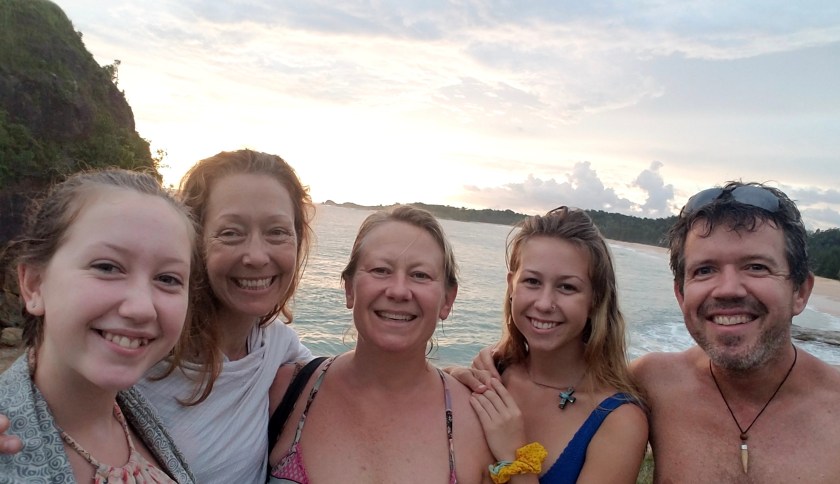
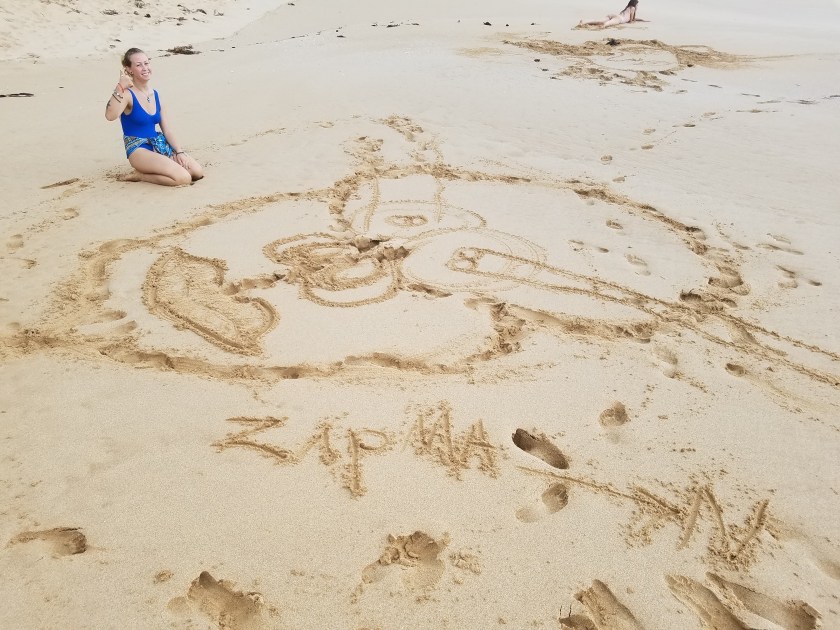
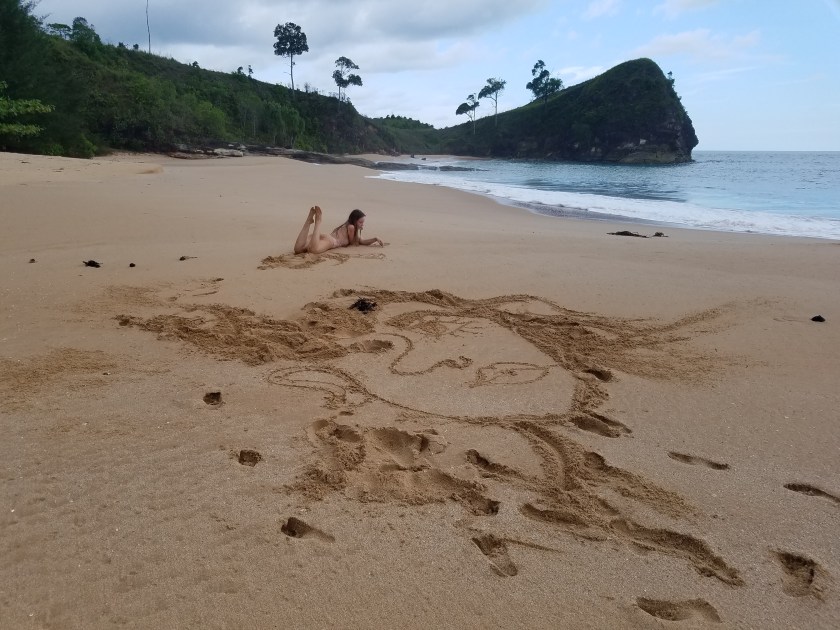
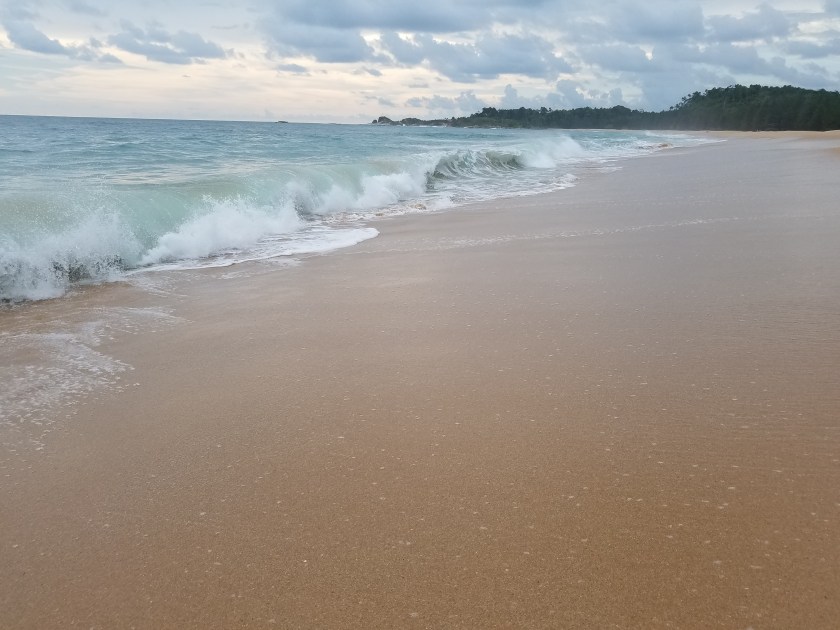
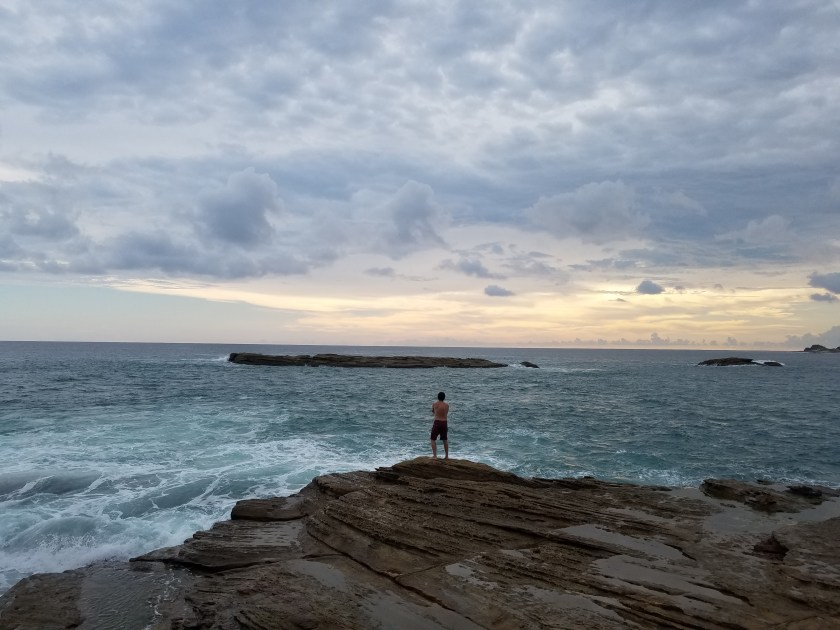
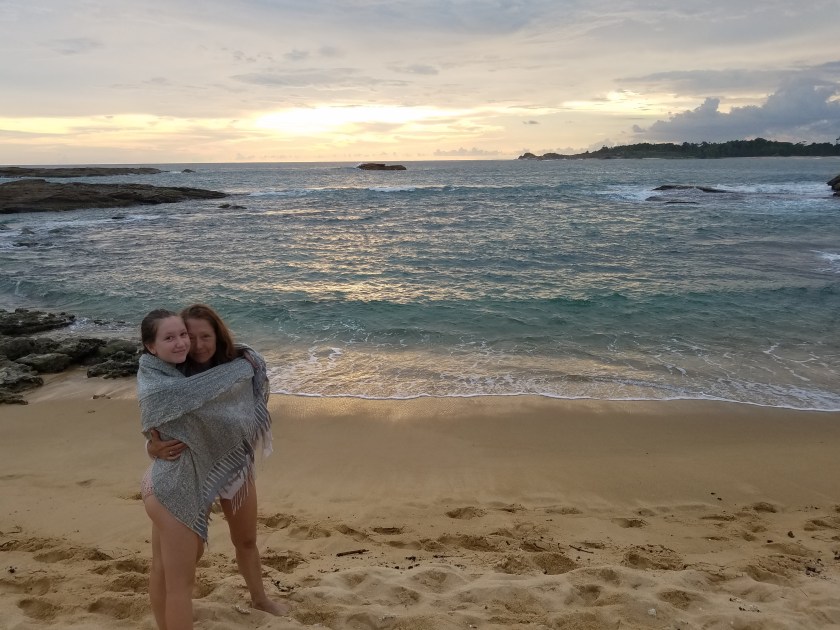
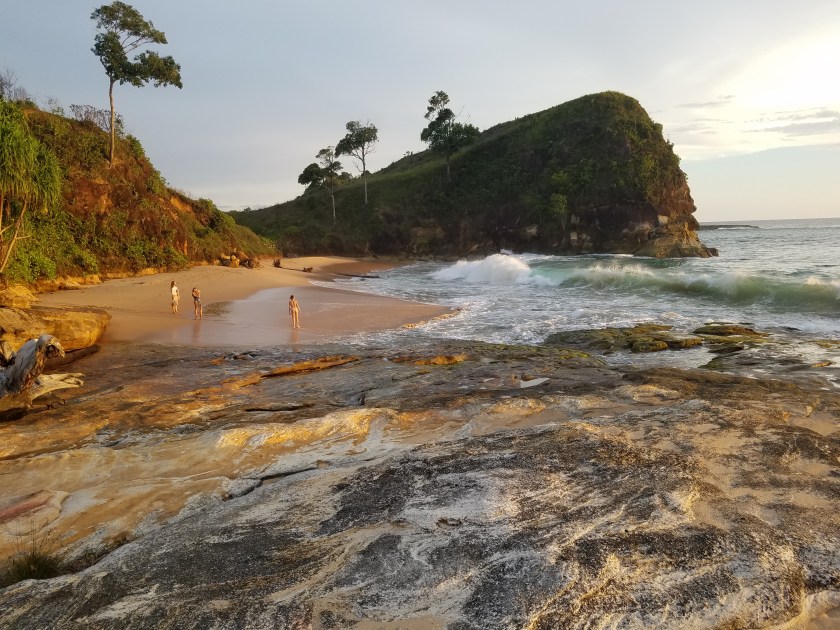
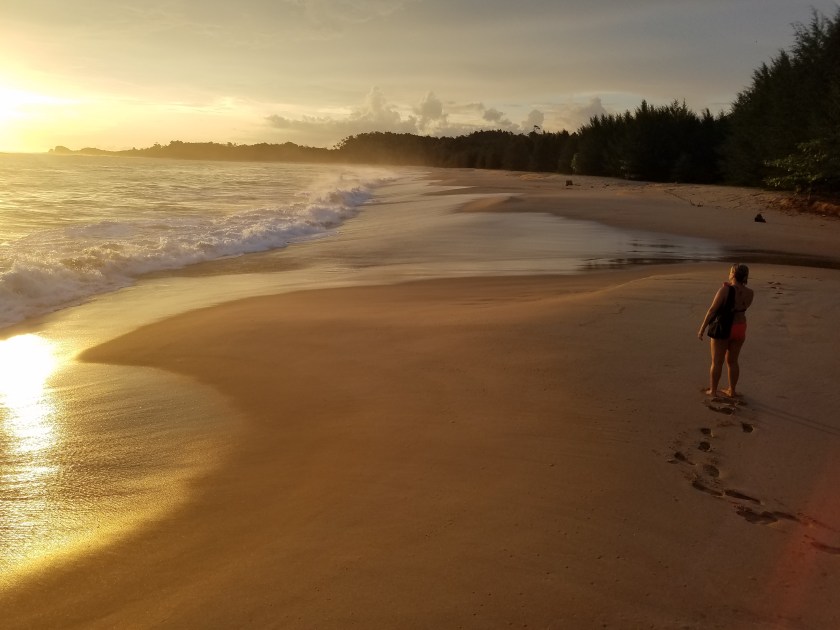
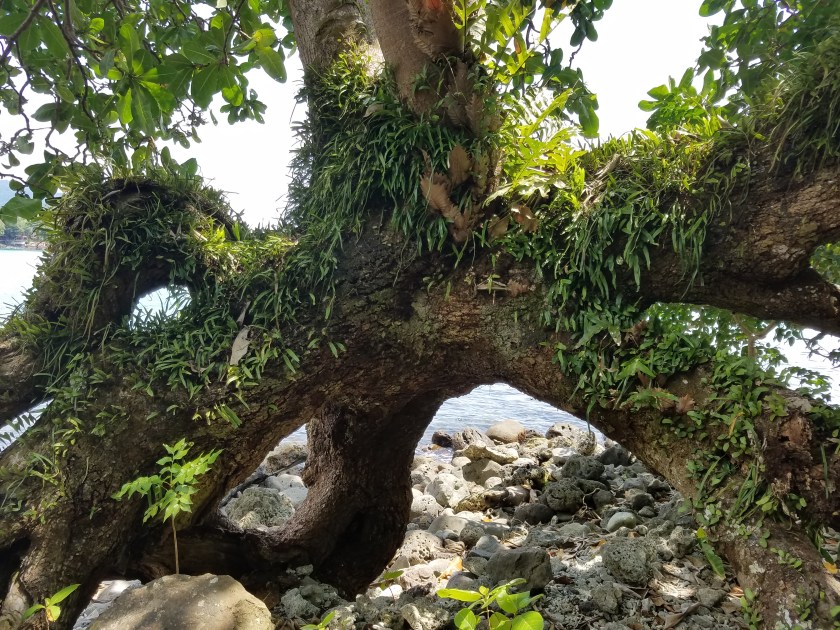
One afternoon in Calang we hired a simple boat (for $14 USD) to take us to a small nearby island where we were alone, free to swim in our normal beach wear. The island would have been ideal had it not been for the copious amounts of trash present. This has been a sad and common theme in many parts of Southeast Asia. There seems to be an overwhelming lack of awareness about the impact of trash, and very little infrastructure to manage the massive amounts of plastic drinking water bottles generated by both tourists and locals. We pick up trash when we can, and that day filled a large garbage barrel three times before enjoying a nice swim. While some more built up areas have a garbage service, small villages throw their trash in a pile or burn it. The current awareness is perhaps what America’s was until the 1960’s, when littering fines were put into place. Not too long ago packaging in Southeast Asia was biodegradable and could be tossed on the ground, but this doesn’t work so well with plastic.

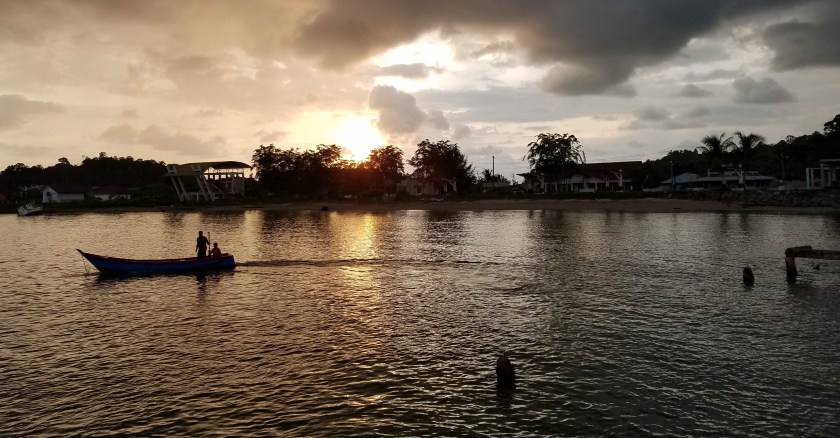
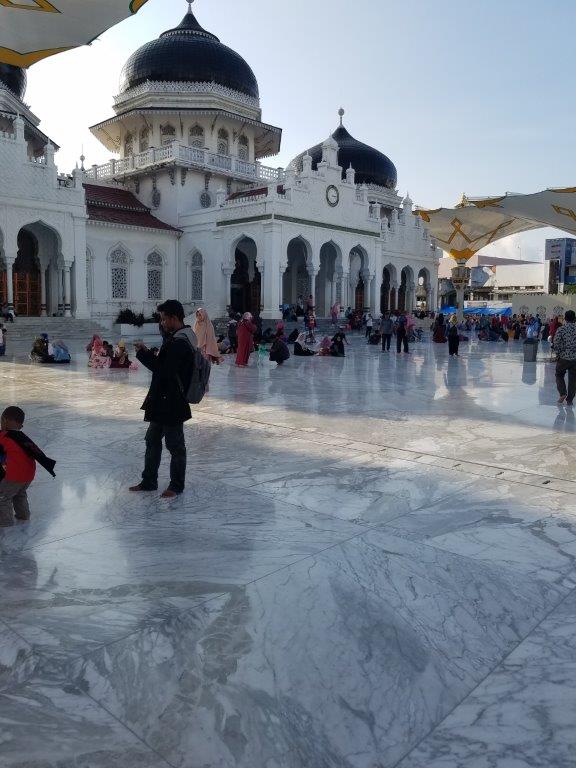
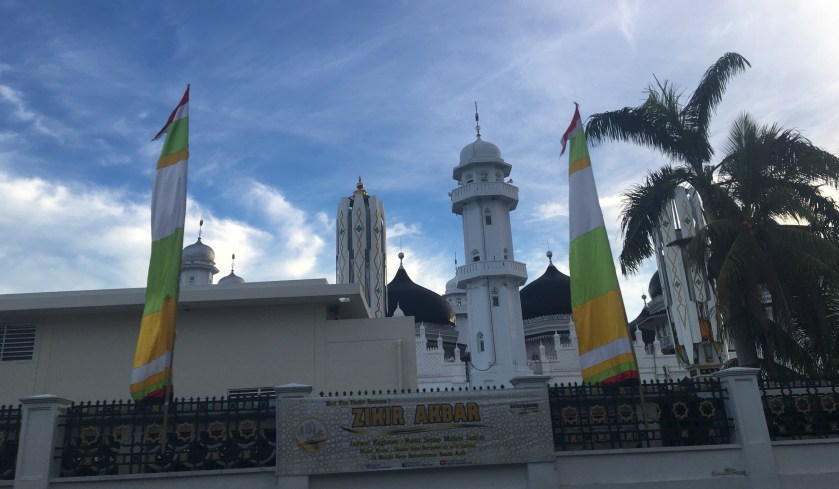
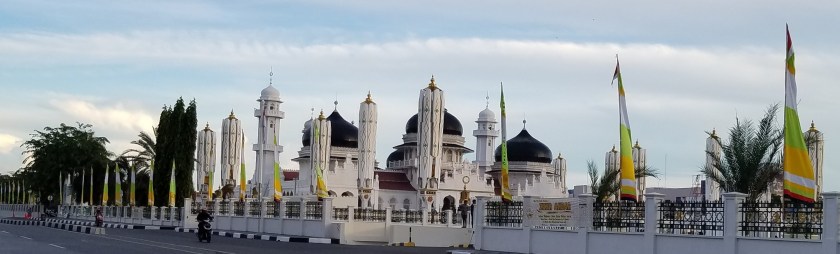
With just a few more days left in Sumatra, the five of us crammed our bags and ourselves into the small SUV with our driver, who brought us back to Banda Aceh, often stopping to allow herds of cows or goats to cross the road. In Banda Aceh we were reunited with Omar, Smiley’s friend, who escorted us to his friend’s quiet bungalow rental. Omar’s friend Julie served as our guide and host over the next two days, bringing us to a small, beautiful beach nestled in a jungle cove, where we could swim freely in our bathing suits. (On most beaches in Banda Aceh people have to be fully covered, and women swimming have to be met with a sarong to cover their body after leaving the water). As visitors we all respected the culture and norms. There was one time I felt angry about it, when we went to see the large, white mosque in Banda Aceh that withstood the devastating tsunami of 2004. We were told by one kind local woman at the entrance that we would need to cover our heads. We women put scarves on our heads, had at least shin length skirts on, and our arms were mostly covered, but one man told me I needed to have my arms entirely covered, and another man asked if we were Muslim. When we said we were not, they told us to leave. Doug, with long pants and short sleeved shirt on, had walked ahead oblivious to our experience. Ella is very interested in religion and philosophy, and was especially offended by the contradiction of being forced to leave the temple. Some locals who saw us turned away seemed a bit embarrassed and apologetic, but were not in any power to challenge the rule. I just found it angering and ironic, as I’m sure that’s not what Muhammed would have done. It was truly the exception though, as we have otherwise felt warmly welcomed and respected by all here.
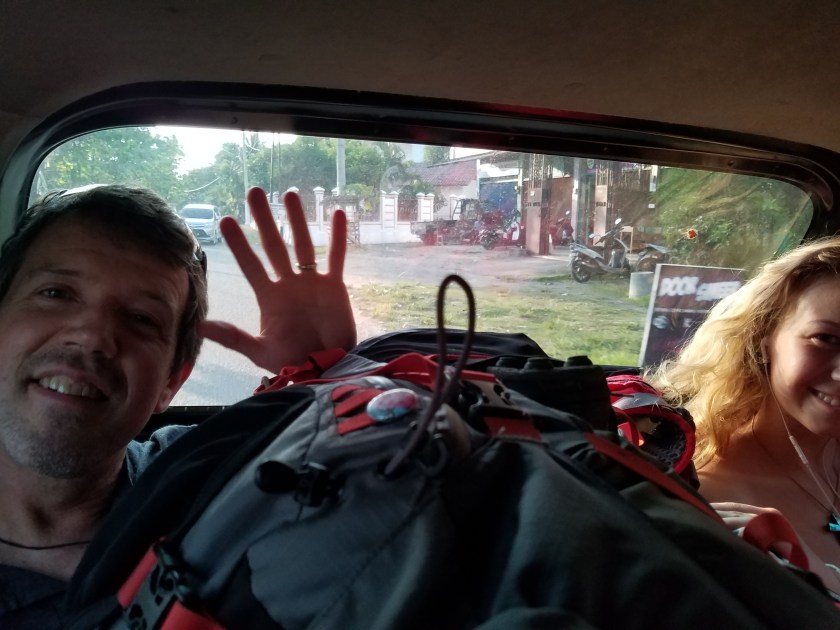
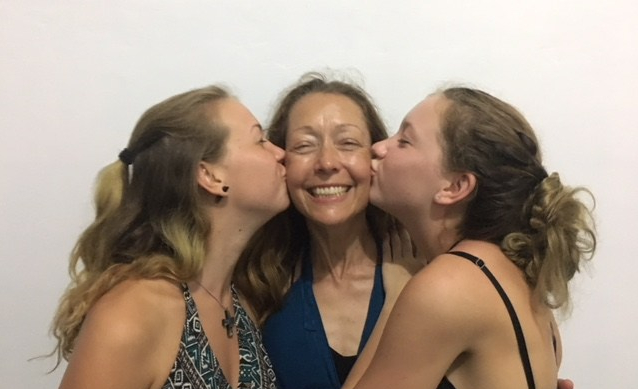
After a pleasant evening with our host’s family we woke early to catch our flight to Jakarta on the Indonesian island of Java. Kari returned to Bali to continue her coaching work www.karivantine.com. I am writing this while on an eight hour train ride from Jakarta to Yogykarta. It’s a comfortable, spacious train that rumbles through miles and miles of rural villages, past a quilt works of rice paddies and corn fields. This is about my favorite mode of travel….

Doug’s letters to family:
May 11, 2018
Dear family,
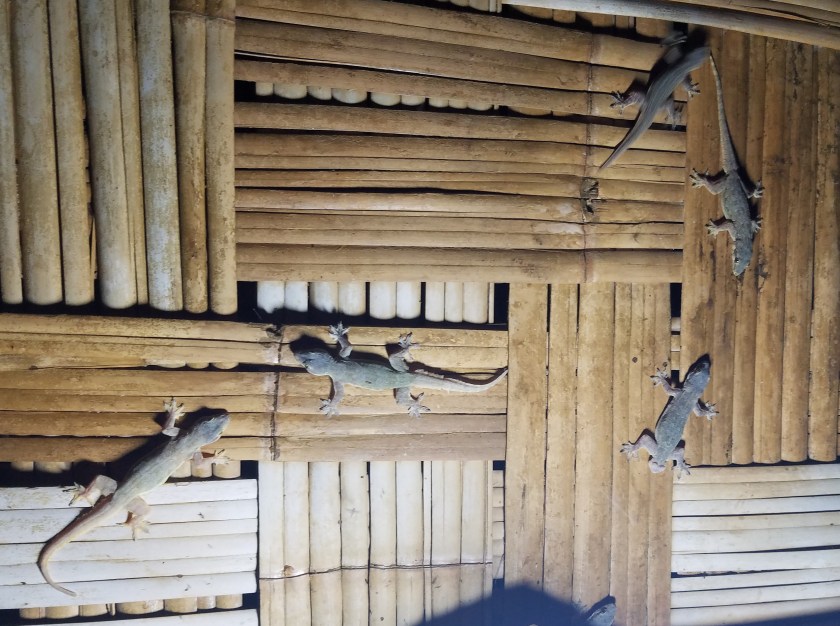
Last night at bedtime a bright teal kingfisher flew into our bungalow. Our lights must have attracted him, the only ones burning along this lonely stretch of Aceh coast here on the northwest tip of Sumatra. The cicuks hunting along our walls and ceiling would have made a fine dinner for the bird and maybe that’s what attracted him, but our human activity was too distracting and he quickly lost focus, perching instead on a ceiling beam and considering his next move. An hour later, lights now out except for a single reading lamp, we were all getting tired of his occasional flutterings and a bit surprised he hadn’t made quick work of his 6 window and 2 open door escape options. Ella finally turned on the outside porch light and we fell asleep. No sign of the bird as I sit here this morning, though I just watched another kingfisher sitting on a nearby branch, this one mostly white with some darker markings.
We are close now to wrapping up our 18 day visit to northern Sumatra and would have loved to have more time. We got a bit jammed with our travel schedules as this was the largest window we could manage between Helen’s friend leaving us in Bangkok and Jeff Flint joining us in a few days in Yogyakarta on Java. I’ve also been considering how best to parcel out our remaining 2 months and the inevitable decisions of places missed. That said, we’ve all had a blast here and are so glad to be back in Indonesia. Sumatra is amazing, and our short time inspires us to return some day for further exploration.
We arrived in Medan on April 23rd and a pre-arranged driver navigated a poorly maintained mountain highway the 3 hours to Brastagi (often also Berastagi on maps). The contrast between the 2 locations is striking. Medan is on the coast, steamy and sprawling and Indonesia’s 3rd largest city. In the early 1900’s Dutch settlers discovered an area high in the mountains west of the city and developed Brastagi, cool and clear, even down right chilly in the evenings and early morning. The town is surrounded by several active volcanos, the most dangerous of which (Sinabung) spectacularly erupted just 3 years ago, killing 7 people with scary pyroclastic gas flows. A few hours south of Brastagi is lake Toba, the remains of an ancient super-volcano whose caldera forms the largest lake in Indonesia with water depths reaching 500 meters. The whole area around the lake and for several hundred kilometers north is populated by the Batak people, interesting among other things for their warlike history and ritual cannibalism. They have an elaborate death culture and often bury family members in ornate mausoleums (built to resemble livable homes) on their own property close to where they live. After 10 years the bodies of loved ones are exhumed and their bones collected and polished, then placed again in the family death house. We saw many of these homes of the dead as we drove through the area, all attractive and inviting in appearance, often surrounded by rice paddies and other agricultural land.
Our first morning in Brastagi the host of our homestay, a Batak guy my age called Smiley (Ishmael), remembered there was a traditional wedding ceremony taking place in a village 45 minutes down a country road in the ominous shadow of Sinabung. The whole village was there, several hundred people all tightly packed, sitting on woven mats inside an open walled shelter with a raised platform at one end holding the most prominent family and bride and groom. There was a microphone and when we arrived just before lunchtime a long morning of family speechifying was wrapping up and the crowd was restless and distracted, buzzed on betel nut and happy to welcome us, the only non-locals in attendance. All were dressed in their finest, which included mostly traditional Batak costumes of rich fabrics with elaborate hats and headdresses. The wedding pair, looking a bit bored and neglected (this was clearly a community affair and only indirectly focused on the couple), were full-on spectacular in outfits that featured many sewn on gold coins.
After some initial introductions and picture taking on the edge of the crowd, Smiley showed us a nearby building where the wedding feast was being prepared in vat-like woks over 2 open fires. A little while later we all got in line inside the pavilion and greeted the wedding party, along with half of the rest of the village. It’s possible I’ve never shaken so many hands at one time and I like the custom here of touching one’s heart with one’s right hand following the shake. All were intrigued with us and many selfies and group photos were taken. The bride and groom were similarly gracious and inviting and didn’t appear put out being upstaged by us exotic foreigners. We lingered a bit longer after getting through the line and were offered food that was being efficiently distributed using buckets and ladles of various sizes, passed on to individual plates within separate family groups, all still crowded together of the floor of the enclosure.
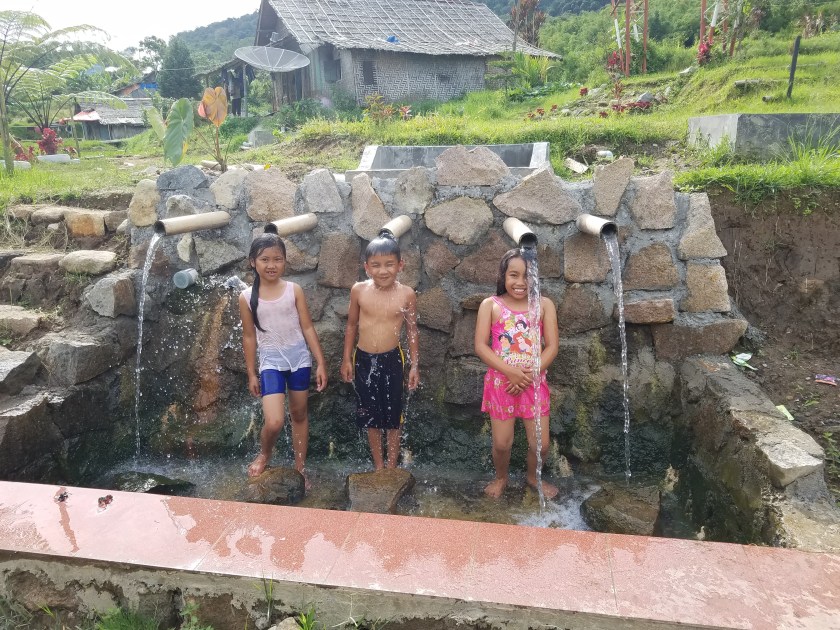
Another day we climbed the volcano (Sibayak) that looms over one side of Brastagi, a 3 hour hike I’d last taken 30 years earlier with Andrew and Steve. The summit was satisfyingly noisy, with screaming vents of hot steam, bubbling waterholes and the rich stink of sulfur. A bit like Rotorua, actually, which made us nostalgic for our springtime in New Zealand, and later we soaked in hot thermal swimming pools with Smiley’s family near a modern looking facility that now uses steam from the volcano to power the surrounding area.
Living for 4 days with a Muslim Batak family was pretty special. Smiley’s wife, Cecelia, was 18 years younger, lovely, and mother to 3 cute kids between the ages of 6 and 10. She cooked us all delicious breakfasts and dinners, the best food we’ve had in Indonesia, and ran all the logistics of homestay and family while Smiley facilitated guides, drivers and other logistics for various travelers. The 4 of us slept in a spacious upstairs room while their whole family slept in the downstairs sleeping and eating area, and the 9 of us all shared a communal toilet and mandi room with no shower or hot water. Cecelia cooked Anna a beautiful birthday cake one evening and we all shared a warm family celebration. I expect we will return again to Brastagi someday and will have friends there to stay with when we do.
I’ll also mention that Smiley performed with a rock band in Holland for several years has had many interesting adventures, including several rescue missions involving lost tourists on volcanos. He went to Banda Aceh just days after the tsunami in 2004 to help in recovery efforts, has guided National Geographic teams in the jungle, guided a movie crew with film star Rachel Hunter and ended up acting beside her in Intrepid Journeys when the actor chosen for the role underperformed. Perhaps most interestingly, for years Smiley worked at an NGO sponsored orangutan rehabilitation center, now bankrupt, his job being to facilitate the adoption of orphaned young orangutans with wild mothers. He explained that in nature, only orangutans, black gibbons and the Thomas’ leaf monkey will adopt babies not their own. Each day, Smiley walked into the jungle with a baby on his shoulders, looking for wild orangutans. The process took from months to as long as 3 years for the female orangutan to gradually allow them to get close enough to interact. The baby would, over time, venture further from Smiley and closer to the wild ones, eventually leaving him for a new life in the jungle in what had to have been about the most satisfying job-moment ever.
We got to have our own jungle moments after leaving Brastagi and driving 6 hours north to the tiny community of Ketambe, staying 2 nights in a simple lodge on the river there, with a night of camping in the rainforest in between. Our first night was actually Anna’s birthday, and we’d picked up a small cake and candles at a shop on the drive up. The evening turned pretty festive, as we met a friendly family of Norwegians (the lodge’s only other guests) with 2 young boys, along with several local children and other adults, all extended family of Cecelia. The cake was presented late in the evening and we cut it into 20 pieces, then sang happy birthday songs in English, Norwegian and Bahasa Indonesia.
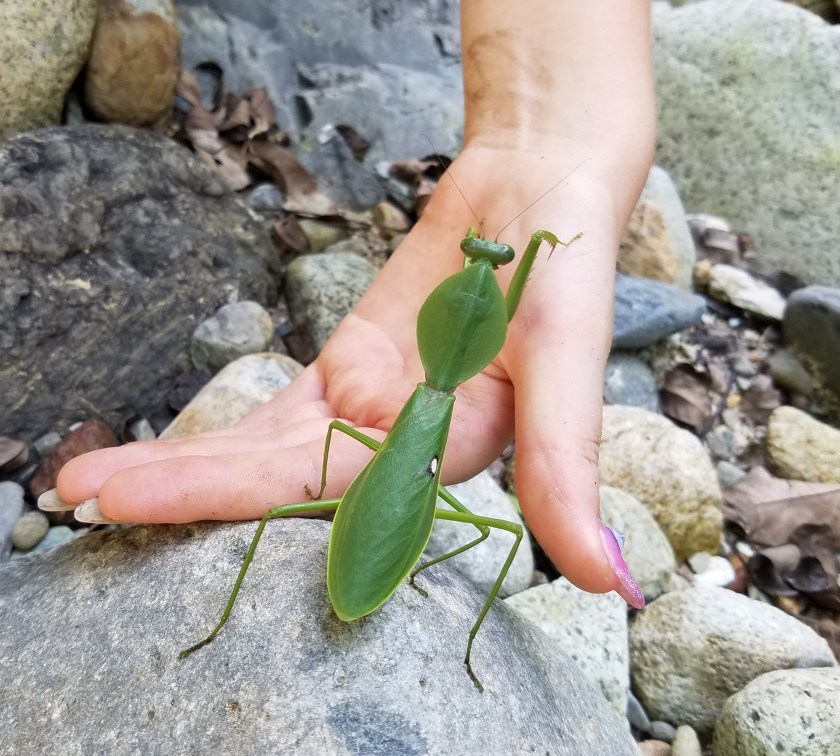
In the morning we left most of our gear at the lodge and trouped off into the jungle with our guide and 2 porters. That turned out to be one of the great days of our year’s adventure. The forest was exotic, with towering trees supporting many vines and high canopy vegetation and all teeming with life. It wasn’t as loud as I remember from our time there 30 years earlier. Our guide theorized that we may have last visited in the dry season when there are many more cicadas. Also, over the last 20 years most of the hornbills have been wiped out by poachers who receive as much as $1700 USD for just the head that they sell on the Chinese black market. We did see several large hornbills, but their distinctive hooting calls were occasional, compared to near constant as they were 20 years ago. Still, there were satisfying jungle noises a-plenty, and several species of monkeys crashed around in the canopy overhead. And the butterflies. Helen has been thwarted several times this year in cities we’ve visited, our attempts to visit local butterfly enclosures unsuccessful. This trip made up for all. After setting up camp on an open stretch of ground beneath huge trees along the banks of a rushing mountain stream, Ella, Helen and I swam, then walked along the river (Anna was in the hammock) while waiting for our lunch to be cooked. Our first big find was a bright green praying mantis on a river stone, about 8 inches long, looking exactly like a big leaf and even complete with a brown spot mimicking a leaf’s imperfection. Then, among a small cloud of various bright butterflies, one pretty teal colored one, the kind whose wings are always quivering, chose Helen’s similarly teal colored sneakers as its new favorite hangout. We were all rapt, and Helen ended up removing her shoe to hold it up, the better to admire all the exquisite detail of this amazing jewel of a creature.
The area of jungle we were in had a few major trails but mostly a confusing network of very lightly trodden paths, from ones similar to our lake perimeter trails to vague animal tracks, and these are what we explored in the afternoon, hoping to glimpse some of the many local animals. We were in Gunung Leuser national park, a huge area covering almost the entire width of northern Sumatra, and one of the most biodiverse and ecologically important remaining tracts of undeveloped rainforest left on earth. The area supports all of Indonesia’s remaining megafauna, from elephants, a species of Rhino with 2 horns and long hair, tigers, leopards and orangutans, sun bears, tapirs, crocodiles, pythons and pangolins. We all walked as quietly as we could, using hand gestures to pause while our guide scanned the trees for wildlife. Not far into our exploration we came across a mother orangutan and her young baby, maybe just 30 feet above the forest floor. Our guide later explained that mother’s fear their babies could be injured from a large fall high in the trees and often come close to the ground when teaching their young to hang from branches on their own. We watched from about 70 feet away for about an hour as the pair slowly made their way through several trees, eating leaves and awing us with their deep stares and human-like presence. Anna even cried a little. The effect was similar to the day all those wild elephants walked between our Land Rovers in Tarangire last winter.
Camp was basic, with a big tent constructed for the 4 of us using wooden stakes and sheets of plastic. We slept on rattan mats after using the same to sit on during dinner, a typically Indonesian affair of curries, rice and vegetables. I would have loved a chair with a back rest, but stretched a lot and we all somehow slept pretty well. The next morning we hiked along the river 2 hours to the same hot springs us 3 danger brothers found our way to so many years ago. The trail approaches from a different direction now but all else remains the same, though on our last visit we had no guide and didn’t see anyone else, and this time there were a couple of French travelers and a few domestic day trippers visiting from the nearby big town of Kutacane. The spot is still super scenic, with a side stream of boiling hot water (used at times by campers to cook eggs and veggies) pouring down into the main cold water river. Currents and eddies shifted from cold to almost scalding, and everywhere butterflies tasted the rocks for salt, sulfur and other minerals.
Our day from that high point on deteriorated a bit, with first Helen, then Anna getting sick with what might have been the unhygienic conditions at camp. Helen got super wiped and threw up on the hike back from the hot spring. I had gone on ahead to bring back extra drinking water and while gone another local guide offered to carry her part way along the trail. After lunch at camp we hiked the couple of hours back to civilization, during which Anna got sick and the guide and I took turns carrying Helen. At the lodge that night Ella and I also succumbed as did the guide, so only our 2 porters escaped the jungle unscathed. Fortunately, it was one of those fast in-and-out kind of intestinal assaults so by the next morning we were all able to pull ourselves together for the long ride back to Brastagi. The next day, fully recovered, we drove back to Medan and took the 13 hour night bus to Banda Aceh.
I’m going to wrap this email up here. I’ll continue on with an account of our 10 days in Aceh shortly but don’t want this note to get too long. We actually just flew from BA to Jakarta today and are now checked into a budget hotel near the Gambir station, poised for an early train ride over to Yogyakarta in the morning, where we’ll be able to greet cousin Jeff who arrives from Japan. I’m thinking an 8 hour train ride might be just the time to write some more, and want to before new experiences fog the amazing memories of this too short stretch we’ve just finished in Sumatra.
Love you all so much,
Doug
Hi again,
We’re on a train now, clacking along at a stately pace through Indonesia’s largest city. Is it true that Jakarta now extends all the way to Bogor? Sure looked like it that day I was with you guys and using a google earth map to see if I could track down an image of our old Puncak place near Bandung. Last night we drove around a bit and saw some of the downtown area which seems cleaner now than I remember from 30 years ago. Still some pretty scary looking Soviet-era statues (one of which I actually recognized from my childhood) and lots of modern looking high rises and that big torch tower looming over an entire swath of the city. They may be sprucing things up a bit here in anticipation of the 2018 Asian Games they host this August, advertising for which we first started noticing last month in Thailand.
Jakarta is still heavily Muslim and we never did track down any beer last night, but it was nice seeing a few women with bare heads, a contrast to the area we’ve just come from. So glad to have been to and experienced Aceh, the conservative Islamic stronghold in northern Sumatra, and what an education it has been for the girls. Definitely off the tourist track, we were mostly the only westerners in evidence as we explored the large province for 9 days. The people we met were consistently super friendly and many girls and young women treated Ella and Helen as celebrities, giggling and breathless and just wanting to be near them. And so many requests for photos of us all from people of all ages. I remember when traveling here 30 years ago occasional swarms of kids mobbing us in small villages and wanting to touch us. Even a few times small children being frightened of our white skin. In this modern world I expect pretty much everyone we come across has been on the internet or at least seen television, so now I think we’re more associated with Hollywood and images from their screens become real.
Aceh, the name is actually an acronym for Arabic, Chinese, European (Portuguese) and Hindustan (Indian), was an historically important center along the spice trade route in the days of sailing ships and Islam’s gateway to the Indonesian archipelago. Back in the late 1950’s the Indonesian government tried to lump the northern state together with Bataks and Aceh rebelled and declared independence, leading to a decades long and brutal civil war. Around 2000 they were given permission to practice sharia law and gained broad powers of autonomy from the rest of Indonesia. There was still conflict in the region and Sumatra feared that Aceh was attempting to impose their strict laws on the rest of the island. That all changed on December 26th, 2004, when the third largest earthquake in all of recorded history (magnitude 9.3) shook Banda Aceh (Aceh’s center) for 10 minutes. Fifteen minutes later a tsunami struck, hitting the west coast with three consecutive 30 meter high waves. About 210 thousand people died or went missing that day in Aceh. They then watched as the rest of Indonesia and other countries responded, with aid pouring in from all over the world. Before we traveled to the providence we heard that the Acehnese are more humble now than in the past, and still very appreciative of all the support they’ve received following that unbelievable calamity 14 years ago. We had people thank us, in fact, upon hearing we were Americans, saying how generous our country had been and naming infrastructure projects such as roads and many homes that were built with American dollars and aid workers. It gave me a new appreciation for “soft power” and the influence we can extend in the world by using our country’s wealth to provide relief and recovery from natural disasters such as this one.
Still, Aceh remains conservative, and it’s been many days now since I’ve tasted a beer. It’s hard to accept their treatment of women, with a culture that requires females to remain heavily covered, particularly in such a hot climate. I have read that Aceh is actually (perhaps just in some areas?) a matriarchal society but we didn’t see evidence of this where we were traveling. Mostly the way this strict Islamic culture affected us was peripheral. Men always addressed me, Anna and the girls kept themselves covered with long dresses and shawls yet they still received many lecherous looks from men. The most uncomfortable experience we had was on our last day in Banda Aceh. It was a local holiday and at the tsunami museum we had our usual rock star welcome from screaming school kids. Later we tried to enter the city’s grand mosque, a truly beautiful palace like affair and full of Moorish influence, a place I remember well from visiting with Steve and Andrew 30 years ago. Anna, Kari (yes, Kari!) and the girls covered themselves from head to toe with scarves and shawls but were still stopped just inside the gates and told they couldn’t enter. Most of the crowd seemed friendly and curious but there were at least 2 men who were not happy, pointing to a bit of exposed skin on Anna’s lower arm and saying they were dressed inappropriately. They then asked if we were Muslim, and seemed to refuse them entry based on religious identity. I say “them” because I had been in the lead when entering the site and had walked on a head, challenged by no one, admiring the beautiful huge tiled area in front of the mosque for a couple of minutes before noticing that the rest were not behind me. Perhaps in hind sight we were in the religious heart of a very conservative area, but what a rebuke to be kicked out of a public site based simply on appearance. And how eye opening for us all.
We’ve been having such interesting conversations these last days regarding sexism and prejudice, of course by no means limited to Islam. Kari, in fact, has recently spent 6 weeks living in a Buddhist monastery in Myanmar. She was traveling with a male friend who also stayed there and their two experiences couldn’t have been more different. He was treated as a royal guest while Kari was shunned by the monks and made to eat with the women after all the men had been served. They were given 2 meals a day and for the first 3 mornings there Kari only managed a little watery rice for breakfast after the men had heaped their plates full. Kari also told of a smart young local woman she spent time with pointing to many flower offerings she laid out each day in a prayer to attain the beauty of white skin in a future incarnation. Ultimately, she wished to be reincarnated as a man but knew that would still take many lifetimes to attain. What must it do to a woman’s psyche to live in culture where it’s taken for granted she’s of less worth than a man? And just a few days ago the Yemini wife of the Acehnese family we were staying with compared her arm color to Anna’s and how much more beautiful it was than her own, a similar sort of understanding that skin color equates beauty and prestige. Heavy stuff for sure and so glad for us all to be more exposed to this unsavory aspect of our human condition.
The 13 hour night bus from Medan to Banda Aceh was pretty grim and we’re all blaming Ella. The girls, having grown up with Harry Potter, both wanted to experience “the night bus” of course, and we were told it was a modern European style and quite comfortable, with reclining seats and foot rests. Or we could have taken the 1 hour plane flight for about the same cost. Anna wanted the plane, Helen and I were neutral, and Ella really wanted the bus, so that’s why she’s to blame. I managed to sleep a bit but it was a pretty endless night, and smoky, and we all arrived in BA crusty and wiped and oh so ready for some beach time after the discomfort of jungle and cigarette fumes.
As an aside, here’s a quick story that probably didn’t make it to the AP. On Pulau Weh we connected with that nice Norwegian family we met in the jungle and learned they took the plane up from Medan. Asked how it went (in anticipation of getting to tell them how rough our bus experience was) they told us they were high jacked. Apparently the 4 of them were sitting in the front row of the plane when upon reaching cruising level a man (stowaway?) burst out of the bathroom in front of them yelling “Allah Akbar”, knocked down a stewardess and tried to gain access to the pilot’s cockpit area. While searching for something he could use as a weapon he was confronted by other crew members and was somehow subdued with a fast acting depressant. Our friend Chris, along with several other passengers, got him tied up in one of the seats and took turns standing around him until the plane arrived in Aceh, where the airport had been evacuated in anticipation of their landing. All on board was chaos, with people screaming and crying, and the family’s 2 boys, age 6 and 11, were pretty traumatized. Kind of ruined our long-uncomfortable-bus-ride story, actually.
That first morning on arrival we took a couple of motorized becaks down to the port and caught the early ferry to good old Pulau Weh, the island we 3 brothers spent so many happy weeks on 30 years ago. Once there we took two more becaks on the 45 minute ride out to Gapang beach, just a few kilometers south of the village of Iboih where we last stayed, though back then there was no road and no settlement in the area we stayed. Now there’s a great little community, probably about the same size as old-Iboih, actually, with 3 dive centers and several warungs to take our daily meals. Kari met us there, and the 5 of us spent 4 happy days together doing all things dive-like. We are now an officially certified PADI scuba family and can dive anywhere we choose with the flash of our cards and enough cash. While the 4 women were completing their certifications (begun on Bali 2 months earlier) I went on a couple of excellent wall dives in areas of healthy corals, clear visibility and excellent marine biodiversity. Later we all dove together and in total had 5 dives apiece, each with about 1 hour of underwater time. So cool to share this new world, and Anna and the girls (and Kari) are all smitten. Anna ended up doing great, after her initial difficulty with equalizing back on Bali. Both girls are naturals with great form and are better than me at conserving air. I was surprised at how differently they experienced corals and fish between our previous snorkeling excursions and now scuba diving. The difference between just observing from above and actually swimming down to become part of that underwater world is striking and we’re all excited for our next dive opportunity, which should be coming up next month on Sulawesi.
We were busy and never made it off of Pantai Gapang. I thought about a quick excursion to Iboih and did see it at a distance by water, but decided I’d stick to my memories of the small community with no tourist infrastructure, not the sizable town it’s become with its many guesthouses, restaurants and dive shops. We also didn’t get over to Pulau Nasi to see if that bridge with my name in cement is still there. Our experience in Sumatra at each location was one of limited time, and I’d love to return again someday to see more of the island at a more leisurely pace.
After 4 nights on Pulau Weh we instead chose to travel back to Banda Aceh and west 3 hours to the coastal town of Calang, a sleepy community of several thousand residents along a mostly undeveloped, rugged coastline. I’d forgotten how mountainous Sumatra is, with misty mountain tops and dripping rainforests leading right down to warm, tan colored soft sand beaches. So much of the coast is inaccessible still, at least from land. Previously a large town of 20 thousand, the tsunami hit Calang first and in a moment 70 percent of its population was lost. We stayed in a 2 room bungalow up on stilts, just inside a tree line beyond a wild, wide beach with crashing surf. There were 2 bungalows, rebuilt on a property that used to have 7, a popular traveler’s destination pre-2004. Our host, a 30 year old guy named Hasono, showed us pictures of the place as he remembers from growing up, complete with scruffy backpackers and beach fires. The place is empty now, except for a small herd of cattle and lots of bird life.
I’ll mention here another aspect of traveling that’s been in our faces since arriving in Southeast Asia: lots of trash and a prevailing unawareness of conservationism. I mentioned in an earlier email that Bali was pretty bad, though at least there is an awareness that tourism could be negatively impacted by unsightly litter. In Labuan Bajo when visiting the Komodo islands we learned of the Trash Hero project that encourages weekly community clean-up events and has greatly reduced the town’s waste over the last 5 years. Reading the Lonely Planet and speaking with travelers, it’s clear that much of SE Asia is trashed and they are only now coming to terms with it. We’ve had interesting conversations about how different people and cultures see, and what they see. I’m starting to believe the ability to see trash and how one is affected by it may be akin to a northern culture that uses 100 different words to describe snow. Some of us only see snow, others see myriad, telling variations and nuances. Does a culture that has forever dropped its garbage on the ground notice when that trash is no longer eaten by their goats?
We were in Calang for 3 nights and our first day there we had some locals take us in a long boat out to a deserted island in the middle of their harbor. It was beautiful and we decided it was actually the very best shell beach we’d ever visited, with so many hermit crabs sporting beautifully polished jewels of different shapes and sizes on their backs. Interestingly, there was a well-constructed pavilion on the edge of the beach where we were dropped off and several other gazebo-type structures, all slowly deteriorating in the jungle. I speculated that the buildings were probably built by some well-meaning NGO post tsunami as a way of stimulating the return of tourism to the area. Instead, no one claimed responsibility and the structures were beginning to fall apart. And the trash. We also speculated that the beach is now used by Acehnese tourists coming down from the city for the weekend. On our visit it appeared the area had been recently used by a large group, all of which discarded many single use plastic water cups, the kind you pull a piece of plastic film away from the lid to drink from. The cups, and other trash, were everywhere along the high tide line and under the trees around the pavilion area. We had arranged for 3 hours on the island (3 to 6pm…what a beautiful time of day with sunset at 6:45) and spent one of those hours picking up trash just to make the area more attractive for our visit. There was a single large trash barrel, mostly empty, and we filled it up 4 times, dumping the first 3 loads into a single unsightly pile in the middle of the pavilion area. We never did finish the job but at least got most of the trash off the beach which was the biggest eye sore. So do locals see that? And what about next weekend’s group of tourists that arrives from BA for some conservative Muslim recreating? (Many of the empty cups were half full of betel nut juice, woohoo.) Does anyone ever say, hey this is gross, let’s clean it up? On our trip here I keep getting the sense of a culture that I can hardly begin to really understand. Partly, at least in Aceh, it may be the unimaginable trauma of losing one’s family and community to a big wave, so what does it really matter anyway. But why kill all the hornbills, or dig up all the sea turtle eggs? I guess that’s actually easy: it pays well and they’re yummy. Our host Hasono told us one evening of a huge bird colony that lived on a small island named after his father (Hassan) just off the coast from where we stayed. The birds had always been there and each morning they flew to the jungle on the mainland in their many hundreds of thousands, darkening the sky for a square kilometer, then returned in the same spectacular fashion each evening. The tourists loved it and planned their days accordingly so as not to miss the show, just as they liked to watch turtles laying eggs on the beach. Then one day a local, tired of birds shitting on him twice a day, went to the island with others and erected 5 large vertical nets. The next day the villagers went out again to the stink and carnage they’d caused. The bird colony left and hasn’t been seen since.
I’m afraid this has turned into a bit of a rant and I really didn’t need to include that last disturbing account to state my case. Of course I do recognize that this is partly economic, partly cultural, and mostly no different to the experience our country had up to the 1970’s(?) when we first began taking steps to address our own pollution. And our country has lots of money to throw at the problem. What would locals around the areas we’ve been traveling do with the trash if they did pick it up? How many tens of millions of dollars would be needed to build the required recycling and incineration plants, not to mention garbage trucks and decent roads to drive them on? Instead, in this area of the world a common sight along the roadside each morning or evening are little fires, each burning the day’s waste (if it doesn’t get tossed on the ground) and the reek of burning plastic is an everyday smell. We had a great conversation over dinner with a young Acehnese man who is very aware of the problem, and saddened that so little seems possible to address the issue. I do hope the world can offer more resources to this issue and in so help to save our planet.
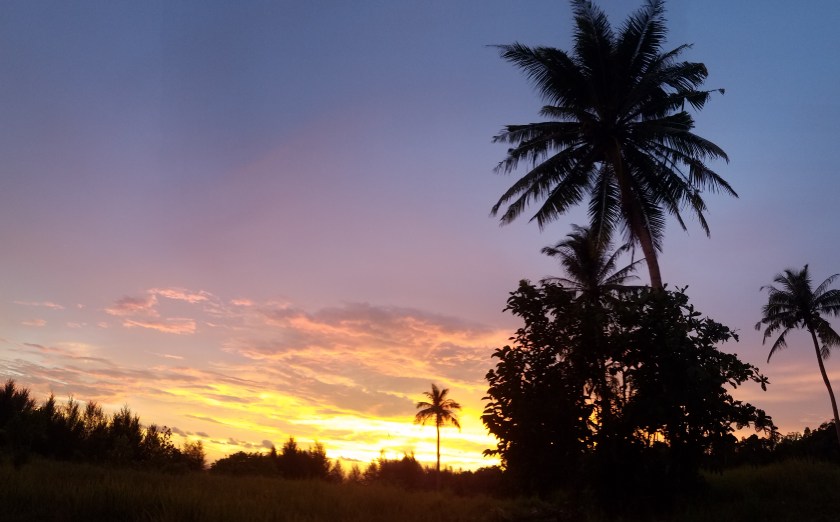
Mostly though, trash recedes conveniently into the background and this place is astonishingly gorgeous. Our second afternoon in Calang (we had use of a big car for our 3 days there and did some crazy fun local driving) we adventured out to find a recommended beach on a nearby peninsula. We tracked it down and, after asking some locals, removed slats on a gate across a rough road and managed to drive up and over a small mountain to a ridiculously beautiful stretch of coast. Again we were on the beach late in the day as the sun lowered in the west and the sunset was phenomenal, maybe one of the top 5 most overall beautiful coastal scenes I’ve ever seen. The waves were crazy on the main beach, fun to watch but deadly. We walked awhile and crossed a narrow isthmus to another stretch of sheltered sand where we all enjoyed the mild water of the Indian ocean, watching as the colors sharpened and imagining the coast of Zanzibar out beyond the horizon.
And now here we are driving by train through rice paddies across Java, volcanos in the distance, heading to our rendezvous with Jeff in Yogyakarta this evening. What a trip this has been. Anna and I have been looking at our calendar and penciling in when we’ll be where. With just over 2 months left the days and weeks are now all accounted for, so different from the early stages of our travels when it seemed we had endless time to see the world. We’ll be in the Yogya area for a week or so while I get our family’s visa extensions handled, then we’ll head to Semarang for a quick visit with John and Retno before flying to Makassar. After Tana Toraja we’ll head overland to the Togean islands and hopefully meet up with Kari again for some more diving. Then Kuala Lumpur for a weekend, Siem Reap and Phnom Penh for a week, then another week around Hanoi. Then to Zurich on July 3rd and the Zimm’s and Abby and our short stint in Europe before arriving full circle back at the lake around July 23rd. Very fun. Love you all so much and can’t wait for dock time and so many hugs,
Doug
 Strout Family Year of Travel